



Two years ago, you might have heard of “lazy girl jobs” and “quiet quittingQuiet QuittingQuiet quitting refers to employees doing only the minimum required work rather than going above and beyond, rejecting hustle culture's expectation of constant extra effort. The term sparked significant PhilippineGo to Quiet Quitting Glossary” on TikTok, but American magazine Fast Company says there’s a new entry in Gen Z and millennials’ lexicon of work-related buzzwords: micro-retirement.
“‘Vacations.’ The word is ‘vacations,’” the Merriam-Webster Dictionary said in an X post, which included a screenshot of Fast Company’s article on the new trendTrendA pattern or style that gains popularity for a period of time, whether in fashion, music, language, or online behavior. Trends move quickly in the age of social media, andGo to Trend Glossary. In the screenshot, the article says that micro-retirement “involves a one to two-week break from work every 12 to 18 months.” But this definition has since been removed from the story.
The magazine says that micro-retirement is used to “avoid burnout, find greater fulfillment in their work, and enhance their overall well-being,” and that the trendTrendA pattern or style that gains popularity for a period of time, whether in fashion, music, language, or online behavior. Trends move quickly in the age of social media, andGo to Trend Glossary isn’t limited to Gen Z workers, as 10 percent of working Gen Z and millennials in the U.S. are considering micro-retirements, while 75 percent thought employers should offer unpaid sabbaticals, according to a report from gig-seeking platform Side Hustles.
While the word “break” already exists, “micro-retirement” is being posited as an umbrella term for sabbaticals and vacations. Fast Company says a micro-retirement can look like “quitting a job, then finding a new job when you’re ready to work again,” “setting up a plan with your employer that allows you to take unpaid frequent work breaks,” and “taking breaks from your business if you’re a business owner.”
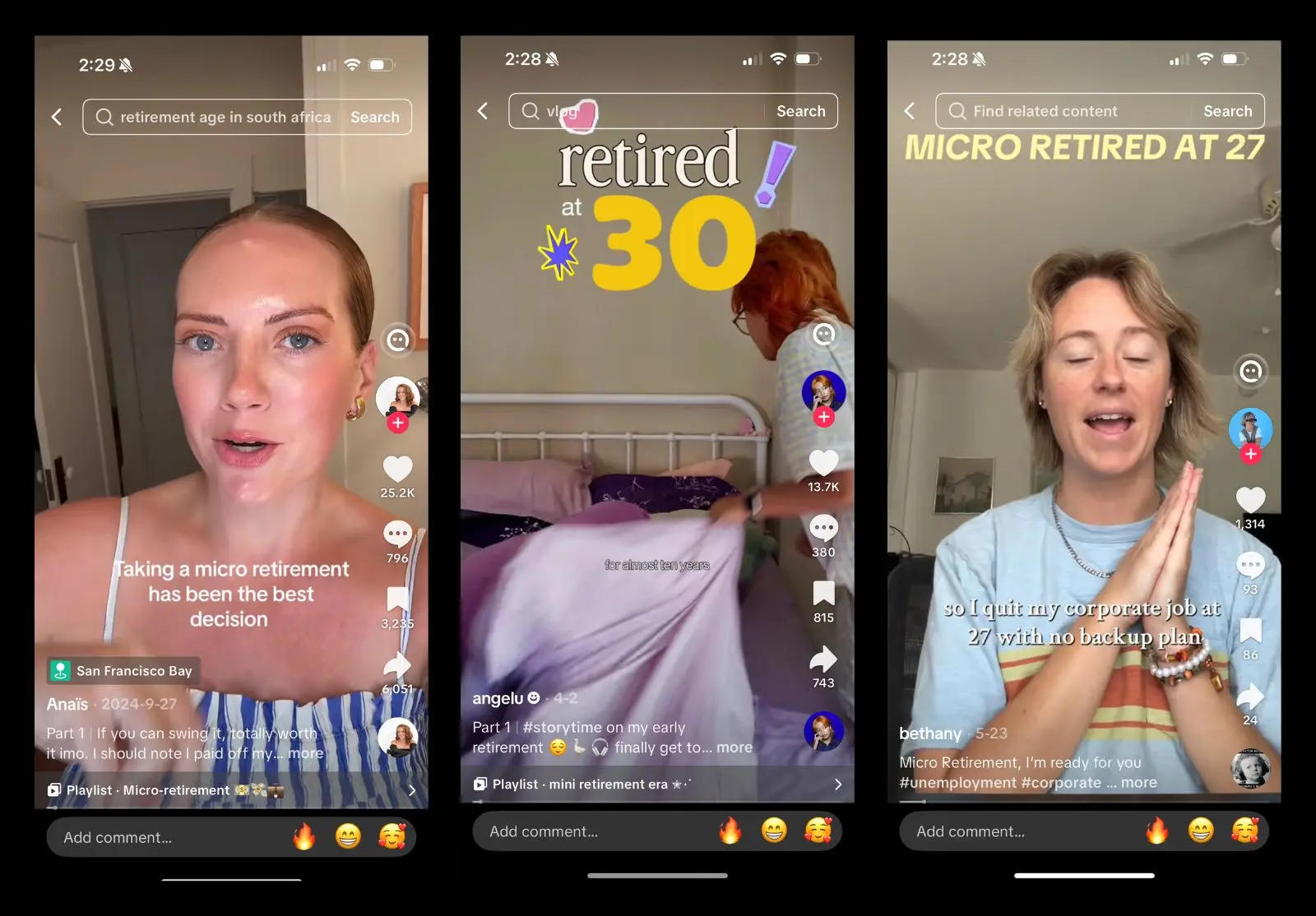
The Guardian also says micro-retirements are not the same as sabbaticals, citing one of the trend’s proponents, personal development content creator Adama Lorna. In a TikTok video, Lorna explained, “Instead of waiting in your 60s or 70s to travel the world and to try and indulge in those hobbies, all those new things, you do them once you have your youth, your energy. You dot them around your life.” She added that micro-retirement doesn’t necessarily involve travel, like a vacation would.
Dubai-basedBasedBased is slang expressing approval for someone unapologetically stating their genuine opinion, regardless of whether it's popular, controversial, or conventionally acceptable within discourse. Originally associated with certain online political subcultures,Go to Based Glossary business news organization Moniify says young workers are more interested in cycling between two to three years of work and one year of “doing whatever they want” over working endlessly until retirement age. So, instead of the regular retirement, workers opting to micro-retire are looking to work until they die — but with intermittent breaks.
Recommended Video