

For restaurants, there is a world of difference between one-star and two-star reviews. A two-star review is typically an understandable complaint — paragraphs, reasoned, “too salty,” “not to my taste.” One will see reason in the two-star review, and even apologies.
Meanwhile, the one-star review is usually ten percent a review and ninety percent vengeance. It is the home of insecurity and gripe; and perhaps in the Philippines, the only measure of payback available to those who feel mistreated by a restaurant.
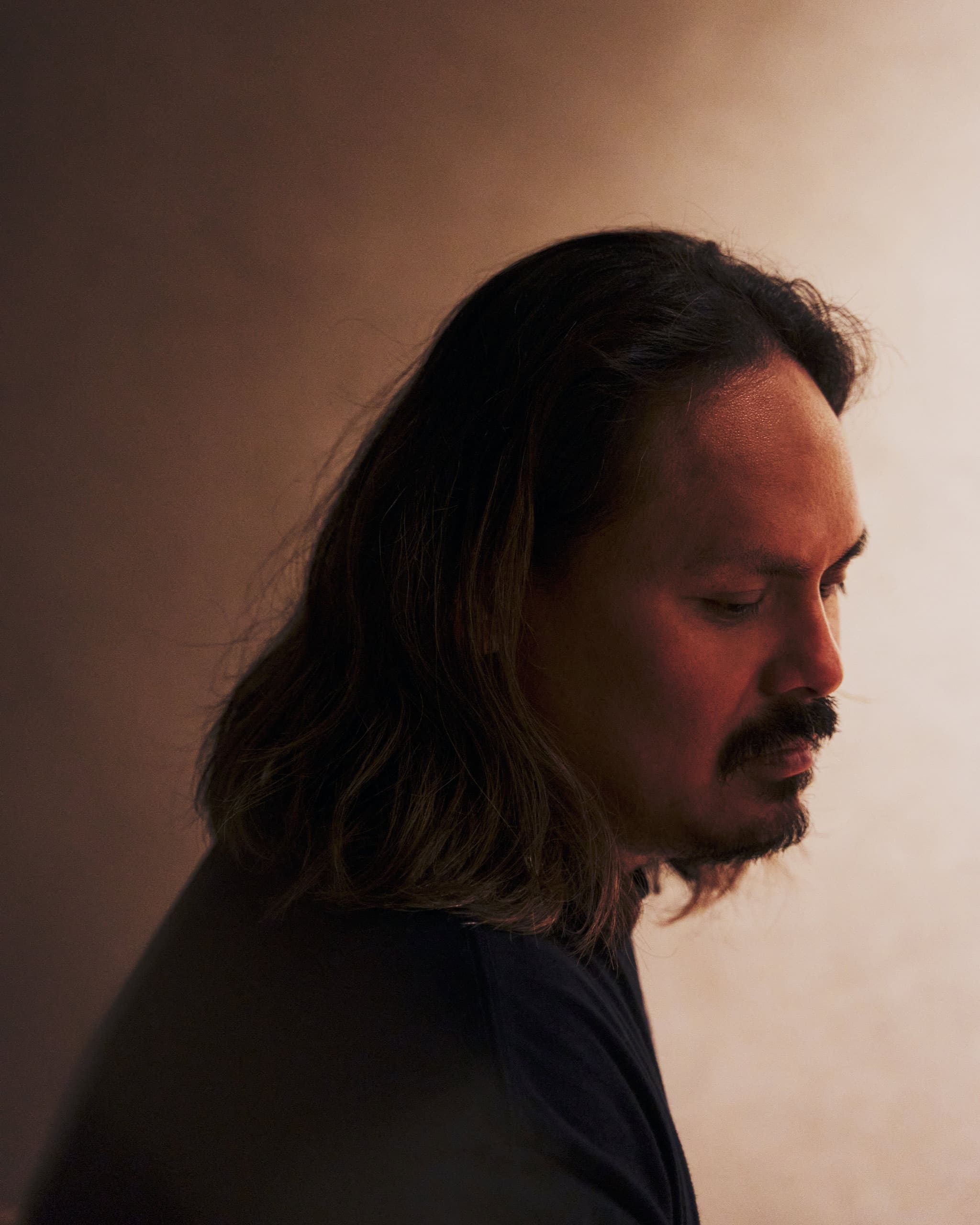
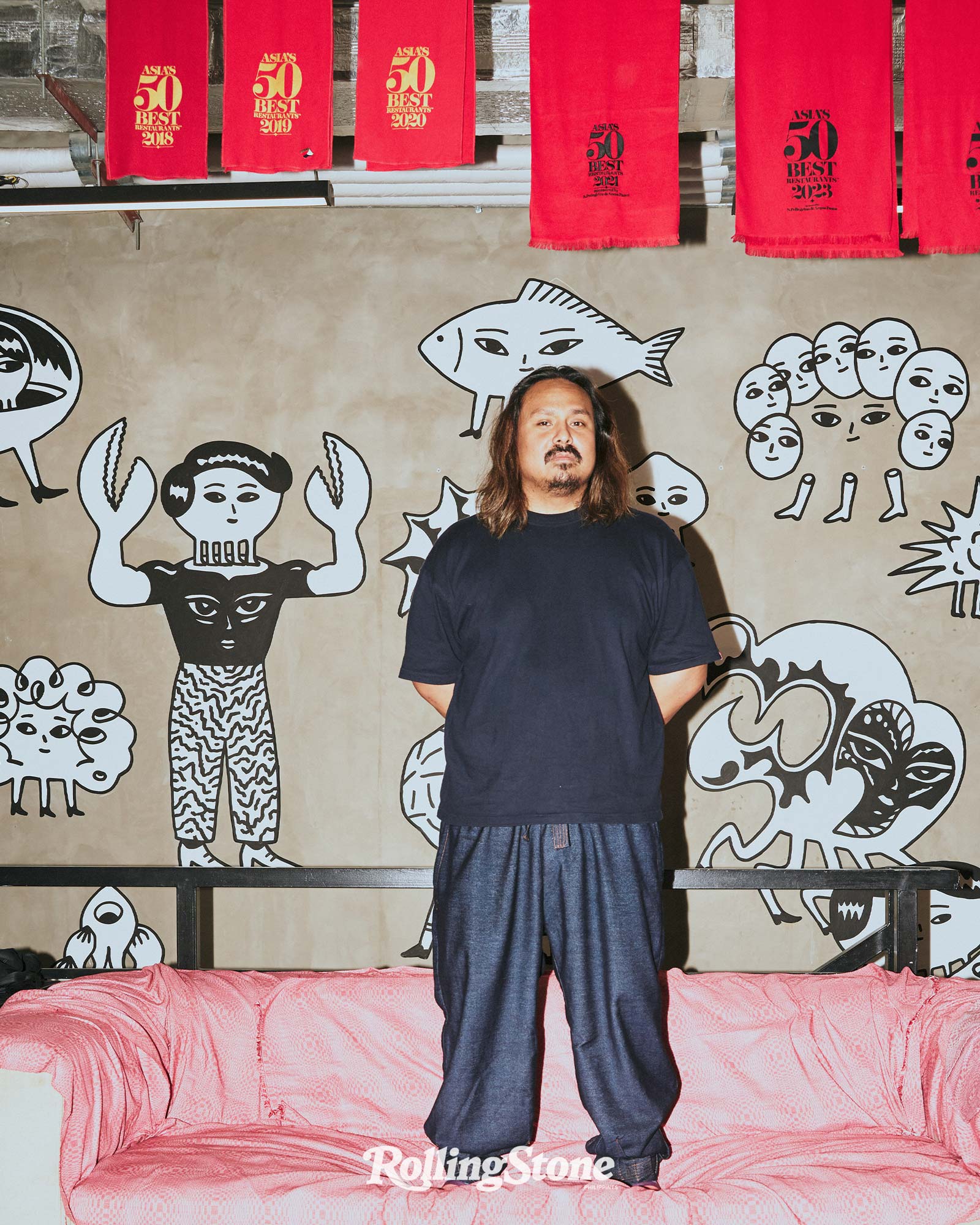
Though it was named one of Asia’s best restaurants, Jordy and May Navarra’s Toyo Eatery is not exempted from the vigilante justice of the one-star review. Many have written about Jordy’s work in the kitchens of Heston Blumenthal’s Fat Duck, and in Hong Kong’s Bo Innovation. Since the couple established Toyo Eatery in 2016, it has received distinction after distinction, climbing to 24th in Asia’s 50 Best Restaurants in 2024. Much has been published about the restaurant’s playfulness around sustainably sourced ingredients — from “siomai rice” and “tortang talong with banana ketchup” in tasting menus, to its signature “bahay kubo” salad, which uses all eighteen vegetables from the folkFolkA genre rooted in storytelling and tradition, often built on acoustic instruments and honest, plainspoken lyrics. In the Philippines, folk and its protest-song legacy have long carried social commentary, andGo to Folk Glossary song.
But Toyo’s reviews will still reveal a colorful list of angry or jilted diners. One reviewer was disappointed because the staff didn’t know what a club soda was. One star. Another says they had a decent meal, but weren’t extended the courtesy of shelter during a rainy day. One star. A few have said their reservation calls kept getting dropped. One star. Yes, certain experiences deserve one-star reviews — and one can’t help but take delight in a well-written take-down of an establishment, driven by some kind of fine dining fury. But sadly, these one-star reviews deserve one-star reviews of their own.
[W]hat could be more Pinoy than having your credentials doubted by fellow Pinoys?
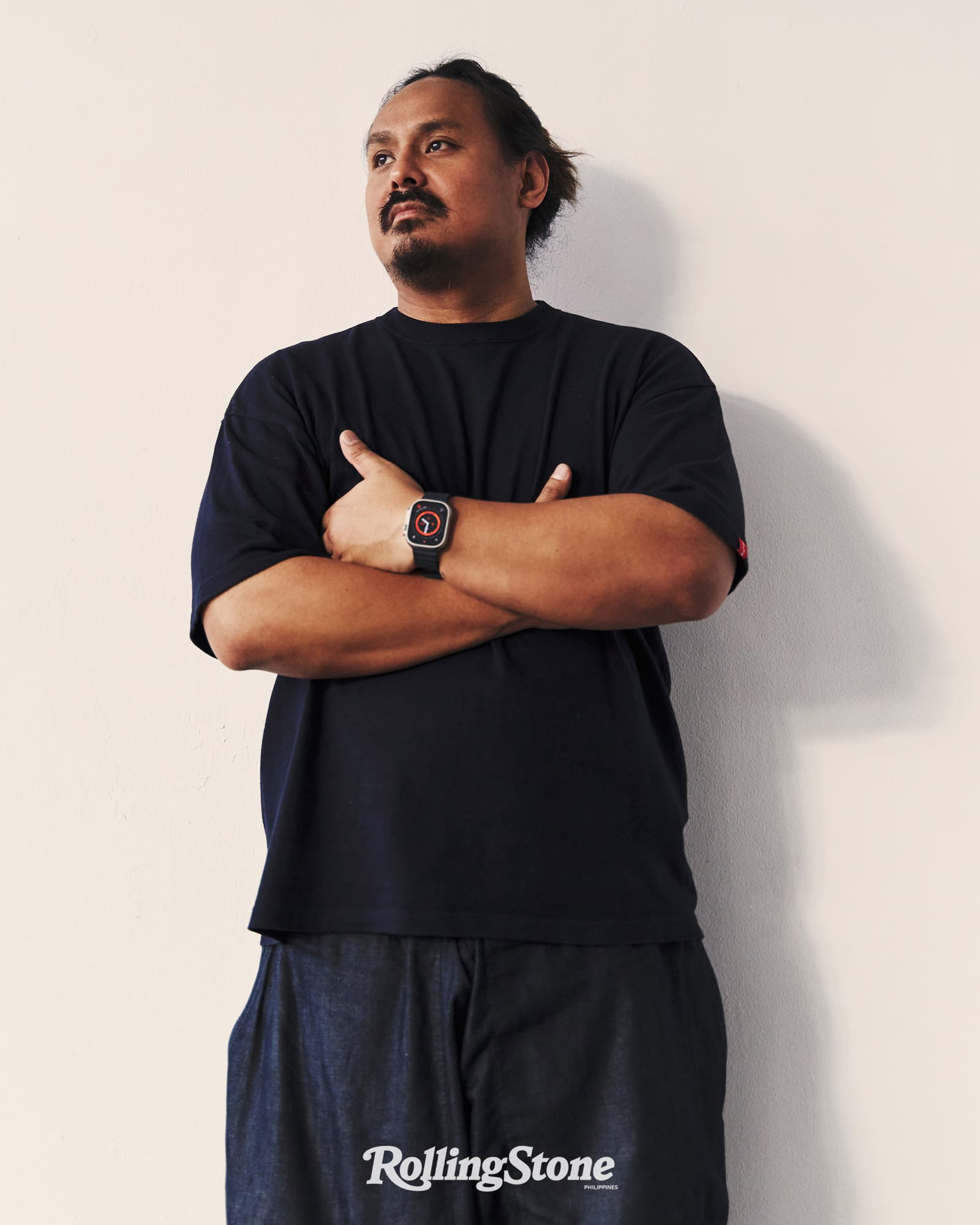
There are 617 Google reviews of Toyo Eatery, and Jordy does not read all of them. But he does admit: Some reviews hurt more than others.
“It doesn’t hurt when it’s constructive,” he begins. “But with any review, there’s an emotional response. Nobody wants to not do well. When you make a mistake, you know you were wrong. The obvious one is: You misplaced a booking, or the food’s undercooked. [You say] you’re sorry, and you do your best [not to repeat it].”
“The ones you appreciate are the ones you get live. It gives you a chance to fix it. If you’re a guest, and you want to participate and make sure your experience is good, you can show or tell us so we can fix it. Everyone [in Toyo] works really hard to make it better.”
But how does one structure a review to hurt the chef? Jordy says, quite plainly: “When they’re stupid.”
“We’ll get a one-star review that’ll be like, ‘I couldn’t get a booking,’ or they arrive an hour early and they had to wait to be seated. But even [with] that, we think of how to make that experience better. Our job is anticipating these things. Sa reservations pa lang, you want to express a specific vibe — a state of mind. You want to put them in a situation where they’re ready to be open-minded, to have fun. The experience starts [before] you arrive.”
At this point, May, Jordy’s wife and partner, chimes in, “Some [of these] comments hurt so much, because it’s directed at everyone in our team. People don’t realize it. We’re a business, but we’re not faceless.”
The heart of Toyo
Jordy Navarra and May Butalid went to the same high school. May dated Jordy’s friend, although they weren’t close. After that relationship ended, Jordy and May reconnected through Yahoo! Messenger. When may_b developed feelings for jordy_jordy_jordy, he was in Canada and she was in Manila.
They talked. A lot. Once, he told her he was “super into” a book. So she logged off, bought a copy, read it over a weekend, logged back in, and told him: “Oh, weren’t we talking about that book? That’s my favorite book!”
That book was Lolita by Vladimir Nabokov, a read as uneasy as it is long, clocking in at 112,473 words.
You can feel the butterflies in May’s stomach as she recounts this story. When asked how he felt during that time, Jordy smiles at May and says: “Obviously I liked her too, no?”
The story impresses upon millennials the cruel passage of time — how the couple behind one of Asia’s best restaurants possesses the most definitive Pinoy millennial love story.
“May is the heart of Toyo,” says Jordy. “She is the person who notices when people are feeling down. She’s the person everyone talks to when they’re having issues at home. This is on top of doing payroll and the technical aspects of running the business.”

“Sometimes they’ll come to me and tell me boyfriend problems,” May says, always smiling. “Or they just want to tell me about [the previous] night. You can’t fake these things… because they know when you’re bullshitting them. I really listen. I take it to heart so much.”
Over the years, May has navigated staffers missing their family, being troubled by love, and agonizing over what phone they should buy. On the surface, it may seem irrelevant to the everyday work in a restaurant, but Jordy says all this is essential. “You want real relationships? You want to express good feelings for people who come here? You need to be able to do it for each other.”
May chimes in, laughing. “Good thing we don’t have children.”
This is a good time to say that “May” is pronounced not like the month before June, but like the Filipino word for what is there. May tao (there are people). May bahay (there is a house). To both Toyo and Filipino linguists, that is what “May” is: an existential particle.
Then there’s the team
When Toyo does collaboration events with restaurants abroad, Jordy travels with a tribe. “Like Manny Pacquiao,” May adds. They emphasize that they are all essential to the restaurant. “Jordy doesn’t like the attention,” May says. “He knows it’s really not about him. He [can’t] make this without everyone else, so he directs the attention to the team.”
They describe an incident that would be fit for a sitcom. When Jordy began organizing these exposure trips for his staff — many of whom were flying for the first time — it caught the attention of the Bureau of Immigration, who had him sign human trafficking waivers as their guarantor. Jordy explained to officers that it’s normal for restaurant employees to travel and try new food. In some instances, Immigration escorted away an employee, who turned to him and shouted, “CHEF! CHEF!”
Now, the Bureau of Immigration possesses multiple autographs from one of Manila’s most popular chefs — official documents that will send him to prison if his staff don’t return home.
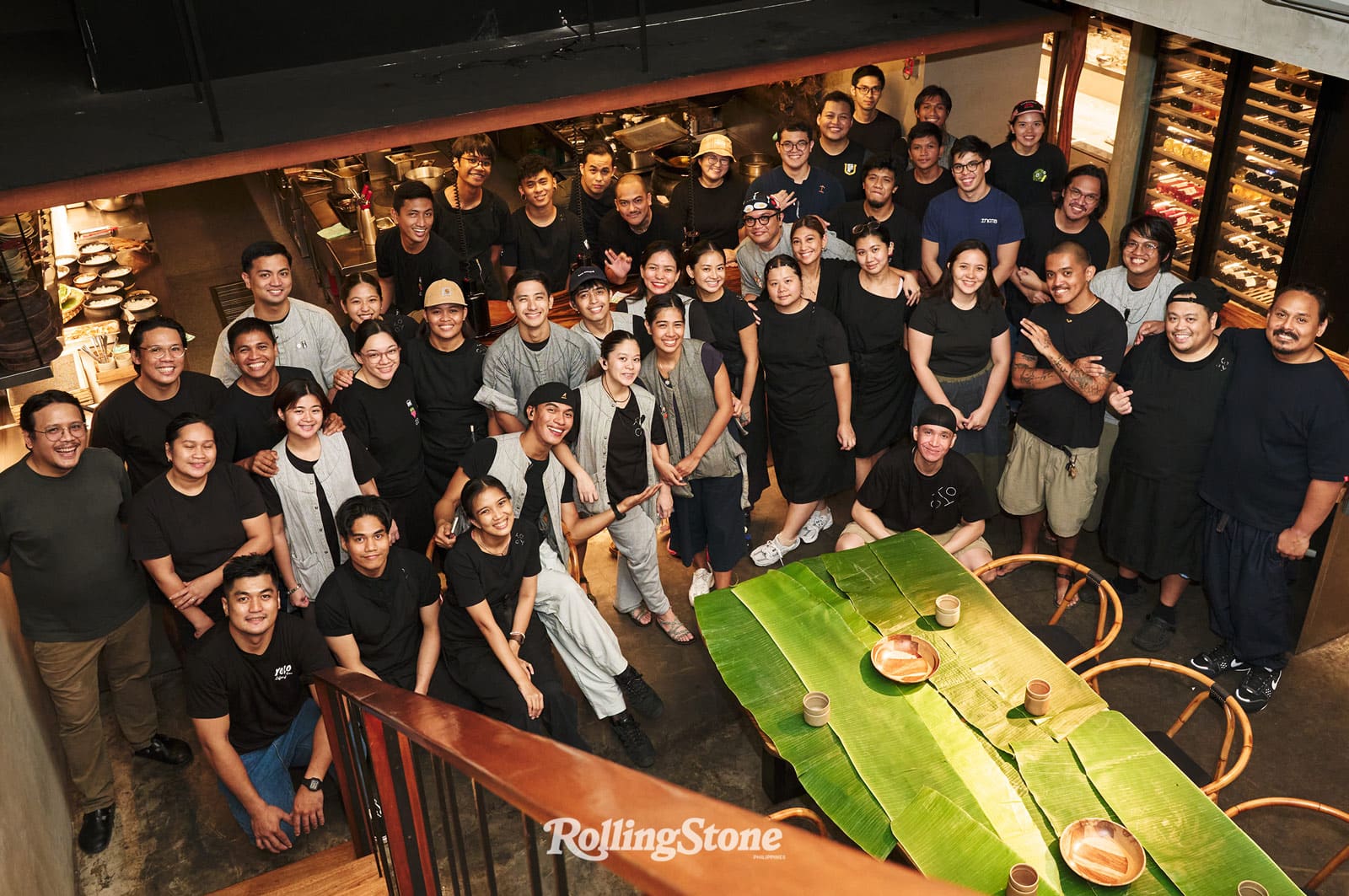
Toyo Eatery is a house of characters. During the few times I have dined there, I’ve heard the same food explained several different ways: some with singing, others with animated gestures, but always with deep knowledge of the menu. The unassailable professionalism paired with its cartoonish sense of humor is what makes Toyo Eatery unmistakably Filipino.
“People that work here come from all over,” Jordy says. “You can be from Jollibee, or from another fine dining restaurant. Our manager Kevin used to work in a club. It doesn’t really matter where you come from. We look at them and [see whether] Filipino hospitality comes more naturally to them.” For front-of-house, Jordy says he doesn’t want “NPCs,” referring to non-playable characters in games who mostly repeat lines. “For us, may pinanggalingan ka. You have a personal relationship with the food.”
Some [of these] comments hurt so much, because it’s directed at everyone in our team. People don’t realize it. We’re a business, but we’re not faceless.
May adds: “Yes, there’s a professional side to [explaining food]. You have to know how it’s made. You have to study that, and you can’t make a mistake there. But the way you say it — please don’t memorize it. Some people [explain the food] in a very Tagalog way, and others speak better in English. We don’t care how you’re going to say it, as long as you say the right things.”
If Toyo’s service feels personal, that’s because it is personal. All of it. They consult their boss about their love lives; they take bad reviews to heart. Some even have Toyo-themed tattoos. When Jordy is featured in the media, they scream “YEEEEES, CHEF!!!” with the warm sarcasm that can only come from actual friendship. Toyo Eatery is what happens when Filipinos throw away the “trabaho lang” (keep it professional) mentality and try to make something meaningful together.
Jordy agrees. “[They say] don’t take it personally, it’s just [business]. But this is personal for us. This is what we do the whole day. The people here are very personal to us. You think there’s this big corporate structure and everyone’s a faceless person, [but] really, they are actual people na kakilala namin. I know 40 is a lot of people, but we know everyone.”
‘Once in a while, everyone’s an asshole’
Of course, Toyo is still a restaurant. And though it is a far cry from Kitchen Nightmares, they do need to deal with any friction that arises.
“Once in a while, everyone’s an asshole,” Jordy says. “But as much as possible, there’s always a nice way to say something.” Though he admits that, in tense moments, there are less opportunities for niceties. “But [I always say] let’s talk about it after. Communication is overemphasized here.”
“We used to have a front-of-house that [spoke] to me one-on-one,” he shares. “[They’d say]: ‘I’m having a hard time because I think this is the most efficient way to do [the task].’ I’d reply: “Yeah I know, but sometimes the most efficient way isn’t necessarily the right way.” He then explains that they have to gauge the comfort levels and capabilities of all their employees, and efficiency is not their only goal. I reply, “Yes, even for customers, P5,000 for a meal is not a picture of efficiency.” “Exactly!” Jordy replies.
In fact, every single day, Toyo chooses this inefficient path — especially when they source from farmers, who they know by name, as well as by face. “You can just buy ingredients, easy,” he says. “You can specify the size, shape, and weight. But when you work with farmers directly, they’ll give you five avocados, iba-iba ‘yong size. They taste great, but you have to make adjustments every day.”
There are the things they do for story: Inspired by traditions like boiling Chinese master stocks for generations, and the solera method of blending in wine, Toyo always prepares its sauces with some carry-over sauce from the previous batches — including their barbecue sauces and kalabasa puree.
He knows it’s really not about him. He [can’t] make this without everyone else, so he directs the attention to the team.
“We have different mother bases for different kinds of sauces,” Jordy says. “It gave continuity. People feel like they’re taking care of something that was passed down so there’s a little pressure. When you add to it, it’s a nice connection to people who have done that job previously. It’s nice because whatever we’re doing now is built on the base we’ve established.”
Why do we bother with fine dining? The answer is certainly not efficiency, because everything — the price, ingredients, interiors, service, and ambiance — is all certainly extra. I suppose we bother because we seek out experiences to pair with our milestones. It helps us immortalize moments we’d like to remember.

“You need to feel full at least, to feel like you ate,” Jordy notes about the ideal fine dining experience. “That’s the basic [goal] you need to hit. After that, it should taste good. The next question is: Was it unique? Was it creative? Did your dad come home from working overseas tapos finally kumain kayo sa labas? The moment is punctuated by the food.”
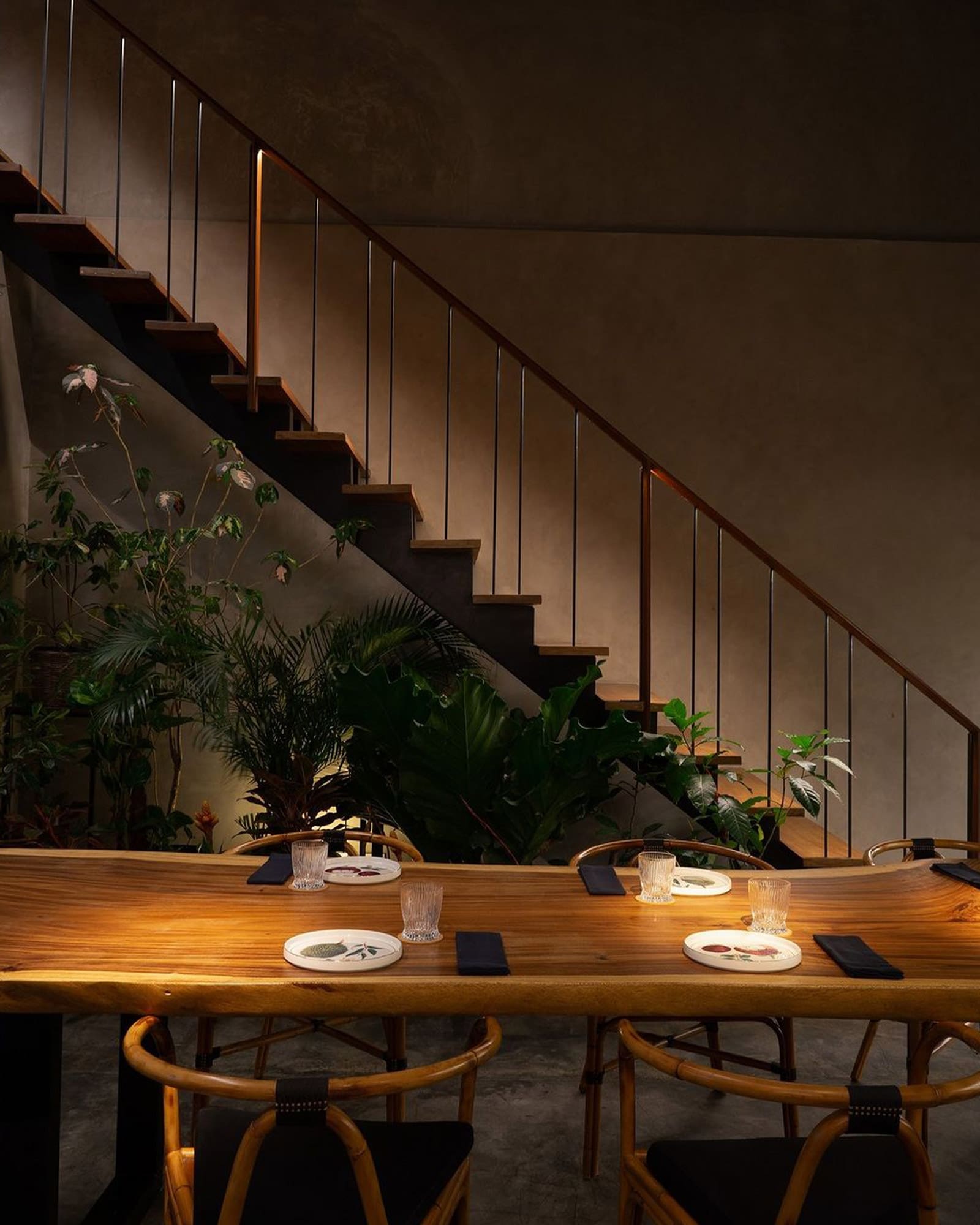
The late food critic Clinton Palanca once wrote about authenticity in food: “No one quite knows what it means, except that they want it.” But Toyo Eatery has made a compelling argument for what it could be. In Toyo, you don’t just eat Filipino food, you partake in a meal. You are welcomed and served in that warm, personal (not professional!) Filipino way. Their kitchen is not an office, but a home. They bring out their nice plates and glasses and bowls. It is almost like a play — an idealized Philippines — and you are not just watching, you are part of the cast. You are a guest in this house — and you have a say in how the evening will go.
No one is claiming that this is always how Filipino fine dining should be. One might argue that to enjoy Toyo, one must be ready to suspend their disbelief and take part in the story they are telling. Comparing restaurants to movies, Jordy says: “You sort of imply a genre, an approach.” He adds that he appreciates when diners “try to see the intention of the experience.”
Yes, some people find this pretentious or gimmicky. And yes, being named the 24th best restaurant in Asia will certainly attract a new level of scrutiny. But if Toyo’s project is to craft a dining experience that is truly, undeniably Pinoy — seriously, what could be more Pinoy than having your credentials doubted by fellow Pinoys?

Before his passing, Palanca wrote about Toyo: “[It] has never been about putting Filipino food on the global map — at least to my mind. Its greatest achievement has been getting Filipinos to love their food… I’ve often asked Jordy and May what their plans are, and they usually give me a strange look. ‘We’re just going to keep on doing what we’re doing,’ they said, with a shrug.”
That was 2019. We’ve had a whole pandemic since then, a new President, the first two Olympic golds for the Philippines. Toyo’s list of one-star reviews grows, but the list of five-star reviews grows much faster. Their barbecue sauce in the kitchen grows thicker and more complex by the year. More diners come, more bahay kubo songs are sung, more new dishes crafted, and more overseas collaborations launched. More employees confide in their bosses, cry over bad reviews, and perhaps get the Toyo logo tattooed on their body. Through all the triumphs and record highs in Asia’s Top 50, through all the creatively written takedowns, and through all birthdays and anniversaries celebrated in their dimly lit abode, Jordy and May — as Palanca described — have kept shrugging, doing what they’re doing. That, it seems, has always been enough.
Recommended Video

Rolling Stone Philippines Voices Issue, Now Available at SariSari Shopping