


When Bryan and Maxine Kong, founders of ice cream company Kurimu, first opened Now Now Canteen in September 2024, they hoped to use fermentation as a way to “democratize fine dining culinary techniques and make it accessible to the neighborhood,” according to an interview in BusinessWorld. For some, this might feel like a surface-level assertion, but it’s important to give credit where it’s due.
Prior to Now Now, located in Mandaluyong, menus that featureFeatureA guest appearance by another artist on a song, usually credited as featuring or ft. in the title. Features introduce each performer to the other's fans, and they can sparkGo to Feature Glossary modern fermentation techniques was largely relegated to Manila’s high-end restaurants like Toyo Eatery, Hapag, Gallery by Chele, and Metiz where a seven-course degustation meal will cost at least P4,000. On regular days, Now Now serves an à la carte menu starting at P385. This price point broadens the scope of who can participate in modern gastronomy, broadly defined as the art, science, and tradition of preparing food.
(Within my radar, there are regrettably few examples of fermented mains in Manila’s casual dining scene, which include the burong isda in Rizal’s Balaw-Balaw Restaurant and the raw marinated crab (gejang) in Malate’s Koreatown. I would’ve given Poblacion’s natty wine bar Bibio a special mention here, but they recently removed their lacto-fermented fries from their menu.)
However, my visit to Now Now was not on a regular day. It was the inaugural launch of “ReNOWn,” their “cultural incubation and artist residency program” curated by artist and writer Patrick de Veyra, which opens to the public from May 21 to 23, and from May 28 to 30.
According to their statement, ReNOWn is “dedicated to exploring the intersection of gastronomy and contemporary art.” This edition featured a seven-course tasting menu inspired by visual artist Isabel Santos, whose textural body of work explores anxieties rooted in social expectation. For ReNOWn, she hangs a tapestry made especially for the collaboration titled “When Words Cannot Express,” containing post-war Western motifs alluding to female domesticity. This edition also saw chef Kelvin Pundavela, former sous chef of Japanese restaurant MŌDAN in Cubao, lead ReNOWn’s “gastronomy team.”
Delicate and Technical
According to de Veyra, the gastronomy team worked around Santos’ preference for Japanese-Italian dishes that were acid-reflux-friendly and vegetable-forward.
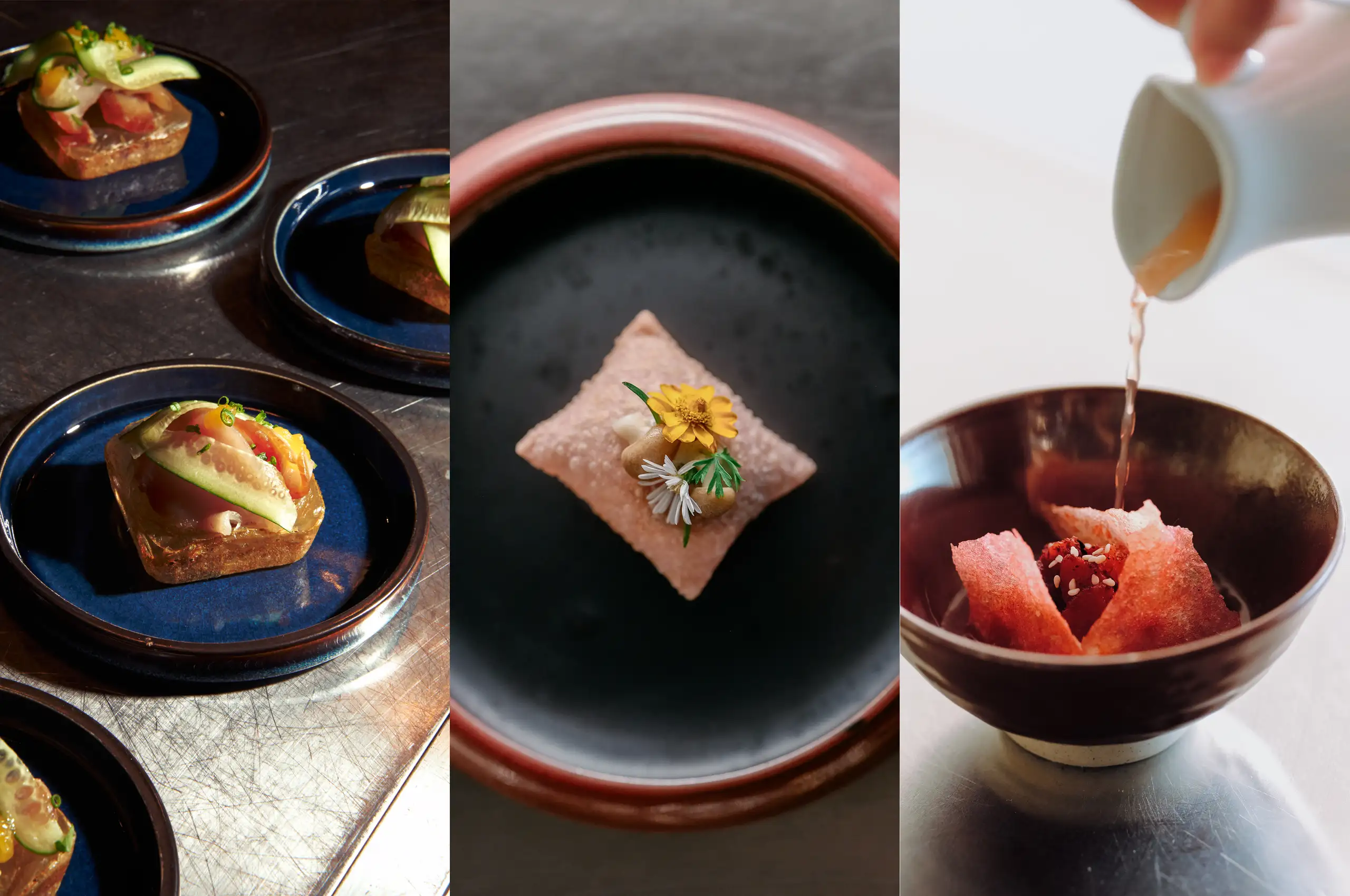
The first antipasto course, consisting of three petit fours, succeeded in finesse as each dish built on flavor with progressive intensity. The lacto-fermented cucumber and pickled shimeji added zest to the delicate wheat flavor of the puffed pasta, resting on a dollop of mushroom-taro cream. The katsu scallop, sandwiched between two tiny fermented corn shokupan buns topped with garlic-dill aioli and lumpfish caviar, was melt-in-your-mouth creamy. The capsicum from the smoked pepper added a kick to the thin layers of roasted octopus and shrimp, neatly stacked between crisp potato pavés.
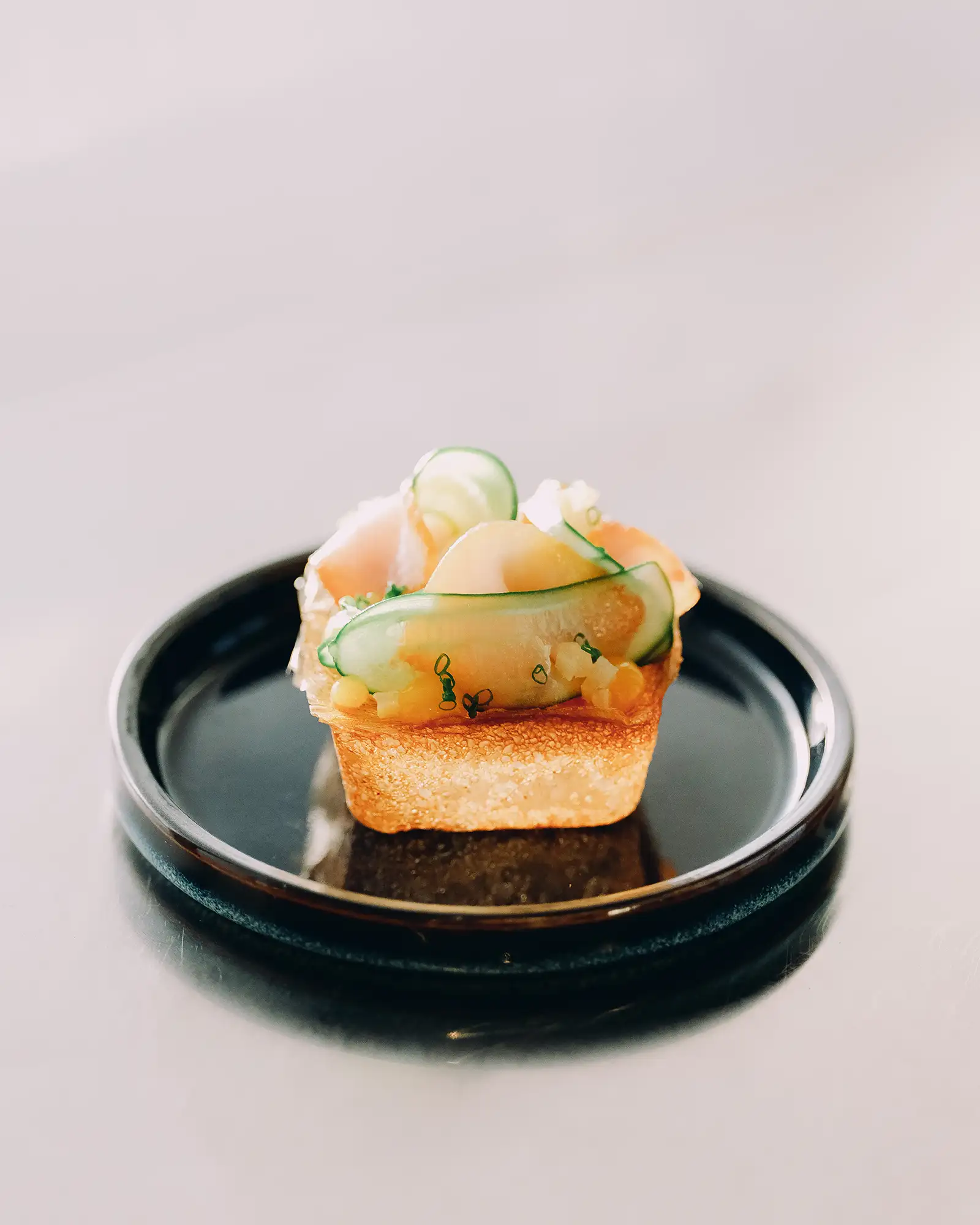
Pundavela’s technicality is best captured in his shoyu-cured swordfish that sits on a bed of dashi-seasoned crystal bread, which is even thinner than the flaky outer layer of a butter croissant. But unlike a croissant, the crystal bread gently shatters in your mouth without leaving shards between your teeth. The fish’s savoriness was brightened by the preserved lemons and gel of ponkan, adding a subtly citrus fragrance.
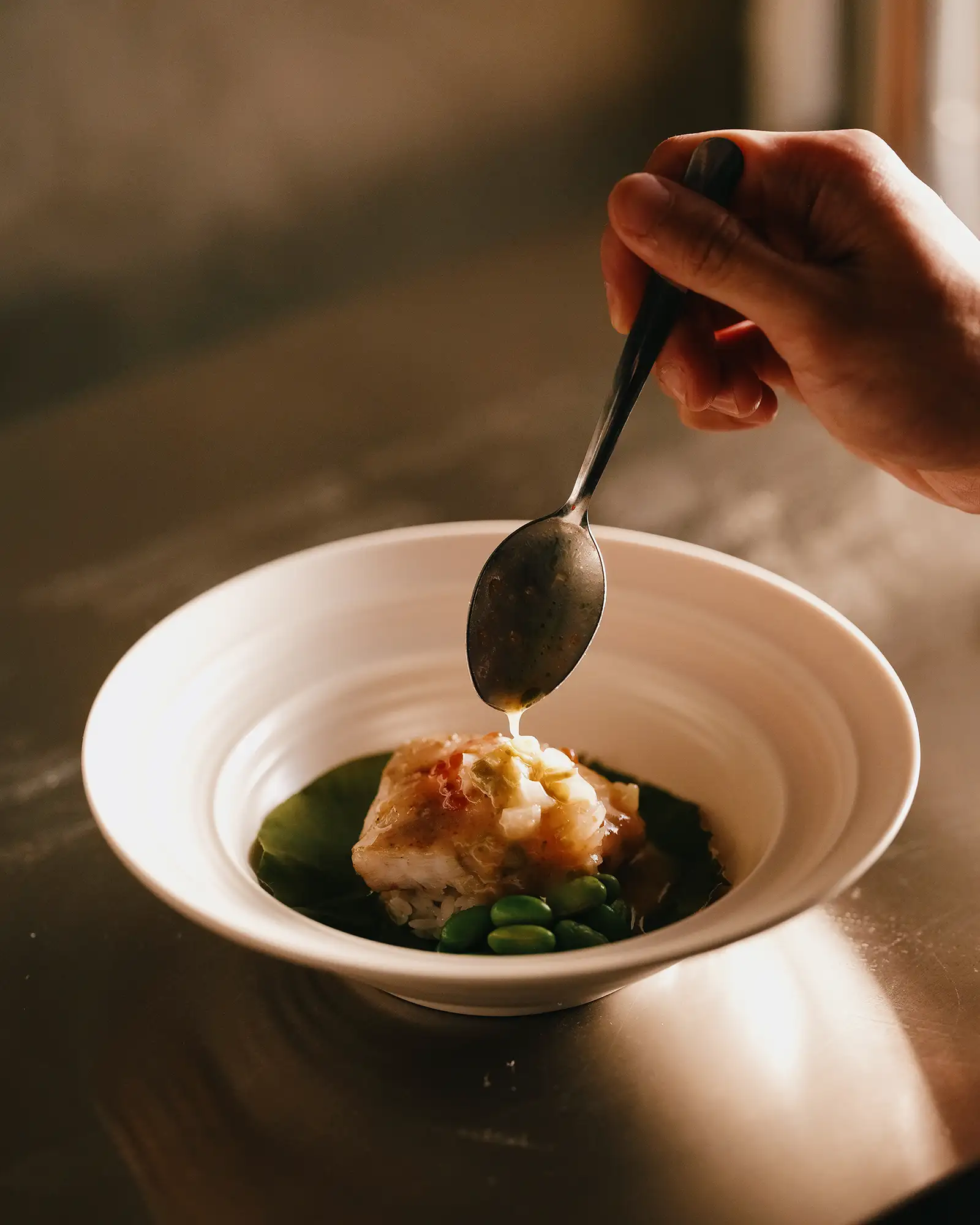
The fourth primi course — a miso butter halibut with salmon roe, edamame, and amazake caper sauce — was perfectly grilled, fatty, and tangy. Yet the elaborate drama of the cloth adorned with Santos’ motifs, which covered the dish, set expectations that the course didn’t quite meet. Pundavela explained it as a nod to her tapestry, but also how art gradually unveils itself. When I begrudgingly lifted the cloth, it revealed an inconspicuous, albeit delicious, halibut.
Similarly, having the menu printed on a napkin with Santos’ work was new, though slightly impractical. I wasn’t sure whether to place it on my lap, lay it flat on the table, or awkwardly wipe it with my mouth. A paper menu would have sufficed, and it wouldn’t have compromised Santos’ vision since guests get to take home a limited-edition fiber artwork.
A Confusing Mouthful
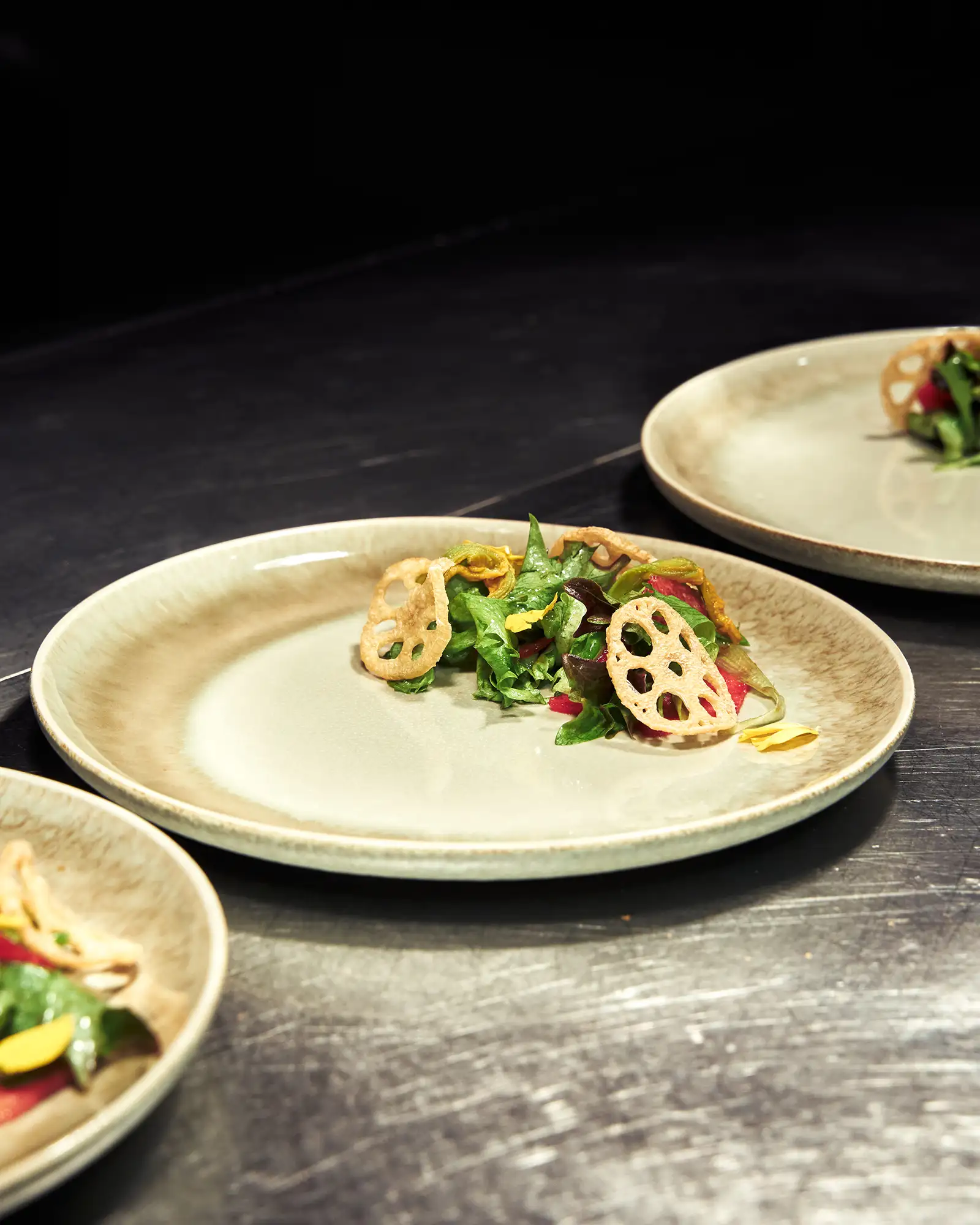
Other dishes didn’t leave as strong an impression. The lotus chips in the second course — an oakleaf and mizuna salad with hibiscus-pickled pear and ginger ponzu — could’ve used a gentler heat setting for a more tender, balanced bite. A warm broth of mushroom tofu and tomato dashi made sense as a lead-up to the main dish, but was too sharp a shift as a palate cleanser from the halibut’s lighter flavors.
The main course — a “gyutan lasagna” that was, again, a call to Santos’ art, but also her love for curry — was made of pasta sheets, beef lengua, curry sauce, black garlic cheese, and nori pesto. It was a confusing mouthful of rich and soft textures that its thin layer of raw carrot couldn’t offset, and the dish would have benefited from more refinement. Its saving grace was the bitter sorrel leaf and zingy papaya chutney, which added much-needed dimensions to the dish.
As Pundavela served the dessert course — a kombucha strawberry hiyayakko (chilled silken tofu) with beetroot molasses and sumac togarashi crisps, then later a scoop of toasted rice ice cream with black garlic cheesecake foam and rice puffs (an off-menu flavor from Kurimu) — de Veyra verbosely explained the thought process behind ReNOWn. The project, he said, is a response to the growing loss of novelty or “visual tolerance” in Manila’s art scene, and an opportunity to bridge a dialogue between food and art practitioners. While it was an opportunity for conceptual artists looking to spruce up their practice, it proved an adjustment for highly technical chefs who struggled to see themselves as artists, de Veyra recounted.
Even Pundavela admitted to this as he eavesdropped on our conversation, quietly nodding and smiling at de Veyra’s proclamations. When I asked about the extent of his input beyond the kitchen, Pundavela said he was inclined to think about Santos first (like most chefs would), only offering minimal suggestions on the concept. The most challenging part, he explained, was adapting to a new kitchen and team — all while working around Santos’ parameters.

Santos tells me over text that this project is a menu based on her works and preferences, and that no parameters, aside from her artwork, were set by the gastronomy team. “I never or rarely work in a group,” she says, explaining how communication was key to achieving her vision. “I think it’s because I have a hard time explaining what I’m trying to do, but the essence of this project is collaboration.” For an artist who works in isolation to step into this territory should feel like a welcome invitation, and any conceptual imbalance in the final execution is neither Pundavela or Santos’ burden to carry.
Rather, it is a reflection of a curatorial shortcoming: a lack of narrative perceptiveness that, in de Veyra’s effort to bridge contemporary art and gastronomy, may have reinforced the divide between the two. If the goal of ReNOWn is for chefs and artists to meet at eye-level, it requires an approach that cuts through abstraction to uncover context that is humanly relatable. But if the intent is pure expression, which can sometimes mean disregarding the audience, it might, at best, offer fresh ideas, or at worst, slip into opaque verbiage.
That’s not to say there isn’t an idea here. After all, this is a relatively new format for Manila and the potential to address issues and spotlight stories has promise. But like all excellent cooking and artmaking, misfires are inevitable. Whether you’re ready to shell out P5,500 (plus P1,000 for a drink pairing) to support this project long-term really depends on your budget. But how ReNOWn will weave the multifarious perspectives of artists and chefs will be key to its longevity since art and food, as Pundavela wisely put it, are grounded in “preference” and “experience.”
Because if one person finds belonging in a new field, who am I to stop them?
Recommended Video