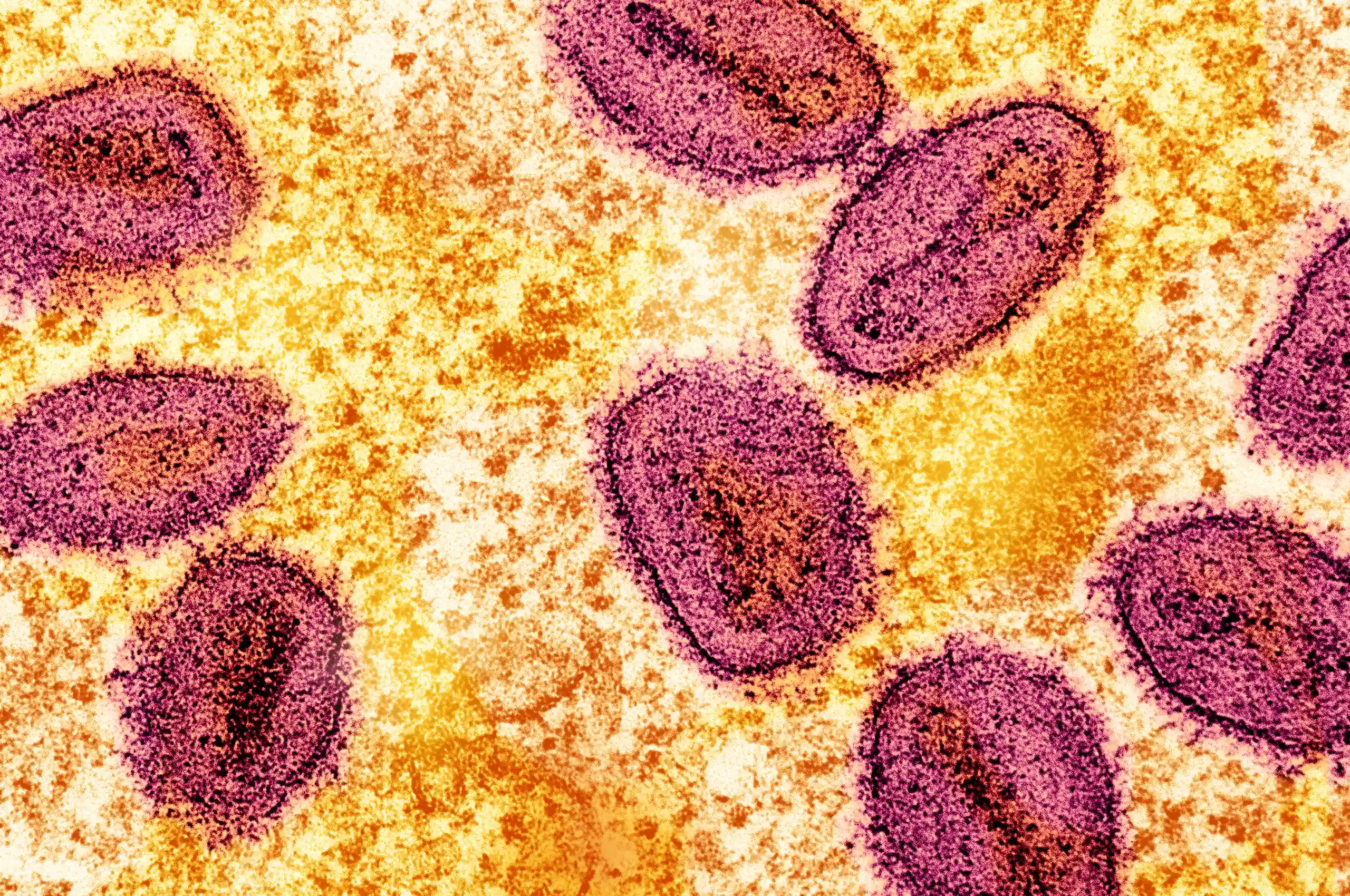
Cases of monkeypox, or mpox, are rising in parts of Visayas and Mindanao, prompting regional offices of the Department of Health (DOH) to ramp up information campaigns and create protocols to address and report the infection disease. On Thursday, May 29, the DOH Central Visayas Center for Health Development (DOH-CVCHD) posted on Facebook, telling users to be aware of the symptoms of mpox.
The DOH-CVCHD has yet to provide numbers on infections in the Central Visayas Region, but in South Cotabato, 10 individuals have been infected as of May 22. Two cases have been confirmed in Maguindanao del Norte, while six were still under observation as of Monday, May 26, according to the Bangsamoro Autonomous Region in Muslim Mindanao (BARMM) Ministry of Health. In Zamboanga Sibugay, two cases of mpox have been recorded, including the infection of a three-year-old child.
On April 16, the Davao City Health Office reported two cases of mpox, one of which resulted in death due to complications, ABS-CBN News reported.
No cases have been confirmed yet from Camiguin, but Mambajao municipality health officer Boel Espinas told Philippine Information Agency Region 10 that health authorities are monitoring suspected cases, especially as tourists come and leave the municipality, which is known as a tourism hotspot.
A nationwide concern
Outside the Vis-Min regions, Ilocos Sur reported its first mpox case on April 19. The local government stated that it was an isolated case, and that there was no evidence of local transmission.
According to the World Health Organization (WHO), mpox symptoms include rashes that may last two to four weeks, followed by a fever, headache, muscle aches, back pain, low energy, and swollen lymph nodes. Rashes may look like sores or blisters and typically appear around the face, palms, soles, groin, and genital or anal regions. Lesions may also appear in the mouth, throat, anus, rectum or vagina, or on the eyes.
The disease is transmitted from animals to humans through physical contact and eating if the meat is not cooked properly. Between people, mpox is transmitted through skin-to-skin, mouth-to-mouth, and mouth-to-skin contact.

In September 2024, DOH Secretary Teodoro “Ted” Herbosa said that the country was set to receive 2,500 doses of a vaccine to prevent the spread of mpox, but the WHO was only prioritizing countries with an outbreak. The Philippines has not yet received these vaccines. The global outbreak started in 2022, but the Philippines was not largely affected as it only saw a total of 27 cases between July 2022 and September 2024. Rappler reports that the Food and Drug Administration (FDA) also has not yet approved an mpox vaccine for public use in the Philippines.
Recommended Video