
Squid Game has been one of Netflix’s biggest money-makers since its debut on the platform in 2021. Bringing in $900 million in revenue and 330 million viewers worldwide, the South Korean series, touching on poverty through series of fatal childrens’ games, became a global phenomenon almost overnight. Given the show’s success on Netflix, it’s no surprise the streamer has gone to great lengths to extend its run beyond the first season, despite the fact that Korean dramas usually conclude after just one.
But should the series have really gone on for more than one season? Squid Game Season 1 told a tightly woven, self-contained story, one that didn’t beg for a sequel. Its premise was simple: the poorest of South Korea agreeing to risk their lives in a series of deadly games for a shot at financial salvation, courtesy of the world’s ultra-rich. We watched in both horror and fascination as Seong Gi-hun (Lee Jung-jae), along with fellow players Cho Sang-woo, Kang Sae-byeok, Ali Abdul, and others, formed alliances, broke them, and hopelessly clung to their humanity while navigating nightmarish versions of innocuous games like red light, green light, tug of war, and marbles.
Even with the first season’s somber cliffhanger, the story felt whole: its power came from what it left unresolved, not from tying up every loose end. Squid Game director Hwang Dong-hyuk had even initially intended the story to be much shorter, writing it as a one-off movie. “I don’t have well-developed plans for Squid Game 2,” Hwang said in an interview with Variety in 2021. “It is quite tiring just thinking about it.” The stress of filming the first season was so great that Hwang lost “eight or nine” teeth in the process: he swore he’d never add to the series again.
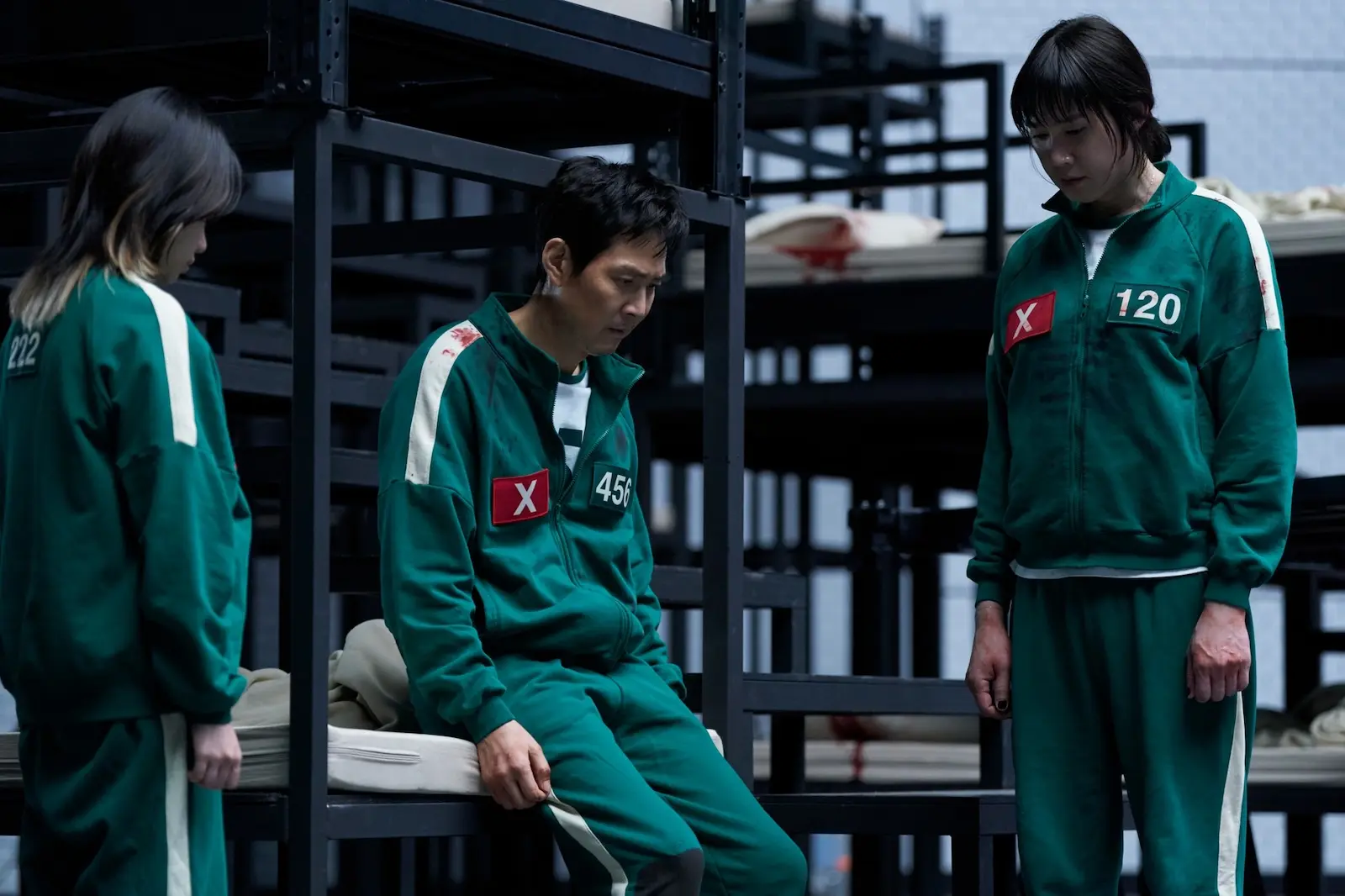
“Even though the first series was such a huge global success, honestly, I didn’t make much,” the director said in an interview with the BBC in 2024. While Netflix paid Hwang upfront for his work on the series, the platform did not offer the director a bonus after the show’s success. The new additions to the ensemble — the loose cannon Thanos (T.O.P.), the trans ex-Special Forces soldier Cho Hyun-ju (Park Sung-hoon), and Seong’s best friend Park Jung-bae (Lee Seo-hwan), to name a few — added greater stakes to the narrative, but the season felt as if it were creating more questions than answers. The emotional clarity of the original gave way to a more sprawling, uneven narrative, which tried its best to deepen the story but ultimately fell short.
The sharp contrast between the first and second seasons didn’t go unnoticed by viewers or critics. Season 1 was widely praised for its gripping storytelling and social commentary, with Rolling Stone even calling it “a parable of modern life as blood sport.” In contrast, Season 2 failed to capture the same impact. Also reviewed by Rolling Stone, the follow-up was seen as underwhelming, with not “much new to say on the subject of income inequality, which is the whole point of this macabre story.”
This final season of Squid Game promises to put an end to Seong’s battle against the game’s shadowy creators: a conflict that’s been building since he first stepped into the deadly contest. But with so much anticipation surrounding the finale, can any resolution truly satisfy the show’s devoted fans? With the emotional stakes scattered and the story stretched thin, it remains to be seen whether or not Hwang can deliver an ending that feels both meaningful and earned.
Recommended Video