

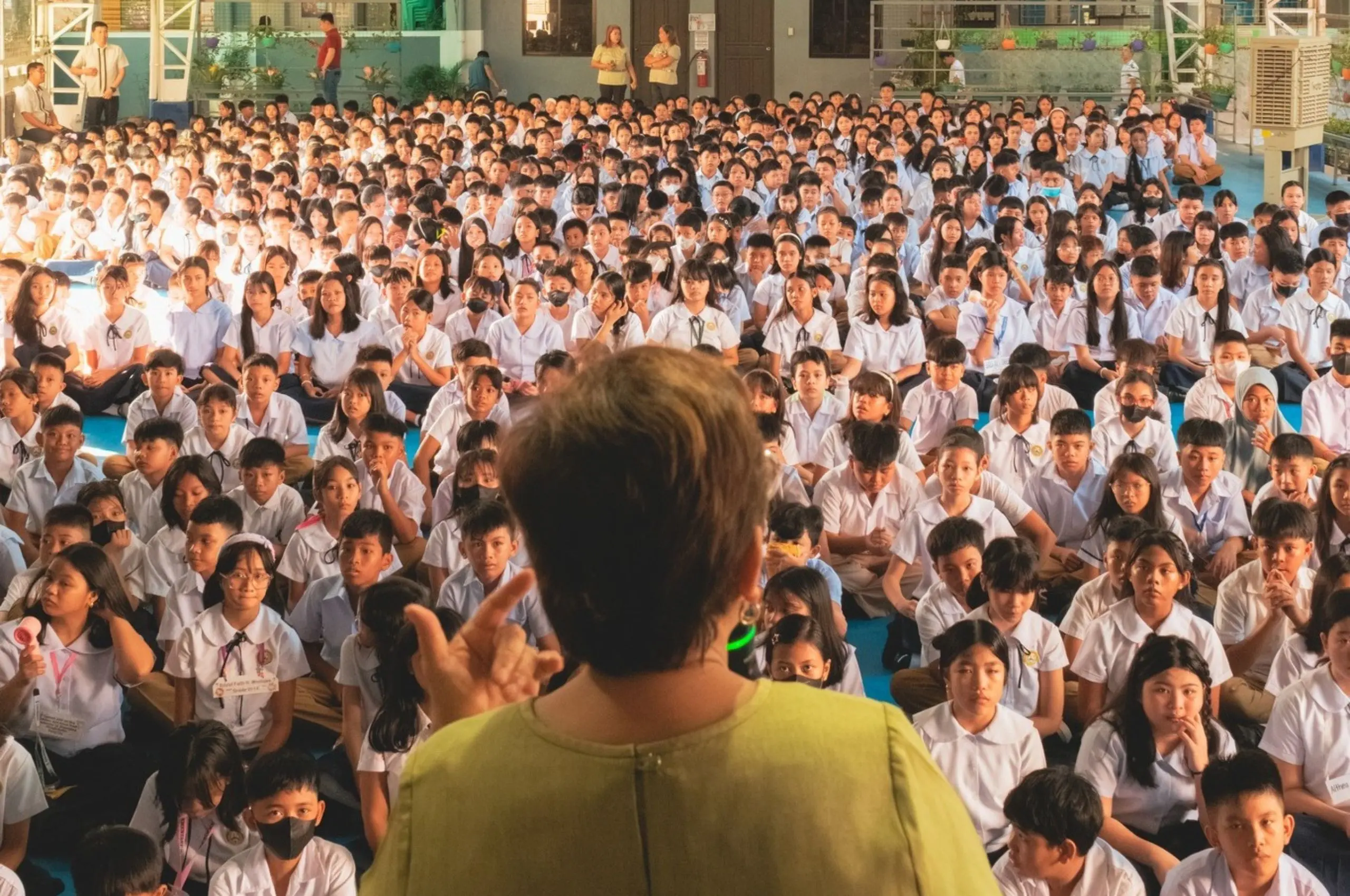
As classes resume this week, the United Nations Children’s Fund (UNICEF) sounds the alarm on the Philippines’ “real and widespread” education crisis. In a press briefing in Makati City on June 17, UNICEF Chief of Education Akihiro Fushimi noted that Filipino children are unable to read at the expected level while learning gaps continue to widen in the Bangsamoro Autonomous Region in Muslim Mindanao (BARMM), citing data from 2019.
90 percent of Filipino children in Grade 5 could not read at their expected level, while 83 percent struggled with basic mathematics in 2019, according to UNICEF.
“We estimate at UNICEF that children in general in the Philippines, by the time they reach Grade 4, they have skills in reading and mathematics around Grade 2 levels, already two years behind, and it is further worse in BARMM,” said Fushimi.
He pointed out that the COVID-19 pandemic worsened these issues. “With COVID-19, we know the Philippines has faced a two-year-long school closure,” he said. “During this time, many children, particularly those in disadvantaged communities and families, could not access the alternate modes of learning.”
Disasters like typhoons, volcanic eruptions, and earthquakes also negatively affect 100 percent of the Philippines’ schools, he added.
Despite this, improvements to the education system still seem actionable. “As early as three to four years before [children] enter kindergarten, we have to invest in their health, nutrition, and education,” Fushimi said. “I think there’s a huge momentum when it comes to support, with the leadership and with the technical people’s efforts on the daily basis.”
“We are happy to work with the government in terms of looking at different kinds of financing models sustainably,” he added.
Functional Illiteracy and Other Concerns

The press briefing echoes concerns raised by the Second Congressional Commission on Education (EDCOM 2) in its January 2025 report, where it said the Philippine education system was in a crisis.
The first of EDCOM 2’s key findings on the basic education system is that most Grade 3 students were 1 to 2 years behind curriculum expectations during “foundational years of learning,” or kindergarten to Grade 3. Bullying and the lack of teachers, classrooms, and learning resources also remain problems for the Department of Education.
Other concerns include learning days lost to class suspensions due to natural calamities, limited oversight and support for special curricular programs (SCPs) that would promote inclusive education, limited slots in the Philippine Science High School system, and lack of support for out-of-school youth.
In the Functional Literacy, Education, and Mass Media Survey (FLEMMS) conducted in late 2024, the Philippine Statistics Authority found that approximately 18 million Filipinos who graduated from basic education are functionally illiterate, or lacking the literacy needed to deal with everyday situations and work.
Recommended Video