

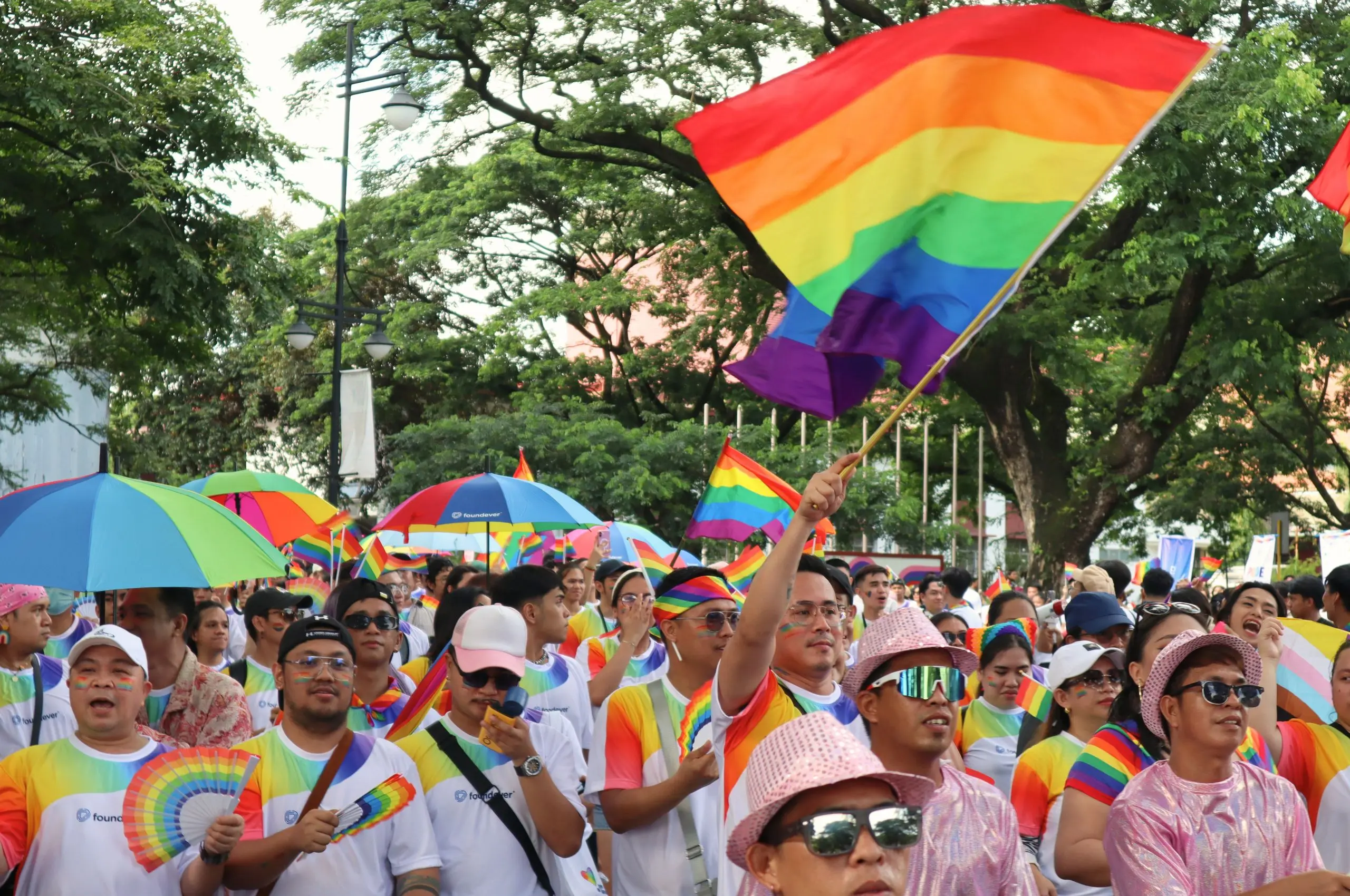
On Saturday, June 28, nonprofit organization Pride PH and the Quezon City Government hosted the country’s biggest Pride celebration, LoveLaban 3 Pride Festival, in the University of the Philippines Diliman. Despite the weather shuttling between extremes, sweltering temperatures one minute and heavy rains the next, attendees marched on concrete and mud to show solidarity for the LGBTQ+ community. And marching alongside them? A veritable who’s who of corporations.
Last year, LoveLaban saw approximately 212,000 attendees gather at the Quezon Memorial Circle. This year, Pride PH brought the festival’s main stage to UPD’s Sunken Garden, while other parts of the university campus were turned into alleys for food and merch concessionaires. One alley in particular was dedicated to brand partners.
Partners and sponsors included Canva, JisuLife, Nestle, Nivea, Aboitiz Power, Go Hotels, Manulife, Alorica, Coca-Cola Philippines, H&M, and Manila Water among a list of 35. These and many other companies like Citibank and Maersk sent delegations of LGBTQ+ employees and allies to join the march under the banner of workplace diversity. In this way, Pride PH was able to reframe corporate participation as genuine, a true show of acceptance and support within companies and organizations.
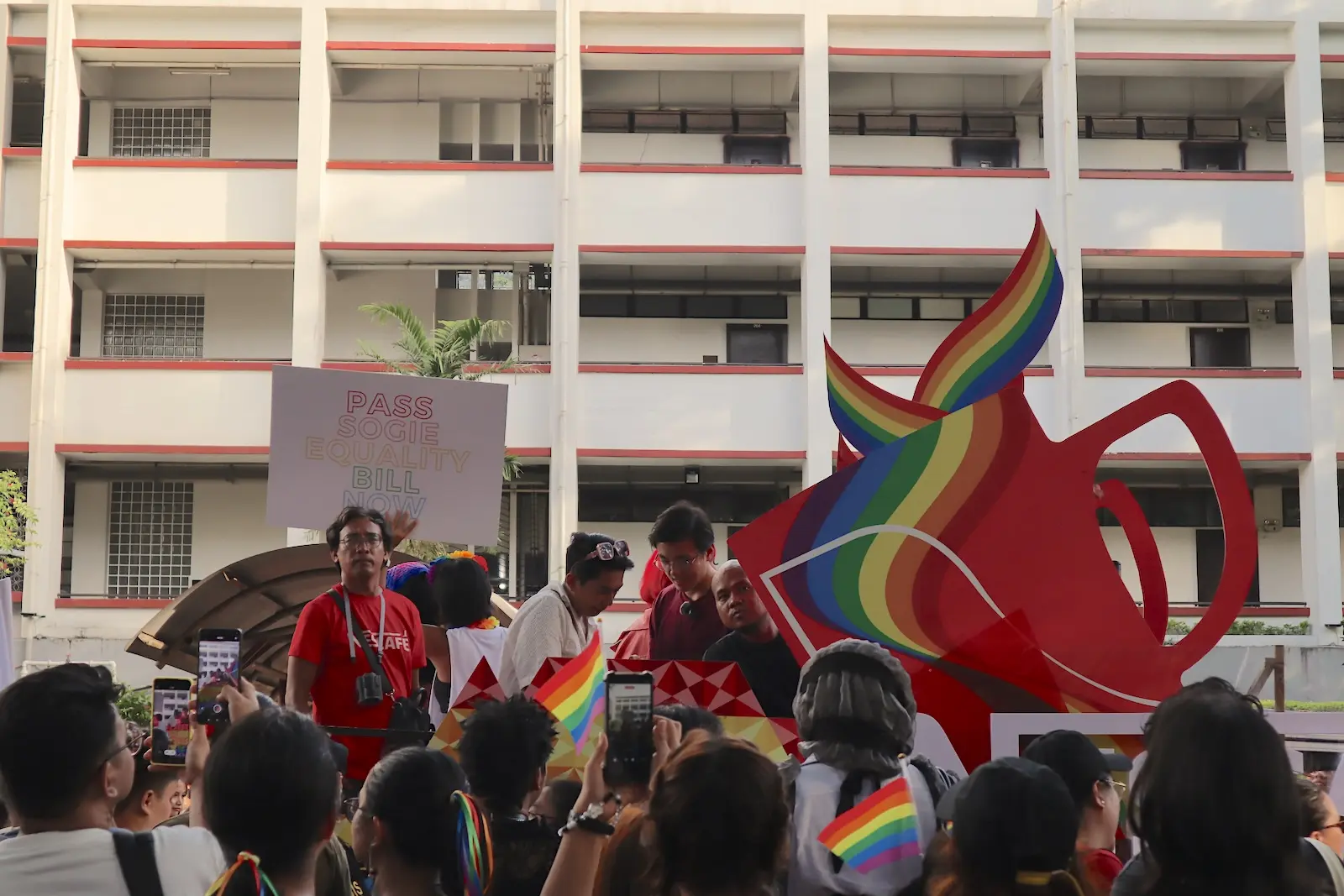
However, with the commercialization and upscaling of Pride, the community it’s meant to serve may be compromised. The large number of participants has made it necessary for organizers to ramp up security, but the presence of police was also disturbing to some attendees. One even said they felt unsafe seeing riot shields stored off in one part of the UPD campus.
On Thursday, June 26, more progressive groups faced police when they marched through Mendiola Street in the city of Manila for the first Stonewall Philippines, a gathering more akin to protest than the LoveLaban festival. It also served as a commemoration of Stonewall Manila, a pro-LGBTQ+ and anti-price hike demonstration that grassroots organizers held on the same date in 1994. This earlier demonstration was a commemoration of the 1969 Stonewall riots in the U.S.
To cut LoveLaban some slack, sponsorships are necessary to get a festival of that scale up and running. While Stonewall Philippines is a call for LGBTQ+ rights and the passage of the SOGIE Equality Bill unrestricted by partnership contracts with corporations, LoveLaban gives room for queer Filipinos to celebrate themselves and each other, and may even strengthen queer communities within the workplace. Furthermore, it shows that there are corporations willing to back LGBTQ+ advocacies even in a country as conservative as the Philippines.
But this year’s festival also serves as a reminder for organizers to remember that Pride is a protest, and that, above commercial interests, the LGBTQ+ community must come first.
Recommended Video