

In 2021, the resort and “cultural village” Desa Potato Head saw the launch of Headstream, a digital radio broadcast studio that, since its beginnings in the pandemic, has become part of a movement in Southeast Asia to pivot away from the algorithms dominated by music streaming platforms.
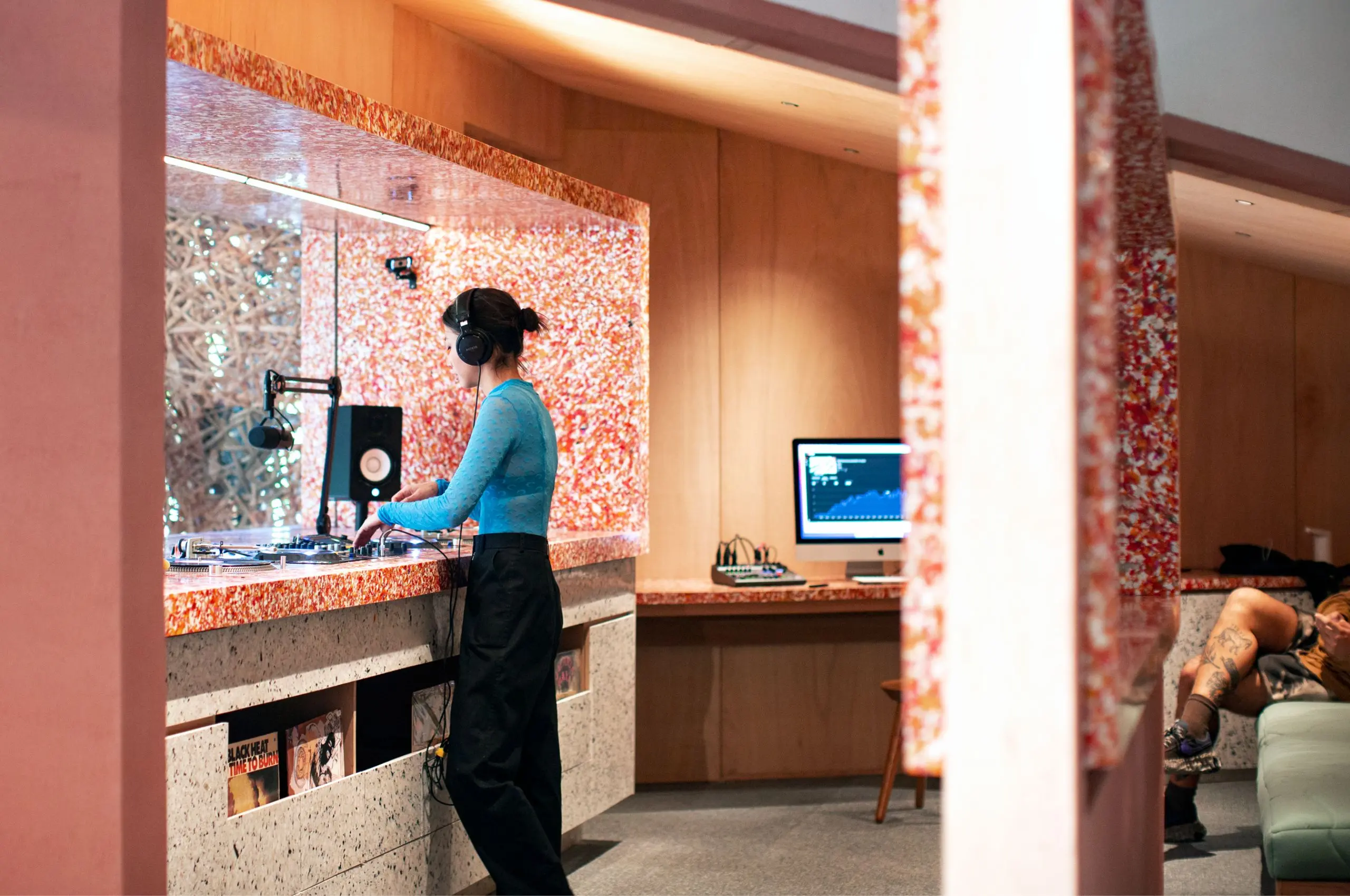
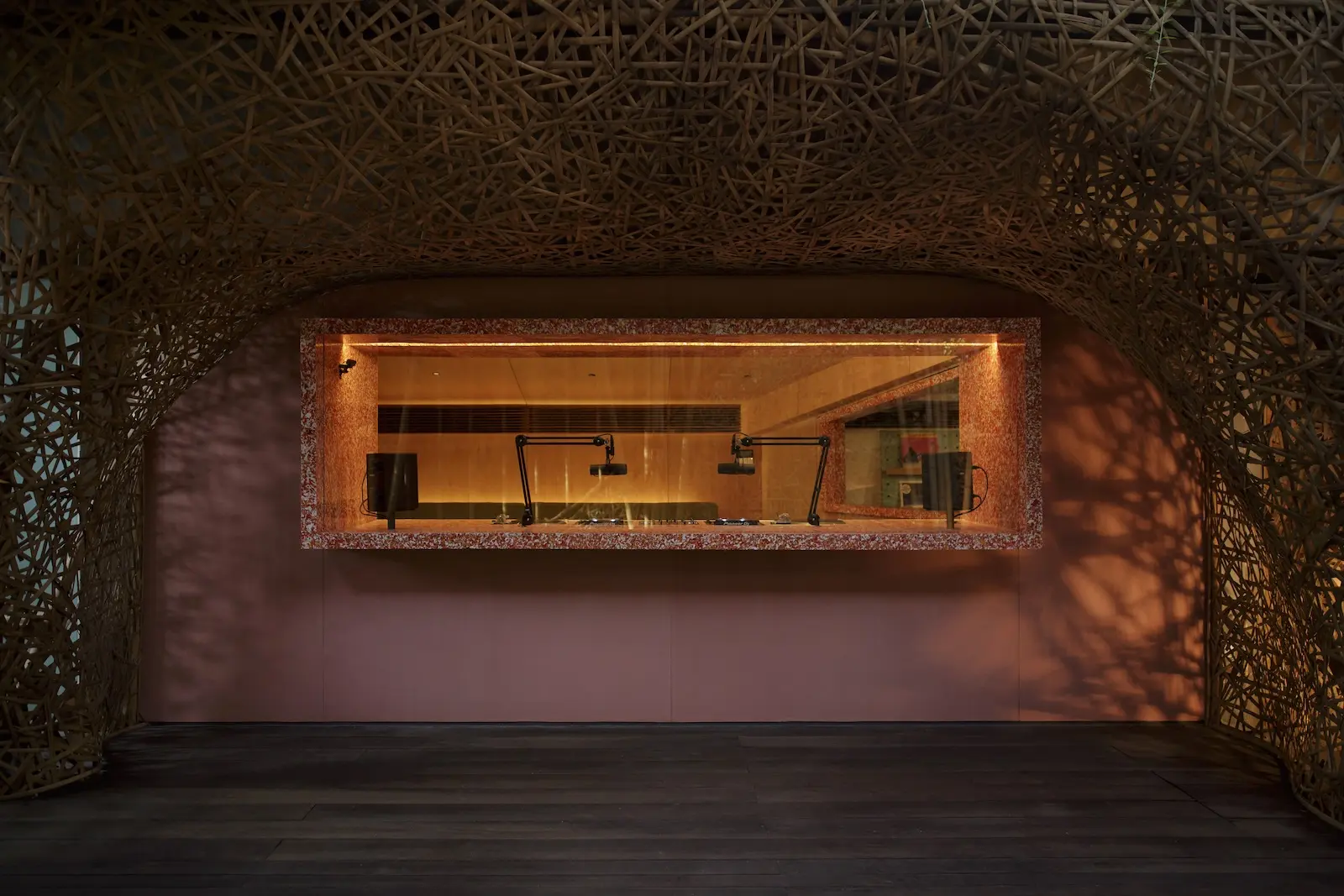
Much like the rest of the hospitality complex in Seminyak, Bali, Headstream’s physical space was designed with sustainability in mind, according to architect and ZXC Studio founder Zhi Xiong Chan. In total, 564 kilograms of recycled material were incorporated into the space, from the window frames and paneling to the bar stools.
The space also serves as a backdrop for the radio’s livestreams, equipped with a DJ booth and livestreaming equipment. Headstream is a platform for artists who want to broadcast their work — whether it’s local Indonesians or Potato Head’s guests from all over the world. For Headstream studio manager Bagus Prayogo, whose DJ name is Bagvs, the radio also works as a way to map the local music community and go beyond Potato Head’s initial music direction.
As a DJ, Prayogo found it hard to play anywhere in Bali before the pandemic due to venues favoring foreign DJs over local DJs, with many promoters believing the former to be more lucrative. But the lockdown made way for Balinese collectives of musicians and artists to flourish, as flight restrictions prevented foreign DJs from coming to Bali. “For example, PNNY, a local collective of Bali-born DJs — they were just opening DJs for big names,” Prayogo told Rolling Stone Philippines. “But after COVID, they grew and [became] headliners, which is so amazing to see.” Likewise, most of Potato Head’s resident DJs, who play across the hotel’s various music venues, are now locals.
Without compromising support for homegrown talents, Headstream also helped expand the resort’s soundscape, which was primarily dictated by Beach Club, Potato Head’s first music venue. “At the beginning, [Beach Club] had very strict music direction, like Balearic,” Prayogo said. But by platforming local acts and even the resort’s guests on Headstream, Potato Head was able to get a better sense of their direct community. “People can express themselves, to play whatever they want at Headstream… So if you guys go to the archive of our SoundCloud, you can see anything.”
In this way, Headstream honors the purpose of community radio: to zero-in on a locality and magnify it.
The United Nations Educational, Scientific and Cultural Organization (UNESCO) Community Radio Handbook published in 2001 defines community radio as “radio by the people and for the people.” In the Philippines, traditional community radio stations are more synonymous with local radio, which primarily works as a news outlet and a platform for local voices to discuss the community’s issues and concerns.
In recent years, we’ve seen the rise of digital broadcasting platforms geared towards creating and maintaining community through music. While not as functional as local news, the music radios that emerged during the pandemic also espouse the idea of democratizing broadcast, amplifying local voices and talent through accessibility.
They’re especially important for underground and alternative music scenes that, like the rest of the world during the pandemic, had to use digital spaces to stay intact. Examples of this are Headstream, Manila Community Radio (MCR), Hanoi Community Radio, Durian Radio, and Bangkok Community Radio.
The Philippines’ MCR started in 2020 as a pandemic project, seeking to provide a new space for people to get music in lieu of canceled concerts and shut-down clubs. MCR’s Anton Ventura also told Vice that the radio station’s music was “anti-algorithmic,” aiming to give its broadcasters the freedom to play whatever they wanted. “The general public has become too reliant on streaming services to choose and explore music for us, so music discovery and curation have become less explored and underappreciated,” he said.
During the pandemic, Vietnam’s Hanoi Community Radio also came to life after Vietnamese DJ Maggie Tra taught women and nonbinary individuals how to DJ, making the radio a space for that community to express itself. And like Headstream and MCR, Hanoi Community Radio also aimed to spotlight local acts and share their work with a worldwide audience online.
Today, eased flight restrictions and a hyper-connected internet give these community radios the opportunity for dialogue on the web and offline. When asked what other Southeast Asian community radios can learn from Headstream, Prayogo only said, “Nothing. I think let’s learn together.”
Recommended Video