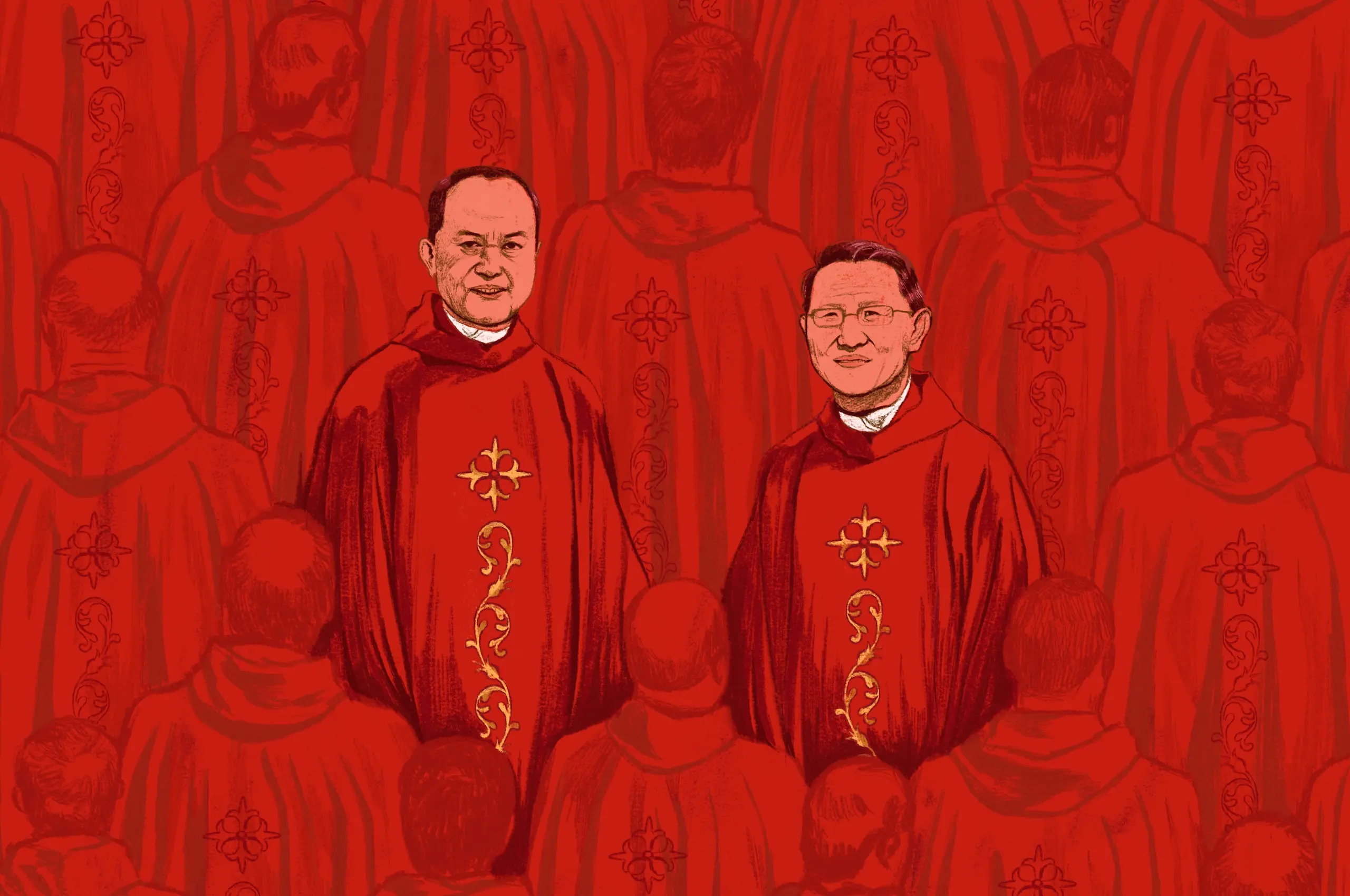
Cardinal Pablo Virgilio “Ambo” David has never shied away from a political discussion. He says this tendency was inevitable, especially as the Diocese of Kalookan, which he heads as its bishop, became the underbelly of the extrajudicial killings.
Cardinal David was appointed as bishop only months before Rodrigo Duterte was elected president in 2016. “At first, I resisted the idea of becoming a bishop when it was offered to me because my training is academic,” he says, citing his background as a Bible professor.
But when the administration’s war on drugs devastated the urban poor communities of Caloocan, Navotas, and Malabon — the cities that form Kalookan — David used his position not only to guide his diocese but to protect it. He called on the government to stop the extrajudicial killings and set up a community-based drug rehabilitation program, becoming a target of political persecution and death threats in its wake.
The Pampanga-born bishop was made the president of the Catholic Bishops’ Conference of the Philippines (CBCP) in 2021. In December 2024, the late Pope Francis elevated David to the rank of cardinal. Just a few months after that, he became a part of the College of Cardinals in the conclave following Francis’ death.
In this interview, Cardinal David talks about meeting Pope Leo XIV in the conclave, his friend Cardinal Luis Antonio “Chito” Tagle, and what guides him as one of the country’s most politically outspoken church leaders.
What was it like to participate in the conclave?
It was the exact opposite of what you might have seen in the movie [Conclave], which I’ve seen myself. I don’t fault [the creators] for that because that’s really the objective of producing a movie: to entertain, to stir up people’s imagination and curiosity.
[But] to sort of insinuate that there is a lot of politics going on there, underground and all of that, I didn’t feel any of that. It was the exact opposite. For me, the conclave experience was like a retreat. The cardinals got to know each other. The good thing is that we had a lot of time for personal interaction because during the pre-conclave sessions, we were not yet in communication.
I think the people are looking at the papacy as a kind of symbol of moral and spiritual leadership that is very much needed nowadays in the world.
We were allowed to bring our phones, our iPads. It is not true that it is very secretive. I had a brief encounter with Cardinal Robert Francis Prevost, who became Pope Leo XIV, during a coffee break. I didn’t know he was American. He identified himself as a Peruvian. I told him in Italian that I am from the Philippines. He told me that I must speak English if I am Filipino. Even the American cardinals didn’t seem to know that he was American. He wasn’t really socializing with the American cardinals, because he never practiced his ministry as a bishop in the United States. He went around the world during the time that he was Prior General of the Order of Saint Augustine. He told me that whenever he visited Asia, he [made]used the Philippines as a home base.
What do you make of the conclave becoming such a big thing, not just for Catholics but also for people outside of the Church? And what does that say about the Church’s evolving place in global society?
I think the reason why there is so much interest now in the Catholic Church is because globalization, as both an economic and a geopolitical kind of vision, is collapsing. And I could sense that people are aware that maybe the Church is really the last genuinely globalized institution. Maybe we have something to present to the world, especially in a situation of war, conflict, and division.
Did you know another title of the Pope is Pontifex Maximus? That’s Latin for the “supreme bridge builder.”
I think the people are looking at the papacy as a kind of symbol of moral and spiritual leadership that is very much needed nowadays in the world. Through him, perhaps more bridges of goodwill can be built so that people can appreciate one another’s shared humanity.
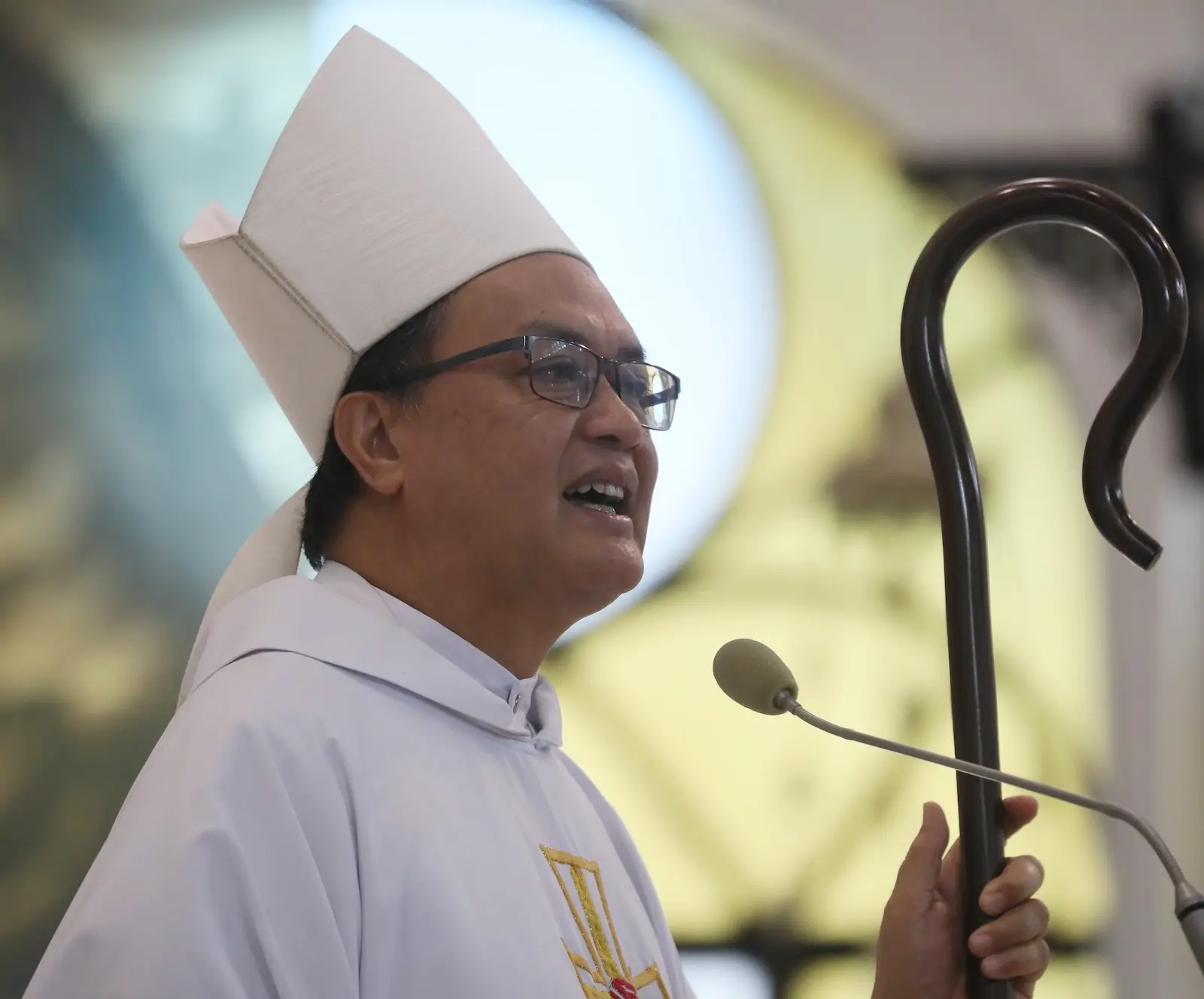
How have the country’s socio-political issues shaped your work and responsibilities as the president of the CBCP?
The first time I became a bishop was here in Kalookan. Before that, I was an auxiliary bishop, an assistant bishop in Pampanga. And while I was doing that, I was a Bible professor in different schools of theology. And that also gave me pastoral experience as a parish priest for almost nine years. Prior to that, I was an academic. At first, I resisted the idea of becoming a bishop when it was offered to me because my training is academic.
The pastoral experience from being the assistant bishop was precious. It prepared me for Kalookan because Kalookan is a different kind of diocese. I call it a Church of the poor because the majority of our people here in this diocese are urban poor people, slum dwellers, and very hardworking people. And that was the context in which I became a bishop.
Parents brought their sons or daughters to me, asking me to include them in the rehab program because they were afraid that they might be killed. Unfortunately, I have to admit to you that some of the people we rehabilitated were still killed. Those were really very, very sad years.
The Duterte regime brought new challenges. When the events that led to extrajudicial killings happened, I was shocked. Most, if not all, victims were very poor people. I’ve always looked at drug addiction not as a crime but as a disease. It is a mental health issue. What [drug users and pushers] need is not our judgment but our understanding and compassion. That’s why I called out to please stop the killings. I am willing to help the government to rehabilitate people with substance use disorder. We put up community-based drug rehabilitation programs in collaboration with the psychology departments of Ateneo and De La Salle University.
Parents brought their sons or daughters to me, asking me to include them in the rehab program because they were afraid that they might be killed. Unfortunately, I have to admit to you that some of the people we rehabilitated were still killed. Those were really very, very sad years.
That was the context in which my brother bishops later on elected me as president of the conference. Honestly, I was surprised by it. I was thinking that they would precisely avoid electing me because the CBCP might become too controversial and earn the ire of the government. But no, I saw it as a statement on the part of my brother bishops. I am expected to exercise leadership. And that means building a kind of communion among ourselves on many levels, regionally, nationally, internationally.
Read the rest of the story in The State of Affairs issue of Rolling Stone Philippines. Order a copy on Sari-Sari Shopping, or read the e-magazine now here.
Recommended Video