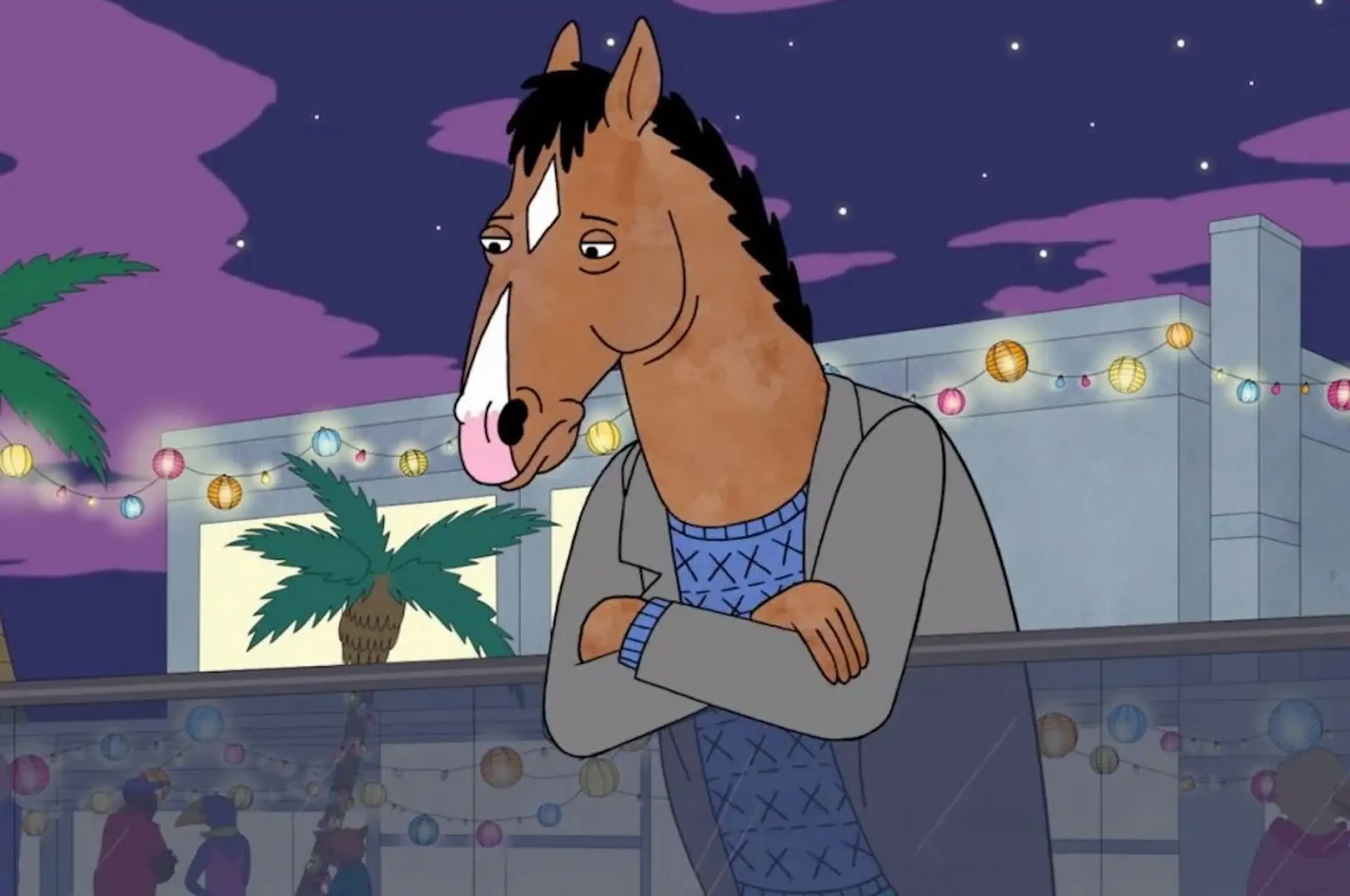
It’s hard to define the type of show BoJack Horseman is to first-time watchers. Yes, it’s a Netflix animated series about a talking horse, voiced by a gruff, ill-tempered Will Arnett. The titular character also has a severe alcohol, sex, and drug addiction problem, fueled by the fact that he is a washed-up ‘9
0s sitcom actor who hasn’t quite accepted that he’s out of the spotlight. BoJack’s best friends are his ex-girlfriend-slash-talent-agent, the pink cat Princess Carolyn (Amy Sedaris), a pretty famous Golden Labrador named Mr. Peanutbutter (Paul F. Tompkins), his anxious ghost writer Diane Nguyen (Alison Brie), and his slacker roommate Todd (Aaron Paul). They all live in Hollywood (or Hollywoo — if you know, you know), and while it would be easy to look at the show’s first four seasons and dismiss it as a satire on stardom, celebrity worship, and vapidity, it is simply not just that.
For a series covered in layers upon layers of celebrity references (with delightful pun names like Sextina Aquafina, Courtney Portnoy, and Cindy Crawfish), inside jokes about the silliness of L.A., and long narrative arcs that address the worst of celebrity culture (the sixth season reckons with the #MeToo movement), BoJack Horseman is ultimately a show about what it means to keep showing up and doing right despite the absurdity.
“When I pitched the show,” said show creator Raphael Bob-Waksberg in a 2024 interview with The A.V. Club, “the two questions that I wrapped around it in my initial pitch to Netflix [were] how can a person be happy and how can a person be good? I think the show posits that they’re the same — that you find some sort of, not happiness necessarily, but equanimity or peace, perhaps, by choosing to do the right thing and making that choice over and over again.”
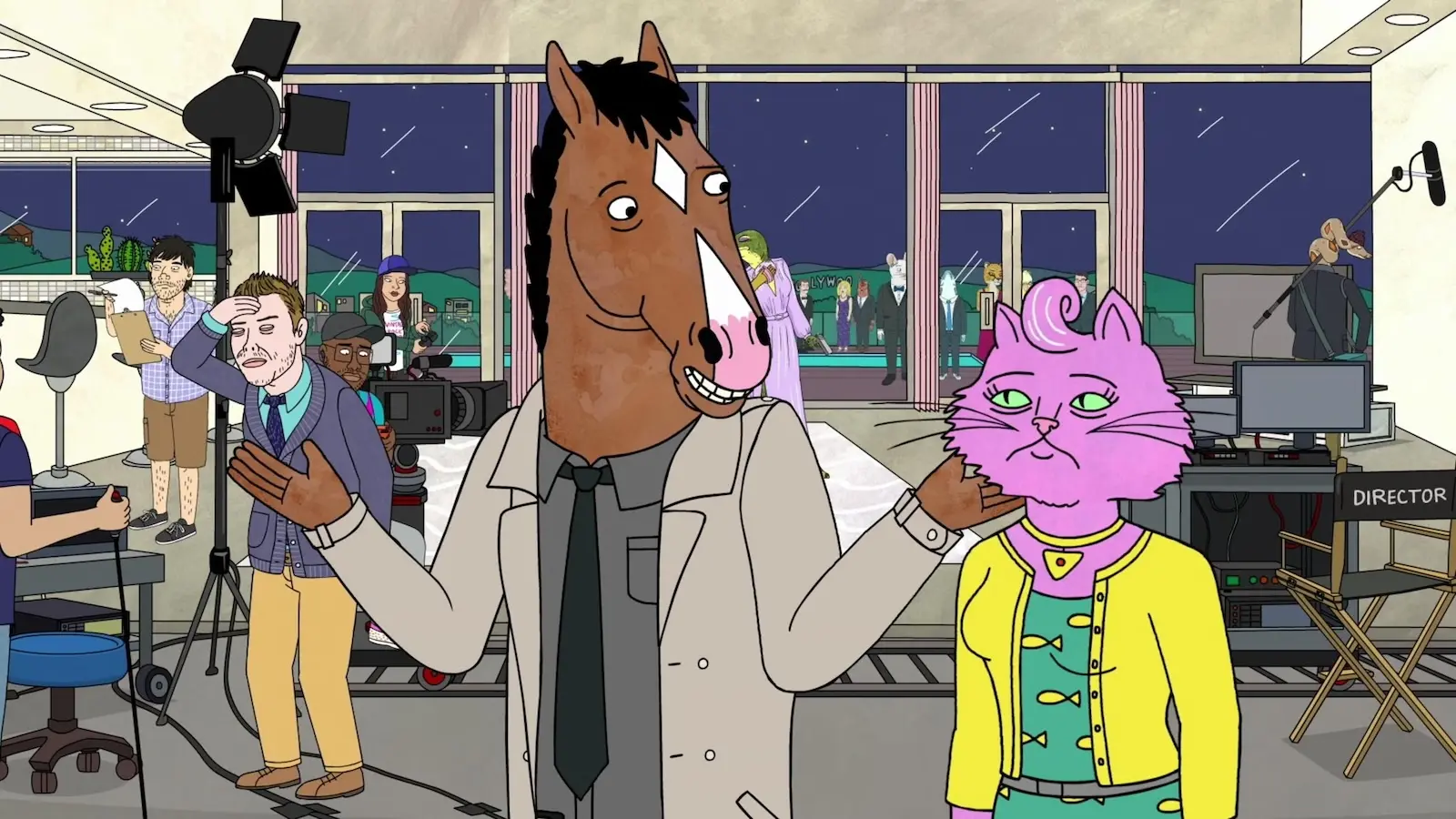
Although most of the characters figure this out eventually and learn how to find fulfillment in one form or another — some take to meditation, others to medication, and one of them turns to opening a startup that connects clown dentists to children — the only one who can’t seem to be happy is BoJack. He just can’t see that he doesn’t deserve to be miserable, and so the show’s biggest sources of conflict stem from his never-ending slouch towards misery. Some of his sins are easier to forgive than others, like him stealing a muffin from a Navy seal, crashing a lizard’s funeral, and throwing his junk into Felicity Hoffman’s garden (there is a whole Reddit subthread dedicated to every bad thing he’s ever done). But others are not so easy to gloss over, like him enabling his sober friends to give in to their addictions, getting his friends fired for his own mistakes, and engaging in eerily predatory behavior.
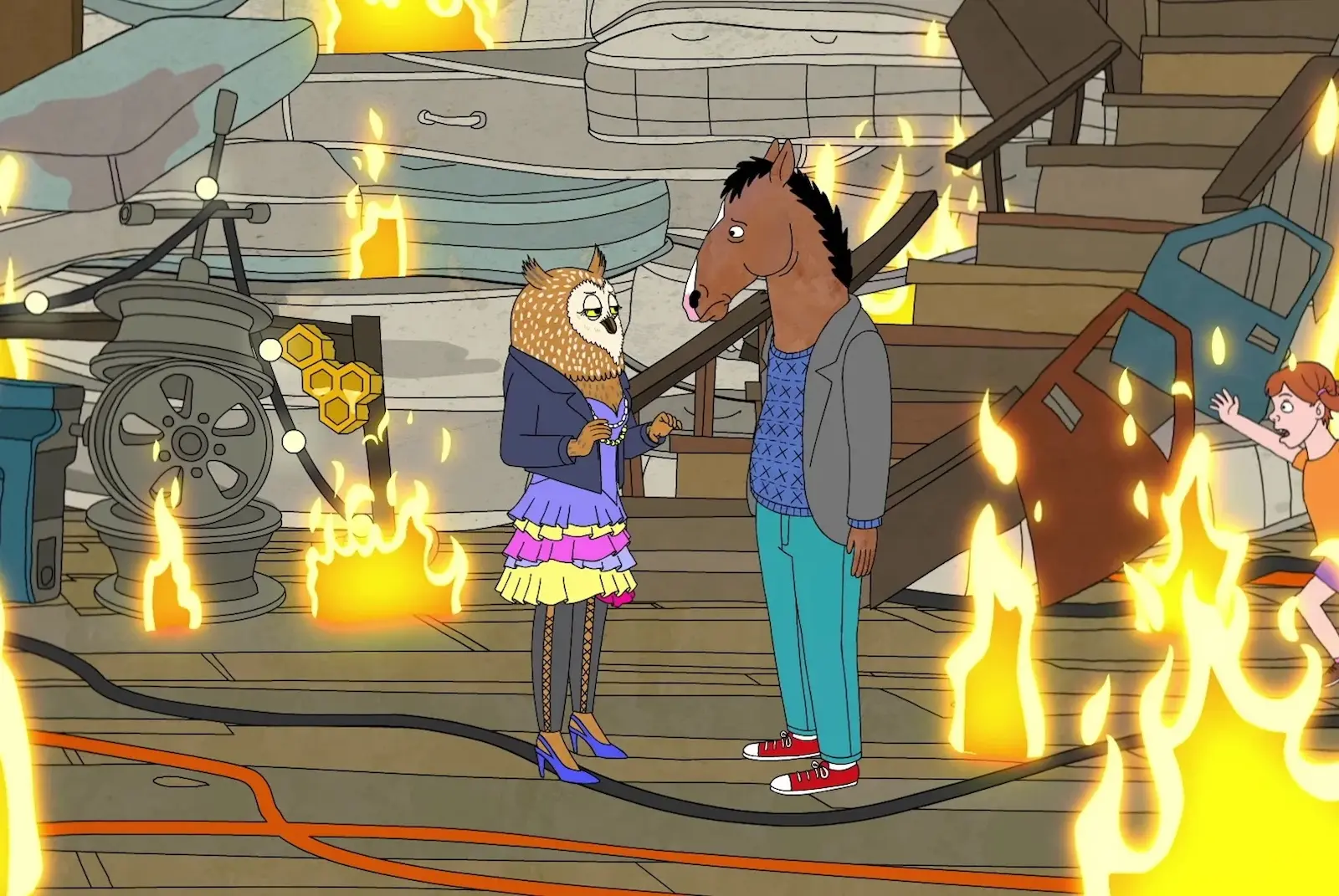
BoJack is not a good horse, and Bob-Waksberg never fails to remind us about that. But at the same time, BoJack spends the show trying to get better. He turns to teaching at one point, making one of his rare attempts to step out of the spotlight. He saves a baby seahorse and returns it to its mother in one of the show’s boldest episodes (“Fish Out of Water,” which is almost devoid of dialogue). He eventually reckons with all the mistakes he’s made over the past 50 years, and even though his arc isn’t necessarily resolved by the show’s end (Netflix cancelled it after six seasons), his commitment to trying has left viewers feeling that they’d born witness to one of the most poignant, emotional, and heartfelt animated series of the century.
“I’ve always felt like BoJack Horseman was an optimistic show, but a cautiously optimistic one,” said Bob-Waksberg. “I’ve seen the show described as bleak or nihilistic, but… I don’t think that’s the show we made. I remain cautiously optimistic about humanity and man’s ability to change.”
Bob-Waksberg’s latest animated series, Long Story Short, premieres on Netflix on August 22.
Recommended Video