When I first met Yee Chung Kee and Victoria Keet, two of the founding members of the Quezon City Biennial (QCB), they were attempting to race through the Quezon City (QC) traffic, speeding back and forth between setting up different events for their biennial’s opening weekend. They hopped onto our call while stuck in traffic, apologizing for the chaos. “We’re doing everything ourselves today,” said Yee, the QCB director. Keet, the biennial’s assistant director, nodded from the shotgun seat.
The two have taken on the Herculean task of staging the largest art festival for the largest and most populous city in the country. From August 10 to October 10, Keet and Yee, along with the biennial’s other founding members from Sampaguita Projects, KalawakanSpacetime, and No Gallery, have enlisted the help of 30 artists from across the country to spotlight Filipino art as well as push QC’s art scene into the national conversation. Using 20 QC-based venues, partners, and collaborators, which include Minus Plus -+* / Garapata Store, 5th House, Ulat Kambal, and more, the organizers hope to turn their vision of a decentralized, community-based art festival into a reality.
As the QCB makes its debut, Yee and Keet spoke to Rolling Stone Philippines on their goals behind the project, the challenges that came with putting together a festival of this scale, and what they hope will be the future of the QCB.
This interview has been edited for brevity and clarity.
What is QCB’s origin story?
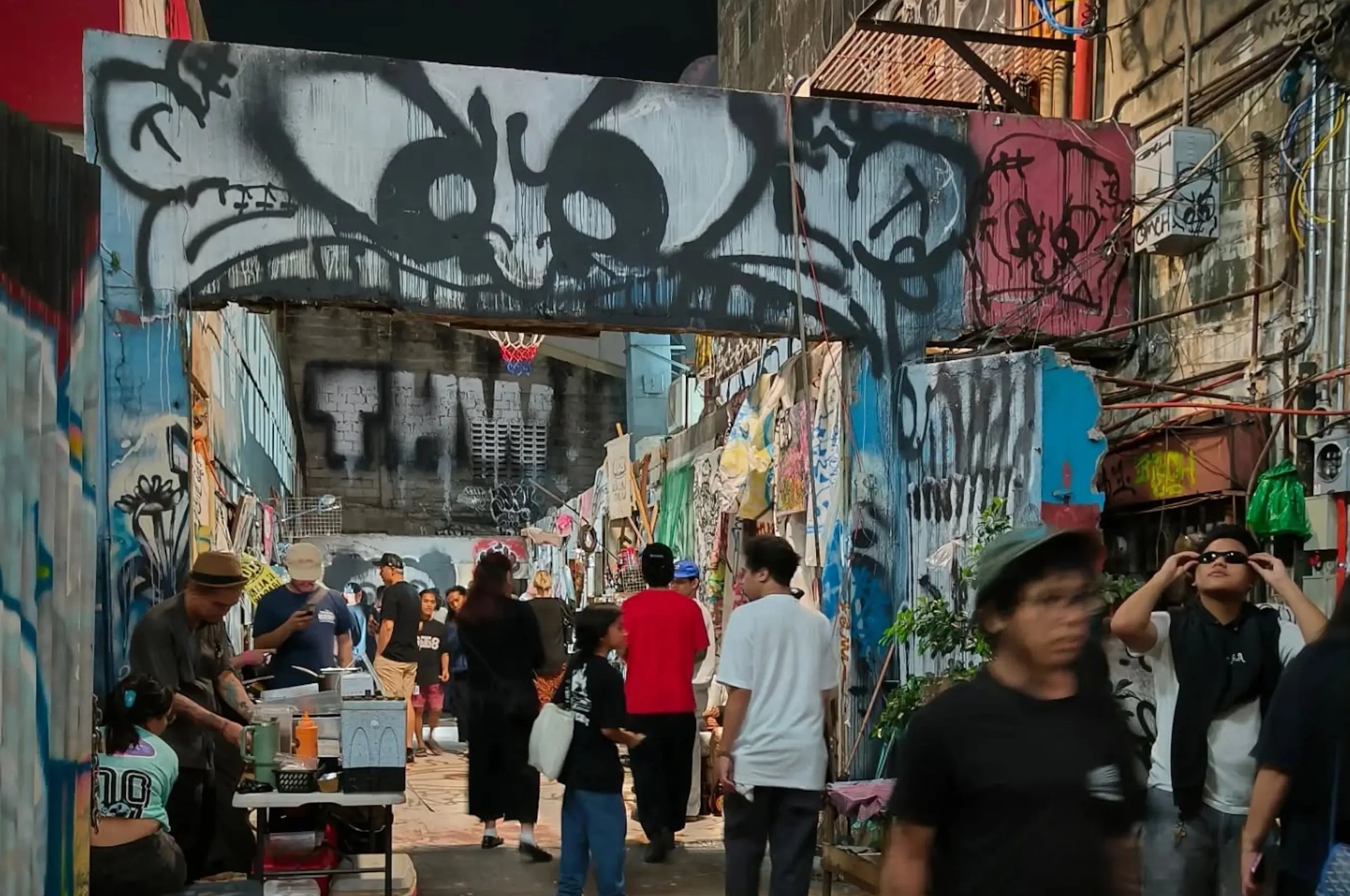
Yee: So, Victoria and I run an artist-run space here in Katipunan called NINUNO Gallery, and we’re one of the many different artist-run spaces that are currently residing in Quezon City. But there’s always been this long history of artist and creative spaces finding a home here in QC, especially in the ’80s, ’90s, and 2000s. There has always been a culture of independent self-organization, of DIY culture.
All these artist-run spaces, including ours, have had exhibitions pretty much every month, so we thought it just made sense to upscale our events and turn them into one big one. Most of the artists here [in QC] have been making art for at least 10, 15 years, maybe even more. We’ve traversed the art world landscape already, so it felt like the logical next step to put up our own festival.
We’ve spent the last year or so trying to get everyone together behind this one goal: to represent not just QC, but Philippine art itself. It sounds ambitious, but that’s also why we called it a “biennial,” you know? The term itself already makes our event sound like it’s on an international stage. It gives the festival its own weight.
You mentioned bringing in artists to represent Philippine art as a whole, but a lot of the artists participating in this first edition of the biennial are from QC. What do you feel separates QC’s art scene from other hubs around Manila or the country?
Keet: I would say it’s more informal here. It’s more DIY. I think the way people interact with each other, the way we hang out and make tambay in artist-run spaces or galleries around QC… That’s what sets us apart. And because we chill out with each other so much, it’s easier for our ideas to kind of get together. We’re always gathering together as a community to work together.
Yee: I guess QC does have this particular “vibe” that’s more loose and a lot more fluid than other cities. There’s still some structure, but there’s always still room for creativity and fun. But like I said, we’re not trying to focus solely on QC-based artists. It just so happens that QC is this meeting point, or a central vortex that just attracts all these different types of artists.
What were the challenges when bringing all these different artists to work together?
Yee: Ha! It definitely wasn’t easy. But we were lucky enough to be working with our friends already, and because we’ve known them for such a long time, we know how they operate. The big challenges were keeping everyone coordinated and on the same page. But we knew that not everything was going to be perfect and that we were always going to be late. We just had to accept that and work with that.
Keet: But at the same time, there was this kind of magic that kept shining through, even in those periods of uncertainty and stress-induced whatever.
Yee: Yeah. And wow, there definitely wasn’t enough funding for this. The entire festival pretty much came from out of our own pockets. We’ve done everything we can to try and find avenues for funds. We applied for grants, sponsorships, and government support. We even hosted our own fundraising events. But we already knew we weren’t going to get much, and we knew that we could still pull it off even with minimal support. Our strength lies in our people’s time, energy, and effort, which we have in spades and spades and spades.
Do you wish there had been more financial support outside of your own fundraising efforts?
Yee: Yes and no. I guess I would have been concerned if there was support from a third-party, because wouldn’t that have compromised the whole integrity of QCB? I wouldn’t have wanted to compromise our festival just for [financial] support. But at some point, hey: money’s money, and whoever wants to give us money for the next biennial…
Is that the plan? To make sure the QCB is a regular, permanent event?
Keet: We would like it to be. It’s a cause worth repeating, especially since we get to show what kind of art and artists come out of QC.
Yee: I think it’s also a cause worth having because we have such a different way of approaching things. We want to let everyone know that things don’t have to be so formal. They don’t have to be so “professional” or “corporate.”
Because the QCB is so new and just launched its opening weekend, how would you describe the biennial to first-comers curious about checking out its events?
Yee: It’s going to be a lot of good, clean, dirty fun.
Keet: Good, bad, and grimey!
Yee: Yes! Just be open to what you’re going to see. You’re probably going to see a lot of really cool art that’s not all paintings. We have immersive installations, performance art, sound art, workshops: anything different, we have it. I think that’s one of the defining characteristics of the artists we chose to be part of the biennial: this approach to how they portray the act of being or existing, but without taking themselves too seriously. We want viewers to think about the art when they see it, but we also want them to have fun.
Recommended Video