

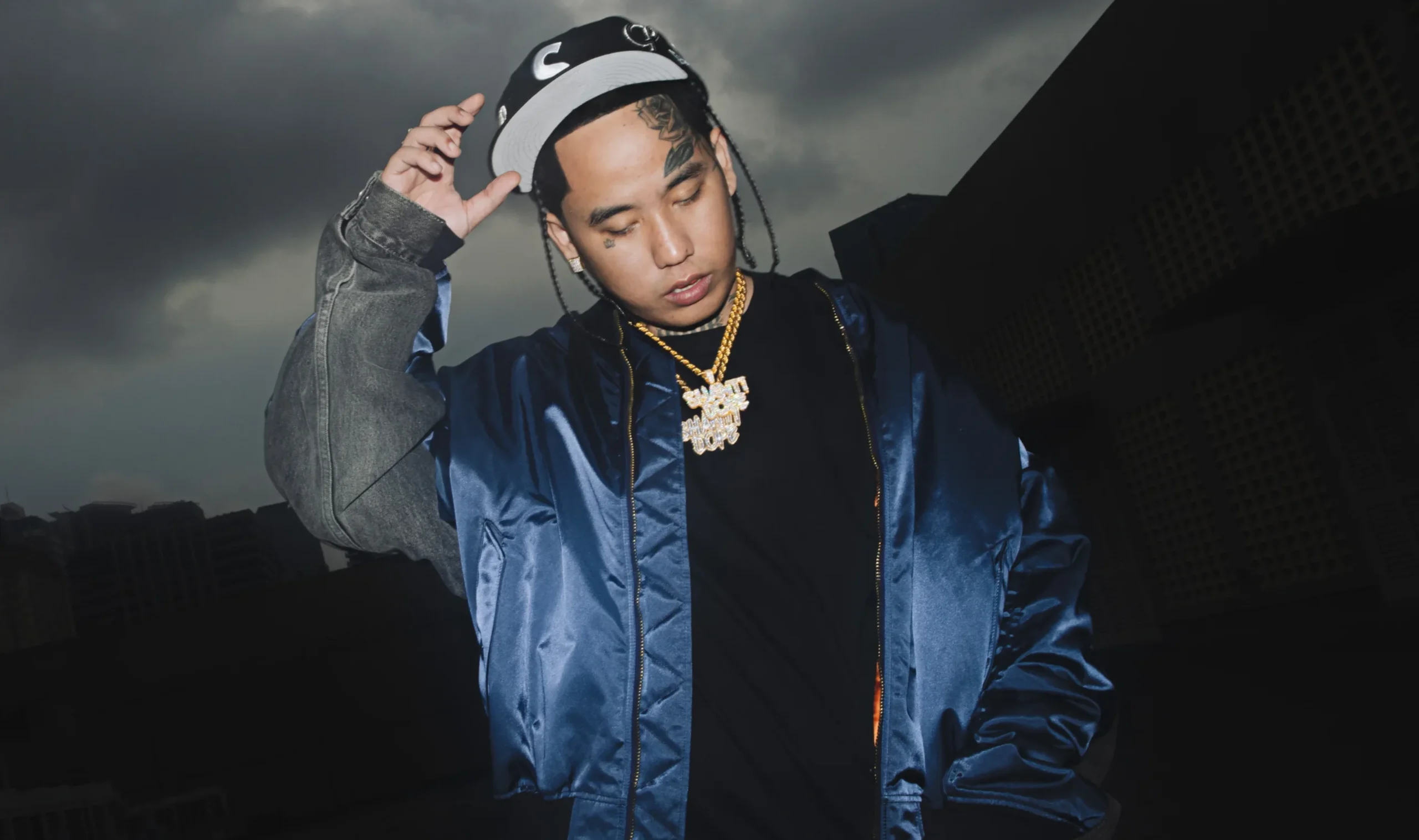
Rapper Shanti Dope has no shortage of hits, but choosing only five off the top of his head proved more difficult than writing a hook on the spot.
Across nearly a decade, the Cavite-born artist has built a catalog that spans youthful storytelling, biting social commentary, and songs that shaped his generation’s relationship with Filipino hip-hop. In Rolling Stone Philippines’ Greatest Hits video series, Shanti Dope reflects on the milestones of his career — from his beginnings in the mid-2010s, to becoming one of the country’s most prominent rappers.
He first came into the spotlight with the 2017 debut EP Materyal, followed by the 2022 release Basic. But in between, Shanti steadily built a reputation for memorable songwriting and versatility. Looking back, he recalls how his self-titled track “Shantidope” became a turning point, particularly when hip-hop icon Gloc-9 contributed the song’s hook.
“Nung pinarinig ni Klumcee yung chorus ni Gloc, nasiraan talaga ako ng ulo,” Shanti tells Rolling Stone Philippines. “Di ako mapaniwala na ganon yung ilalagay niyang melody sa chorus and na-pressure din ako kung anong verse ang gagawin ko, kung ano yung flow, ano yung substance…”
On the Come Up
A year later, Shanti broke through with “Nadarang,” an anthem rooted in themes of eternal love. It marked the softer, melodic side of his artistry. But by 2018, he was pushing into edgier territory with “Amatz,” a harder-hitting track that caused both acclaim and controversy. The song drew attention from the Philippine Drug Enforcement Agency, which sought to ban it from radio in 2019. Ironically, two years later, it was featured on Disney+’s Marvel television show, The Falcon and the Winter Soldier.
“Bumase na lang ako sa mga nangyayari sa paligid ko, [kunwari] yung war on drugs,” he says. “Nung una pina-ban [‘yong “Amatz”] ng PDEA i-play sa mga radio e, sa mainstream media, parang di ko alam kung matatakot o matutuwa ako kasi parang sa America lang nangyayari ‘yon e. Naalala ko yung kanta ng N.W.A, ‘yong [Fuck Tha Police] — diba pinagbawal nila ‘yon?”
More recently, Shanti Dope showed his adaptability in the post-pandemic years with “City Girl,” one of his most successful tracks in the 2020s. To his surprise, the song came together in only two days, making it one of the quickest writing sessions of his career.
“Nung sinabi nila na sa akin na kailangan ko gumawa ng kanta, parang ginawan ko siya agad ta’s ‘di ko inoverthink ‘yong lyrics,” he says. “Dati kasi, pag gumagawa ako ng song, sobrang ino-overthink ko ‘yong lyrics e. Parang baka pag narinig nila ‘to isipin nila ganto ganyan.”
You can watch the full video on Rolling Stone Philippines’ Greatest Hits, exclusively on our YouTube channel.
Recommended Video