

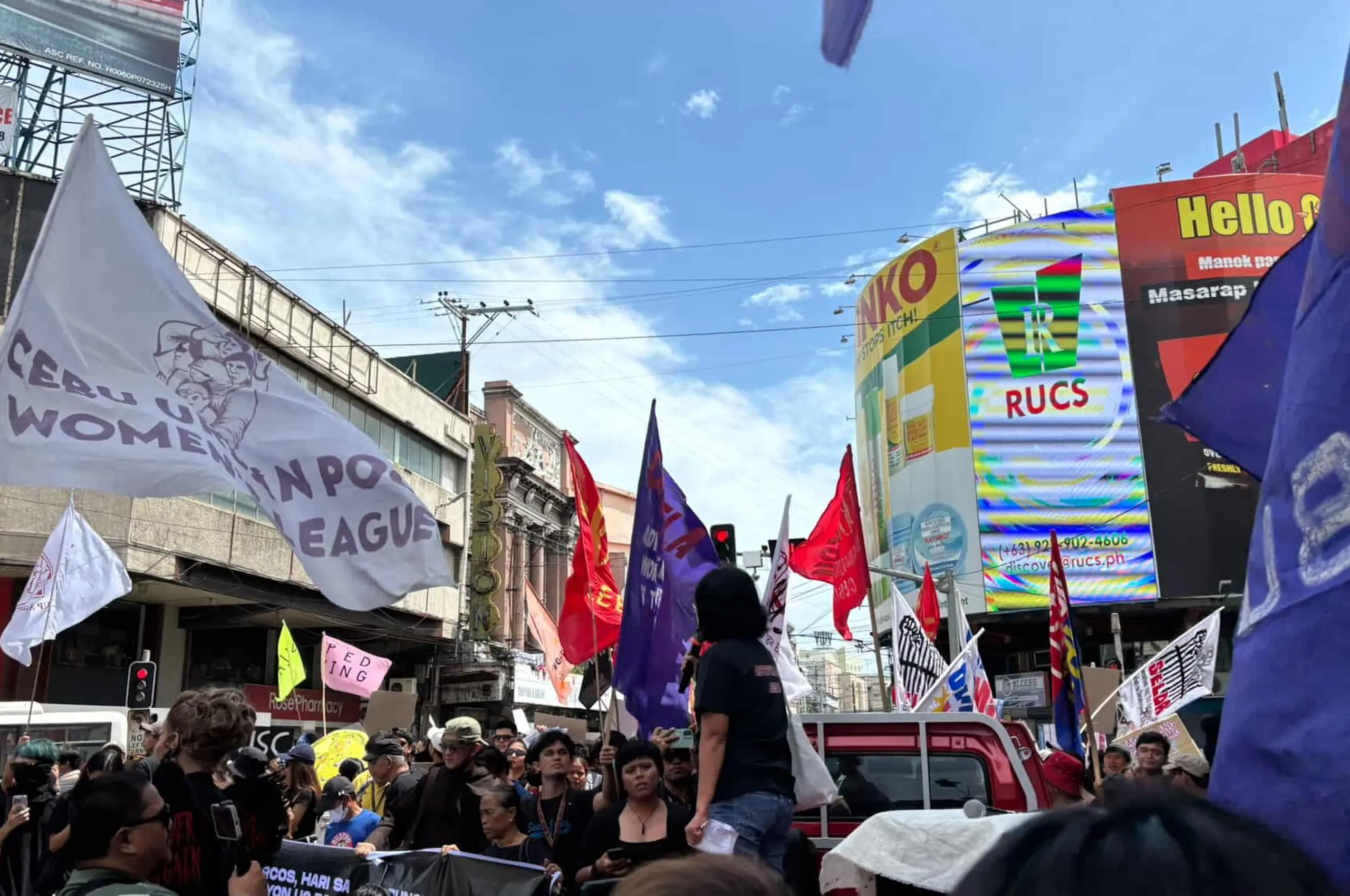
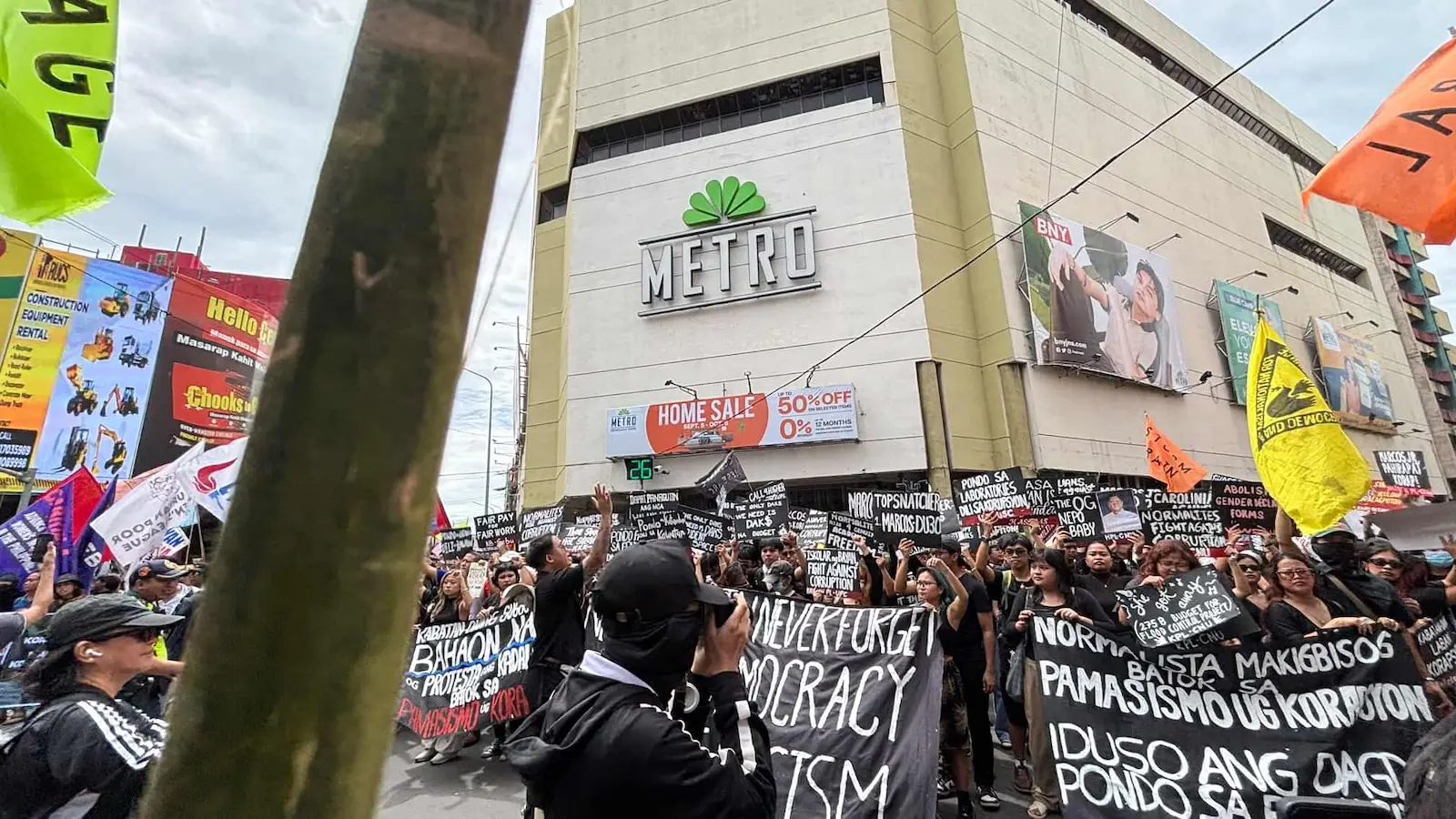
As the Trillion Peso March surged through Manila, protestors in Cebu launched their own rallies against rampant government corruption.
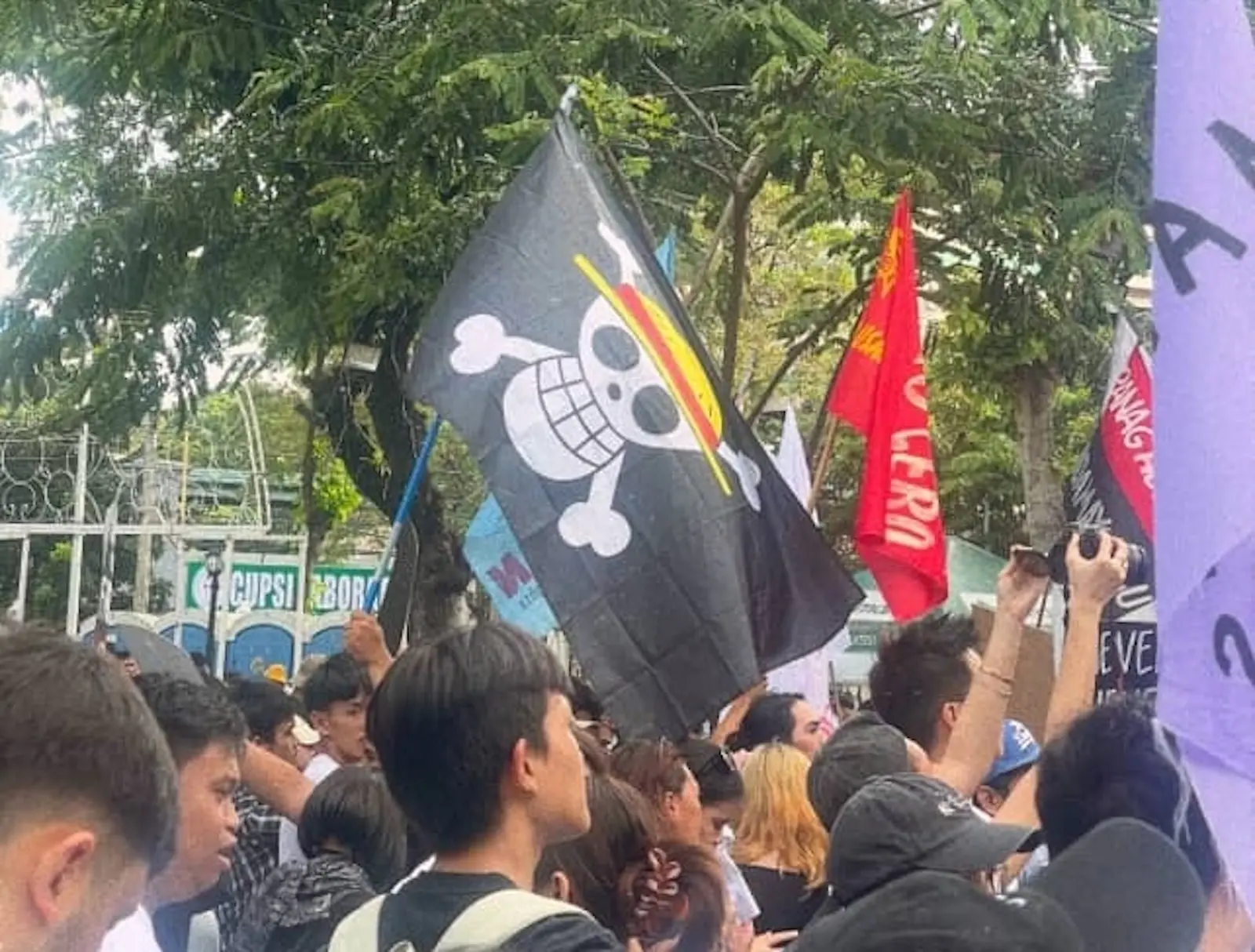
On the early morning of September 21, hundreds of demonstrators in Cebu City flocked to Fuente Osmeña Circle to begin the march towards Colon Street downtown. The march was organized by the left-wing group, Bagong Alyansang Makabayan – Central Visayas, and was dubbed “Bahaon Nato Ang Colon.” The crowd was a diverse mix of political organizations, workers, students, and religious groups, brought together by a shared frustration over those abusing their power. “I think I’m not only speaking for myself when I say that we are tired of the injustice of it all,” one young protestor, who goes by Maegan, told Rolling Stone Philippines.
“It’s always hard to do things alone, so it made me so much braver being with people [who] have the same goal,” continued Maegan. “‘Ayaw’g ka hadlok’ [Don’t be scared], this was a line that was repeatedly chanted in the crowd. Hearing from jeepney drivers, families of martial law victims, farmers, professors, and students provided so many perspectives that show the dark tentacles that corruption has sprouted.”
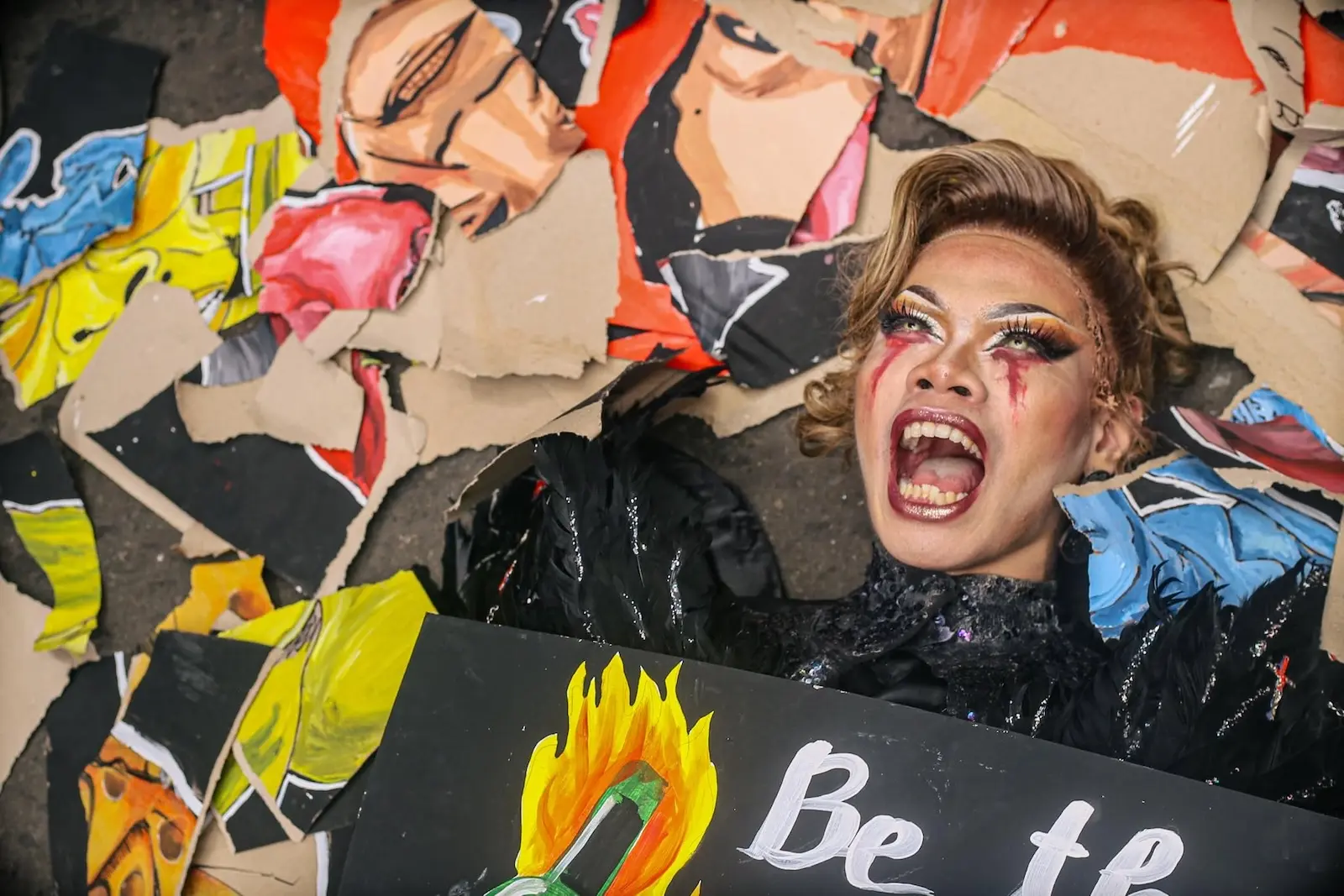
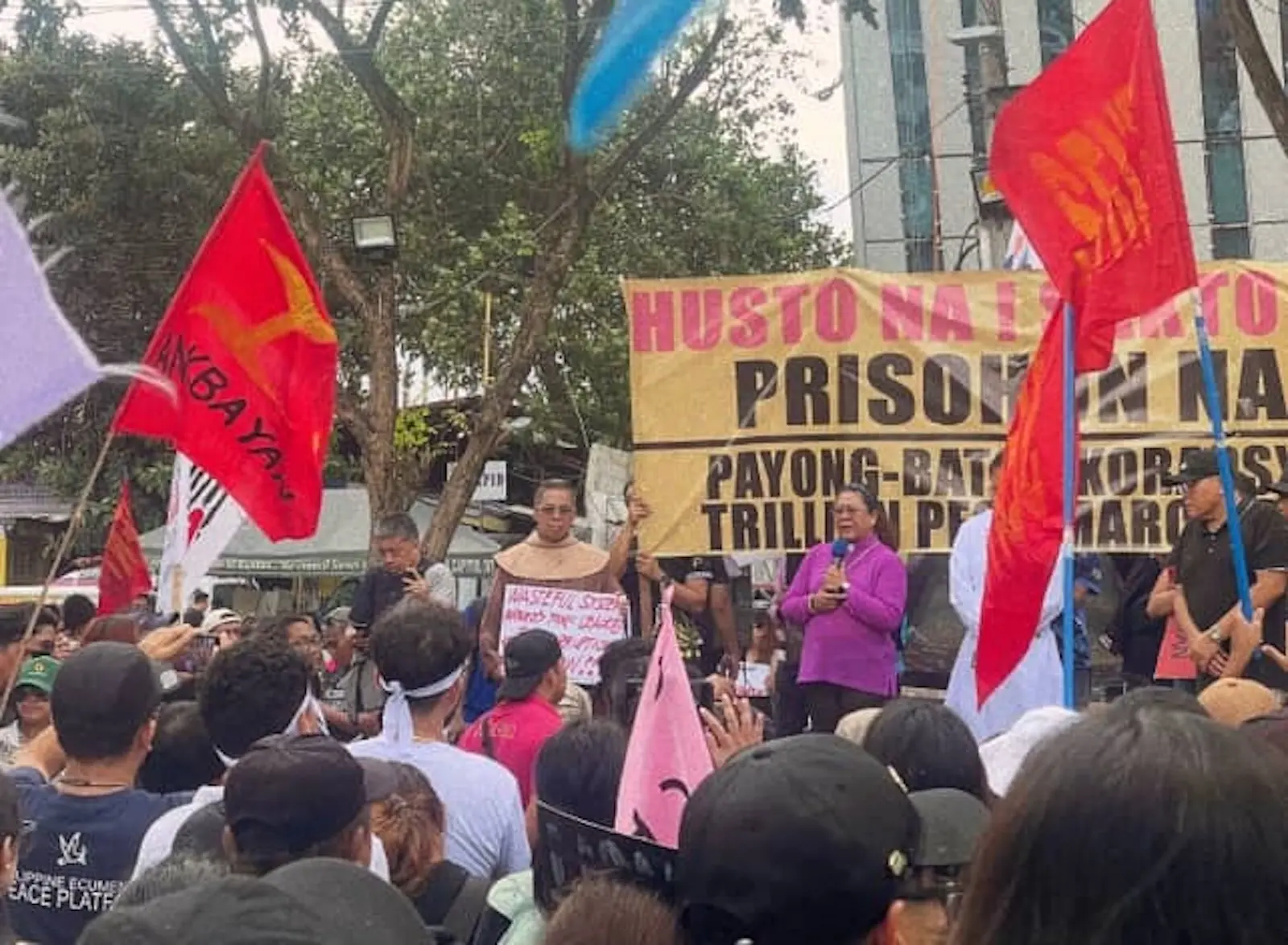
For other demonstrators, the day became a reason to highlight how their respective communities were taking a stand against corruption. Sheng Mai, a drag artist currently studying at the University of the Philippines Cebu, chose to march in a full drag outfit inspired by the violence of the country’s martial law era. Sheng Mai went viralViralDescribes content that spreads rapidly across social platforms as people share it, remix it, and react to it. A viral moment can turn an unknown song, clip, or person intoGo to Viral Glossary after a photo of them lying outside Metro Colon Department Store, surrounded by torn posters bearing politicians’ faces, began circulating online.
“Queerness has always been [about] resistance,” Sheng Mai told Rolling Stone Philippines, “and drag is my armor and banner in the fight for freedom. By marching in drag, I wanted to remind people that the LGBTQIA+ community has always claimed its rightful place at the frontlines of struggle.”
While the march was mainly aimed at denouncing recent flood control scandals and corrupt leaders, some groups used the rally to draw sharper political lines. Roughly 700 to 1,000 supporters of former President Rodrigo Duterte headed to the streets and ended their rally with a mass honoring “Digong.” “Pag-abot namo, kami pa lang didto ug ang mga ‘Bring Him Home’ nga protestors,” Ernest Diño, protestor and lead vocalist of Cebu punk rock band The Pervs, told Rolling Stone Philippines. “Naa pa sila’y T-shirt printing na booth!”
[“When we got there, it was just us and the ‘Bring Him Home’ protestors. They even had a T-shirt printing booth!”]
Going Live at Fuente
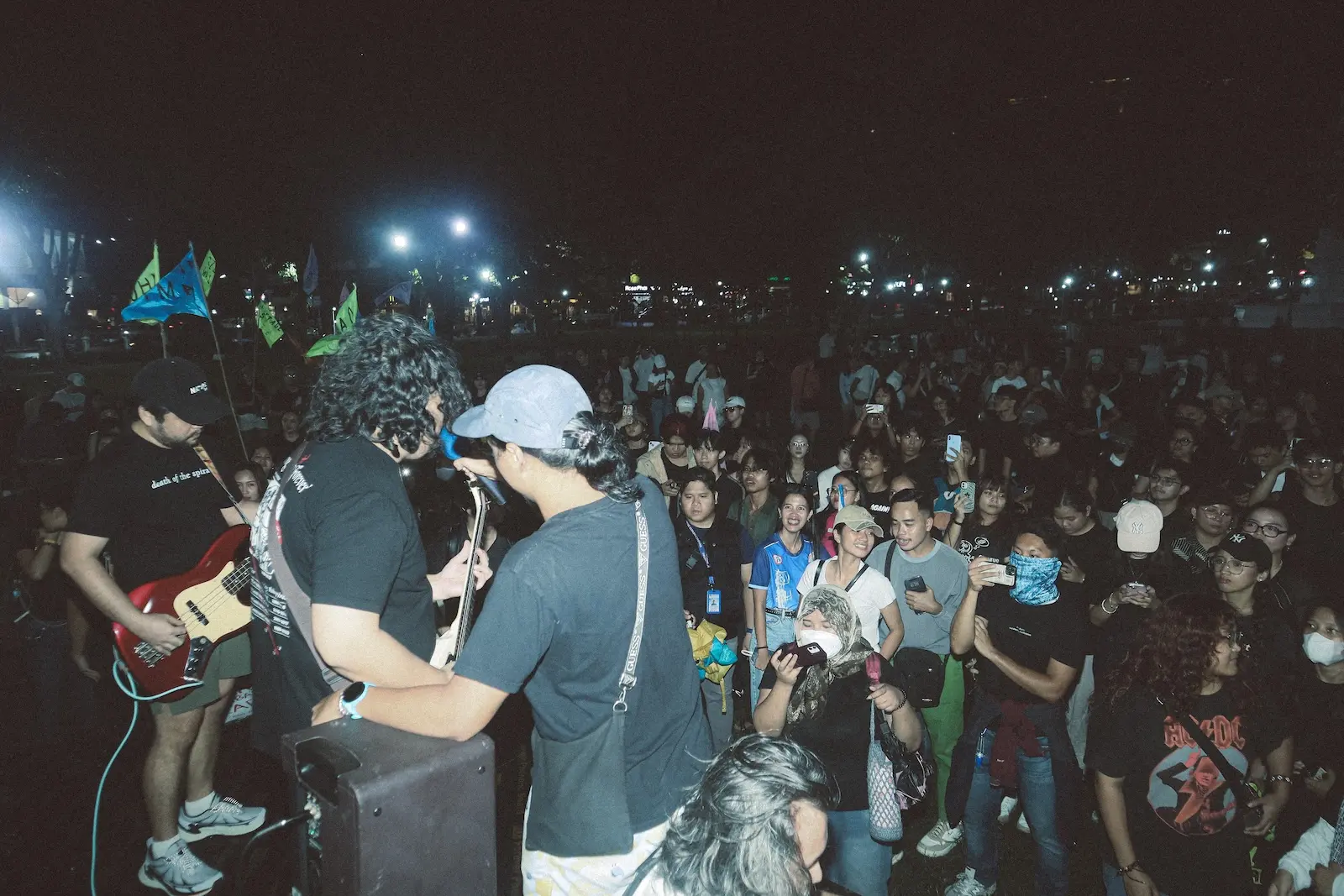
The day culminated with a live concert at Fuente Osmeña Circle. Cebu bands Kubra Commander and The Pervs took to the stage for a high-octane set, playing songs that reflected the rage and hope of the Cebuano protestors around them.
“The set was short but powerful,” Karl Lucente, musician and co-founder of September Fever, told Rolling Stone Philippines. “Kubra Commander opened with ‘The Now,’ a track that couldn’t have been more fitting as everyone reflected on the present moment.” “There was a time when I thought I could never get out of the hole I dug myself,” sang the band, “but now I know the secret to my peace… there’s no better time than now.”
“The Pervs followed with a cover of The Spirals’ ‘This is Not the Spolarium,’” continued Lucente, “one of the late Louell Armas-Lopez’s best and most timely songs.” The Pervs also played “Fuck the Filipino Family,” a choice which Diño noted was meant to add to the ongoing conversation of political dynasties and nepo children. “As a person and as an artist,” said Diño, “Nindot baya na naay chance nga maka-express ka sa imong hunahuna bahin sa ing-ani nga isyu.”
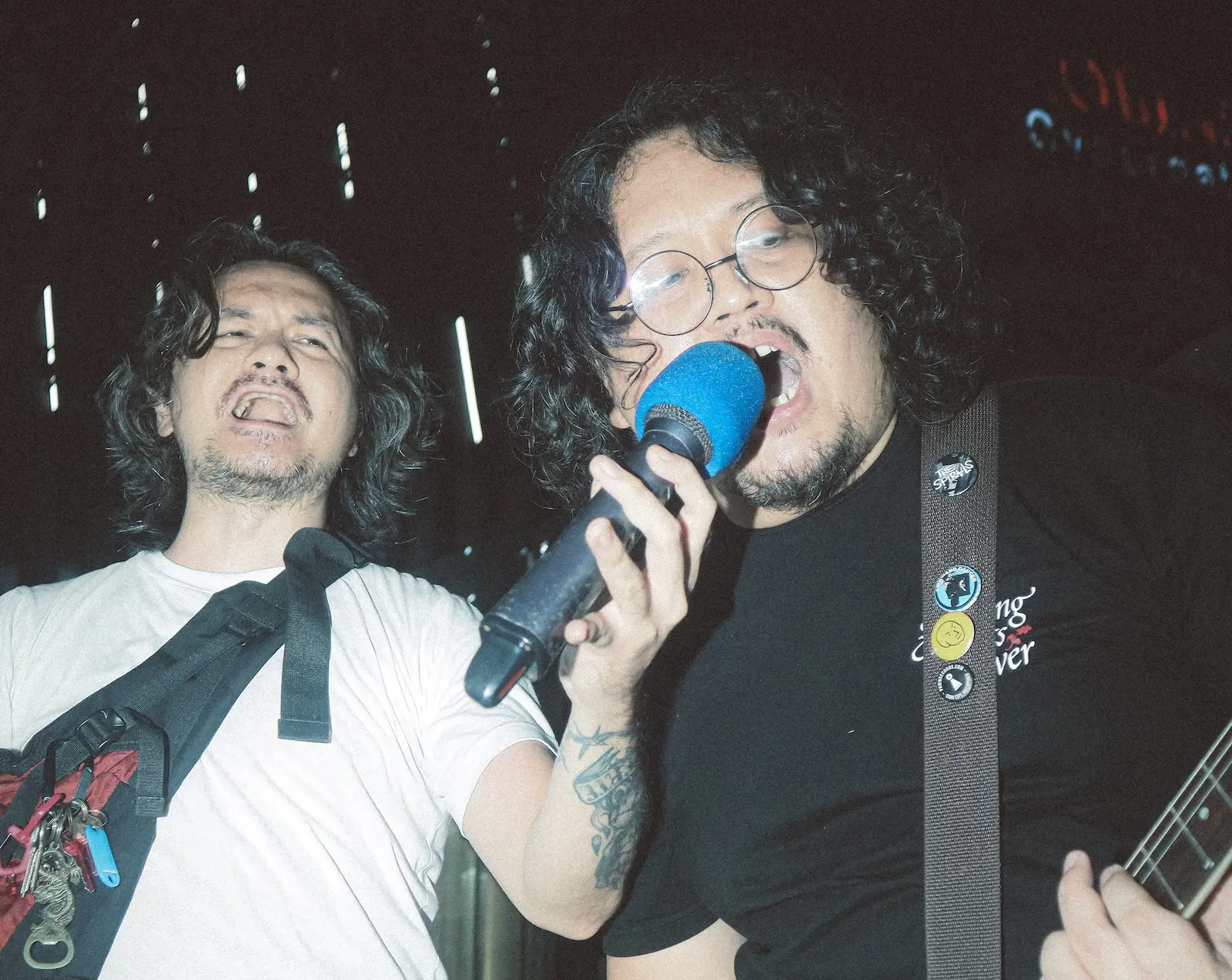
[“As a person and as an artist, it’s a good opportunity to have this chance to express your thoughts and feelings about these kinds of issues.”]
As Cebu continues to process the events and rallies that unfolded on September 21, many of the demonstrators remain hopeful that their collective voice sparked enough awareness to enact real, albeit gradual, change. “Change is never instant, but it is inevitable when people rise together,” said Sheng Mai. “Already, I see the ripples of courage and truth spreading across our nation’s heart.”
“I am brutally optimistic,” said Maegan. “We cannot expect decades of corruption and mismanagement to be solved in a matter of years — we will have to be patient and painfully hopeful. But that is the key there, the only way we can supplement our hopefulness is by making our voices heard.”
Recommended Video