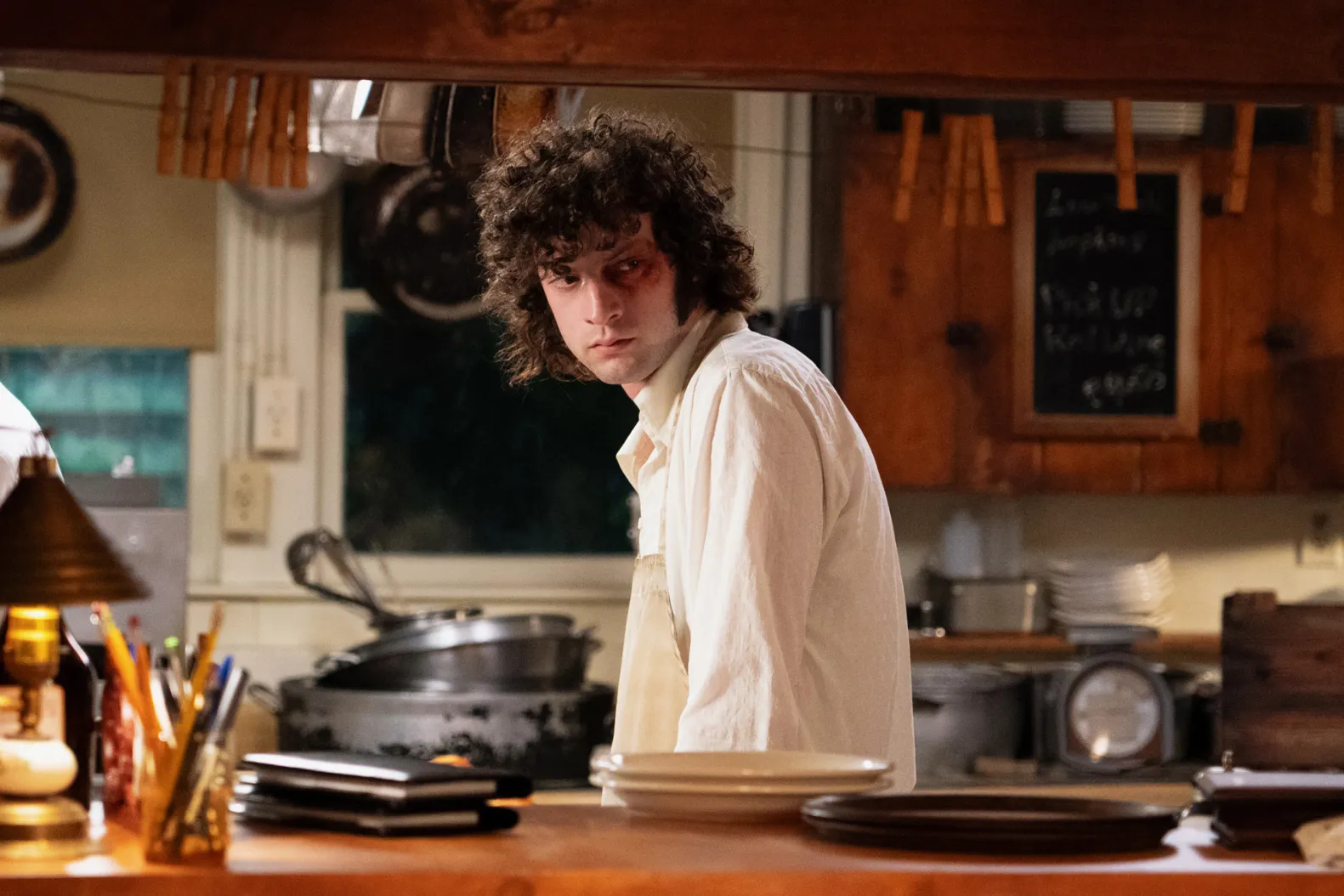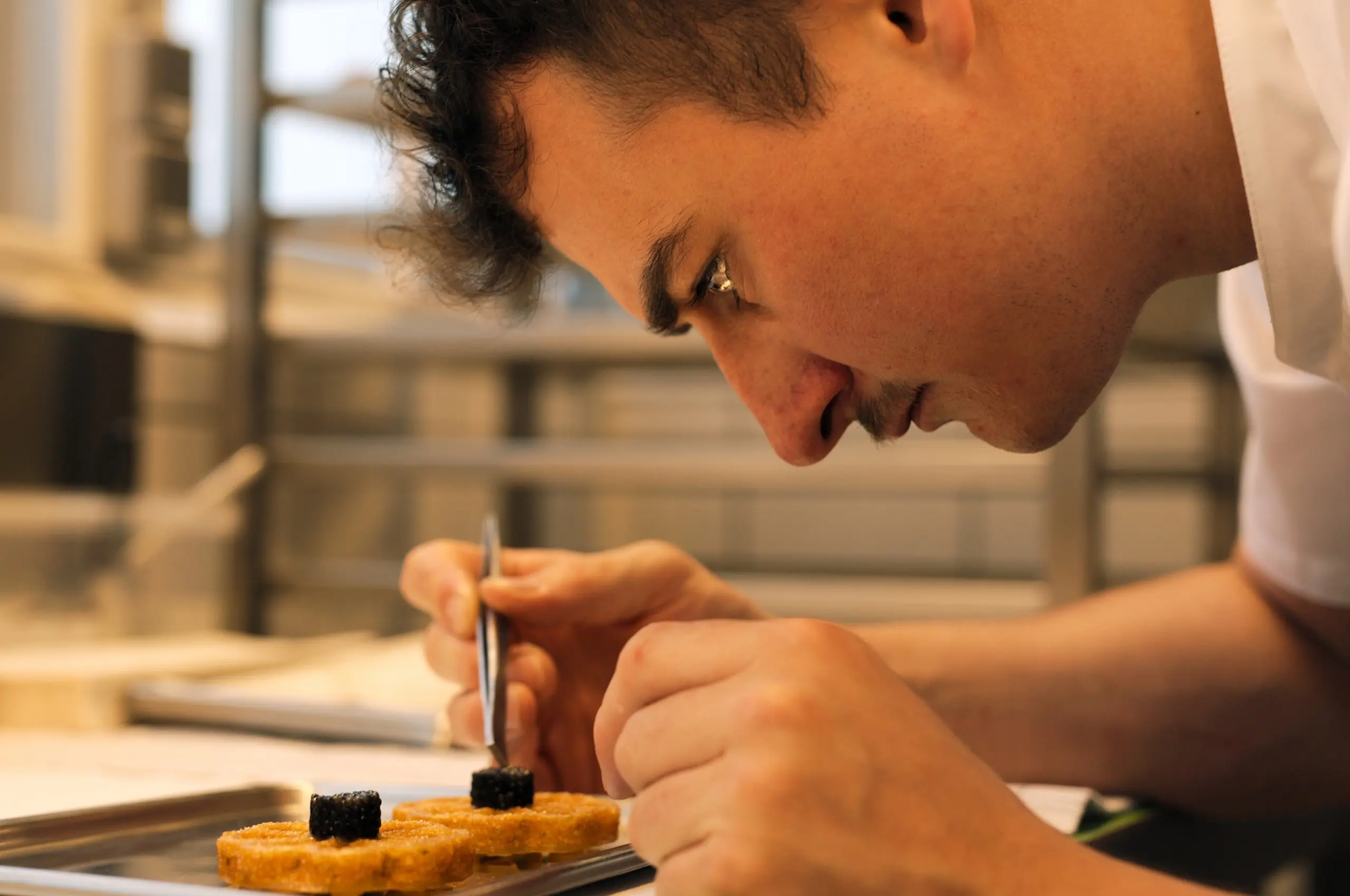
“It’s a greedy, ego thing,” admits Nicolai Tram, the founder and Head Chef of Knystaforsen, when reflecting on his Michelin star chase. “If you don’t get a star, then it’s gonna end up with you being sad, depressed, and having low self-esteem.” He then gives an earnest, albeit strange, impression of Gollum from The Lord of the Rings, mumbling, “My precious, my precious, my precious.”
Welcome to Apple TV+’s latest docuseries, Knife Edge: Chasing Michelin Stars, a world filled with gastronomic divas, mysterious Michelin inspectors, and so much culinary pressure that it often feels like the different restaurants on the show are about to blow. Produced by Gordon Ramsay and hosted by Jesse Burgess, who is best known for his food-centric YouTube channel Topjaw, Knife Edge takes the lid off of some of the Michelin Guide’s best-kept secrets, as well as the lowest moments of some of the most high-end restaurants worldwide.
The chase for a star may seem like a hunt best left for the restaurants featured in Knife Edge, but it is now much closer to our shores than we think. On February 17, the Michelin Guide announced that it would be expanding its reach to Metro Manila, the surrounding regions of Pampanga, Tagaytay, and Cavite, as well as the vibrant food scene in Cebu. The inaugural Michelin Guide Philippines will debut in 2026, though the anonymous Michelin Guide Inspectors have already been exploring the local cuisine. While Filipino restaurants may be new to the guide’s selection processes, Knife Edge does a good job of peeling back the curtain.
Unlike other shiny shows that center on the epicurean — think Netflix’s stylized docuseries Chef’s Table, or the Duchess of Sussex’s glossy cooking show With Love, Meghan — Knife Edge does not shy away from showing the frustrations and paranoia of its chefs. The show jumps between restaurants across the United States, Mexico, and Europe, spotlighting how different chefs approach the race for one, two, or, for the idiotically brave, three Michelin stars.
Kitchen Theatrics

And the race is, for lack of a better term, messy. Contrary to certain cooking dramas about hot chefs screaming at their team to get their shit together (ahem, The Bear), there is nothing glamorous about chefs losing their cool in the middle of a packed service. One subject, Executive Chef Dae Kim of New York’s Nōksu, ends an episode throwing a tantrum in front of his team and walking out of the restaurant. As he storms off, one of his chefs rolls her eyes and comments on how his theatrics have brought the kitchen to a standstill.
The same level of drama can be found in the show’s other kitchens of focus. Jacob Potashnick, chef and owner of Feld in Chicago, obsessively turns over his 30-course menu daily in an attempt to win a star within the first year of opening his first restaurant. Another Chicago-based chef, Jenner Tomaska of Esmé, worries about removing a beautiful — but expensive — sunflower from his dessert menu per person. Early into the show’s first episode, New York’s Simon Kim, a business owner aiming to win a star for his Korean fried chicken restaurant Coqodaq, says rather cockily, “Running a restaurant in New York City is the most thrilling in the world, because it’s the most difficult thing in the world.”
High Stakes
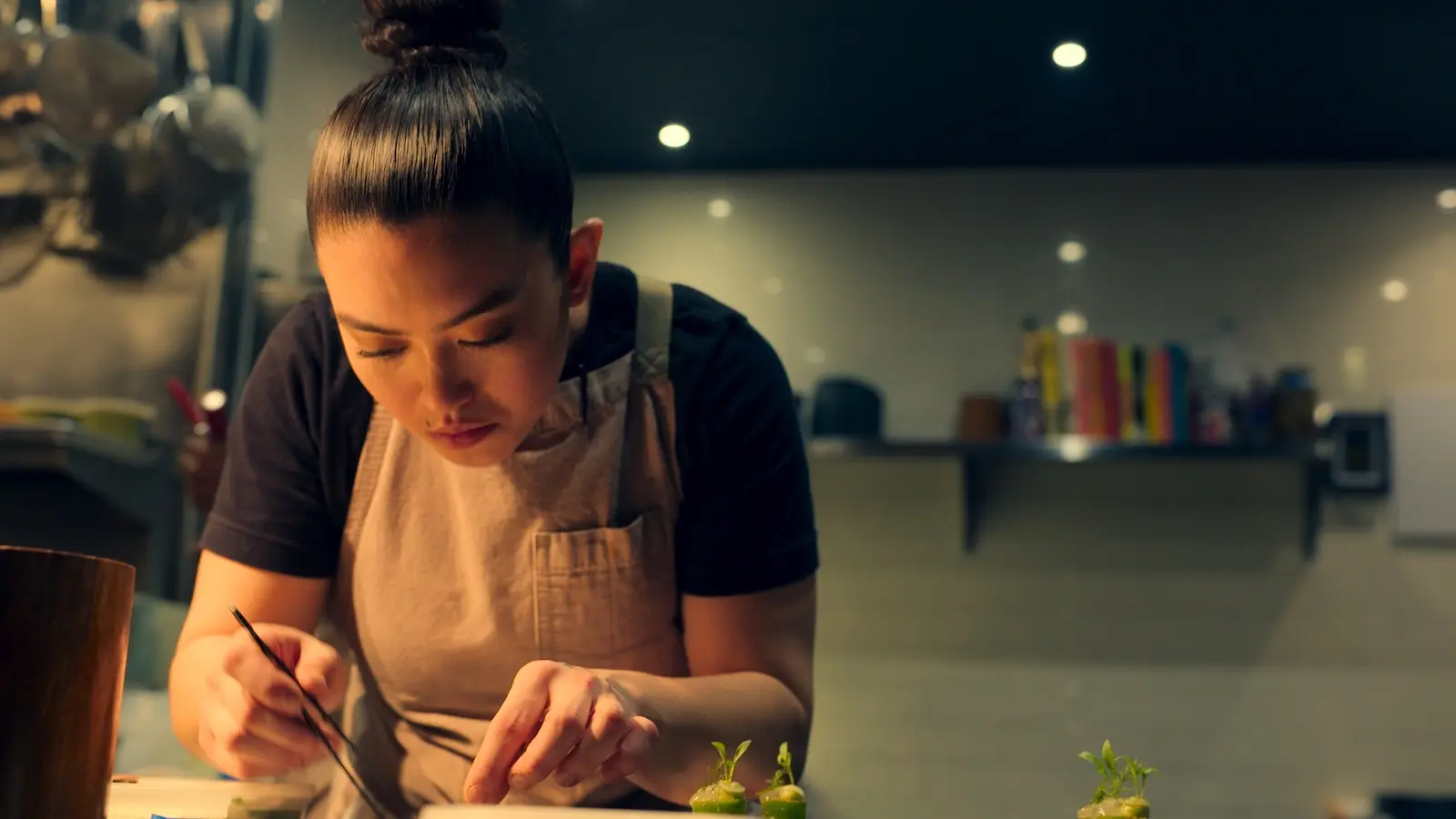
For those not privy to the world of fine dining, the show’s subjects may seem like they’re placing too much pressure on what should essentially be a simple business model: hungry people coming in for food, and restaurants making sure that they get fed. But how could these high-achieving chefs not feel the pressure? The Michelin Guide, since it began awarding its coveted stars to fine dining establishments in 1926, has been both a blessing and a curse for chefs around the world. Its stars can be a restaurant’s saving grace (as the couple behind Copenhagen restaurant Jordnær find out in the fourth episode), or it can be the straw that breaks the camel’s — or chef’s — back.
What’s more, the secrecy surrounding the Michelin’s selection process does little to alleviate the chefs’ paranoia. In a rare glimpse into the Guide’s inner workings, Knife Edge speaks to three anonymous Michelin inspectors and asks them about their criteria when choosing which restaurants make it to the year’s list. But even then, their explanations feel nebulous as they speak in carefully measured phrases on “consistency,” “elements,” and how a chef’s style must come through their dish. When the inspectors, who are sworn to secrecy about their chosen profession, finally walk through the doors of a restaurant, their fork and knife scraping against a platter can sound like a death knell.
But for all the pressures that come with chasing a Michelin star, chefs continue their pursuit because the star has come to represent much more than the Guide’s seal of approval. The star symbolizes international recognition, yes, but it is also a physical monument to the amount of hard work, time, and resources that all chefs put into pushing the boundaries of culinary excellence. “The restaurant business is as high octane as any sport,” Ramsay said in an interview with Food & Travel. “It’s how we raise the bar to create memories in restaurants that, if you get right, can last a lifetime.”
As of writing, the first four episodes of Knife Edge are currently available on Apple TV+. The remaining four episodes will be streamed weekly every Friday.
Recommended Video