

UPDATE: Dreamboi has been extended until November 4 in select Ayala Malls Cinemas. See list here.
“The reality of being trans is filled with horror,” says Dreamboi director Rodina Singh. In the days prior to its screening at VMX’s erotica film festival, CineSilip, the film received an X rating from the Movie and Television Review and Classification Board (MTRCB) , which stated, “While it offers important representation and commentary, its prolonged sexually explicit scenes.” The decision was met with ire by LGBTQIA+ advocates and supporters online, but most especially by its director, who has long labored to have a film like Dreamboi made, a powerful portrayal of a trans woman’s desires and how society works hard to erase transgender people.
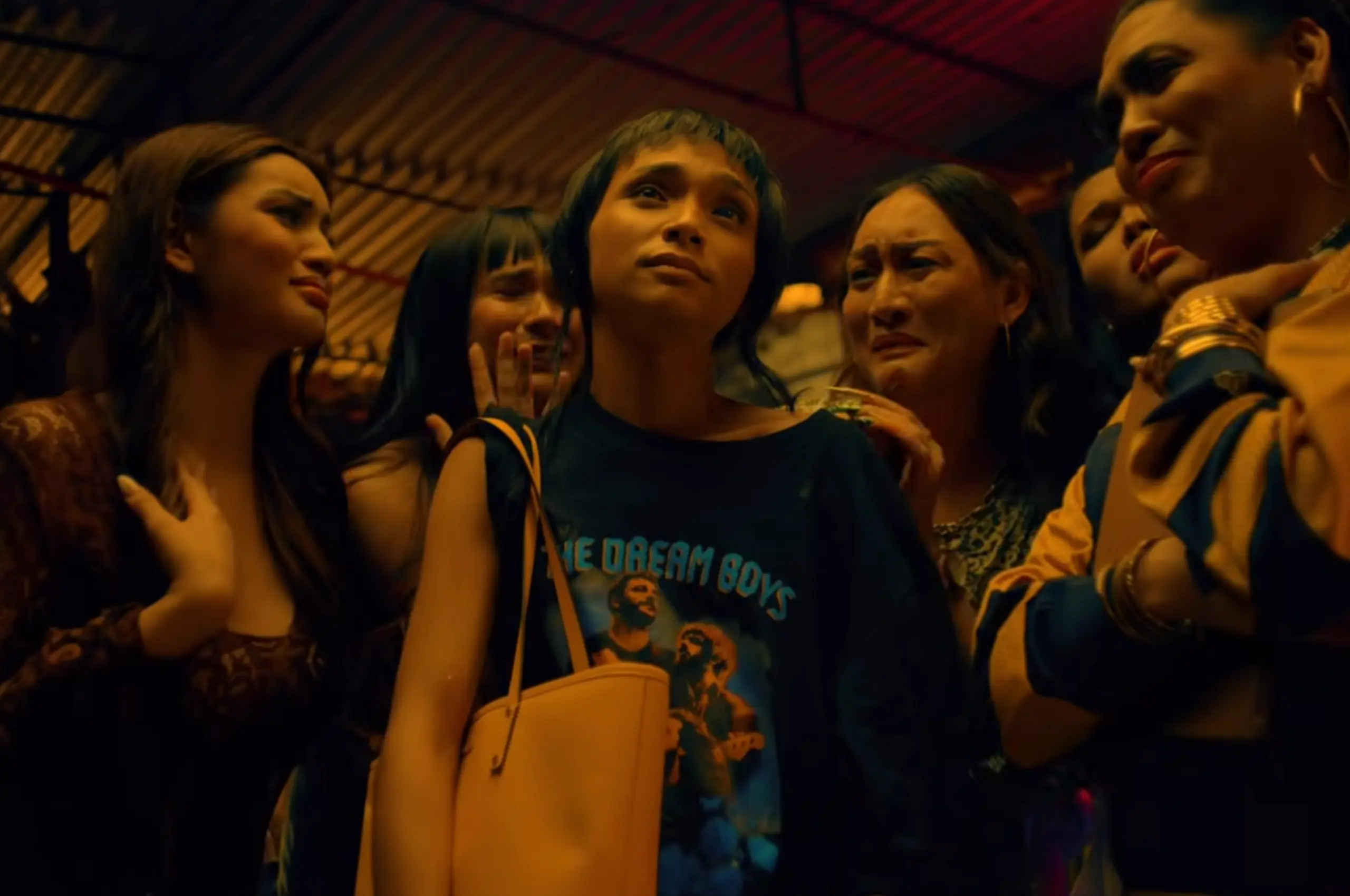
Dreamboi is the lone transgender film in the VMX film festival. While there is a sapphic film (though helmed by a male director), most of the films in the erotic fest are films depicting heterosexual desires. In Dreamboi, Diwa (EJ Jallorina) slowly opens herself up to her desires, fueled by the audio erotica made by the titular adult content creator (Tony Labrusca).
The film received the X rating twice before it finally received an R-18 (all CineSilip films received this rating). It emerged as the most awarded film of the festival, taking home Best Picture, Best Director, Best Supporting Actor, Best Cinematography, Best Sound, Best Editing, Best Supporting Actor and the Audience Choice Award.
It has no scheduled screenings after the festival as of this writing, but it will be heading to the VMX streaming platform next year.
Between her first film, Mamu: And a Mother Too (also starring Dreamboi actress Iyah Mina), and Dreamboi, Singh was busy with the first two seasons of Drag Den. But viewers won’t have to wait long until her next feature film. CinePanalo has just picked up Multwoh: Patay na Patay sa ’Yo, a campy comedy horror that’s unapologetically queer.
“I used to say I was excited to see what kind of work I could create when given the right resources, time, and support,” she says. “But in truth, Drag Den already gave me that opportunity, both in Season 1 and Season 2. I was trusted, I was resourced, I was believed in. So this time, I’m excited to see what that looks like in film. Because in cinema, I haven’t been given that same chance yet. Not at that scale. And that’s what excites me the most now — to finally see what kind of work I can make when I’m trusted that way in film.”
In this interview, Singh makes a case for transgender filmmakers telling their own stories, the ordeal of making Dreamboi, and the challenge of making a film on a platform popular for catering to male desire.
Happy you mentioned Isabel Sandoval, who depicted trans desire in Lingua Franca, at the end of Dreamboi. Were there elements/scenes in the movie that you negotiated or fought for to be retained, given that VMX is catered to men?
From the very first cut we submitted to the MTRCB, I had already taken into consideration that it needed to be rated R-18. So when the initial review came back, I didn’t make any major changes at all. I just refined the visuals a bit — zoomed in on some frames, softened certain exposures, trimmed the parts they didn’t want to see. It’s the same cut, just more carefully framed to pass their standards.
When I was writing Dreamboi, some people asked if I had adjusted the material to cater to the male audience on the VMX app. The truth is, I didn’t. I never even thought about that, and the platform didn’t insist on it either. Dreamboi was never written to please men or to serve an algorithm. I always knew this film would have a life beyond streaming. It wasn’t made for the platform; it was made through it. And honestly, if there are a lot of men on that app, I already knew most of them wouldn’t watch it anyway. Dreamboi was created for those who would truly understand it — the dolls, the queer audience, the ones who would see themselves reflected in it.
For me, films are always made for those who will love them. And I know exactly who I want this film to speak to: my community — the ones who dream — and the ones brave enough to see beauty where others only see taboo.
There were a few triggering things at the beginning of the film, such as the security guard harassing Diwa or Manang Guy’s bigoted tirade. How do you create a nuanced portrayal of the real-life horrors that trans individuals face while ensuring that the film can be a safe place for them?
My guiding principle in making films about us has always been this: it has to be a film I can comfortably watch with people who aren’t trans. Seeing yourself on screen, especially in front of others, feels like being undressed. It’s as if you’re stripped bare in front of an audience. And I know that feeling deeply. Because there’s still so little trans representation, whoever people see on screen often becomes their idea of who we are in real life. Reality and fiction start to blur.
Since most people don’t personally know a trans person, the trans character they see in a film becomes the trans person in their imagination. That’s why representation is so crucial. For many viewers, it’s their first exposure to what transness even looks like. And if that first encounter leaves them with a negative impression, then as filmmakers, we bear some responsibility. That’s where accountability comes in: being aware of how we portray our own community. I never want to exploit our trauma for drama. That’s not what Dreamboi is about.
The film is about ownership — ownership of our bodies, our stories, and how we choose to bare ourselves to the world. Yes, Dreamboi is about Diwa’s “undressing,” about peeling off the layers of her transness, showing the body we see, the pain we carry, the fantasies we hold inside. These are the naked truths that most people don’t want to see. But we show them anyway, because this is what it truly means to exist as us.
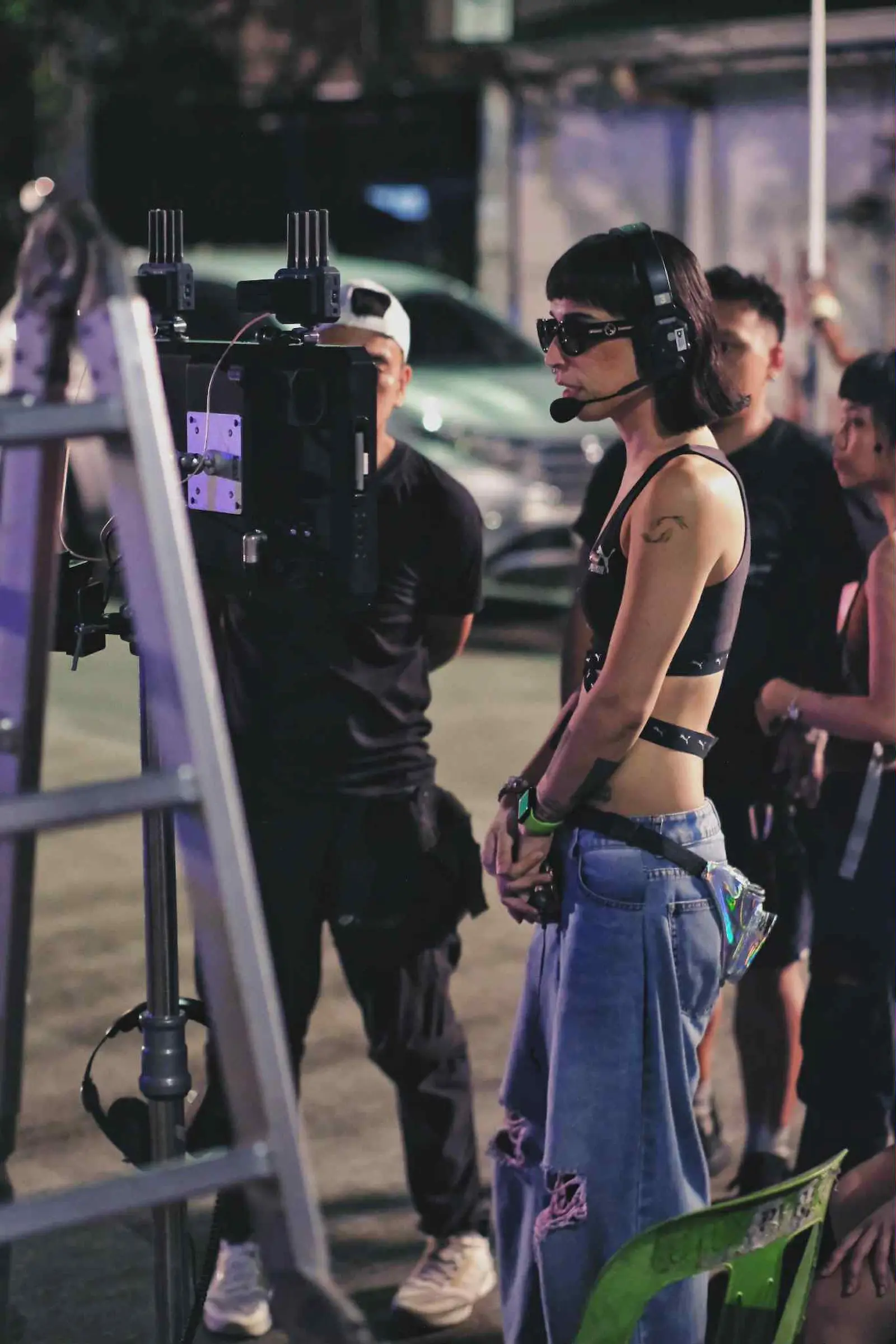
One of the CineSilip filmmakers said that the number of sex scenes was one of the first things that they were asked when pitching their film. Can you tell us what it was like pitching Dreamboi?
When I pitched Dreamboi to CineSilip, I really just said one thing, and I kept saying it again and again: this film needs to be made. I talked about the urgency behind it, why the message of Dreamboi needed to be told now, and why erotica was the right language to tell it because it’s not just about sex — it’s about how desire functions for trans people. I told them the festival was the right space to explore that tension between danger and desire, to talk about the politics of longing and the risks of being seen. Another line I kept repeating during the pitch was: “This film is delicious.”. Not just sensually, but emotionally and spiritually. It’s the pleasure of truth, the sweetness and ache of being trans, of desiring and surviving at the same time.
At a Q&A at Trinoma, right after a Dreamboi screening, I was fascinated by the keyword “fantasy” as a means to vibe with the film. Is this a conscious step from the heavy realism of your film Mamu: And a Mother Too?
People who really know me can attest that I’ve always lived in a world shaped by fantasy. Not in the sense that I’m detached from reality, but because I’ve realized that fantasy can be both a weapon and a drug. If the reality of being trans is filled with horror — and for me, it often is — then fantasy is the drug that helps you cope. In a world that’s so dark, in a world that wants you dead, simply choosing to live and to hope is already a fantasy. So why hold back from it?
Trans people, for the longest time, have mastered the art of surviving in that realm. Because society has always seen us as people who fantasize about being women. For decades, the world has treated us as delusional, as if our womanhood is make-believe. But I’ve learned to reclaim that. If they think we live in fantasy, then fine, I’ll turn that fantasy into art, into truth.
Even back in Mamu, that idea was already there. Mamu was a fantasy told through realism. Because once you see a fantasy on screen, it stops being a fantasy. Once you see it, it becomes real, it becomes an ideal. That’s what I want my films to do: to give my sisters something to hold onto, an image to dream about, a way to arm themselves through visibility. To say, this can happen, this can be us. So maybe that’s my signature as a filmmaker: fantasy is the new drug.
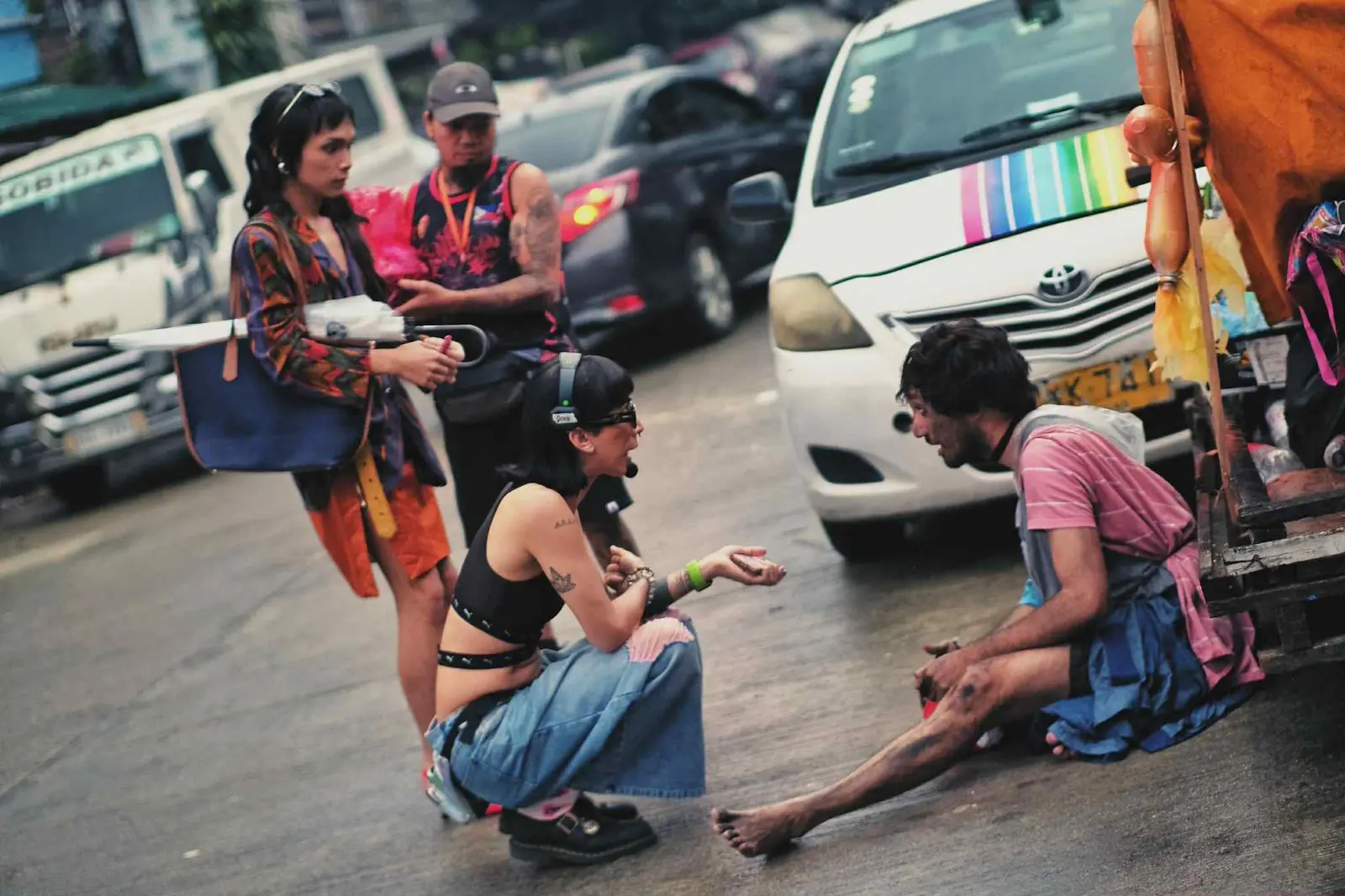
Dreamboi also had such a good cast. What was the journey to finding the actors for Diwa and Dreamboi?
Since the very first draft of Dreamboi, it’s always been EJ. Even while I was still writing it, I already knew it was her. I had her in mind from the very beginning. We’re close friends, real friends. So for me, that was it. Why look any further? I knew how deeply personal Dreamboi would be for me, and I wanted to make it with someone who truly understands me, who knows me inside out. Because the process was going to be hard, emotionally and psychologically, and I needed someone who could walk through that with care. That’s the assurance I had with EJ, that no matter what we’d go through, we’d take care of each other.
This is an extremely personal material. In this film, we’re addressing ourselves, we’re “undressing” ourselves. For the longest time, that’s what’s been done to us on screen. We’ve been undressed by others, portrayed as women with penises, or as men who look like women. We’ve been stripped of dignity and context, exposed in ways that only highlight our bodies, never our souls. So this time, I said, “Enough!” This time, I take the camera. This time, we undress ourselves, but on our own terms. And in Dreamboi, that undressing comes with glitter, horror, music, and sex — all in spicy flavor.
On top of that, Tony has always been Dreamboi to me. Of course, I’ve seen many dreamboys in my head, but Tony has always been at the top of my mind. He captured me in ways I wish were translated on screen, the same way he captured me seven years ago when I first saw him in flesh. He’s maintained that level of charm for me, that image of desire that’s never faded. And Dreamboi is such a crucial role because it’s the personification of desire. So when I thought about who could embody that, that pull, that magnetism, that beauty, I asked myself, why look elsewhere? Who else could be the personification of my desire? It’s Tony Labrusca.
The X rating by MTRCB was such an ordeal, but you eventually got an R-18 rating. What was it like during the journey to getting an R-18 rating? Did you feel disheartened, or were you fueled by the struggle to fight for Dreamboi and what it represents?
Honestly, it was hell. I cried. Like, really cried. At one point, I told myself, maybe I should allow myself to be vulnerable this time, because I was exhausted. We’ve already gone through so much with Dreamboi — from pre-production to the shoot, to post-production — and even when we reached the point of finally showing it in cinemas, there were still struggles. It was overwhelming. But more than that, the tears came from anger and frustration. Because I know, and everyone in our team knows, how much heart, work, and excellence went into this film. You can see it, it’s there, even in the awards we received. So why was it still banned? Why was it still deemed inappropriate? We did our best, we did it right. What was wrong? What else were we supposed to do?
That’s the hardest part to accept — that after everything, someone else gets to decide whether your truth can be seen. And I will stand by this: I don’t think the government has the right to tell us what we can or cannot say through our art. Art is expression. And what we did was art: artistic, intentional, honest. So what are they afraid of? That’s where the frustration really comes from. Because when your film is already so limited — four cinemas, one week, 14 screenings — and they still tell you it’s not allowed? That’s cruelty. That’s not regulation. That’s suppression.
“I don’t think the government has the right to tell us what we can or cannot say through our art. Art is expression. And what we did was art: artistic, intentional, honest. So what are they afraid of?”
Dreamboi follows Warla at Cinemalaya in terms of depicting the struggles of trans women in society. How do you think Dreamboi is different in its approach?
Honestly, there are a lot of differences, but the most fundamental one lies in who’s telling the story. The creators of Warla are cisgender, while I, as a filmmaker, openly identify as a trans woman. That’s the most important distinction. Cis people need to accept that there are parts of our transness they will never fully understand, and therefore can never completely translate on screen. Even I struggle with that.
It took me years to finally realize Dreamboi as a film, years to figure out how to translate all these feelings cinematically — rejection, desire, frustration, the pain of living in a world that constantly reminds you that it wants you dead. That’s why I find it difficult to put too much faith in cis filmmakers, especially cisgender men, when it comes to telling trans stories. I know they can be allies, I know they can empathize. But maybe this time, they should step back and let us take the stage. Let us hold the mic. Because we can speak, and we’ve been ready to speak for a long time. I’ve never really talked about this publicly before, because I didn’t want to sound like I was discrediting their work.
But honestly, I felt uncomfortable watching Warla. Within the first few minutes, we already see a trans character dead in a river, neck broken. So visual. So brutal. And that’s our reality. But I’m not going to the cinema, paying P300, just to be reminded of that. We already know we’re being killed. We live with that knowledge every day. The moment you accept your transness is also the moment you accept that your desire will always have to navigate danger. We don’t need to be told that again. So I kept asking myself: what’s the point of this film? It’s being marketed for trans people, but it’s not really for us. Because we already know these stories. We live them.
That said, the performances were beautiful. I loved seeing trans actors on screen. At least on that point, there’s something we all agree on now. That trans roles should be played by trans actors. But I really hope that after Dreamboi, people start trusting us with our own stories.
I’ve also applied to Cinemalaya. And I wasn’t rejected, I was ignored. Not even acknowledged. No email. Nothing. Just silence. And then you find out later that the results are out, and you think, “That was my life’s greatest work, and it didn’t even get a proper ‘no.’” I’m not saying I was entitled to selection. I’m saying there was no courtesy, no recognition of effort, no basic respect. That’s the kind of thing that weighs heavily on a trans creator like me. Because at that point, while writing Dreamboi, I honestly didn’t know where my stories would go, or if anyone would ever believe in them. So when Warla came out at Cinemalaya, I wanted to watch it. Not out of bitterness, but out of curiosity. I genuinely wanted to understand why that story was trusted, what made it “worthy” of the platform. I wanted to see if I could find an answer. And maybe now, after all this, I think I finally did.
Recommended Video