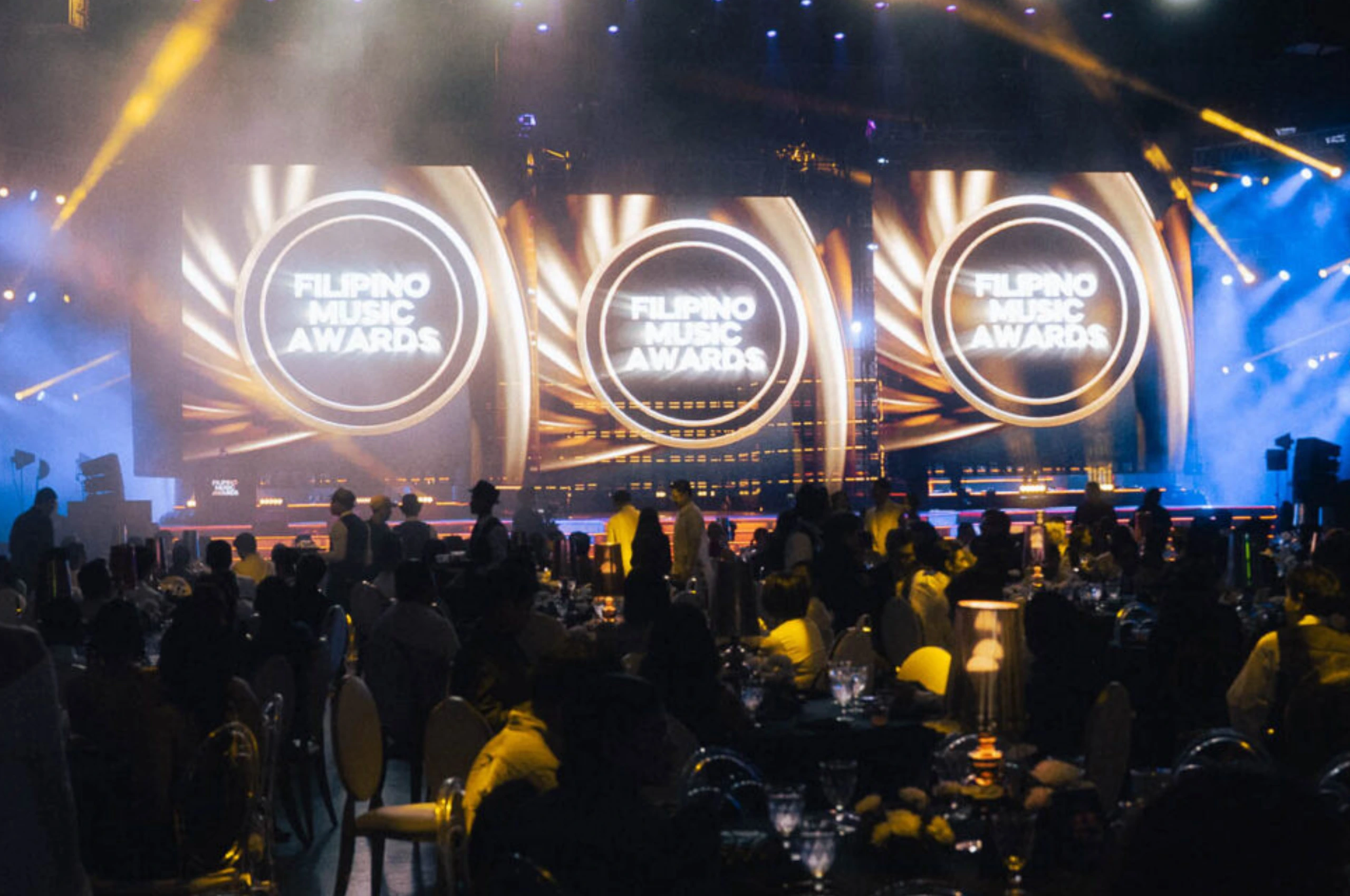


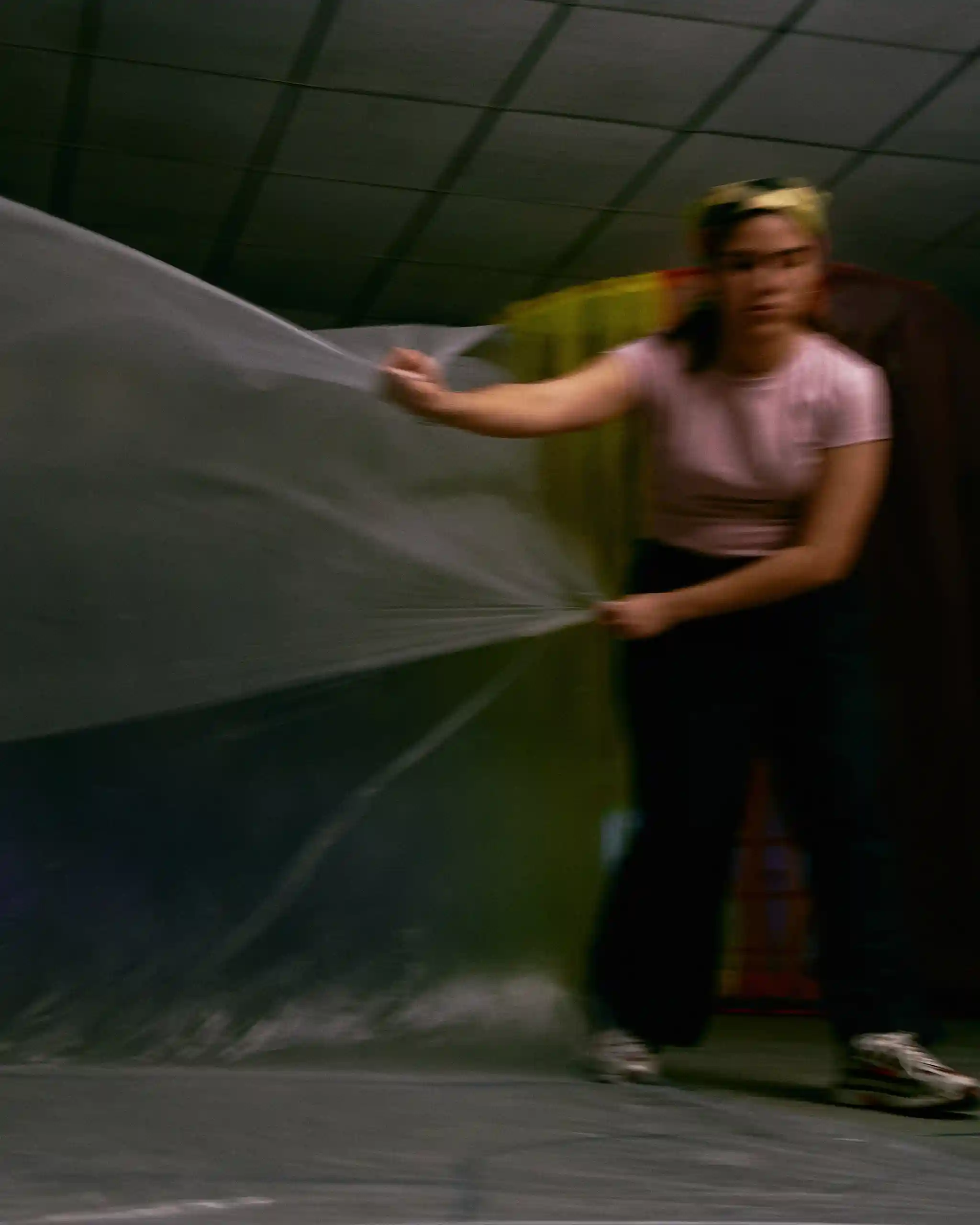
While 2024 saw art and dance showcase Fifth Wall set its stage at the historic Doña Sisang mansion in Old Manila, its latest incarnation, held between October 25 and 26, was held within the concrete confines of a Makati office space — a beautiful and interesting choice to host this year’s theme, “Muscle Memory.” Combining the physicality of dance and architecture through a series of art installations, the sixth edition of Fifth Wall focuses on revisiting movements and investigating “how repetition, rhythm, and recall shape our understanding of self and space.” For founder Madge Reyes, the objective of this latest edition is “to have a more tactile experience when engaging with the artworks and the space.”
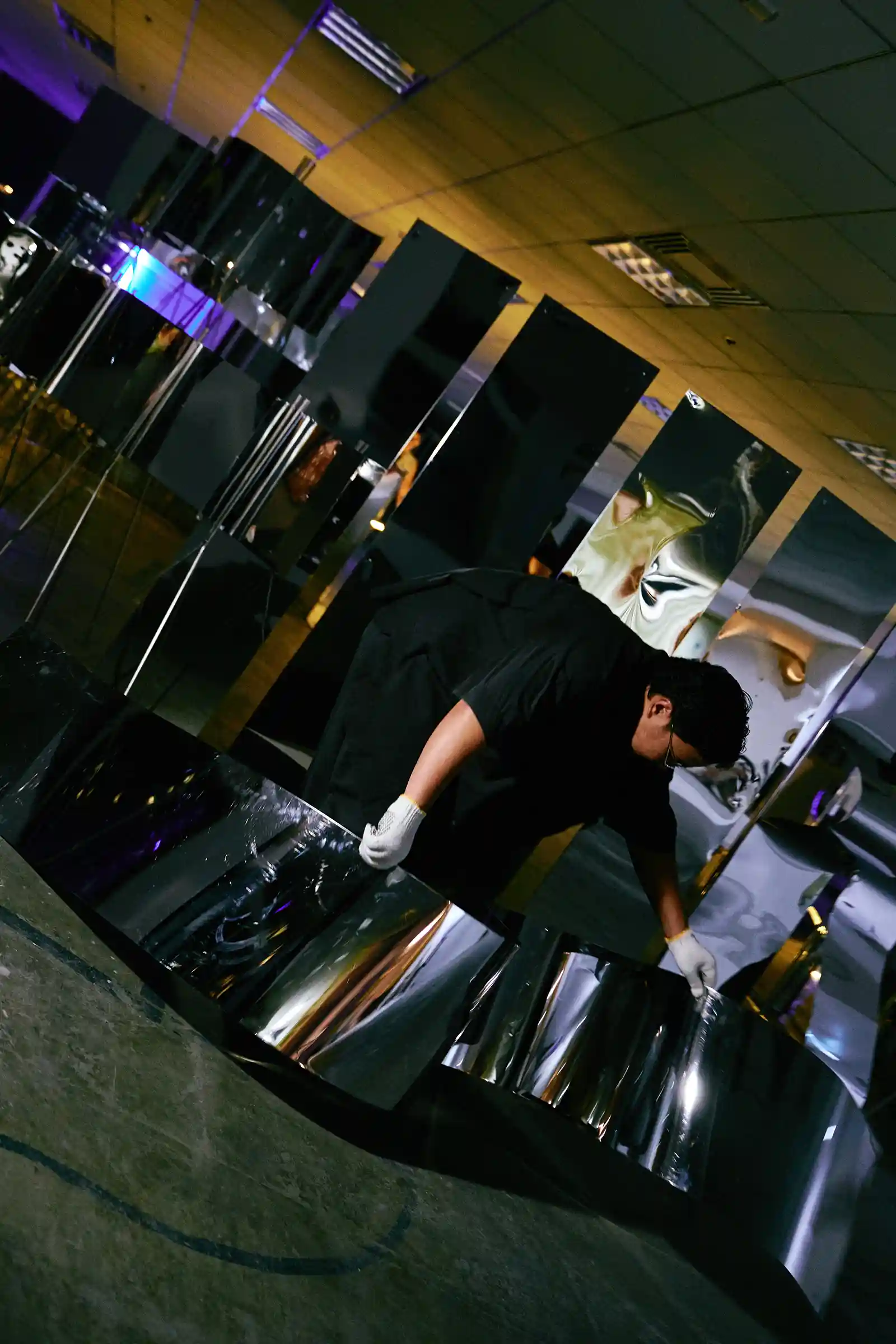
Muscle Memory featured installations from interior designer Es Se, architect Lando Cusi, artist and fabricator Marco Ortiga, fashion designer Novel, and space designer Ileanna Anne for the culture hub WHYNoT, just to name a few. Each work explored “the overall thought of just how we move through cityspaces on a daily basis.”
The weekend event blurred not only the boundaries of the audience and the performer or dance and architecture, but also of the practice of art and work itself as guests were treated to experience and interact with the installations with the aid of a designated tour guide cum host featuring a varied cast of characters from actors Jon Santos and Elijah Canlas, filmmaker Apa Agbayani, and Rolling Stone Philippines’ Digital Editor, Sai Versailles.
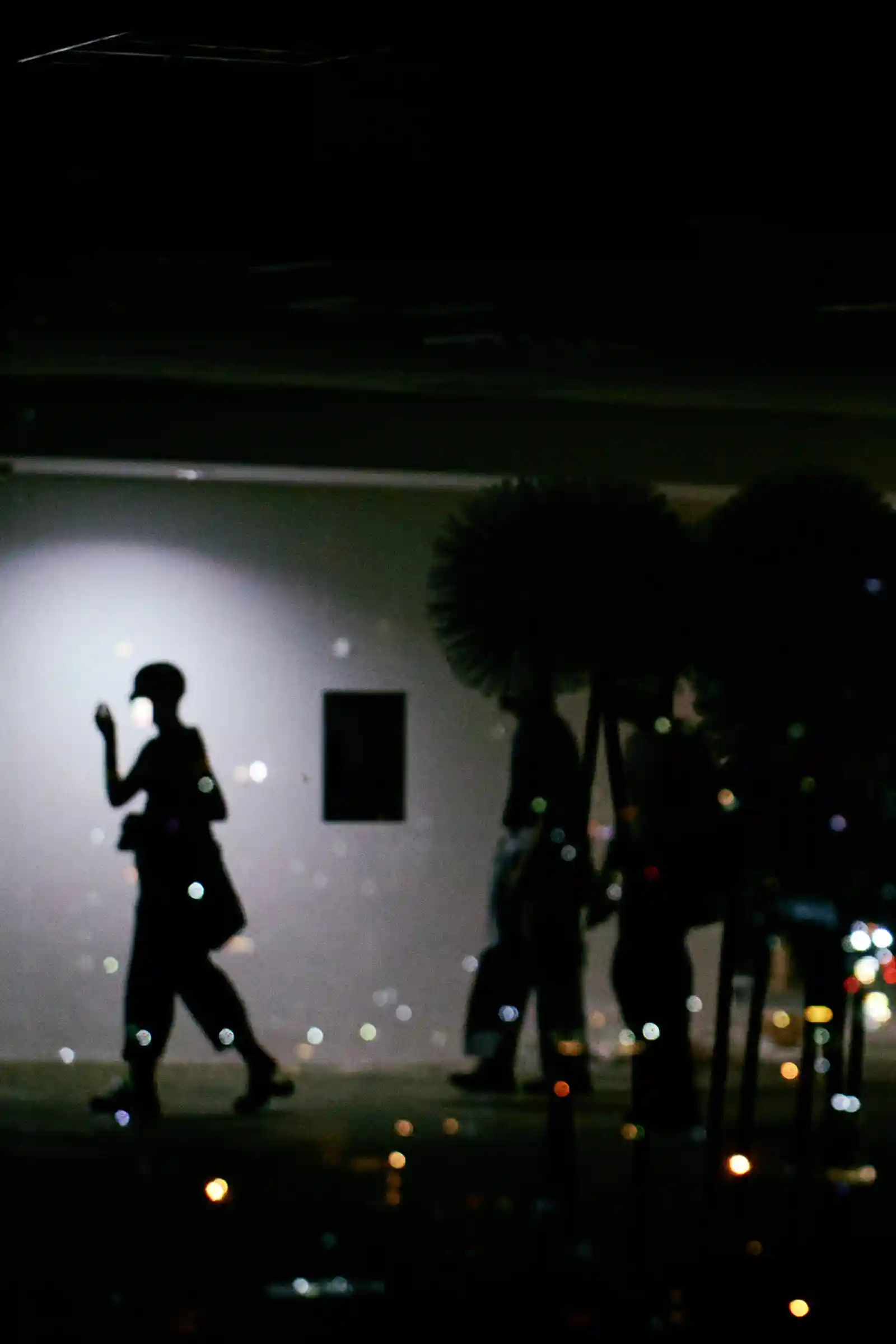
Blank Canvas
Santos, who’s entertained audiences in plays such as Side Show and Bawat Bonggang Bagay, told Rolling Stone Philippines that being a tour guide and performing in an empty space usually meant for offices is “liberating.”
“When they give you an empty space, you can only be excited about the potential, about what they can do with the big empty space. I’ve seen this whole building [at] different times in different years. I’ve been here to catch a play in one of their theaters, another exhibit in another one of their floors, and it’s nice that these spaces in this building include spaces like this,” says Santos. “I’ve always been told that empty space is also an artistic decision. Like when you go through a hallway between two rooms, it isn’t an empty space. It is not the room before it, nor the room after it, but an interim.”
For space designer Ileanna Anne whose work under WHYNoT bookends the whole exhibit, her art breaks through the monotony of daily office life. “Well, when we visited the space, Madge said it was an old kind of office space with cubicles and all of that, and I was really thinking about that kind of metronomic activity that you have of repetition. You go to work, you sit down, you stand up at certain sequences of the day, and that informed what I wanted to put out,” she says. “I think that with spatial design or experiential design, you’re already thinking about movement, because to live in a space, you have to traverse it. And I’m also a dancer by background, so I always incorporate the idea of rhythm, the idea of pacing, and changes into the work.”
The topic of reckoning the relationship between office life and artistic practice is hard to ignore in an installation such as this. As Agbayani puts it, there is a lot to take from what the visuals of an office space represent and what it’s like to work and live as an artist today. “I’m interested in the idea of the office being this cool, artsy thing, and that having a visual style, as opposed to something quotidian and routine. I wonder what energy that’s pulling at in the subconscious?” he says.
“It feels like the things that you need to be able to work as an artist appear to be luxuries, like having time, having a workspace, having mental space. You need them. Those are your resources to create your work. And [I wonder] the economics of that, how do you attain those resources?”
Ortiga shares a similar sentiment, “In a way, you have to balance art and work, and it being sustainable. I think that’s a big challenge for a lot of artists now. Everyone kind of has a day job [because] that’s the only way to survive. If you choose to make art as your profession, then you have to do the rackets. It becomes a job that you have to do. So it’s not anymore self-expression. That’s the thing that artists have to balance these days. Everyone kind of has to figure out how to sustain this ‘job’ and how to turn it into something sustainable.”
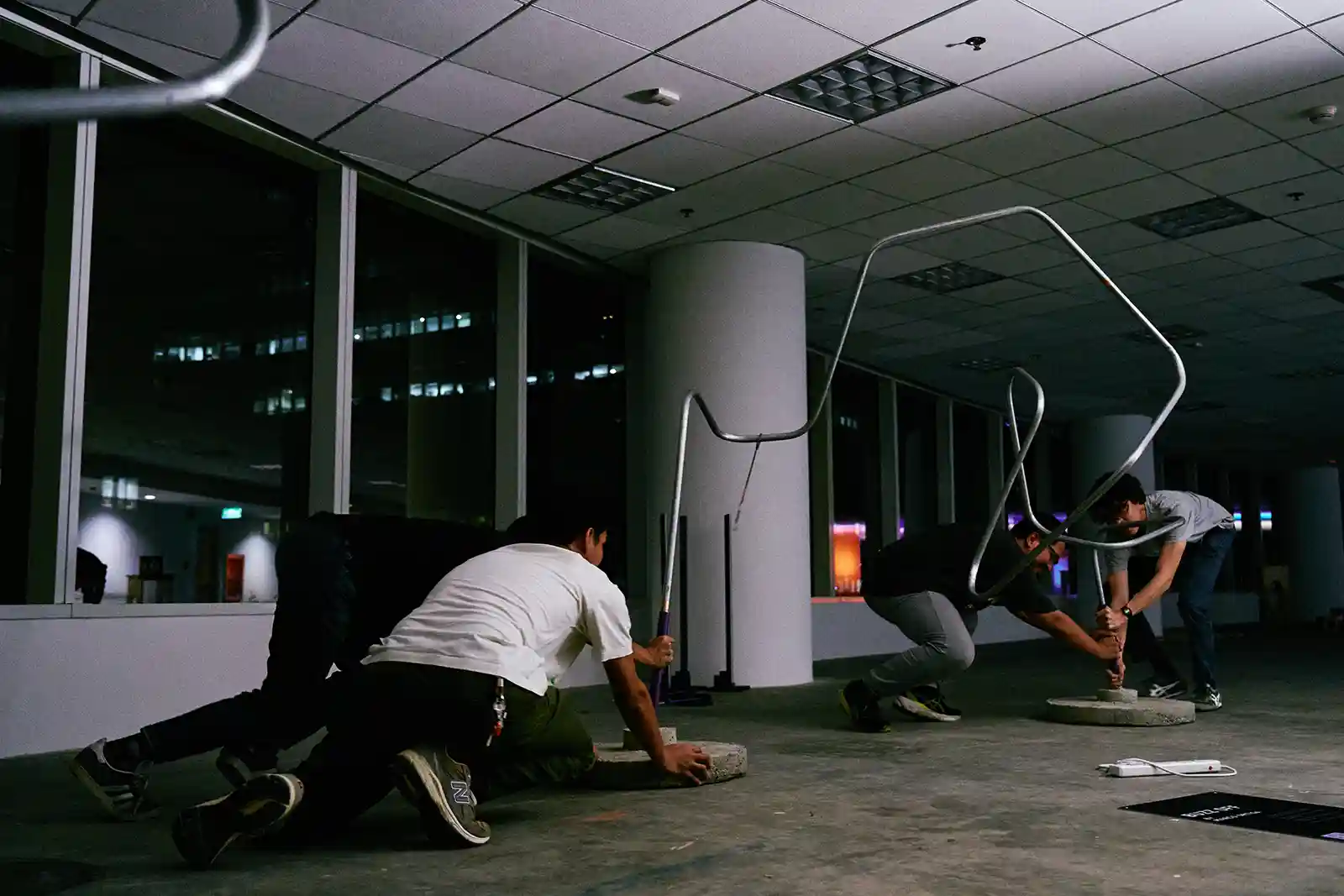
Beyond the Walls
Muscle Memory’s focus on the relationship between the spaces we inhabit and our own bodies reflects how we move through life today. Whether it’s in how we balance work and life, or how we offer space for meaning in what we do.
“I wouldn’t consider art as work,” says Anne. “If you’re putting out art, it’s something that you need to kind of divulge and express. It’s something that comes out of you. So if you’re trying to do work to get it out, then that’s not something that’s easy to express. It’s something that needs to go through a process, an experience that you have, and then it converts itself into an energy that you want to put out there.”
For Santos, whose decades-long career has given him a clearer sense of not just appreciation but understanding in occupying space as a working artist, he says that it is up to the artists to use the space as they see fit. “From my journey, a lot of the halls that I have used, the performance spaces that I use, big or small, are black. It is against that black that with a little ray of light, I make my presence felt. And it is in spaces like that that I am given latitude to occupy. I feel like occupying space moving is just as powerful as occupying space standing up with a little ray of light and a microphone and a point of view.”
Recommended Video
Rolling Stone Philippines Voices Issue, Now Available at SariSari Shopping