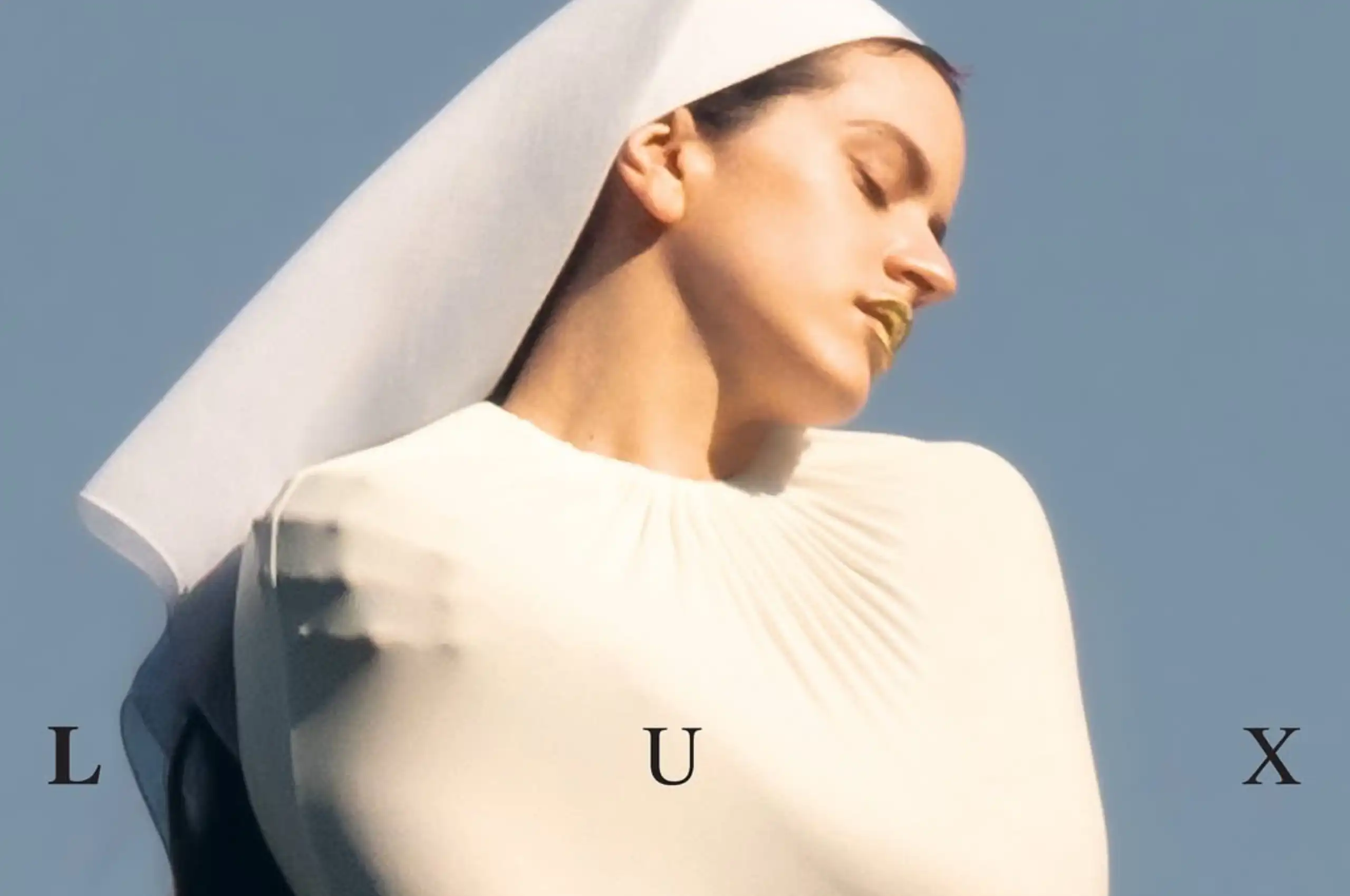
Rosalía ascends into LUX like Mary’s assumption. The Spanish singer and producer’s latest album unfolds in four movements that push her ambition as both performer and architect of sound.
Throughout her career, Rosalía has consistently taken inspiration from this centuries-old art form, transforming it into something refreshingly modern, earning her critical acclaim and global curiosity.
In 2017, Rosalía emerged as a disruptor within flamenco with her debut album Los Ángeles, which saw her deconstruct the genre’s more than 50 different styles — a modular and improvisational act between singer, guitarist, and dancer — into a narrative-driven pop framework of verse-chorus symmetry.
Her 2018 breakthrough, El Mal Querer, originally conceived as a baccalaureate thesis and awarded Album of the Year at the 2019 Latin Grammys, saw Rosalía re-engineer flamenco further by blending its traditional elements with R&B production.
If El Mal Querer was about translation — turning flamenco into a pop language — then LUX is about the feminine mystique and transcendence beyond language, concepts that automatically overhauls the rest of her discography by far. Across 18 tracks, LUX continues to strip pop down to its framework through the format of the ballad, rebuilding it into something closer to ritual.
As she puts it in her Popcast interview, Rosalía hopes to “reach out closer to God” in every album. Each section is shaped by orchestral flourishes and intimate, almost skeletal production that centers her voice above all. She sings in 13 languages, folding Latin, Catalan, English, German, Ukrainian, and more into a seamless flow; the effect is less a display of divine expression and more a search for new modes of expression. Language becomes texture, and her voice is an instrument that shifts to convey a level of emotional purity. Either way, as Rosalía describes in her interview, she prefers listeners to interpret the album with “a choose-your-own adventure” approach.
Pop Beatification
LUX’s first movement — distinguished by lyrical themes of sex, regret, and revenge — begins quietly. “Porcelana” stands out for its minimalist, yet industrially Brutalist production, allowing her melodies to rise unguarded.
Lyrically, Rosalía had to push herself to the absolute limit in painting the picture between herself, God, and the people she regards highly.
In “Divinize,” she expands on the idea of body as a religious relic, such as “Each vertebra reveals a mystery / Pray on my spine it’s a rosary,” or in “La perla” the lyrics call out the outrageous “piece thief” for being an “emotional terrorist.”
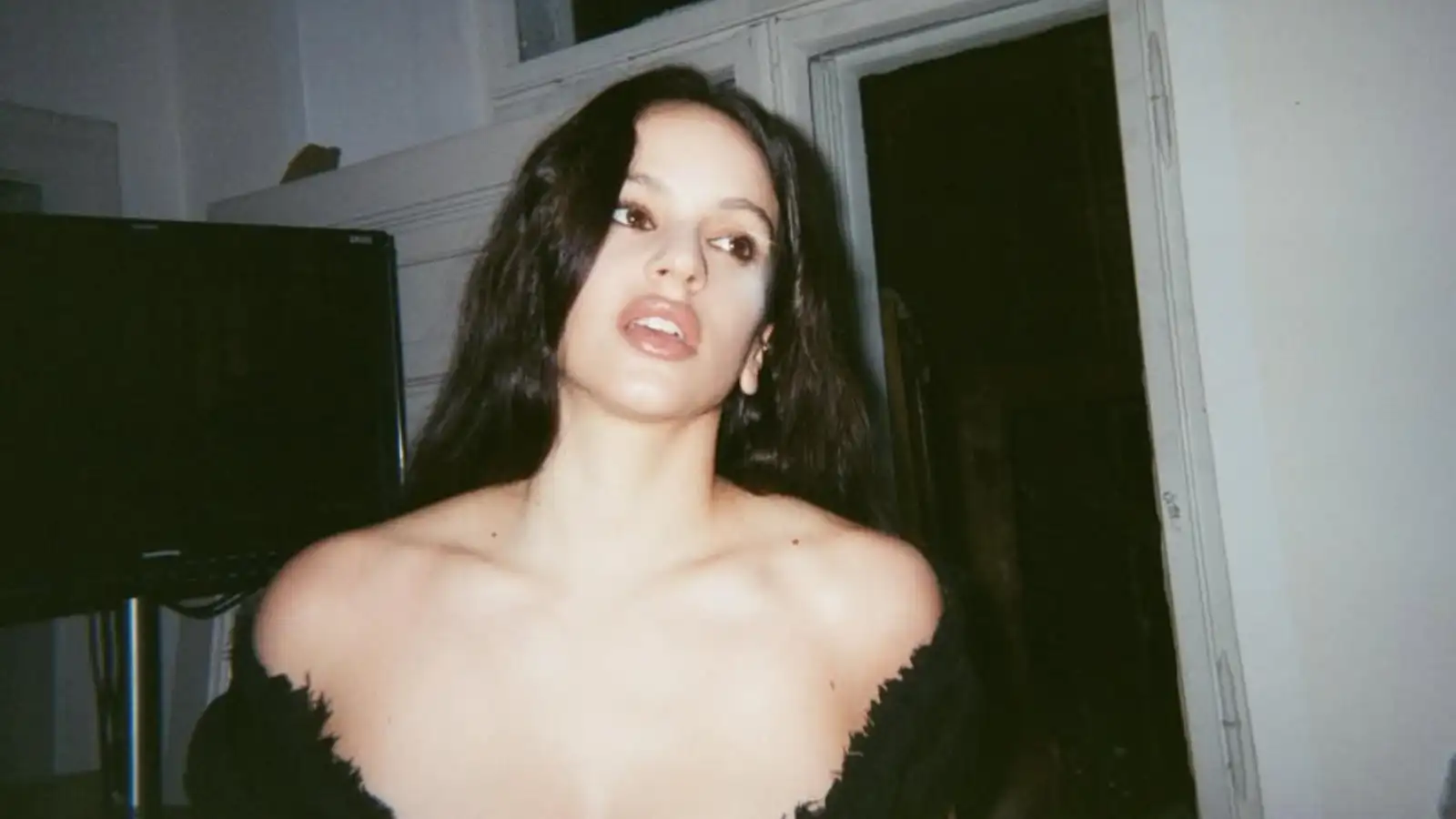
Each movements take bolder turns, whereas in later tracks the orchestral framework penetrates different subgenres of dance music, highlighting the artist’s experimental rebelliousness. “Dios en un stalker” and “La yugular” blend electronic loops with orchestral strings, bridging the organic and synthetic in a way only Rosalía could pull off. The production includes percussive cuts and sampled breaths that blur the line between rhythm and voice. In “Berghain” and “La perla,” she leans into her experimental side, trading pop polish for fractured beats and vocal layering that evokes a baptism or an arena-ready orchestral piece.
“I want to think that my music is pop, it’s just another way of making pop,” Rosalia says in The New York Times’ Popcast. “There has to exist another way of making pop. Björk proved it. Kate Bush proved it. There has to exist other ways of making pop music. And I need to think that what I’m doing is pop.” The codes presented in LUX are different, effortlessly switching yet speaking in the same language that is plainly pop.
She speaks in Arabic in “La yugular” where she exaggerates commitment when she sings, “I’d tear heaven apart for you/ I’d demolish hell for you/ free from promises/ free from threats.”
LUX trades the hyperactive confidence of Motomami for patience, reflection, and near-religious intensity. Her vocals remain the gravitational pull, guiding arrangements that hover between minimalism and grandeur. The album’s four-part structure mirrors a classical suite, yet its heart beats in the language of modern pop, where rhythm and melody coexist with vulnerability.
By its final movement, she finally meets God. In the final track, “Magnolias,” she initiates a meeting point with her lover in the afterlife. “When God descends, I ascend/ we’ll meet halfway.” LUX resolves into something intimate, revealing the inner workings of divine intervention. The songs no longer reach outward but fold inward, tracing themes of devotion, identity, and creative rebirth. It feels less like a continuation of Motomami and more like an unofficial sequel to Los Ángeles: stripped down, rooted, but infinitely more confident in its quality.
For all its experimentation, LUX never abandons Rosalía’s core as a flamenco-trained vocalist who treats pop as both canvas and question. Rosalía has reached a point where she no longer needs to prove her range. She can move from a whisper to a roar, from a homily to a dance floor confession, and still sound unmistakably herself. LUX may not be her flashiest work, but it might be her most complete — a record that invites you to listen again, and again, until its light fully reveals itself.
Recommended Video