

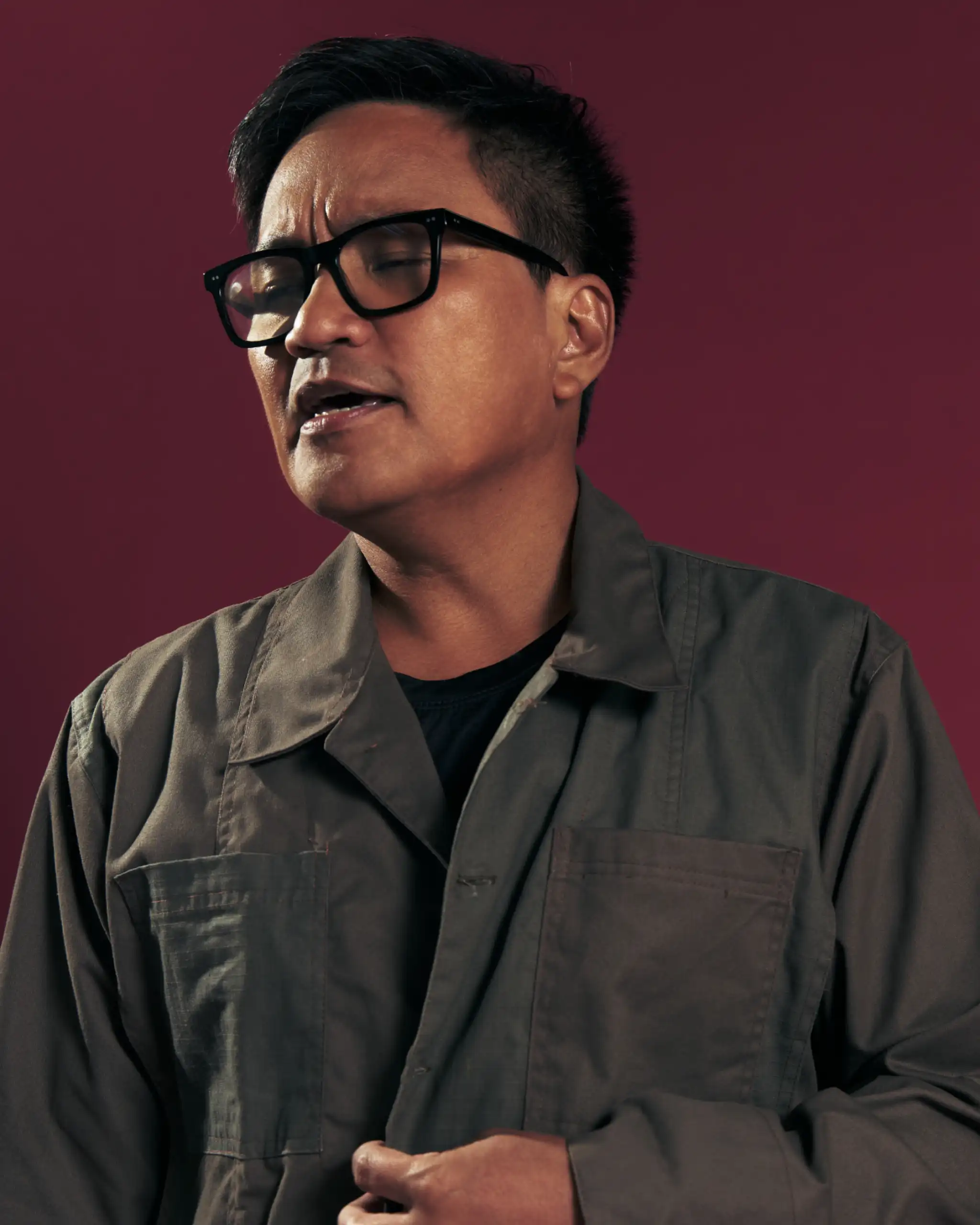
Ebe Dancel has lived several musical lives: often in public, occasionally in pain, always with grace. He’s fronted a fabled indie band, filled small rooms with big feelings, and has always successfully negotiated between sentiment and sentimentality.
He has since eschewed distortion for delicacy, moving between bar shows, private affairs — he’s live-scored bridal marches and first dances — and grander, string-laden productions like “Ebe Dancel and The Manila String Machine: The Repeat,” which he performed on November 15.
Dancel’s story reads like a paradox: from indie ubiquity to pop-soundtrack factory; from anthem weaver to introspective craftsman. He understands the gravitas of reinvention but prefers to recapture his brass-tacks beginnings, where melody, clarity, and sincerity reign.
In this hour-long conversation with Rolling Stone Philippines, Dancel reflects on growing older without growing dull, revisiting songs that once hurt to play, and finding peace in the noise he helped create. It doesn’t hurt to state the obvious at this juncture, so I will:
Sometimes, the loudest thing in the room is restraint.
I want to ask about your relationship with instrumentation. How has that changed: from being in a power trio, one that had to sonically fill a room despite having so little, to now?
I got an acoustic guitar in 2014, a Martin DRS-1, a really old model, niregalo sa akin. I enjoyed it so much that one day, without telling [my live] band, I showed up with it. Tapos sabi ko, “OK, we’re gonna have to tone it down a little.” It just evolved, and I rediscovered my love for it.
Yeah.
I made it a point to say, “We need to hear each other, and the fans need to hear all the instruments.” And it worked out perfectly. Napaka-organic ng transition.
That “rock-out” button —do you still think about engaging it?
[Laughs] You know, here’s a funny story. A few weeks ago, or last month, they invited me to play [the rock festival] Dutdutan. [I thought,] “Why would you want me?” But I went anyway. Before me, there were Kjwan, Tubero, and Sandwich. Before I went onstage, sabi ko, “I’m pretty sure I’m the only guy here with an acoustic guitar.” My younger self would have been very intimidated.
That you were playing alongside loud, full-bodied bands?
That I was playing before really loud and really good bands. But the older I get, mas bumabalik talaga ako sa roots ko: The Carpenters, Kenny Rogers — the only music available to me and my brothers growing up in Isabela, the softer side of things. In fact, ‘pag nag-ba-bike ako, ang sounds ko minsan Joni Mitchell.
Like a counterpoint type thing: an intense activity, but soundtracked with Joni Mitchell!
Yeah! I guess I am that, if anything: I’m an alternative to whatever is out there.
This is an odd digression, but D’Angelo just died. I don’t look like it, but I’m a huge fan, and I realized he built a career on just three really strong albums and other odds and ends. Evan Dando of The Lemonheads — whom I had the pleasure of road-managing with [Billboard Philippines’] Jason Caballa when his band played Manila — is the same.
Wait, really? Seryoso?
Yeah, [the show] was nice and low-key. Anyway, what I’m trying to say is, the Ebe Dancel songbook — or the mythology around that songbook — is hinged on the same number of records from your younger years, along with a smattering of really powerful solo singles. How do you feel about that?
Noong simula, I felt like whatever new product I would release was my favorite. And then, ‘pag hindi pareho ‘yung reception, may tendency na ma-disappoint ako. “Oh, man. I really worked hard on this.” I never told anyone, of course. But as cliched as it sounds, everything is a part of my journey. I cannot blame people for being so nostalgic, but I don’t know if [people from] other countries are like that when it comes to music.
I mean, some late ‘80s hair metal guys never really stopped touring. They lord over cruises and things in Europe. They’re not has-beens, and anyway I’m rabidly against that concept. To me, a working musician is a working musician is a working musician.
Exactly. So, if people like my catalog with my former band, that’s okay. For a while, I struggled with the fans [when] I left the band. Thank God social media wasn’t like how it is now; I would have been crucified then. It’s a decision I had to make. Nowadays, when people come to my shows, it’s very heartwarming when they ask for the new stuff. We [the fans and I] have made peace with each other.
Read the full story and more in the Hall of Fame issue of Rolling Stone Philippines. Order a copy on Sari-Sari Shopping, or read the e-magazine here.
Recommended Video
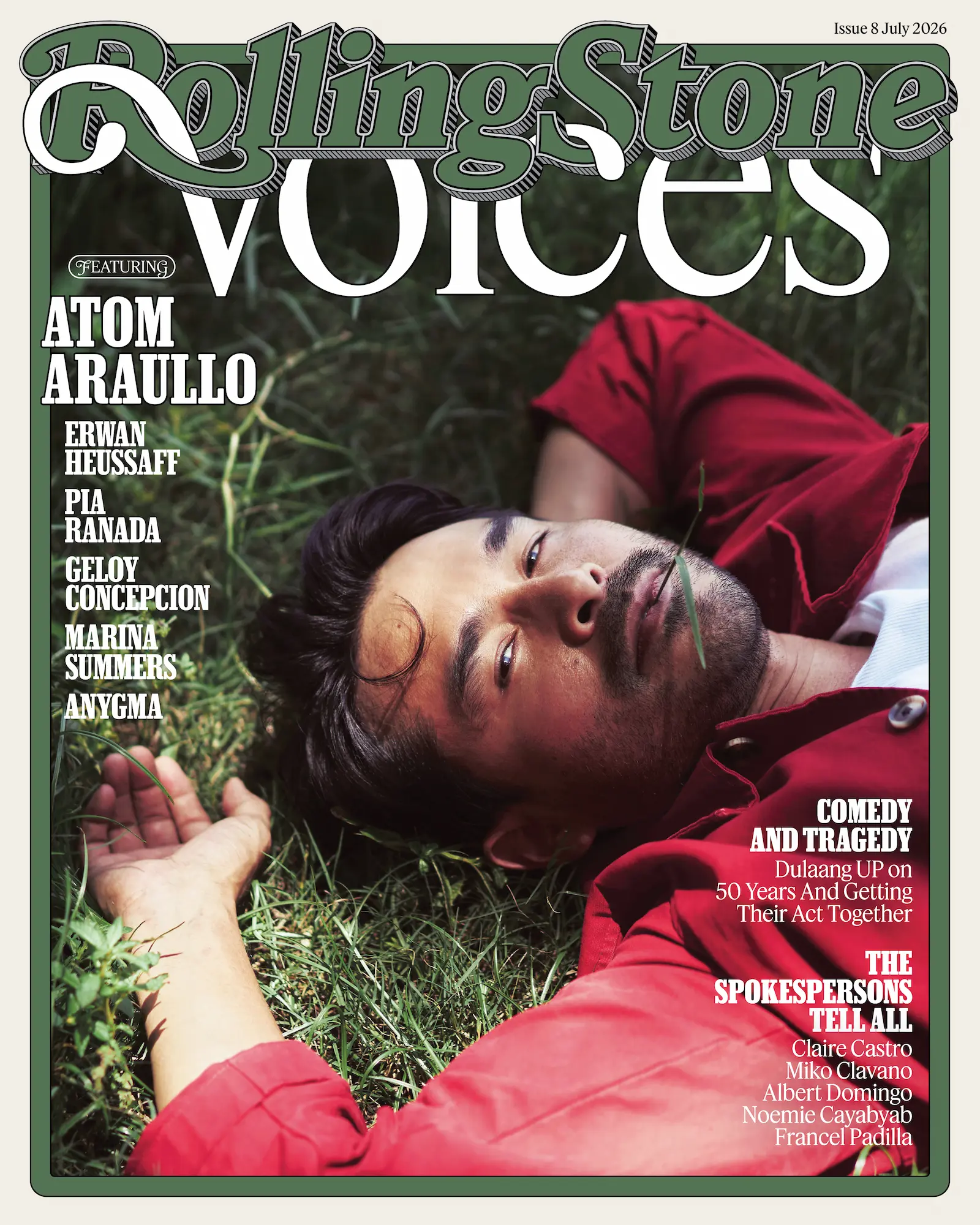
Rolling Stone Philippines Voices Issue, Now Available at SariSari Shopping