When director Judd Figuerres signed on to helm Alamat’s “LuzViMinda” music video, he knew he was stepping into a world with its own visual language. He’s worked with other artists before, such as Lustbass, Jess Connelly, Jason Dhakal, and James Reid, but says shifting into the Alamat universe required matching their eye for Filipino culture.
“Music videos are fun because every artist is a different flavor,” Figuerres tells Rolling Stone Philippines. “I see myself as a mirror to the visions of these artists.” With Alamat and the group’s creative director Jason Paul Laxamana, that meant leaning into the group’s unapologetically Filipino identity, something he’s already familiarized himself with working on the video for their 2022 track “Gayuma.”
Figuerres says the concept for “LuzViMinda” started entirely different: a stylized, anime-influenced world blending Japanese and Filipino cues, supported by computer-generated imagery, or CGI. But when resources tightened, he found himself searching for a more grounded way of honoring the song’s bold and punchy Pinoy hip-hop elements. The breakthrough came specifically from the line “Lumaki ‘to sa Pinas,” lighting up a question for him: “What if the Alamat boys all grew up in the same community?”
“I [wanted] the video to be familiar and cool without repackaging our culture or making it more polished. Gusto ko lang talaga ma-capture ang Pinoy life cause it’s so cool to be Filipino.”
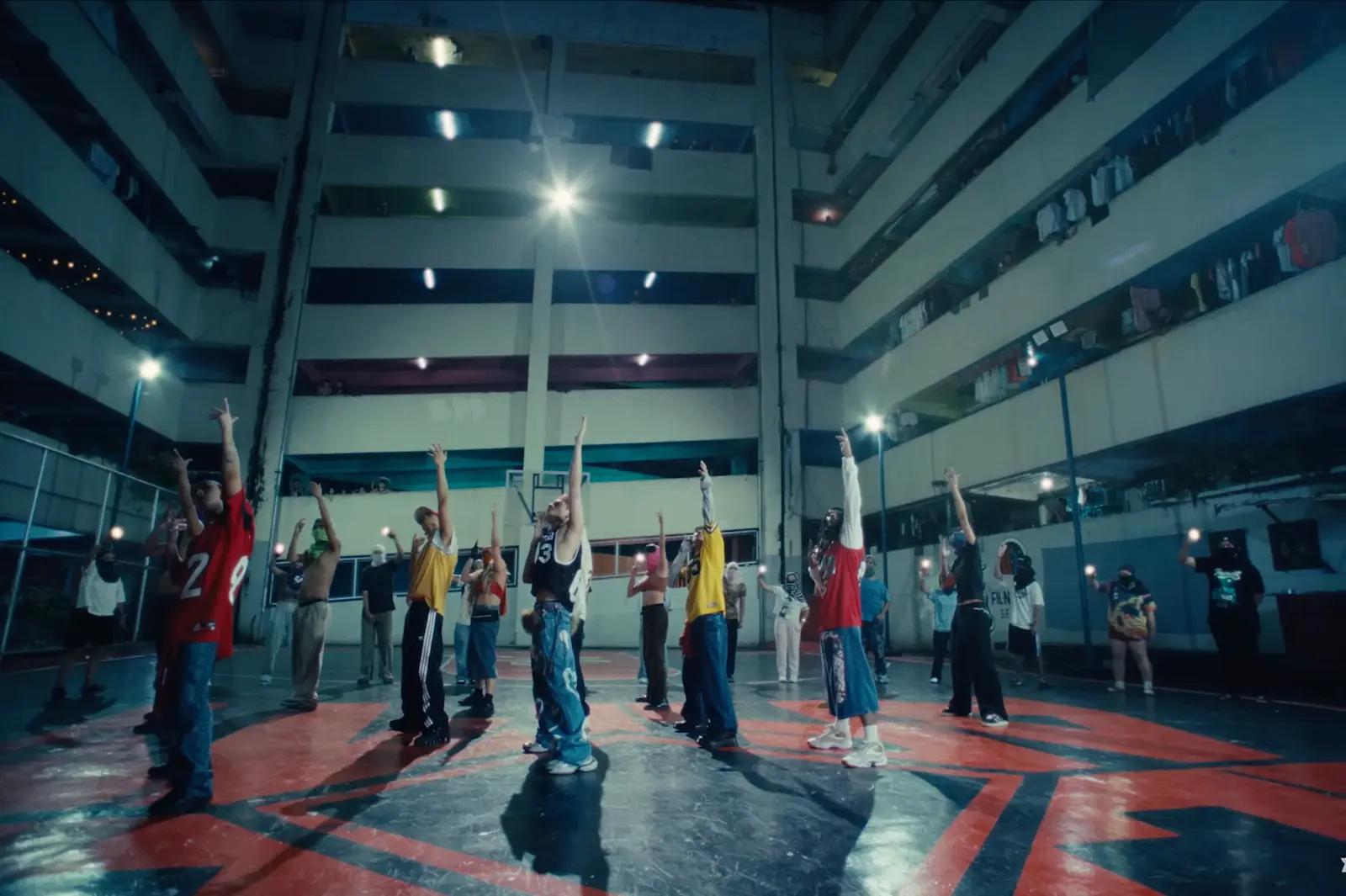
The answer pointed him toward the Fort Bonifacio Tenement in Taguig City, a 1960s public housing complex built under the Diosdado Macapagal administration, and whose community has faced eviction since 2010 due to the structure’s unsafe conditions.
Figuerres had long wanted to shoot there, and “LuzViMinda” finally presented the opening. He asked himself again, “What if lumaki sa Tenement ang Alamat boys? How would they rule Tenement?”
“I had curated vignettes in my head and we were lucky that all those locations existed at Tenement,” Figuerres says. “The sari-sari store, the jeepney terminal, the pisonet, the igiban, the overpass — these are all familiar places where a lot of our lives are spent.”
In shaping the look and feel of “LuzViMinda,” the director drew from the unvarnished quality of recent American hip-hop visuals. “I loved Kendrick Lamar’s DAMN. era,” he says. “All of his videos during that time felt photojournalistic, and I wanted to bring that honesty to the video.”
To keep the world from feeling overly manicured, the production resisted transforming the location into a stylized set. “The look is very stripped down compared to the usual P-pop video. The locations all looked like that naturally and we did minimal dress-ups.” Even the wardrobe emphasized that lived-in sensibility; stylist Florian Trinidad mixed pieces from the members’ own closets with curated items to keep them blended into their environment rather than towering above it.
“Music videos are fun because every artist is a different flavor. I see myself as a mirror to the visions of these artists.”
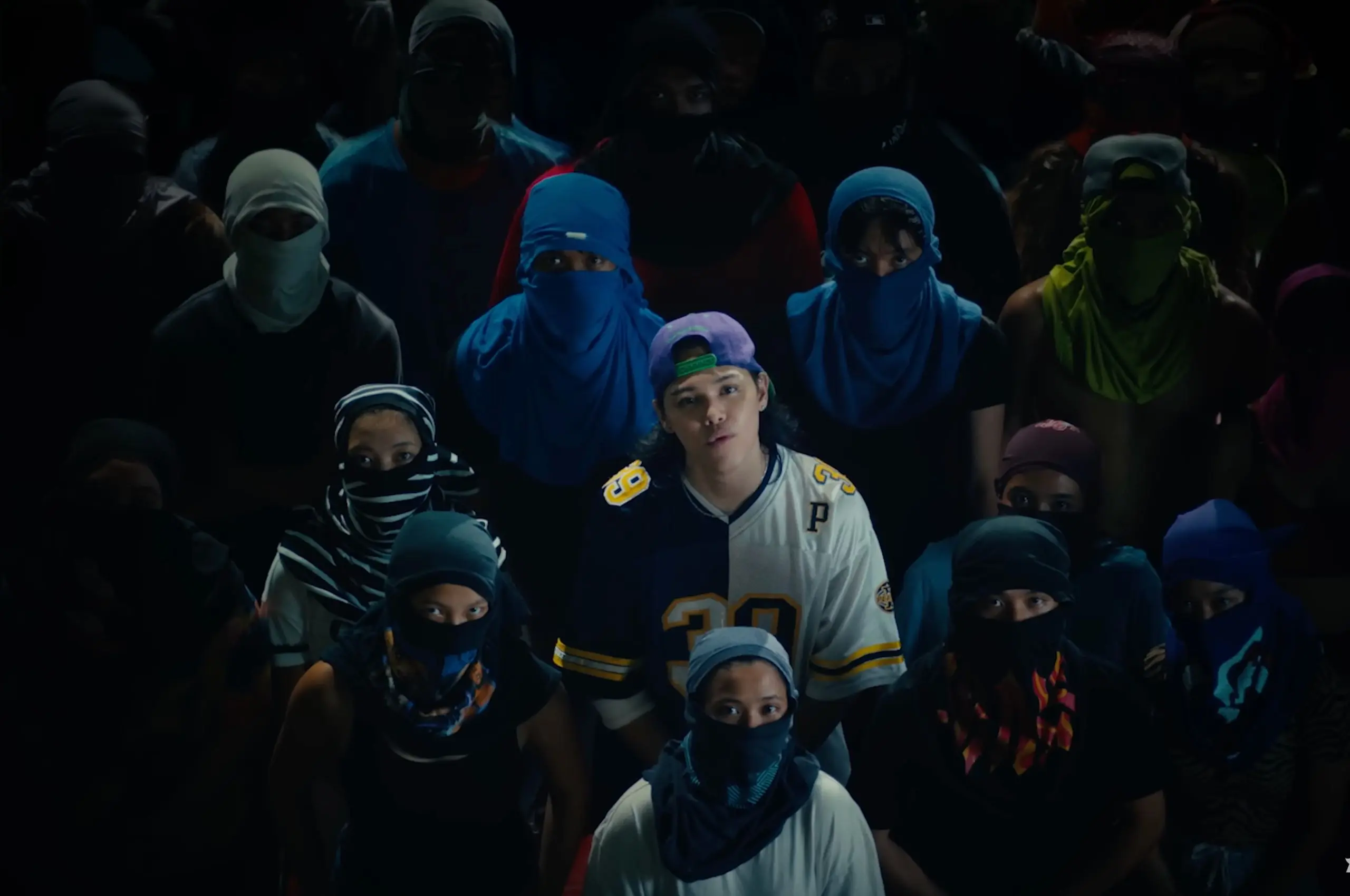
Crowd participation was also central to Figuerres’ vision. Dancers were provided by Viva Entertainment, and the production team cast Tenement residents. Working closely with assistant director Matt Padilla and director of photography Ian Guevarra, he composed scenes that felt layered and communal, creating moments where Alamat’s performance intertwined with the movement of everyday life.
This framing was deliberate, according to Figuerres. He says, “The backdrop is Filipino life, the spectacle is the Pinoy talent that is Alamat, and that was my formula.”
Ultimately, Figuerres set out to create something recognizable, an image of the Philippines that felt honest without being sanitized. “I [wanted] the video to be familiar and cool without repackaging our culture or making it more polished. Gusto ko lang talaga ma-capture ang Pinoy life cause it’s so cool to be Filipino.”
Recommended Video