


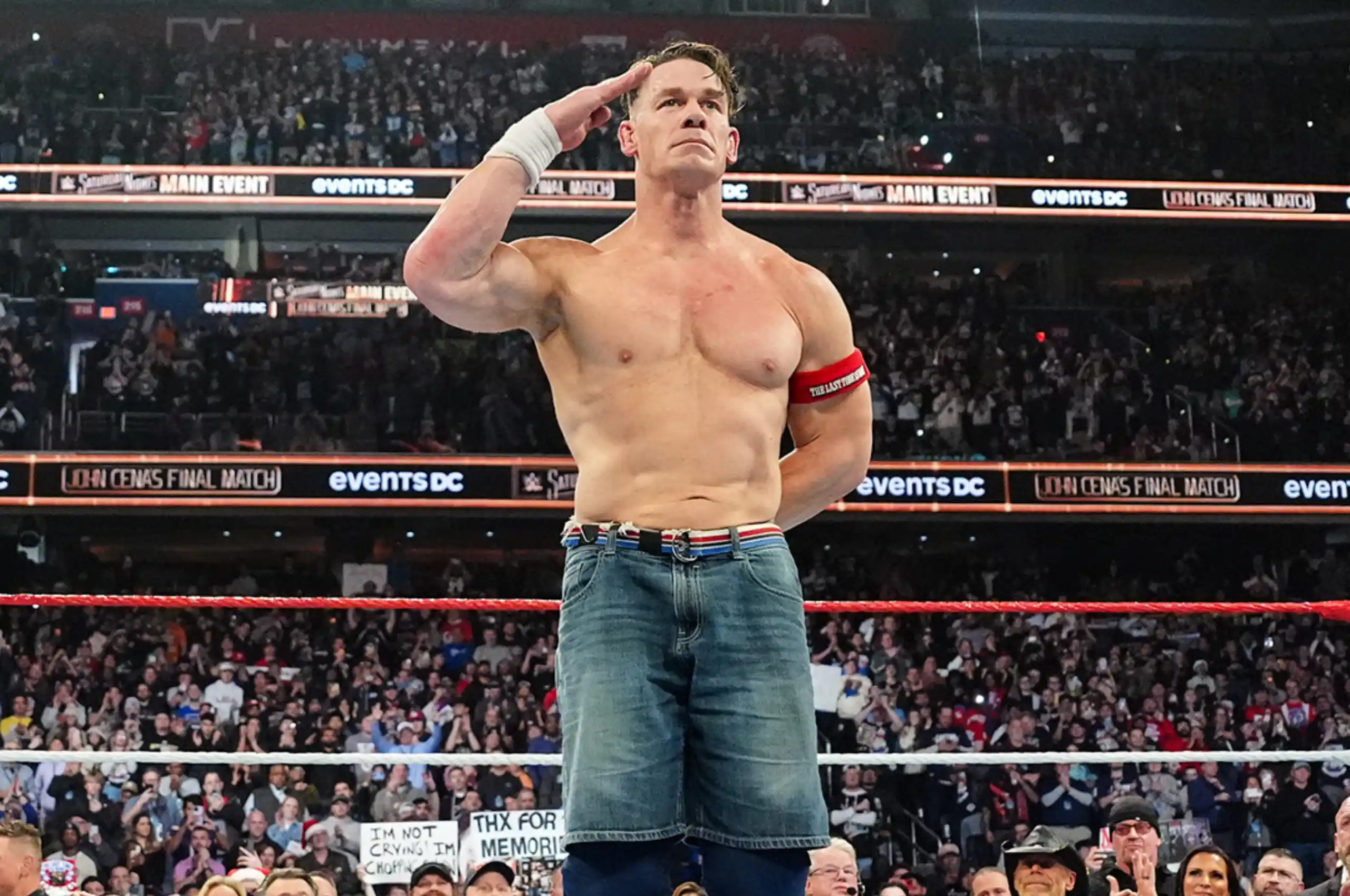
John Cena’s final match ended the only way it realistically could, with him giving everything and leaving the ring on his back. At Saturday Night’s Main Event on December 13, the 17-time world champion faced Gunther in a match that was billed as The Last Time is Now. The result was predictably heartbreaking for much of the crowd. Cena tapped out to Gunther’s submission, closing his in-ring career with a loss that felt heavy, final, and unavoidable.
Gunther played the role of the executioner with ruthless focus. Cena fought with the stubborn resilience that defined his career, but the match was built to strip away nostalgia. When the submission was locked in, the message was clear:Time had finally caught up.
Much of the post match frustration landed on WWE’s chief content officer Paul “Triple H” Levesque, whose embrace with Cena drew loud boos from the crowd. Fans wanted a softer landing, or at least a heroic escape. Instead, they were given a reminder of wrestling’s oldest truth: Retirement matches rarely end in triumph for the person saying goodbye. Cena, to his credit, leaned into it by humbly tapping out to Gunther with a smirk on his face. He thanked the audience sincerely by the end of the match before he walked away from the ring.
In the wrestling culture context, the decision made sense. Cena exited by elevating Gunther as a dominant force, not by protecting his own legacy. Wrestling history supports that choice. Steve Austin lost to The Rock at WrestleMania 18. Ric Flair fell to Shawn Michaels at WrestleMania 24. Michaels himself lost to The Undertaker at WrestleMania 26. Cena joins that lineage now. It was sad, frustrating, and uncomfortable. It was also the right call.
Recommended Video