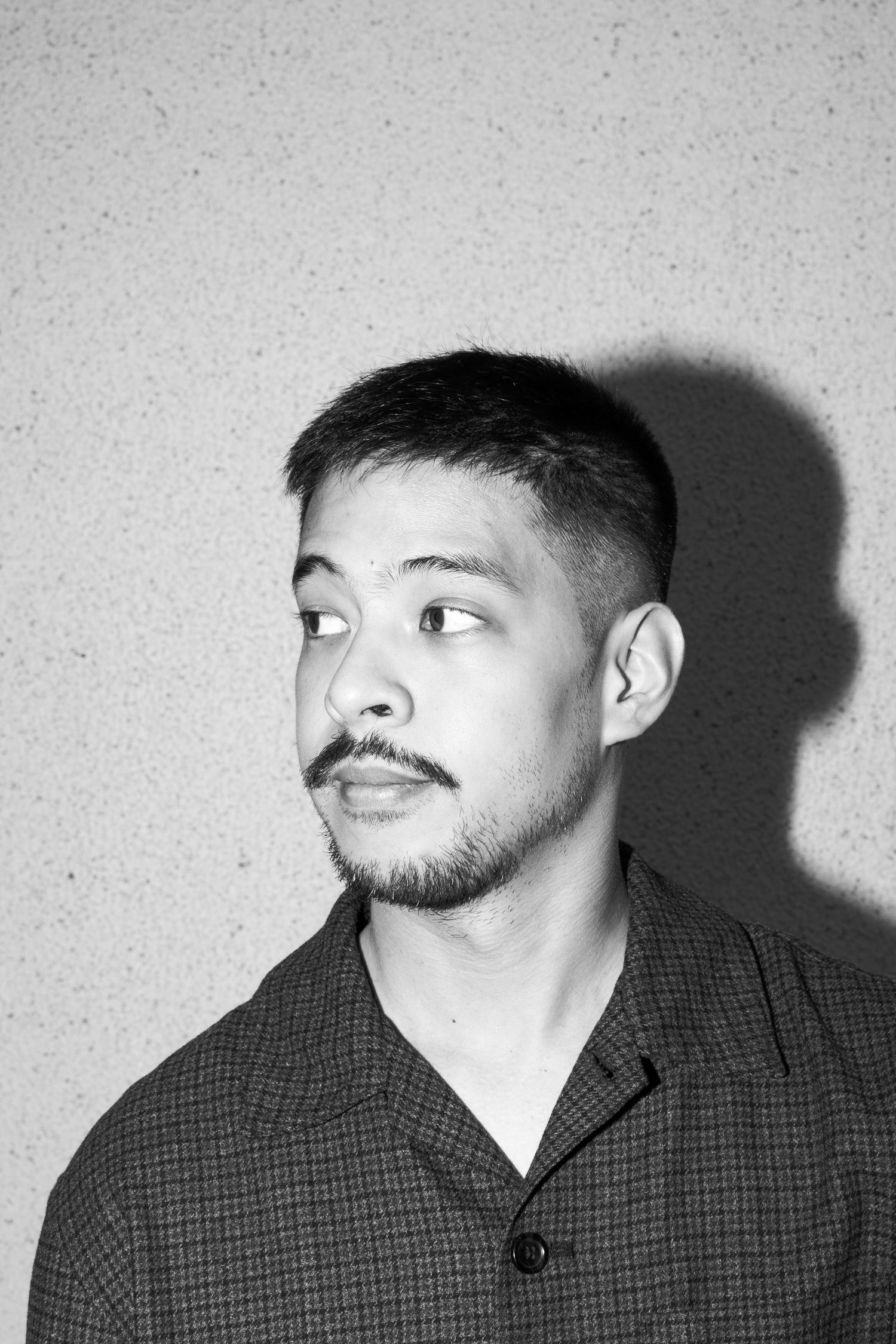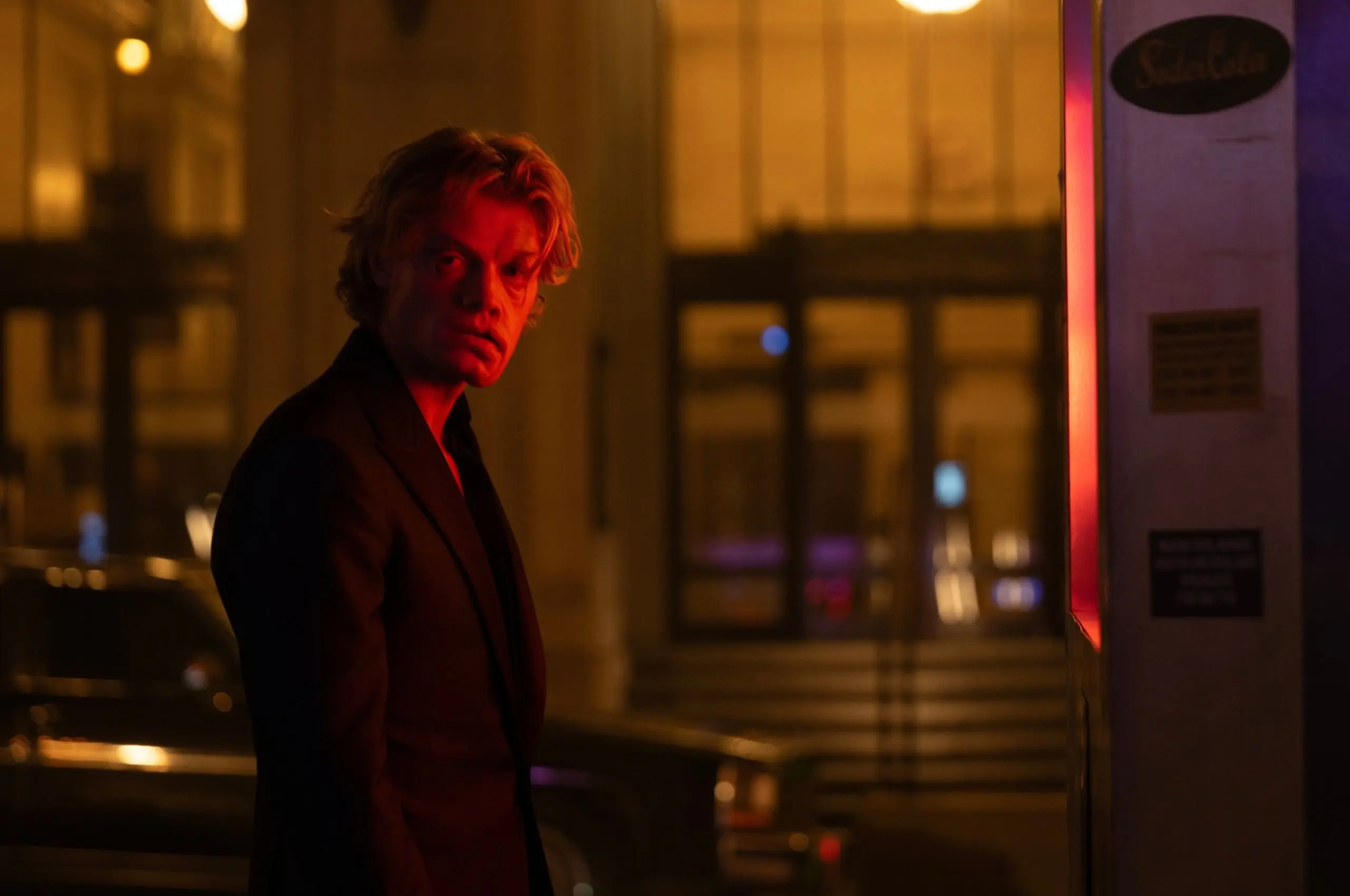


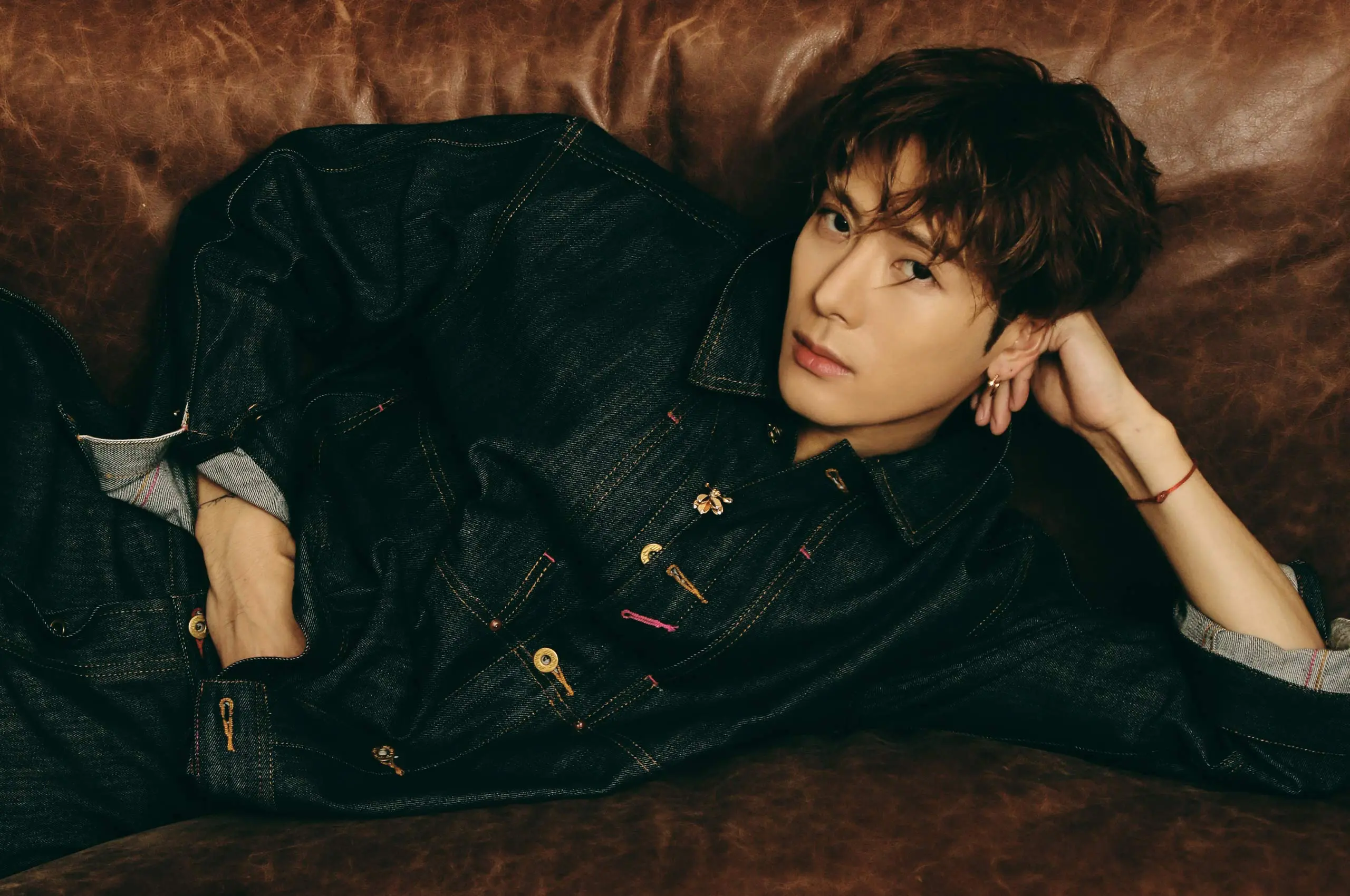
At the core of Jackson Wang’s Magic Man albums is the titular persona, someone who’s descended into hell and back, to be reborn as a man toeing the line between light and darkness. It’s no secret that Wang has alluded to the Magic Man as an alter ego, a representation of what he has gone through since he pursued a solo career. Initially conceived for the first Magic Man album in 2022, Wang continued the saga this year with Magic Man 2, an 11-track affair written and produced by Wang himself. Magic Man 2 is his most personal outing yet, an album that expands on the soundscape of the first Magic Man while holding everything closer to his heart — too close since Wang said that all the songs are culled straight from his journals.
“I think [the Magic Man] represents my alter ego, how I feel,” he says. “Being in this industry and in reality, life could suck, you know? And life could be really realistic, and people, even your best friends, could betray you. Life could be a good place, but it could also be a terrible place. This album is very personal to me, talking about my story, and in those three or four years of my life, that’s how I felt being a part of the industry. That’s why it’s so dark.”
Prior to finishing Magic Man 2, Wang took an eight-month hiatus, looking back on his career so far, his experience in the music industry, and sifting through personal relations and dynamics, taking time to brew the tempest that would be his third solo album. Magic Man 2 is more subdued, confident, and carefully laid out to structure the sonic journey, much like Wang’s personal reflections.
“High Alone” begins the album as an introductory palette, then dunks the listener through peaks and troughs. There’s the languid contemplation of “Not For Me,” the percussion-heavy jam of “Buck” (featuring Indian singer and actor Diljit Dosanjh), the swagger of “GBAD,” up to the closing salvo of the deeply intimate “Sophie Ricky,” in which Wang addresses to his parents, up to the acceptance stage in “Made Me a Man.” And with that, Wang closes the Magic Man chapter in his life.
Days before the Manila leg of his Magic Man 2 World TourWorld TourA series of concerts staged across several countries and continents, often lasting months and promoting a new album. A stop in Manila is a major event for local fans, andGo to World Tour Glossary, Wang sat down with Rolling Stone Philippines to talk about learning everything on his own, and the pains and rapture of bringing something so close to his heart to life.
First off, congratulations on the success of your album, Magic Man 2. Coming from the first Magic Man album you released in 2022, what was the impetus for continuing the concept of Magic Man into another album?
Magic Man 2 is talking about who I am as a person. I think coming from K-popK-popSouth Korean pop music, known for polished production, precise choreography, and highly organized fan communities. With a massive following in the Philippines, K-pop shapes fan culture, concerts, and fashion, andGo to K-pop Glossary and also where I grew up, I’ve never — even as a solo artist — released something like that, and I’ve never talked about who I am. I don’t think a lot of fans, or even the people who know of me, know who I am, what I’ve been through, how I feel as a human. So, I think you know it’s important to address that, and it’s one of those personal albums that I feel like I need as an artist. It wasn’t strategized for a commercial purpose, or talking about stuff that people want to hear. It’s one of those albums [that I did] for myself, and I think I need it. Every artist needs that.
Would you say you’re more involved in making this album than you were with the first one?
I feel like a lot of people don’t understand, especially, I think it’s a big stereotype to like Asian artists or even like K-pop artists. People think the company makes everything. The artist just needs to come and cut the song. I spent a year creating everything myself [in this album]. So I don’t think it’s like participating; I think other people are participating in my album.
Over the course of those albums, even the first one you did before Magic Man — Mirrors — what are the things that you’ve had to learn as a musician, as a writer, and as a producerProducerThe person who shapes how a record sounds, from arranging and recording to guiding performances and making creative choices in the studio. A great producer can bring out the bestGo to Producer Glossary?
I think it’s more [about] the skill set level. But I think the hardest part is finding your sound, being able to express who you are, and managing and balancing everything in production. For example, [in] making an album, the music and the visuals, the outfits, just every piece of the puzzle needs to make sense. And a lot of times it can easily go wrong because there are different divisions. Let’s just say, for a music videoMusic VideoA short film made to accompany a song, combining visuals, performance, and storytelling to reinforce the music. Since the days of television, music videos have been a space for creativeGo to Music Video Glossary. There’s a script, but then, which directors do you source it out to? And when they see your script, they analyze it, and they have a different perspective on your script. When you film it, that could be different, too. When you impose how you edit it, that could turn out wrong, too. So I think the biggest thing that I learned is how to manage and balance everything.
You’re also involved in terms of the creative direction of everything, right?
Even the tour. Everything I created from scratch — from writing and creating. Every time I start a project, I make a deck. And at the end of the day, I think one of the things that I learned is that no one can help you besides yourself. No one can do it for you.
In another interview, you said that you’re not the type to be satisfied with your work, but you felt otherwise in Magic Man. So what was the case for Magic Man 2, and how much did you have to push yourself in the album until you felt that, “Okay, this is the album that I’m proud of”?
I feel like the first time… I think I’m proud that I get to do it, not to compromise, and to serve anybody. Even in the performance, I hope people in my community, or the people who do not know me, when they listen to my album — because the entire album is talking about how I recovered from like really dark days of my life — I hope that [the album] could give encouragement and inspiration to other people, [that] by sharing my story, besides just music and besides just performance in concert, they could take away the message that I’m trying to say.
I noticed the songs are a bit more contemplative than on the first album. Was that a specific direction that you wanted to make?
No. I think it was just making a lot of songs and then not really thinking about the commercial side of it. Just whatever that felt real to me. I think we didn’t even do much post-production on it because it was just the first few takes, and it felt real rather than it felt good.
In all the songs on the album, I found “GBAD” the most surprising because it’s such an unexpected drop in the middle. Can you tell us more about that song?
In every single song in the album, there’s a message about what I feel and how I feel as a person: just living in reality, and life in general. In “GBAD,” life could be really good; it could be a lot to handle, but it could also be like a paradise. So, it depends on how you think. And one of the quotes that I just thought — and by the way, every single song is straight from my journal — that life is a very beautiful place, but sometimes you just got to be an asshole. Because when people make you uncomfortable, you’ve got to protect your will. You get me? Because we all have good hearts, right? But we have boundaries. When people try to manipulate [you] and step over your boundary, you just got to be a dick, right? But to them, it might look like a dick but all you’re doing is just protecting your own will.
Were there albums that inspired the music for Magic Man 2, or were there albums that you were listening to heavily or closely while making it? Or even like when you’re writing your journals.
I don’t know. With age, I start to enjoy slow songs more. I start to enjoy songs that talk about real things rather than just Candy Crush and strawberries or just random colorful stuff, you know? Because I feel like that’s meaningless. But sometimes it’s good when people are super stressed out, you just want to hear some bullshit like that. But I feel like the older I get, the more I love meaningful stuff and slow songs.
“We all have good hearts, right? But we have boundaries. When people try to manipulate [you] and step over your boundary, you just got to be a dick, right? But to them, it might look like a dick. but all you’re doing is just protecting your own will.”
Can you talk about working in Team Wang and transitioning from a star to someone who’s really more behind the scenes?
I think I became more behind-the-scenes because I felt helpless because it wasn’t going the way that I wanted to and that’s why there were moments that I just stepped in, and I control the pace. That’s when I started to do more behind-the-scenes work because things are not going great. But I enjoy it. The more I do it, the more I enjoy it because [I’m] able to control my pace and the destiny of the company, or the team, and [my] career.
I think that’s the responsibility of every artist. Normal people think like, “Oh, Jackson, you probably have like 100 people on your team when you do Coachella, when you do this…” or “There are so many people that think this for you, and all you got to do is just wake up, make up, and just show up and leave.” I wish I had that. I wish! I would die right now to have a team like that. But reality doesn’t work like that. I guess it’s innate for people who are creative [to] really want to take charge of their own.
Sometimes when I’m just reflecting through that year when [I was] making the album, I was thinking [about] some of the songs that I sang in GOT7 — I didn’t even know what [they] meant, you get me? Even my songs during the early days… I didn’t know what they meant. That hit me real hard, and I started to think that if I released a lot of songs like this, or if GOT7 released a lot of songs like that, what if we didn’t even understand it? How would our fans understand it? That made me start to question, do they love us for who they think we are, or do they love us because we’re us? That really changed me a lot.
Do you feel more protective of Magic Man 2 because this is a personal album?
I felt like it’s a release. This is the first time I’m telling my fans who I am and how I feel, not being afraid of it. And like I mentioned, are they supporting the Jackson that they know, or are they supporting me? But who am I? There was a point before Magic Man 2 that I didn’t even know who I was. I didn’t know if I’m who everyone thinks I am. Or am I the one who I think I am? But the problem is, I didn’t know who I was because I was singing a lot of songs and performing a lot of things that I didn’t even know.
As my last question, in what form do happiness and contentment play a large part in your artistry now? Especially that you’re more focused on being personal in your music?
I think being able to be honest plays a big role because I want to make sure that whoever they are loving, whoever anyone is hating, I want to make sure that it’s me. Talking about something that is [very important to me]. We can’t just talk about Candy Crush every day. It’s good sometimes, but it can’t be the main thing.
It’s like a diet.
Yeah. I mean, don’t get me wrong, it could be the biggest song in the world, but does that mean anything to you, though, in your heart? So, as I said, the main thing is just talking about something real about me and my story. I think that’s what I want to do.
Photographed by Ennuh Tiu. Creative and Fashion Direction by Daryl Chang. Art Direction by Gelo Quijencio and Alannah Mitra. Styling by Bettina Banez. Assisted by Mel Estillore. Tailoring by Nina Amoncio and Patch Amoncio. Makeup by HONG Eunjae. Hair by LEE Han. Photography assistance by Rojan Maguyon and Popoy Obales. Shoot Coordination by Liezel Restauro.
Special thanks to TEAM WANG and Publicity Asia. Shot on location at the Presidential Suite of the Dusit Thani Manila.
Recommended Video