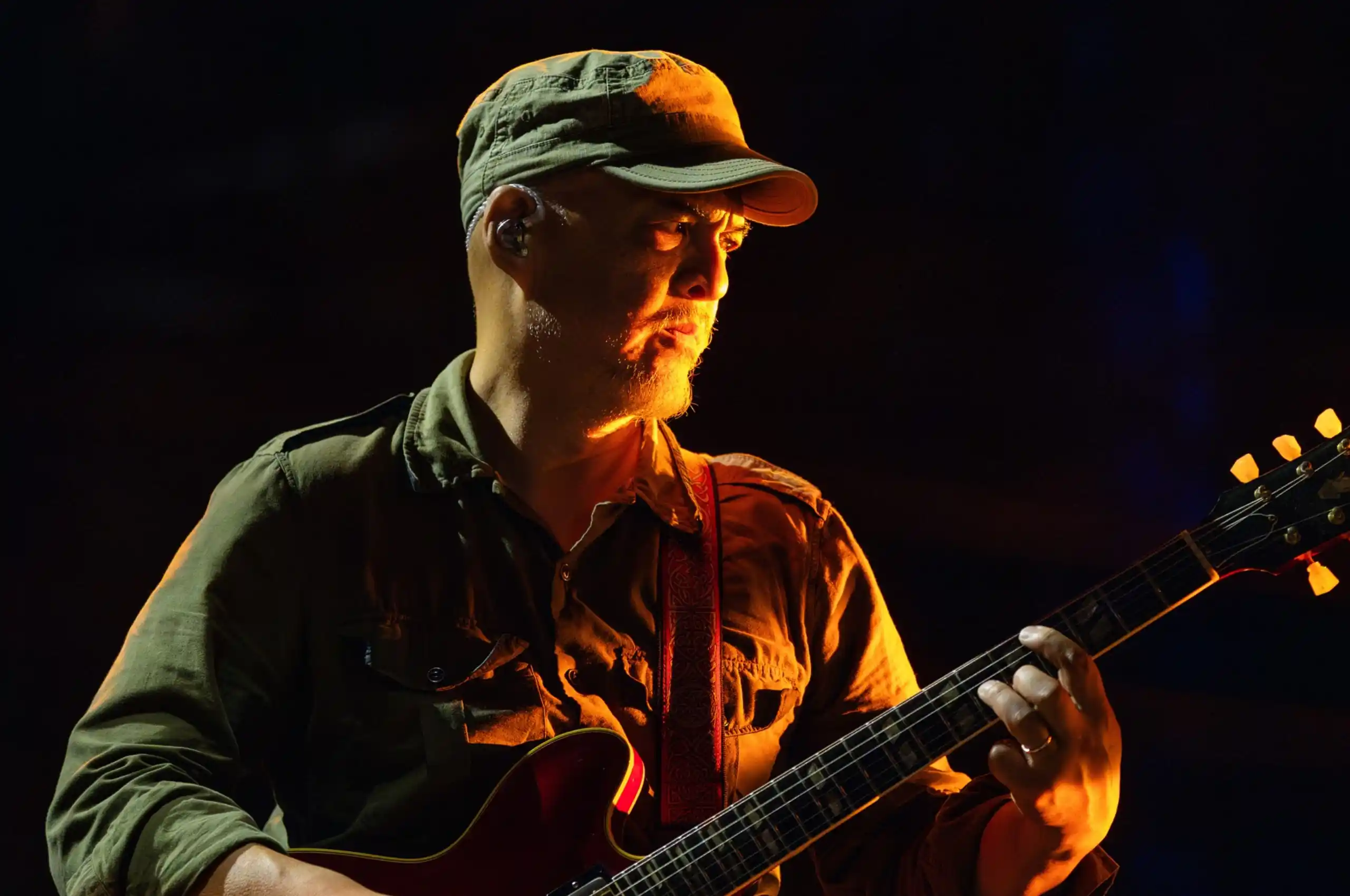
Joey Santiago, one of the lead guitarists of the seminal alternative rock band Pixies, is not the type to mince words about his place in rock history. “What you have in your pocket, you just have to take it out,” he tells Rolling Stone Philippines, not as a threat but to illustrate his philosophy of playing live.
The band is famously known for its smash single “Where Is My Mind?,” which later became the needle drop for the infamous closing scene of David Fincher’s Fight Club in 1999, years after the band’s first breakup. Whether in podcasts or in tell-all biographies across decades of rock literature, Santiago has remained candid about his life and work. For one, he admits the feeling of finally playing in his hometown in Manila — on May 10 at the Filinvest Tent in Alabang, Muntinlupa City — has not fully sunk in.
Santiago helped pioneer the loud-quiet-loud dynamic of late ‘80s and ‘90s alternative rock through his angular guitar style. His unconventional approach, favoring distortion and dissonance over traditional solos, would go on to influence artists like Nirvana’s Kurt Cobain and shape the broader sound of alternative rock.
“I can’t really say much about if I delve into any culture, for that matter. I’m in my own little head.”
Influence, however, was never his intention. As rock continues to evolve, Santiago remains firm in what he brings to the instrument, whether revisiting legacy material from albums like Surfer Rosa and Doolittle, or continuing to perform decades later.
Speaking with Rolling Stone Philippines, Santiago reflects on guitar music, the shifting rock landscape, and his own lineage. Despite his Filipino heritage, he admits there was no conscious effort to incorporate cultural identity into his playing.
“Actually, it’s going to disappoint you, but [there’s no influence]. It’s just because music is music,” Santiago says. “I suppose maybe when I do the little tremolo stuff, when I’m doing the fast picking, that might be a little bit of a Spanish influence there. But I can’t really say much about if I delve into any culture, for that matter. I’m in my own little head.”
“Today, I’m not really much in touch with what’s going on,” he says before adding, “Well, I kind of am.”
Santiago still keeps an ear open. He points to New York indie rock band Geese and their album Getting Killed as one of the few breakout acts that caught his attention, owing to its unpredictability and off-center approach.
“The big buzz band out there now is a band called Geese. And they’re really, really good. [Cameron Winter] has a very unique voice. The instrumentation is weird enough for me. I like it. So that’s what captures my ears.”
Loud Yet Quiet
As one of the guitarists who helped define alternative rock’s rhythmic tension, Santiago says those now-signature dynamics came from working within his own limits.
“Whatever you have, whatever skills you have, just embrace it. That’s it,” he says. “Those are the set of skills I had at the time. It was done in a creative way. Seems like the less tools you have, the more creative you’re bound to get.”
Even now, Santiago approaches his guitar practice as something unfinished. That restless curiosity runs through Pixies songs like “Debaser,” “Monkey Gone to Heaven,” “Broken Face,” and “Cactus,” where his playing continues to push against its own edges.
“There’s always something more to learn. It’s just endless,” he says. “In the end, you’re going to have to paint yourself in a corner and embrace what you like to hear.”
Recommended Video