

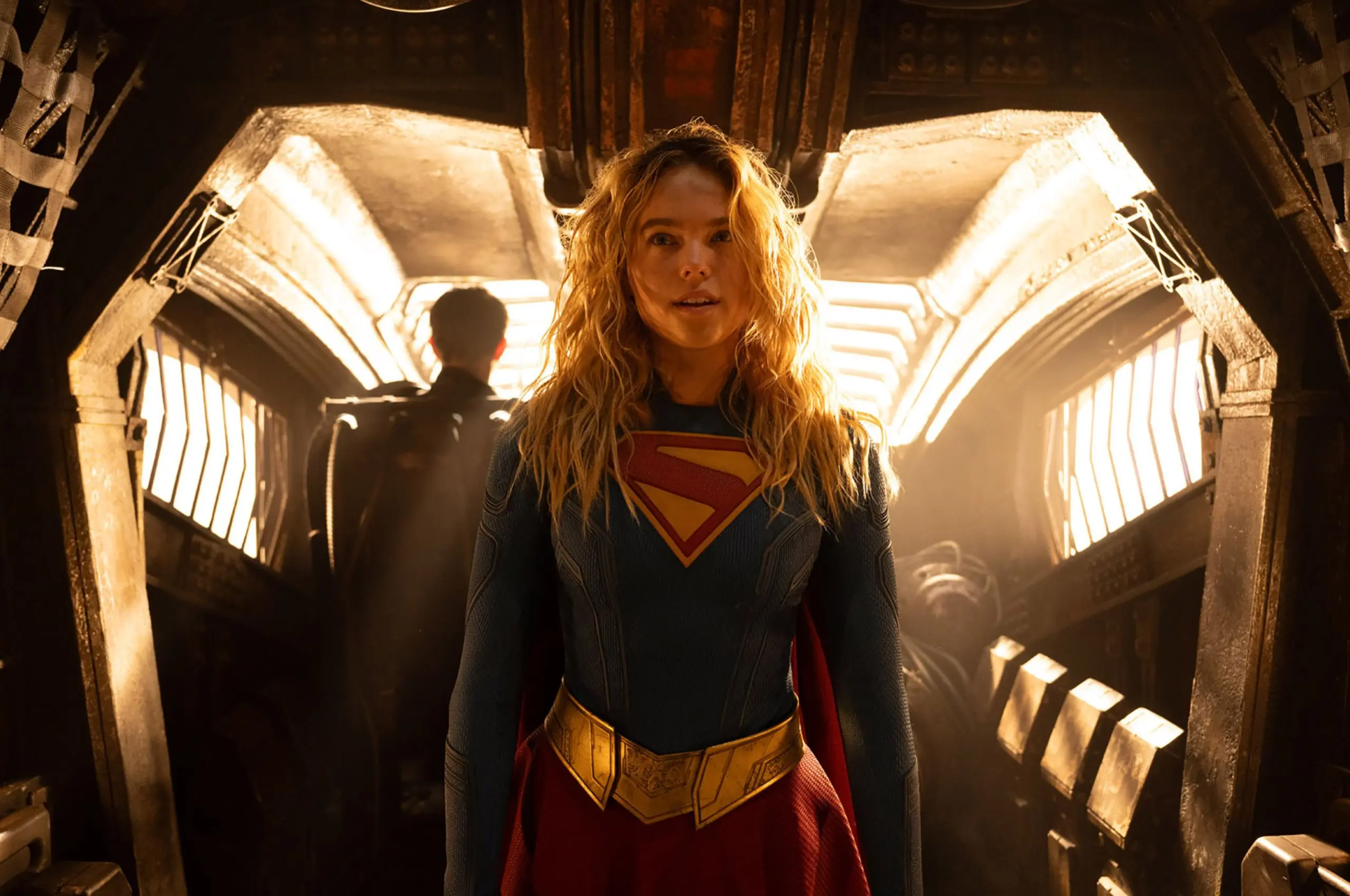
Supergirl, the much-awaited follow-up to James Gunn’s 2025 blockbuster Superman, is out in Philippine cinemas, and director Craig Gillespie couldn’t be more excited about its release. “It’s been a journey, finding the character of Supergirl, and Milly [Alcock] ultimately just became more and more kickass as the process went on,” he says in an interview exclusive to Rolling Stone Philippines.
Supergirl is set some time after the events of Superman, and includes a cameo from David Corenswet’s Clark Kent, but Gillespie’s film, written by Ana Nogueira, is very much its own story.
Milly Alcock, also known for playing a younger Rhaenyra in House of the Dragon, stars as the movie’s titular character, who’s recruited by a girl named Ruthye Marye Knoll (Eve Ridley) to avenge the death of her father at the hands of the Brigands, led by Krem (Matthias Schoenaerts). Playing the mercenary Lobo is Jason Momoa, who isn’t a stranger to DC film adaptations, having played Aquaman in the DC Extended Universe.
Gillespie has led a variety of other projects, from the acclaimed 2017 drama I, Tonya to Disney’s Cruella and even a Kid Cudi music video. Supergirl serves as the filmmaker’s foray into superhero flicks, and in this interview, he talks about the cast, the tandem of Kara and Ruthye, and being a part of the DC Universe (DCU).
How do you feel about taking on a film in the DCU?
The idea of being able to come in under the umbrella of DC with James [Gunn] and [producer] Peter [Safran], I couldn’t have been more excited. Honestly, I love James’s work. I’ve been a big fan for a long time. The tonality that he uses in his work I very much relate to, and he’s a filmmaker that takes chances and isn’t shy about that. When I first met with James, he said each film they want to approach like its own graphic novel, with its own illustrator and writer, and they’re all very distinctive in the comic book world. And when they sent this script to me, I read the first two scenes and I was in. I mean, there were such extremes that happened in the opening of the movie, and that tone out of the gate, I couldn’t wait to read the rest of the script. And it all delivered, all the way up to the final scene. It leaned into the trauma, the emotion, and the choices that these characters make that are not necessarily what the audience has seen before, and I knew coming in under James and Peter’s leadership, that they wouldn’t shy away from that.
What was it like watching Milly Alcock bring Supergirl to life?
I’m so excited about the film. It’s been a journey, finding the character of Supergirl, and Milly ultimately just became more and more kickass as the process went on. She has this strength about her, she’s not afraid to show her vulnerability. Her interpretation of Supergirl, and what we’ve done with her, is very rough around the edges and unapologetic. And it’s funny for sure, but it’s not the comedy that we’re necessarily used to in superhero films. And it was exciting to be able to explore that and keep her in this incredibly grounded place, to lean into that and never be outside of what she’s going through emotionally. It’s uncompromising, and I’m so happy with where we ended up and the way that Milly has been able to bring her to life, because it’s just unapologetic in the best way.
This was a four-and-a-half-month shoot and Milly’s in nearly every scene, and it is also a very physical role. Every morning, she got up an hour-and-a-half early and trained for the physical stuff on the day, because she had to stay in shape for all of that, it was interwoven through the whole shoot. But also, the poise and the focus that she turned up every day with. There’s a lot of action in this, but the moments between her and Ruthye, when she gets to talk about her backstory, she does it in such a beautifully delicate way, because she’s carrying a very guarded person as a character. Those moments could come in the middle of this long, physical shoot and be an intense three, four-page scene, and she’d be so present and so nuanced with it and perfectly in character for what Supergirl’s history has been. Those were always the most exciting moments for me, with Eve, the moment with her father, David Krumholtz, and then her mother as well, Emily Beecham. They were just such powerful emotional scenes, with the added complexity of being guarded. It was very tricky in a way, to strike that balance of emotion and restraint. And she was beautiful.
Who is Kara Zor-El, and can you tell us more about her arc throughout the story?
This is very much a story of self-discovery and taking responsibility. Kara’s been put into a situation that she didn’t ask for, she almost wants to run away from it, and it’s not until she faces her own trauma in a way — and seeing what Ruthye is going through — that she begins realizing perhaps she has to be accountable for herself, practice what she preaches, and just partake in life, really. She’s running away from a lot of things that she doesn’t want to deal with and using having a good time to escape. And she’s not sure what her role is in this universe. She’s got these powers, she’s got the opportunity, but Superman has a very strong footprint on Earth. She wants to be her own person and figure out what her rules are, which aren’t necessarily in the line with how Superman sees things.
Can you talk more about the duo of Kara and her unexpected companion in the film, Ruthye?
They’re a classic duo in that they’re reluctantly put together with the same mission, so to speak. Kara, who is our lead character, is singularly focused on what she wants to do, and Ruthye is a distraction that eventually wears her down and warms her up. But there’s a lot of friction before you see the cracks that start to happen and the warmth that starts to become between them, particularly on Kara’s side, where she’s put up these walls. This is gonna be three days and then she’s done. But Ruthye just gets under her skin in the best way and in a very patient way, so to see Milly and Eve with the restraint that they play against each other, and they take those barbs at times with a grain of salt, it’s like a dance that they do around each other’s backstory.
What was Jason Momoa like as Lobo?
In the best way, Jason is a force. He just fills the screen, you know why he is a movie star. I know Jason wanted to do this for years, and we got to really craft this character together, the whole look, and really pay homage to the comic book version of Lobo. There’ve been many decades of Lobo, but we really zeroed in on the ‘90s. And he came in with such enthusiasm, a lot of ideas, and really wanted to keep the humor and the eccentricities of Lobo that are in the comics. And I’m really excited that we got to do that. He just embodied the character in the best way.
Matthias Schoenaerts plays super-villain Krem. Who is Krem and why was Matthias the perfect choice to play the character?
Matthias is an amazing actor who came under my radar back with Bullhead. He’s done some amazing work over the years, and as we were trying to figure out who to play this role, I got wind that he would actually audition, which was crazy, you know? And I was so excited to play in that sandbox with him. And he auditioned for almost an hour. He came in and he was just ready to play, to try things, nothing was off limits, and the range of performances he gave me just blew me away. And then we just kept going with that on set. I was so excited that we cast him, and very graciously, he would give us this amazing range of performances, from some very eccentric stuff to some very dark stuff, so we got this choice of really crafting it in the edit. And I’m so happy with where we landed. He’s certainly an intimidating villain.
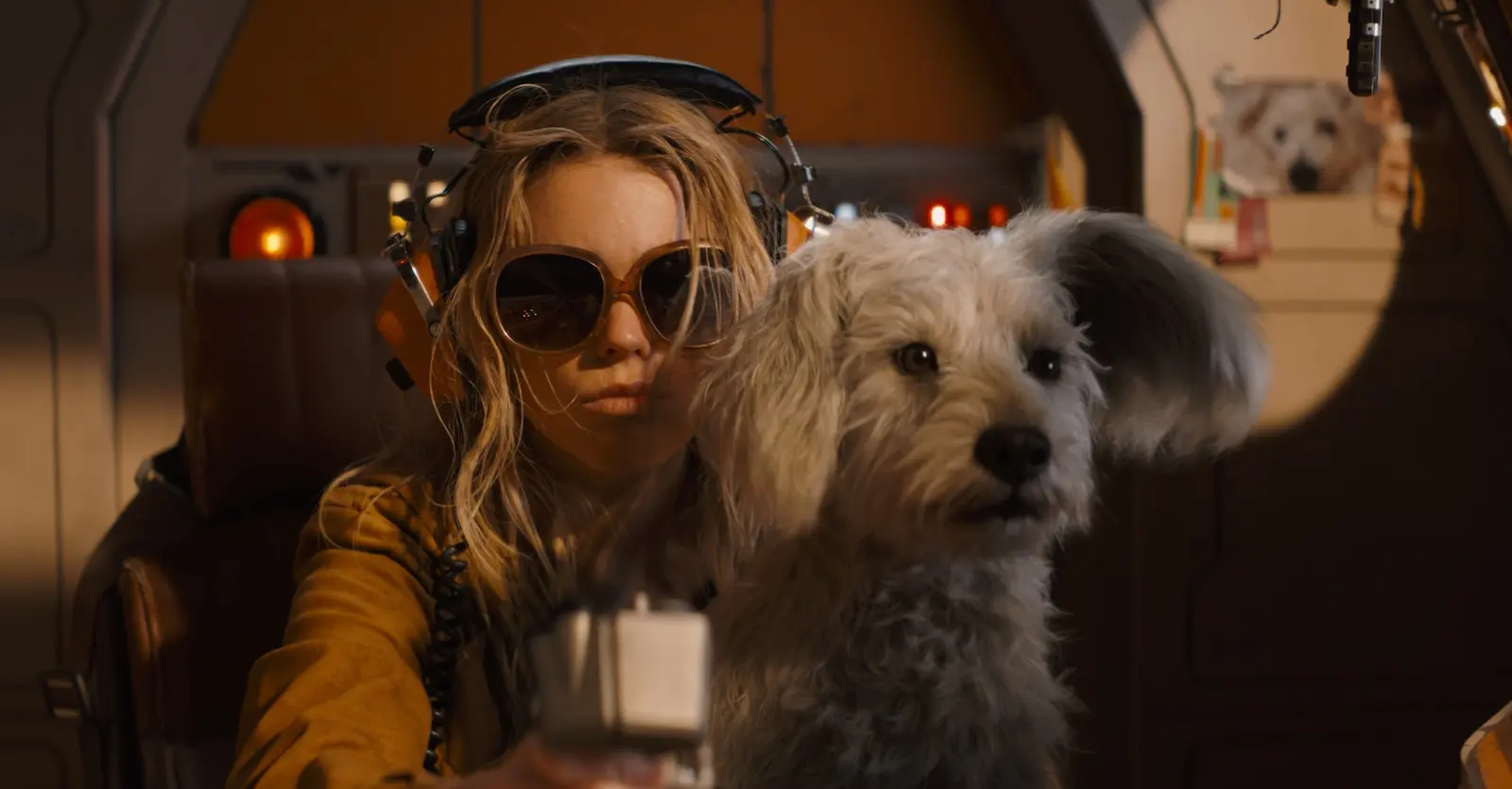
We saw Krypto in Superman. How important is Krypto in Supergirl?
Krypto is literally the pulse of the film, and there’s a ticking clock on Krypto as to whether he’ll live, so it was really important, first of all, to establish his relationship with Kara. She discovers him on Krypton in a very powerful scene. And he ends up being the only thing she takes with her from Krypton, so he’s her physical touchstone to her previous life. So, it was important upfront in the film that we got to understand their bond and how singularly they depend on each other. And then of course, when that rug gets pulled out, how important it truly is to her to save Krypto, and she’ll go to any means to do it. It also gives her a lot of leeway in terms of how frustrated or angry she gets at points, because there are very real stakes, she’s like very much on a mission and everybody better get out of the way.
What did you like most about bringing Kryptonian life to life?
That whole world was really interesting to imagine. In this movie, I think we have five languages, and Kryptonian was one of them, so those actors would have to learn these languages. I was blown away with these very long scenes in Argo with Kara and her father and mother that are three or four minutes long, all in Kryptonian, which is a manufactured language. They had to learn this and emote and perform it, and that was so powerful to see. And outside of that, we had to create this whole world. What is their architecture? What is their structure? What is the hierarchy? The physics that go on in their world? And so that was amazing. You couldn’t just turn around and give her a coffee cup. What’s the coffee cup look like? But our design teams were amazing and it was really one of the most fun things to do.
What was most exciting to work with about screenwriter Ana Nogueira’s script?
Tone for me is the thing I get most excited about. It’s that dance from something absurd to something with high stakes and drama, literally within five seconds of each other. And to me, it’s always like, how do we do that? How do we pull that off? How do we keep the audience still invested in the stakes, but able to laugh at some sort of situation that happens. And it was in the writing with Ana Nogueira, it was immediately on the page, and then it was just expanding on that. That’s the kind of thing I love to be able to pull off, so the audience is always on their heels and trying to keep up in a way. It’s a dance and it’s tricky, and you need an actor that can do that, that can have the emotional stakes and still deliver the line that doesn’t take her out of character, you know? You can’t do it without that, and Milly was terrific at it.
Director of photography Rob Hardy is in charge of capturing the look of the film. What was that process like?
Rob Hardy has such range, and we were really excited to not be shy with the cinematography on this film, in the sense of there’s a little bit of homage, as Rob would say, hearkening back to some of the ‘90s movies like Thelma & Louise, where you’d get these rich neons and dark palettes and just a real mix of color going on. And we tried to really embrace that when Kara and Ruthye go into these bar scenes where you’ll have red neons on their faces, strong light choices, and then the anamorphic lenses that we have with the big flares. I love the work to be cinematic, and he doubled down on that. There’s also a camera called “the chicken,” which is a very small camera on a gimbal that a gaffer or a stunt person can hold. And it’s got wheels, so our operator can sit back and direct it to move incredibly fast and get into tight spaces very quickly. That’s what was used in the oner, and I couldn’t have been happier with the way it all looked. And then also the process of the coverage and how we frame things, he has such a beautiful eye as well. It was so enjoyable getting to play in this sandbox with Rob.
Supergirl is in Philippine cinemas starting June 24.
Frequently Asked Questions
Craig Gillespie directed Supergirl, written by Ana Nogueira. Gillespie previously directed I, Tonya (2017), Cruella (2021), and various commercial and music video projects. Supergirl marks his first superhero film, produced under James Gunn and Peter Safran’s DC Studios.
Supergirl is set after the events of Superman (2025) and includes a cameo from David Corenswet as Clark Kent. It functions as its own standalone story, following Kara Zor-El on a mission involving Ruthye, the mercenary Lobo, and villain Krem.
Jason Momoa plays Lobo in Supergirl — a mercenary character based on the DC comics figure, with the film’s version inspired by the 1990s comic book interpretation. This is a separate character and continuity from his Aquaman role in the DC Extended Universe.
Kara Zor-El’s arc in Supergirl centers on self-discovery and accountability. She is reluctantly drawn into a mission, confronting her own trauma and the consequences of running away from responsibility, ultimately defining her identity outside of Superman’s influence.
Director Craig Gillespie describes Supergirl as grounded, emotionally uncompromising, and “unapologetic.” Screenwriter Ana Nogueira’s script balances dark emotional stakes with absurdist moments, a tone Gillespie describes as moving from high drama to comedy within seconds, distinct from conventional superhero film conventions.
Recommended Video