



The Philippines faces another flash point with China after Chinese Ambassador to the Philippines Jing Quan said Beijing could “easily win” if it chose to use force in the West Philippine Sea, flexing its military advantage — in response to Department of National Defense Secretary Gilberto Teodoro Jr. labeling China a “troublemaker.”
“If we want to use force, we may easily win. But no, we’ll not use force. We love peace,” Jing said in a press briefing in Quezon City on Thursday, October 14.
The Department of Foreign Affairs (DFA) immediately countered Jing’s remarks, describing them as a “thinly veiled threat of the use of force.” The DFA added that it is “hardly helpful” in the context of the bilateral ties between the two countries. President Ferdinand Marcos Jr. also said that the remarks sound very much to him “like a threat,” and is not a “very diplomatic statement to make.”
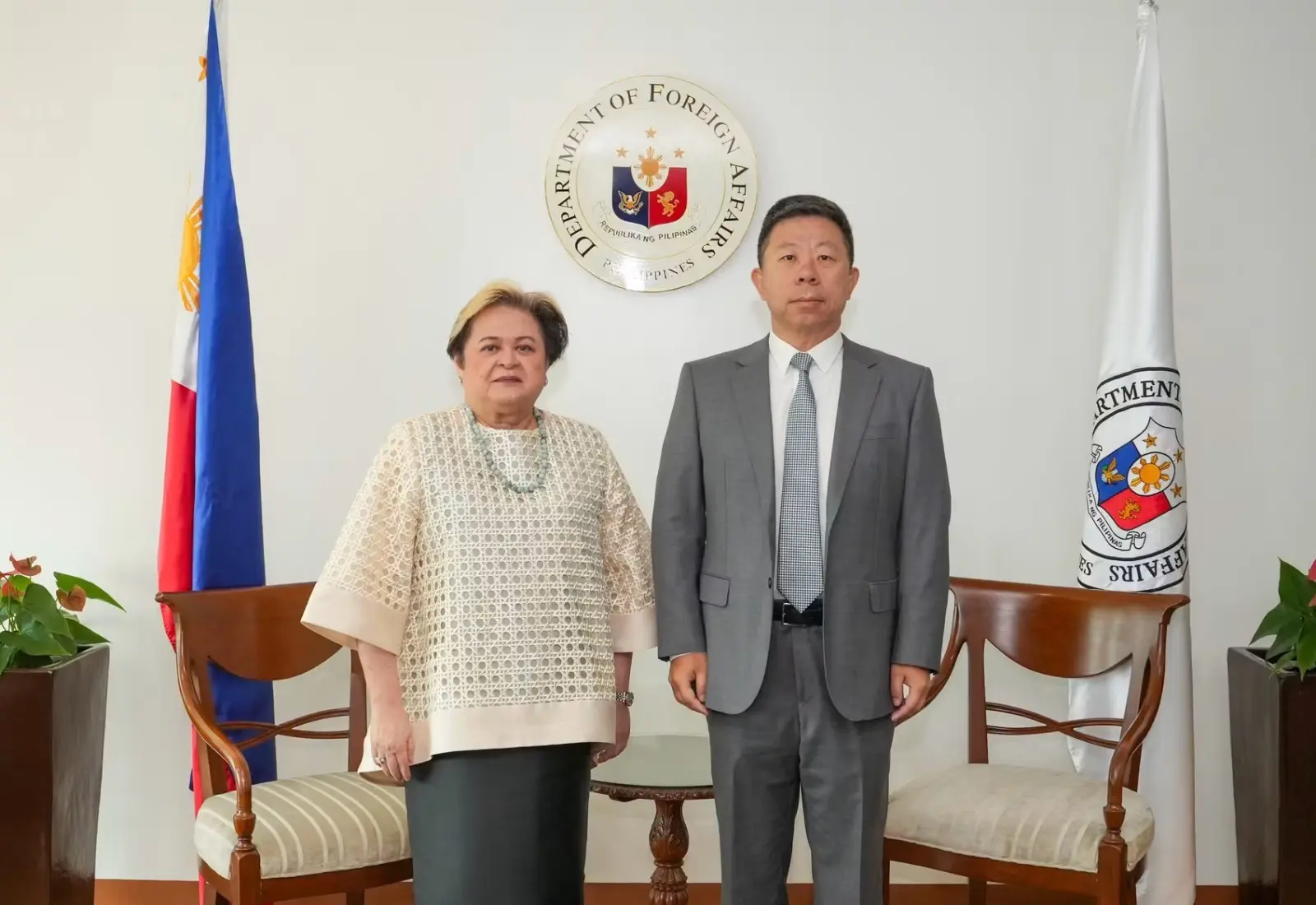
On Monday, October 19, the DFA released a statement after DFA Secretary Tess Lazaro summoned Jing, saying that the department condemned his remarks as “provocative and unacceptable.”
PERSONA NON GRATA
In an X post on Friday, October 16, the Chinese Embassy in Manila challenged the lawmakers who were calling for the ambassador’s expulsion to “stop bluffing,” and asked if it was a threat or coercion.
Some senators and house representatives are talking about declaring the Chinese ambassador persona non grata. Is this threat or coercion? But anyway, just do it. Otherwise, STOP BLUFFING.
— ChineseEmbassyManila (@Chinaembmanila) October 16, 2026
On Saturday, Senator JV Ejercito issued a video on his social media pages telling the ambassador in Mandarin to “go home,” and reiterated the Philippines’ position on the seas.
He further said on Sunday that the Senate is already mulling a resolution to declare the Chinese envoy persona non grata, or an unwelcome person, in the Philippines following his threats. This was also backed up by other senators like Tito Sotto, who said that it is within the rights of the legislative body to act against threats to national sovereignty.
Ejercito further clarified that the Philippines does not want war, recognizing China as “super powerful,” but that they have to respect the Philippines’ sovereignty.
In another recent post, the embassy mentioned how “anti-China” politicians have been threatening them for over three decades now with “old and low tricks.” They added that they will likewise no longer welcome Philippine officials to China. “While diplomacy is based on reciprocity, we will not welcome them to China,” they said.
STILL FLOATING ON DIPLOMATIC TIES?
While a number of senators criticized the remarks, Senator Jinggoy Estrada reminded the lawmakers to be cautious of their actions in order to not close “the doors of dialogue.”
The embassy also shared Foreign Ministry Spokesperson Mao Ning’s comment, who said that “China’s position on improving and growing its ties with the Philippines is clear.”
Before the escalated rhetoric, the Palace previously said on October 14 that the Philippines has no plans to sever ties with Beijing as both countries benefit from each other commercially, especially when it comes to trade and investment. A day later, Jing called the Philippines “a close neighbor and friend with deep historical and cultural ties.”
The DFA further stressed in its recent statement that it will “keep open lines of communication” with China and work for bilateral and diplomatic relations, while “firmly upholding” the country’s position on the West Philippine Sea.
FREQUENTLY ASKED QUESTIONS
Persona non grata is a diplomatic designation declaring a foreign official unwelcome in a host country, usually leading to expulsion.
Lawmakers say Ambassador Jing Quan’s military or force threat in the West Philippine Sea threatened Philippine sovereignty.
Jing Quan said China could “easily win” if it used force in the West Philippine Sea. The DFA called it a “thinly veiled threat.”
The Chinese Embassy told lawmakers calling for persona non grata to “stop bluffing” and said it will no longer welcome Philippine officials to China.
Yes. The Palace says it has no plans to sever ties with Beijing, and China’s envoy has signaled openness to improving relations.
Recommended Video