

As the Philippine government unravels a seemingly endless string of controversies and more politicians get embroiled in scandals, libel threats against journalists and media outlets continue to surface over their mere reporting of findings and facts. But these threats are hardly new in a country where the press remains in a battle against legal and institutional challenges, alongside the safety risks the media faces. The National Union of Journalists of the Philippines (NUJP), for one, has renewed its call for the decriminalization of libel, arguing that it can be used to stifle press freedomPress FreedomThe right of journalists and news organizations to report without censorship, intimidation, or fear of reprisal. A free press is key to democracy, and in the Philippines it remains aGo to Press Freedom Glossary.
The country has two governing laws on libel: there is Revised Penal Code Article 353 for traditional libel, or the committing of the public and malicious imputation of a crime, vice, or defect through traditional print or physical media; and Republic Act No. 10175, or the Cybercrime Prevention Act of 2012, against cyberlibel, or defamation through digital platforms. Libel can be filed as criminal, where the convicted can be imprisoned for a maximum of six years for traditional and eight years for cyber, although both are bailable. For civil cases, meanwhile, only payments for the damages are imposed.
On October 24, veteran journalist Philipp Lustre Jr. was arrested over a cyberlibel complaint, after which he posted bail two days later. While the complainant was initially unidentified, Lustre’s counsel later revealed that it was Vice President Sara Duterte’s husband, Mans Carpio. A day before Lustre’s arrest, GMA Network also received a P20-million libel and cyberlibel case filed against it by Rep. Paolo Duterte.
Here, we take a look at some of the biggest (in terms of financial damages or consequences) libel cases filed against the Filipino media — the reasons for the filing, who’s behind each, and what happened next.
Cory Aquino vs. LOUIE Beltran, ‘The Philippine Star’
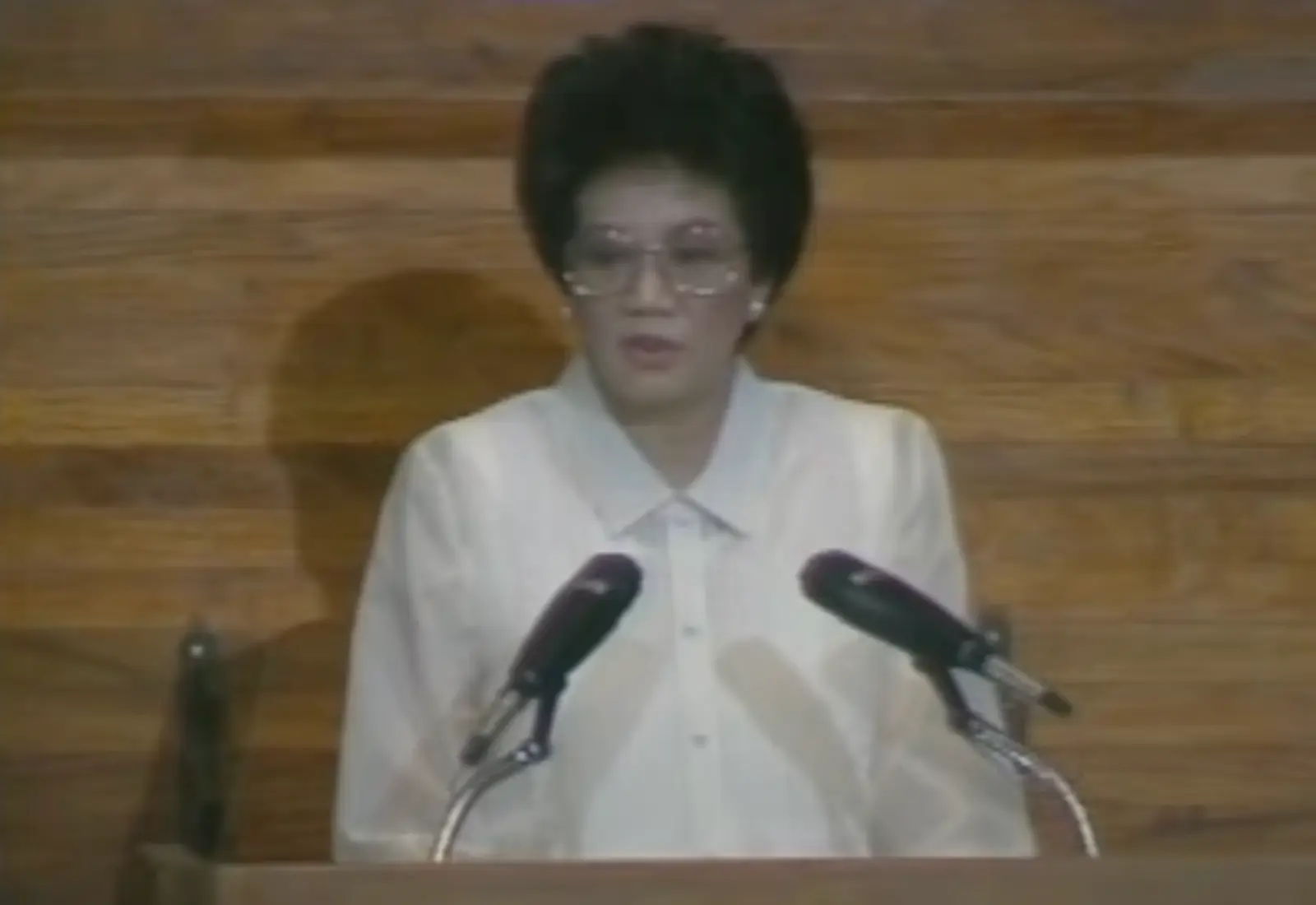
According to the Center for Media Freedom and Responsibility (CMFR), Aquino was considered the first president of the Philippines to file a criminal libel case against journalists, particularly columnist Louie Beltran and the publisher and editor-in-chief Maximo Soliven of The Philippine Star. The lawsuit came from a 1987 article that claimed that Aquino “hid under her bed” during a coup in the presidential palace complex by over 2,000 military personnel from the Reform the Armed Forces Movement (RAM) led by then-Lieutenant Colonel Gregorio “Gringo” Honasan.
The president took offense at the claim, so much so that she personally testified in the trial to denounce the claim and say that it damaged her credibility. The Manila Regional Trial Court (RTC) found the columnist and publisher guilty and sentenced to two years in prison and fined P2 million in damages. The two appealed the conviction and Soliven was cleared, while Beltran gained posthumous acquittal when he died in 1994. The issue, however, intimidated the press about the possible repercussions of reporting on high-ranking officials like the president. According to journalist Luis Teodoro on his website, this prompted state workshops and seminars on libel law, with solutions on how to contend with the law’s potential to be used for harassment of journalists.
Joseph Estrada vs. ‘The Manila Times’
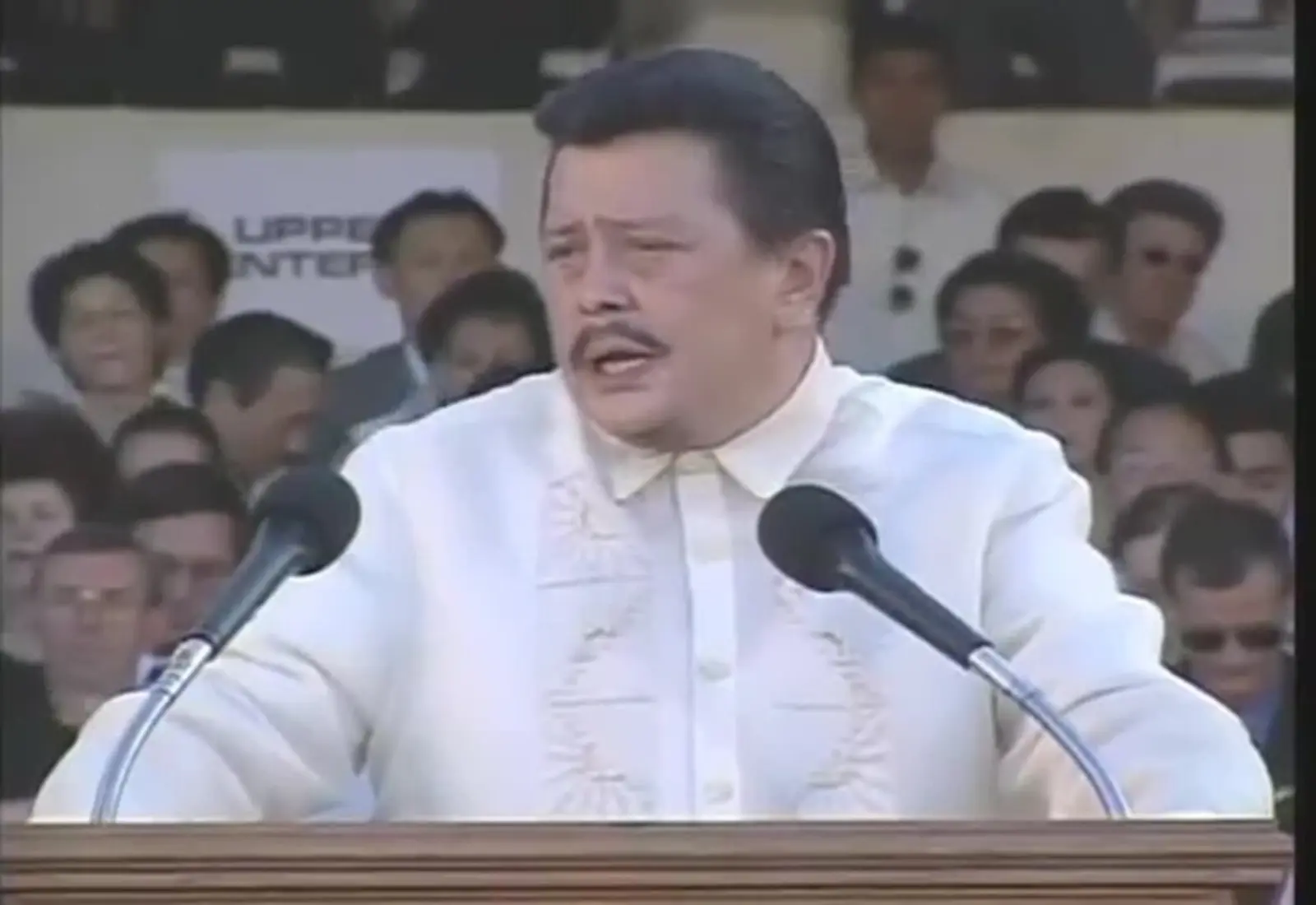
In 1999, then-President Joseph “Erap” Estrada filed a P101 million libel lawsuit against The Manila Times editors and publishers over a front-page story where he was labeled an “unwitting godfather to a supposed fraudulent deal” or the disputed contract between the National Power Corporation (NAPOCOR) and Argentine firm Industrias Metalurgicas Pescarmona Sociedad Anonima (IMPSA). Following the lawsuit, the paper, owned by the Gokongwei family, issued a front-page public apology, which prompted its editors, managing editor Chit Estella, associate editor Booma Cruz, chief reporter for news Eduardo Lingao, and chief business reporter Joel Gaborni, who wrote the controversial article, to resign in protest.
After Estrada dropped the case, the Gokongweis sold the company to Estrada’s crony, Mark Jimenez, and it was temporarily shut down in July of the same year.
Juan Ponce Enrile vs. ‘Philippine Daily Inquirer’
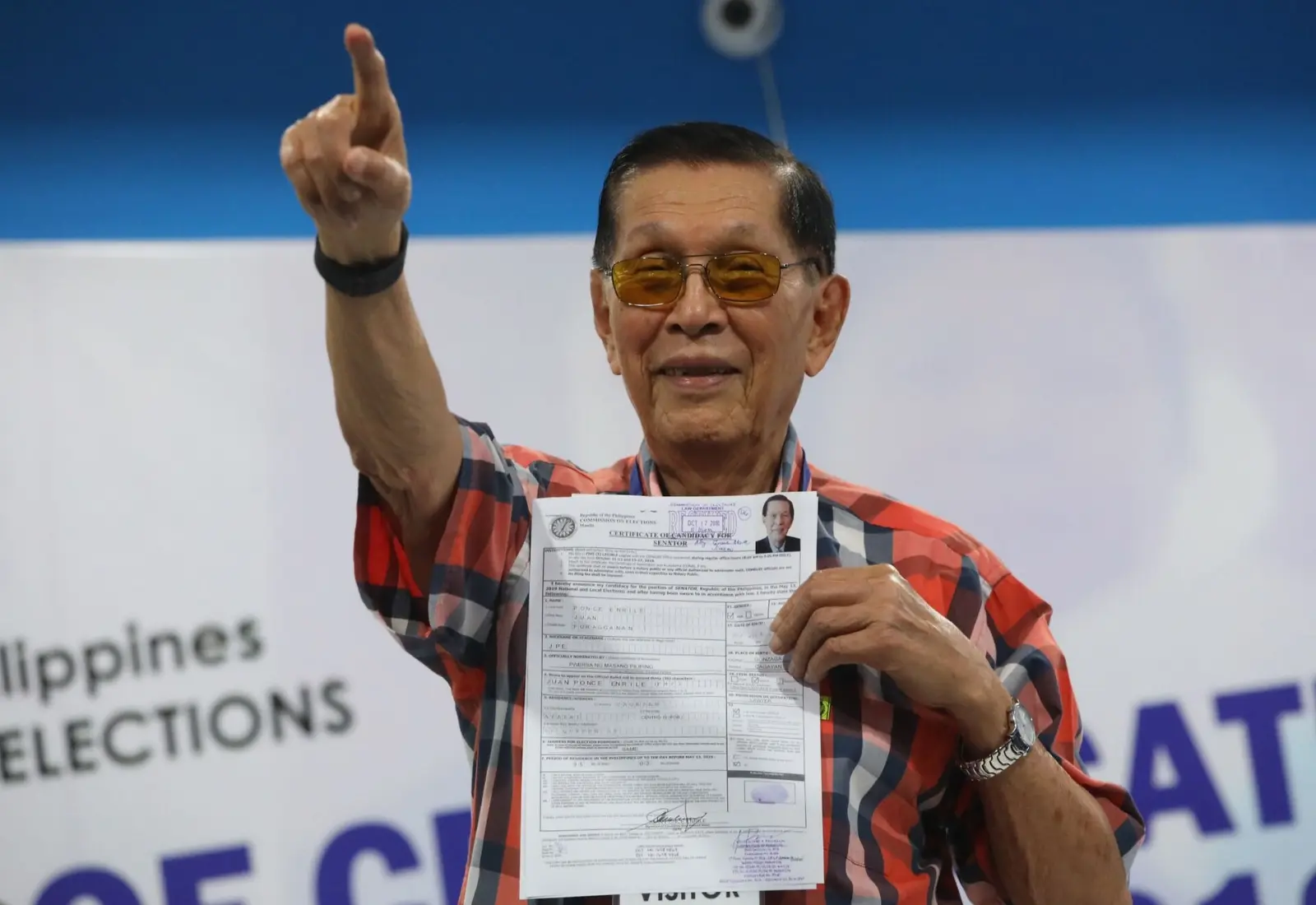
In 2001, Enrile filed a libel suit against three Philippine Daily Inquirer (PDI) editors and a writer over a report that alleged that he, a “Marcos crony,” benefited from and plundered the multibillion-peso coconut levy fund, or the taxes levied on coconut farmers during martial law, citing former Presidential Commission on Good Government Chair (PCGG) Haydee Yorac, who then denied the statements.
The Makati RTC and Court of Appeals (CA) sided with Enrile in 2013 and 2016, ordering PDI to pay P1.3 million for moral damages, P200,000 in exemplary damages, and P100,000 in attorney’s fees to Enrile. But in 2021, the Supreme Court reversed the previous rulings and acquitted the broadsheet of libel, stating that the 2001 article constituted a “fair report” (only reporting what PCGG said) and a “qualified privileged communication” without malice.
According to the PCGG’s 2016 post, a total amount of P9.695 billion was collected from the farmers’ tax and was instead diverted to “the Marcoses and their cronies.”
Raffy Tulfo, ‘Abante Tonite’ vs. Carlos So
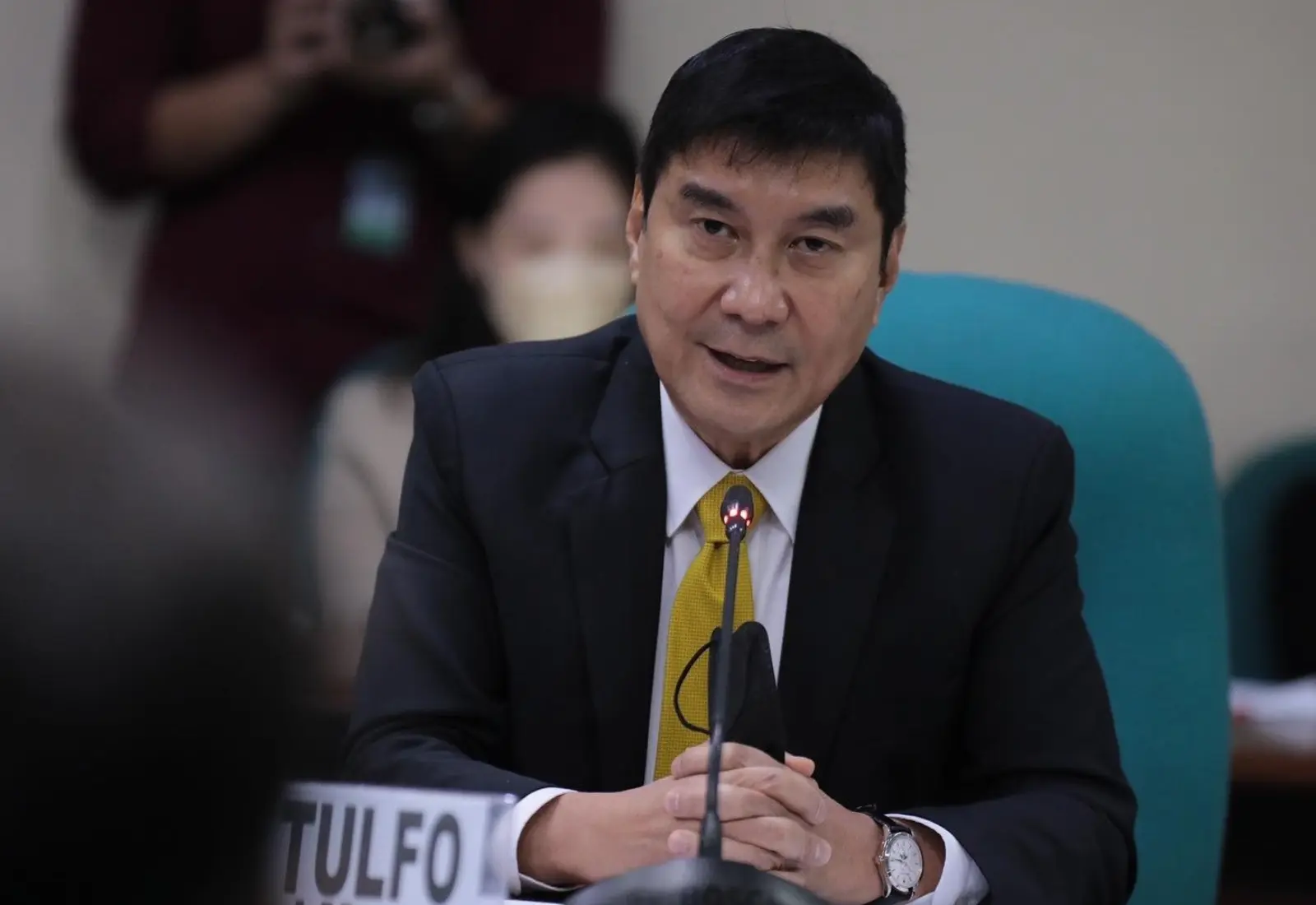
Before Tulfo gained a seat in the Senate, he faced numerous libel charges against him as a journalist over his columns. One of his most prominent cases was against Bureau of Customs (BOC) official Atty. Carlos So, who filed 14 complaint-affidavits that alleged libel against Tulfo, Abante Tonite’s publisher, and the managing editor.
According to So, the columns written by Tulfo accused So of extortion, smuggling, and improprieties. The RTC initially convicted the three, but the Supreme Court acquitted them in 2021 after the case was appealed. The high court ruled that there was no “actual malice” or a “reckless disregard for the truth,” and that reporting about a public official falls under qualified privileged communication, which protects the author from liability if there is no bad faith.
Come 2022, Tulfo, now a senator, proposed the decriminalization of libel, but applies it exclusively to mainstreamMainstreamThe ideas, styles, and works that reach the widest audience and dominate popular attention, such as radio hits and blockbuster films. The word is often set against indie or underground,Go to Mainstream Glossary, traditional journalists rather than unvetted bloggers and vloggers.
Santos, Ressa and ‘Rappler’ vs. Wilfredo Keng
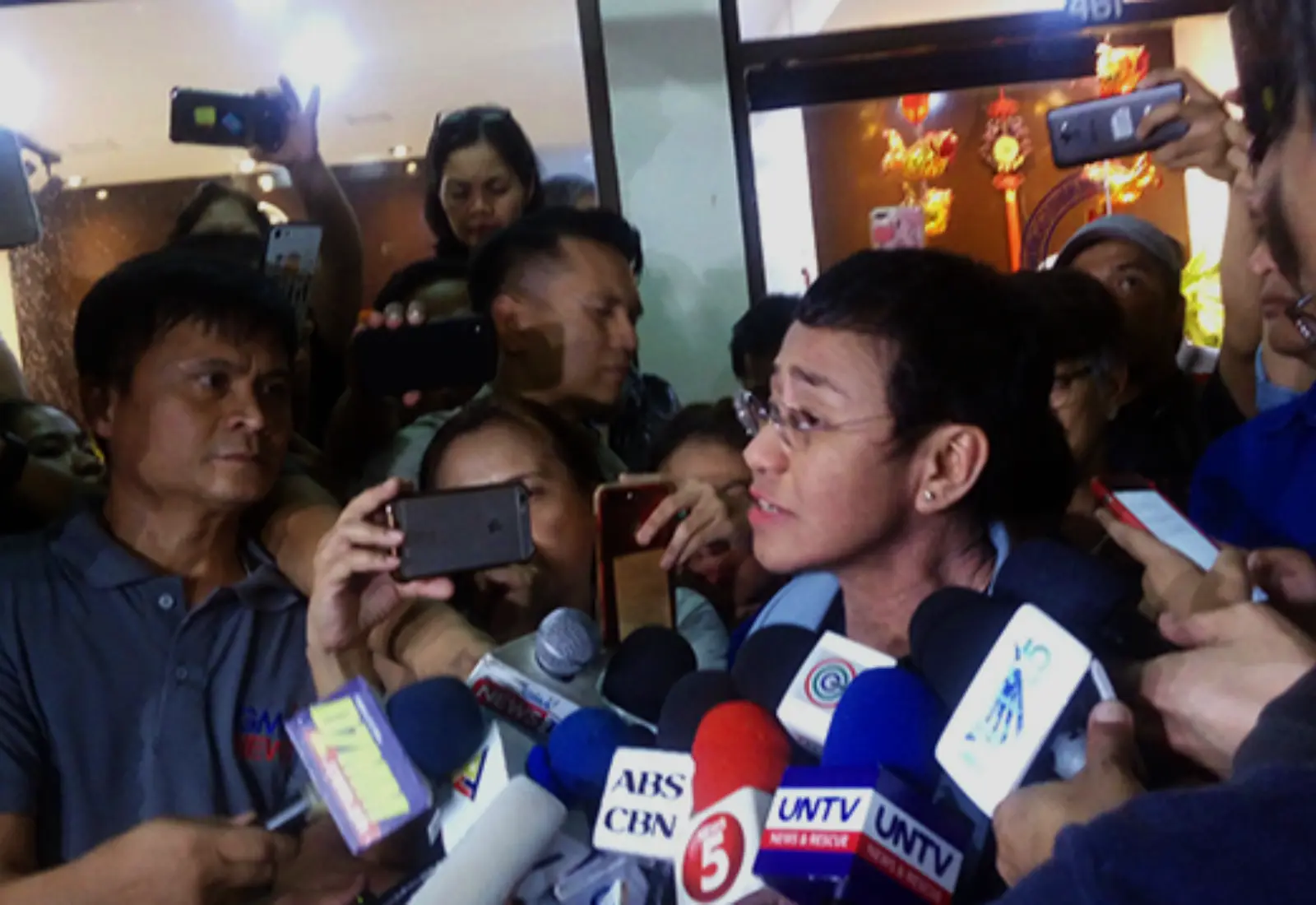
Few local libel cases have drawn as much international attention to the state of Philippine journalism as the cyberlibel case faced by Rappler CEO Maria Ressa and former writer-researcher Reynaldo Santos Jr. The case stemmed from an old story in 2012 (updated in 2014 due to a typographical error) which alleged that businessman Wilfredo Keng lent former Chief Justice Renato Corona his SUV during his 2012 impeachment trial. The article also cited an intelligence report which claimed that Keng was linked to illegal drugs, human trafficking, and was close with lawmakers.
In 2020, both Ressa and Santos were found guilty by the court and were ordered to pay Keng a total of P400,000 for the moral and exemplary damages resulting from the article. The two posted bail and remain free while they legally appeal their convictions. The case caused an uproar within the press locally and internationally, as it was a time when former President Rodrigo Duterte and his administration were notorious for silencing critics, one of which was Rappler.
Other notable cases
Those above were among the biggest, but some relevant cases also include that of broadcast journalist Cheche Lazaro from Probe, who was sued for libel after their investigative reporting on illegal dynamite fishing. Lazaro previously told Rolling Stone Philippines that she had to pay fees out of her own pocket.
There’s also veteran journalist Marites Vitug, who has faced libel charges for her work on the judiciary. In a 2024 interview for Rolling Stone Philippines, she talked about how her first libel case happened when she was still a freelance journalist, back in 1998. She claimed that it was the most expensive libel suit at the time, amounting to over P20 million, though the case was dropped five years after it was filed. Her in-depth article revealed the plunder of Palawan’s forests.
But the libel cases are not confined to politics alone. Several famous showbiz reporters have had their fair share of libelous cases.
In 2007, entertainment columnist Lolit Solis faced a P12 million libel complaint from actors Sam Milby and Piolo Pascual after she wrote that they saw them together in a hotel. According to the actors, they experienced mental anguish and social humiliation, among other things. Solis issued a public apology (though she remained firm on what she saw), and the two actors dropped the case against her.
In 2024, actress Bea Alonzo filed two counts of cyberlibel and sought P30,000,000 for damages against comedian and showbiz commentator Ogie Diaz, saying she was a victim of false information and defamatory claims from Diaz’s online show, which discussed Alonzo’s split with ex-fiancé Dominic Roque. Diaz, however, filed a 70-page counter-affidavit and filed for perjury and damages.
Veteran entertainment reporter Christy Fermin also had multiple cases of traditional and cyberlibel filed against her by celebrities with big names; the latest is from Claudine Barretto, who sued Fermin on October 21 for her repeated remarks about the actress’ mental health, personal life, and alleged financial dependence on her sister Gretchen Barretto.
FREQUENTLY ASKED QUESTIONS
Revised Penal Code Article 353 covers traditional libel (done through traditional print), and Republic Act No. 10175, or the Cybercrime Prevention Act of 2012, covers cyberlibel (committed through digital methods).
In criminal libel, the convicted can be imprisoned for a maximum of six (traditional) or eight (cyber) years, but is bailable. For civil libel, only payments are imposed for the damages incurred by the victim.
Veteran journalist Philipp Lustre Jr. was arrested on October 24 over a cyberlibel complaint filed by Vice President Sara Duterte’s husband, Mans Carpio. A day before Lustre’s arrest, GMA Network also received a libel and cyberlibel case filed by Davao City 1st District Rep. Paolo Duterte.
According to Rolling Stone Philippines’ list, some of the biggest libel cases against journalists in the Philippines were those of Cory Aquino vs. Luis Beltran, The Philippine Star; Joseph Estrada vs. The Manila Times; Juan Ponce Enrile vs. Philippine Daily Inquirer (PDI); Raffy Tulfo, Abante Tonite vs. Carlos T. So; Santos, Ressa and Rappler vs. Wilfredo Keng.
The National Union of the Journalists has renewed its call for the decriminalization of libel, arguing that it can be used to intimidate the media and stifle press freedom.
Recommended Video