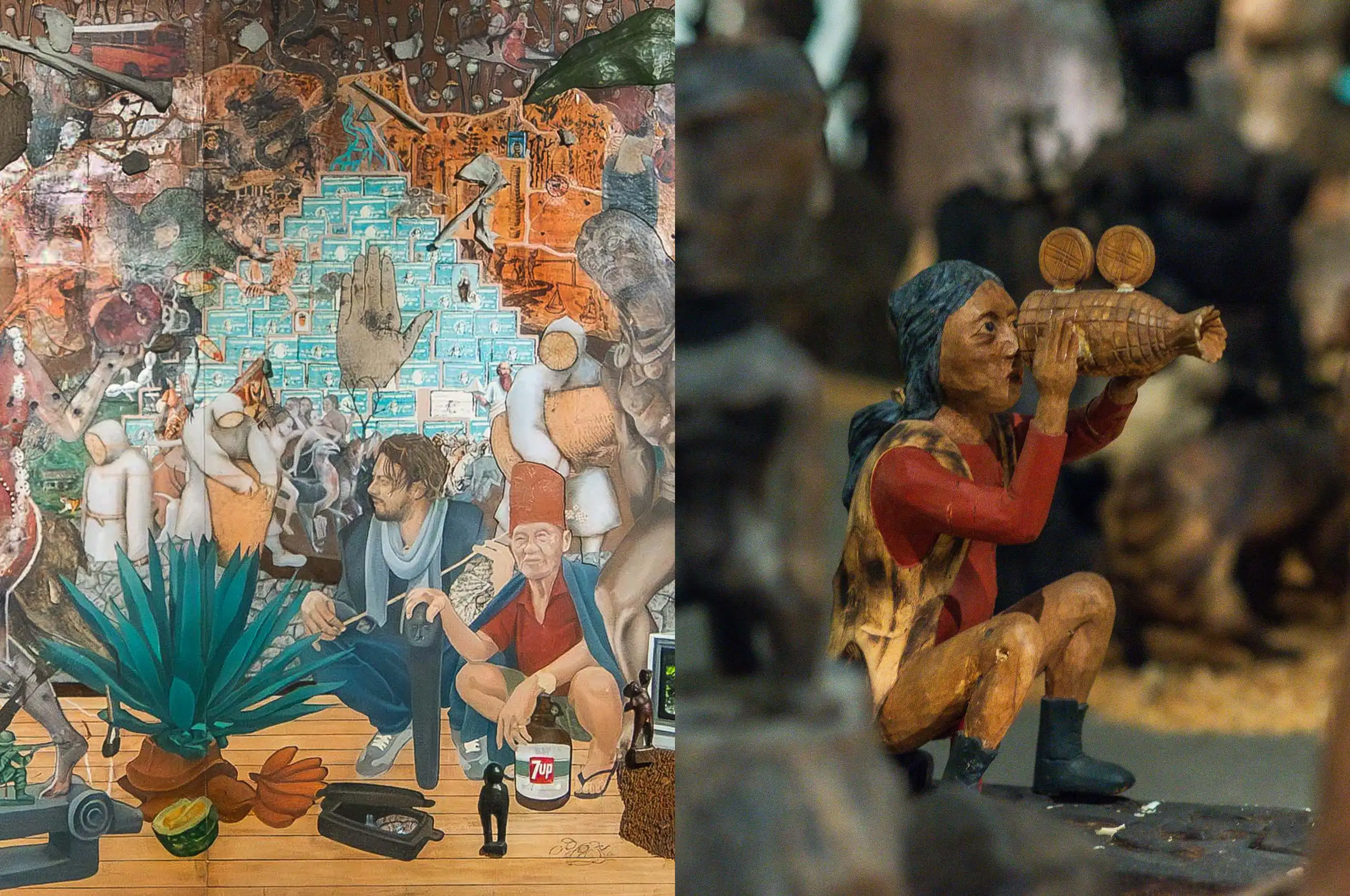
“What makes Baguio so special?” filmmaker and artist Abbie Lara casually asked her subjects in the documentary Natiwong, which was shot over several years and is now being shown in the exhibition Gongs. Smoke. Blood. Earth at the Ateneo Art Gallery.
“The weather,” some replied. “The people!” others remarked. “Probably the dragons hiding within the mountains,” claimed the artist Kabunyan de Guia, who said it in jest — or perhaps more seriously than we’d like to believe.
Baguio is undeniably special. So special, in fact, that it was listed by the United Nations Educational, Scientific and Cultural Organization as one of its Creative Cities. So special that it’s almost puzzling why there has never been a major exhibition solely dedicated to its arts and cultural heritage in the lowlands of the NCR. Baguio was so special that when the Americans arrived, they fell in love with it and transformed almost everything into a stateside county, from the bases, the booze, the bars, the cowboy boots, and the country square dance — except for the anitos and the bululs, the Kabunyan, and the Ma-nongan, who firmly remained within the spirit of the indigenous people and communities across the Cordilleras.
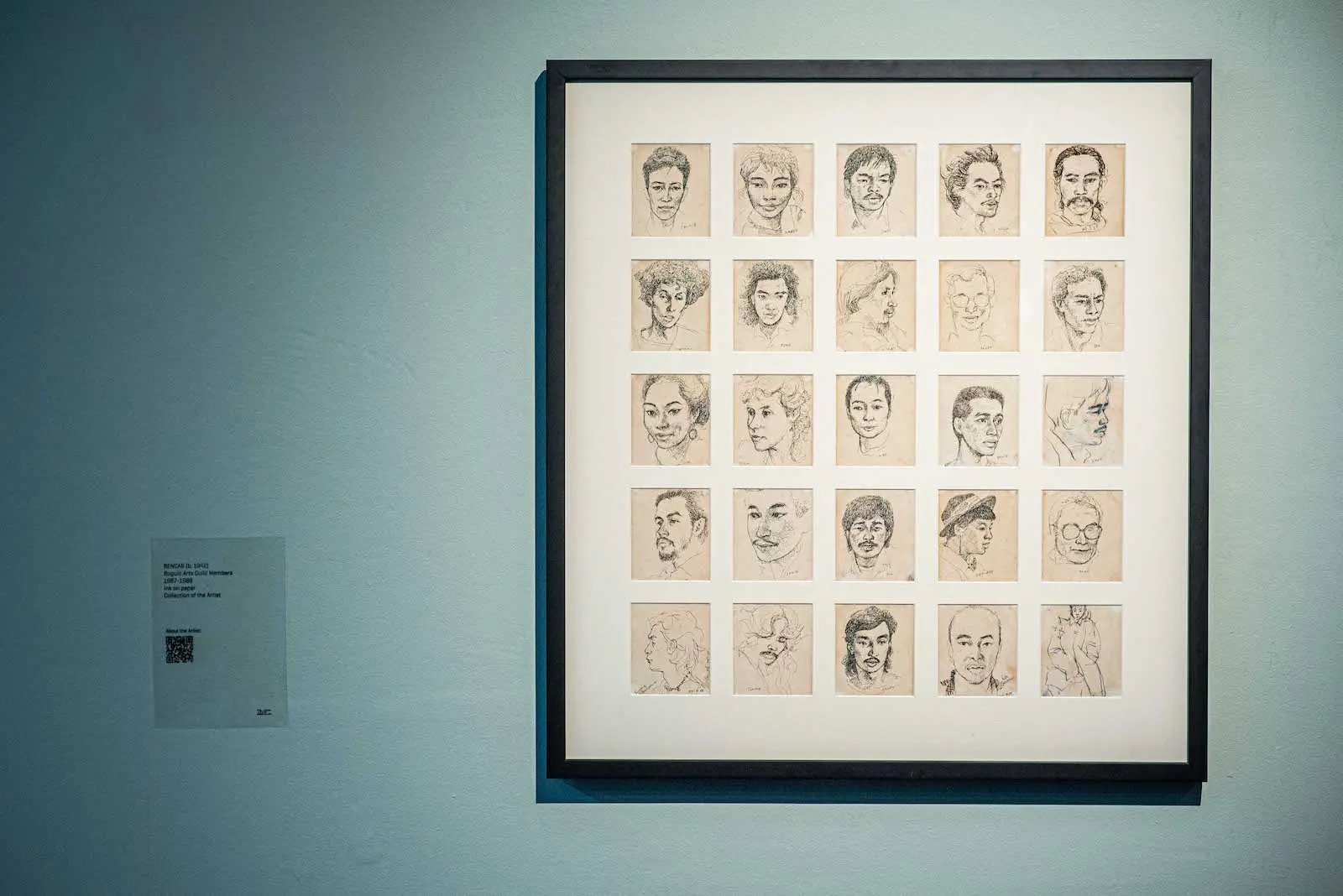
“For the Americans not used to the humidity in the tropics, Baguio was their natural, centralized air conditioning,” said Kawayan de Guia, reflecting on the atypical influence colonial forces had on Baguio’s artscape. It’s an unorthodox legacy, because despite the fervent U.S. occupation and some early artists’ modernist positions, contemporary art from this region has never truly strayed from its precolonial roots. This is thanks in part to the trailblazers, who stood firm against the pressures of foreign tastes and international art markets, and who forged an art identity arguably unique to the place.
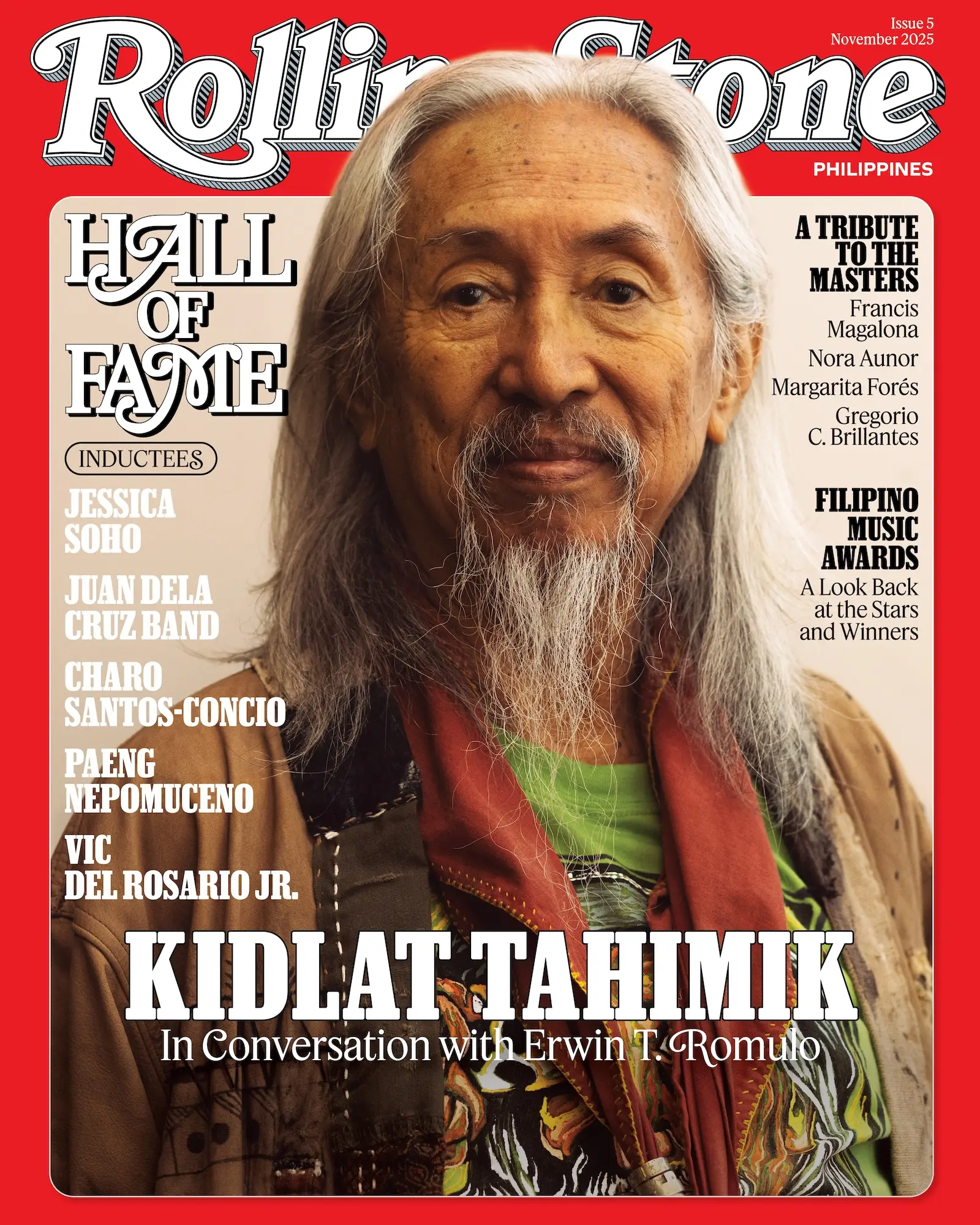
In 1986, in the aftermath of the EDSA Revolution and the end of martial law, a number of these trailblazers met one fateful night at Café Amapola up on Session Road and initiated the beginnings of the Baguio Arts Guild. Santiago Bose, Roberto Villanueva, and erstwhile National Artists Benedicto “BenCab” Cabrera and Kidlat Tahimik, among others, laid the foundation for what would become a pivotal art renaissance, one truly autonomous from the previous dictatorship.
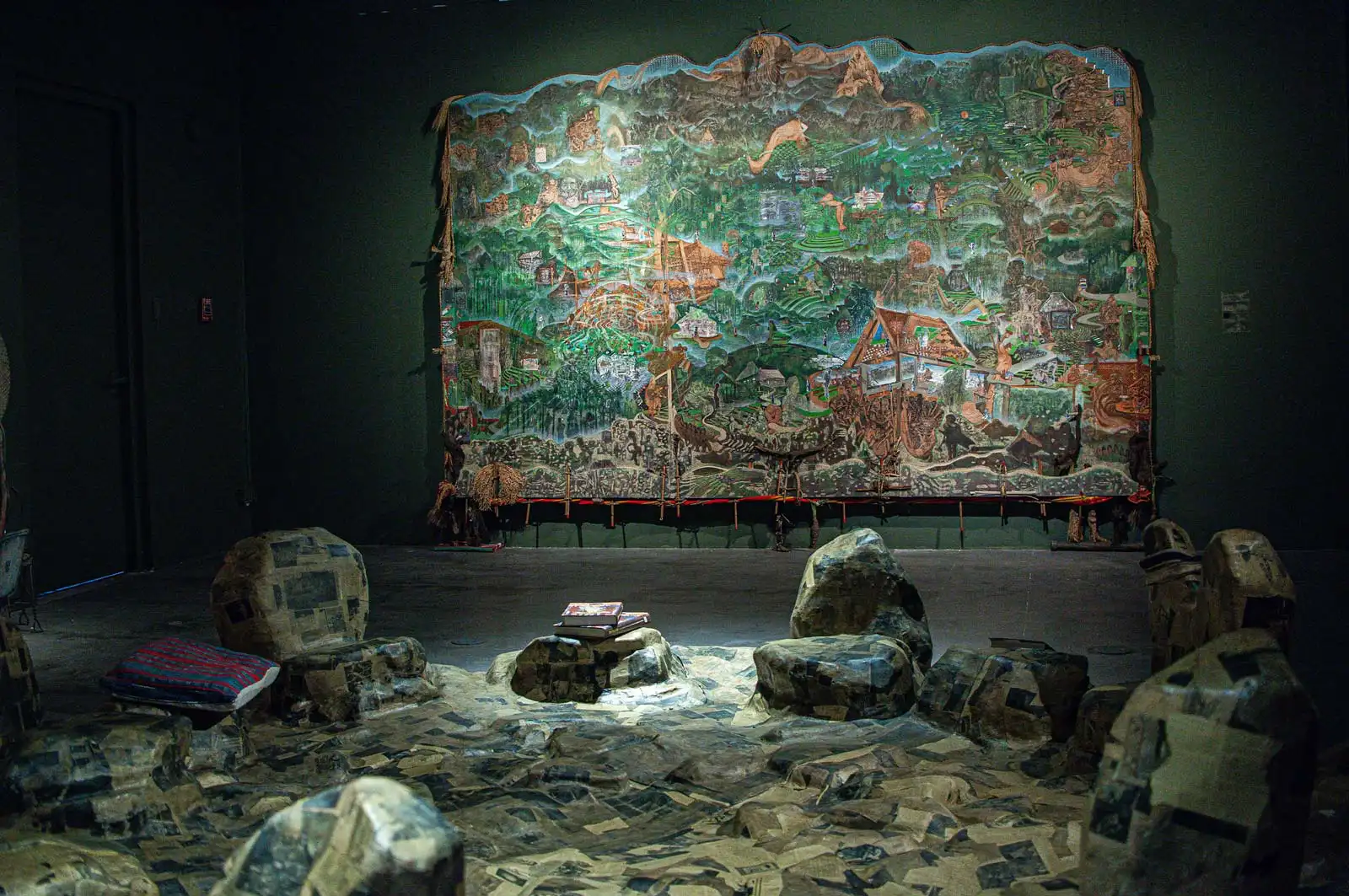
“The guild was not made but formed,” said Katrin de Guia, who became the de facto chronicler while working closely with Tahimik, and eventually, the de facto nanay of the whole art community. In another interview in Lara’s documentary, she explained how the guild seemed to have materialized on its own, organically. The Baguio Arts Guild would then pave the way for many art festivals and community events, which would become the trademark of the City of Pines’ cultural identity. The “gathering” and the convergence of many artists’ and indigenous peoples’ ideas, in true Igorot spirit, embody the tradition of the “dap-ay,” a circular arrangement of stones in a raised platform where the elders sat and convened, serving as their ancestors’ parliament.
Although the guild lasted just over a decade, its spirit of inclusivity and indigeneity lived on through the various projects by the community and the next generation of artists. This can be seen in the work of Rene Aquitaña, who incorporated aboriginal rituals in his collaborative performances; in AX(is) biannual art festival led by Kawayan de Guia; and in Markets of Resistance, the brainchild of Angel Shaw, where both explored new perspectives in socially engaged art. More recently, the long-standing project Tiw-Tiwong: An Uncyclopedia to Life, Living, and Art in Baguio, a book that also carries the indigenous spirit of openness, not-knowing, and resistance to colonial and institutional systems, was published in 2022.
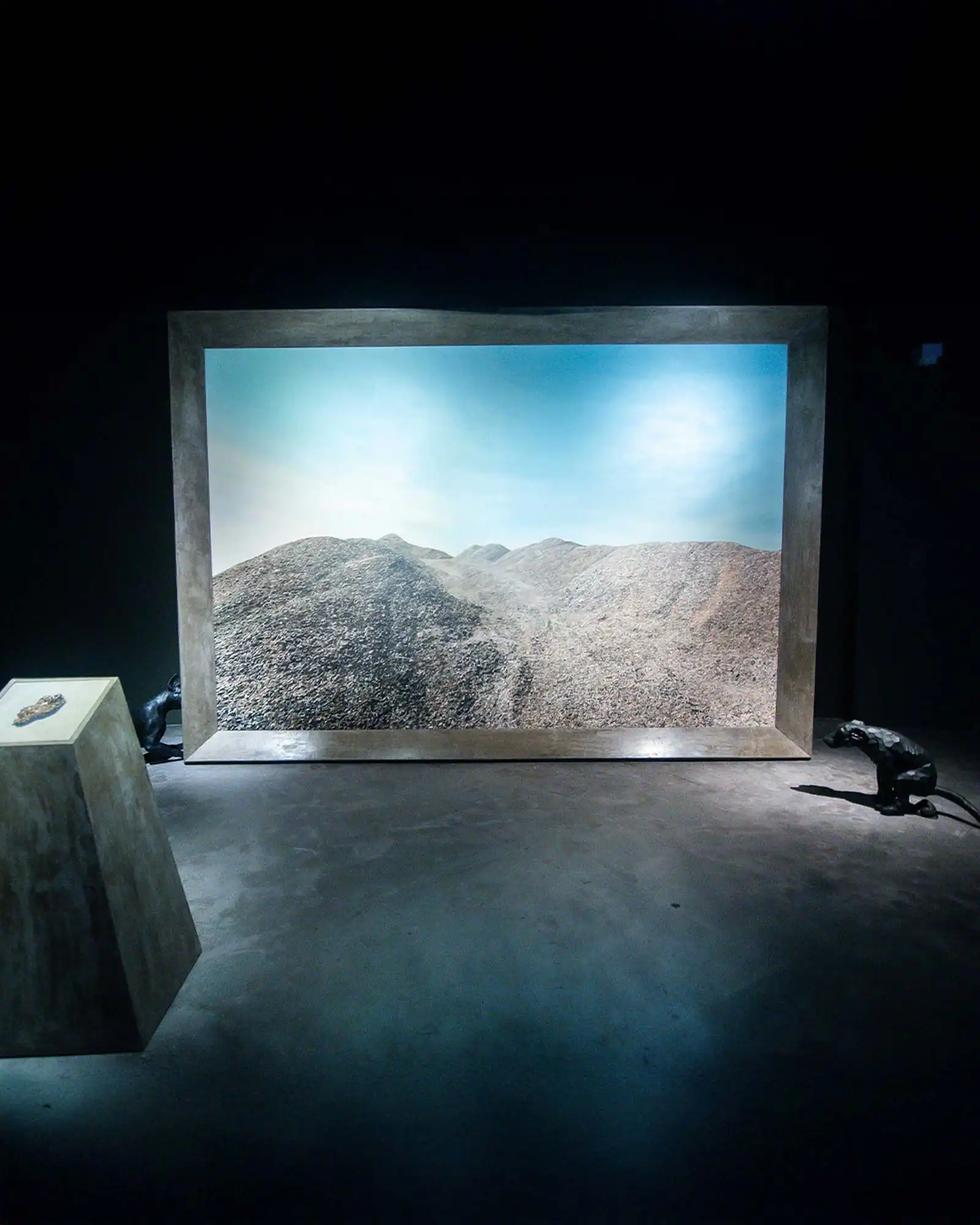
As a continuation of these different phases that began with Baguio’s renaissance in the ‘80s, the Ateneo Art Gallery finally invited the guild and those who followed in its footsteps to organize a major exhibition. With Baguio-based artists Kawayan de Guia and Nona Garcia as guest curators, the exhibition Gongs. Smoke. Blood. Earth. becomes a rare feat: a gathering of a distinct way of Filipino art-making and proof of concept of colonial art ideas and media.
The opening day began with the ritual dance Cañao of the Kankanaey people around Bose’s outdoor sculpture “Bamboo Radar”; continued inside the hallway with Tommy Hafalla’s solicitous black- and-white photographs of various indigenous groups; then to Tahimik’s stagings of his Indio-genous Tales in clusters of characters gathered around their dap-ays. And then, a moment of hesitation: a family of life-like black dogs in natural postures, either on guard or lying doggedly across the gallery. These are wood carvings by Dehon Taguyungon, an artist of Ifugao descent, who believed the black dog is the highest form of animal sacrifice. From this point on, one might feel they are not entering a show, but a village filled with rituals and tales.
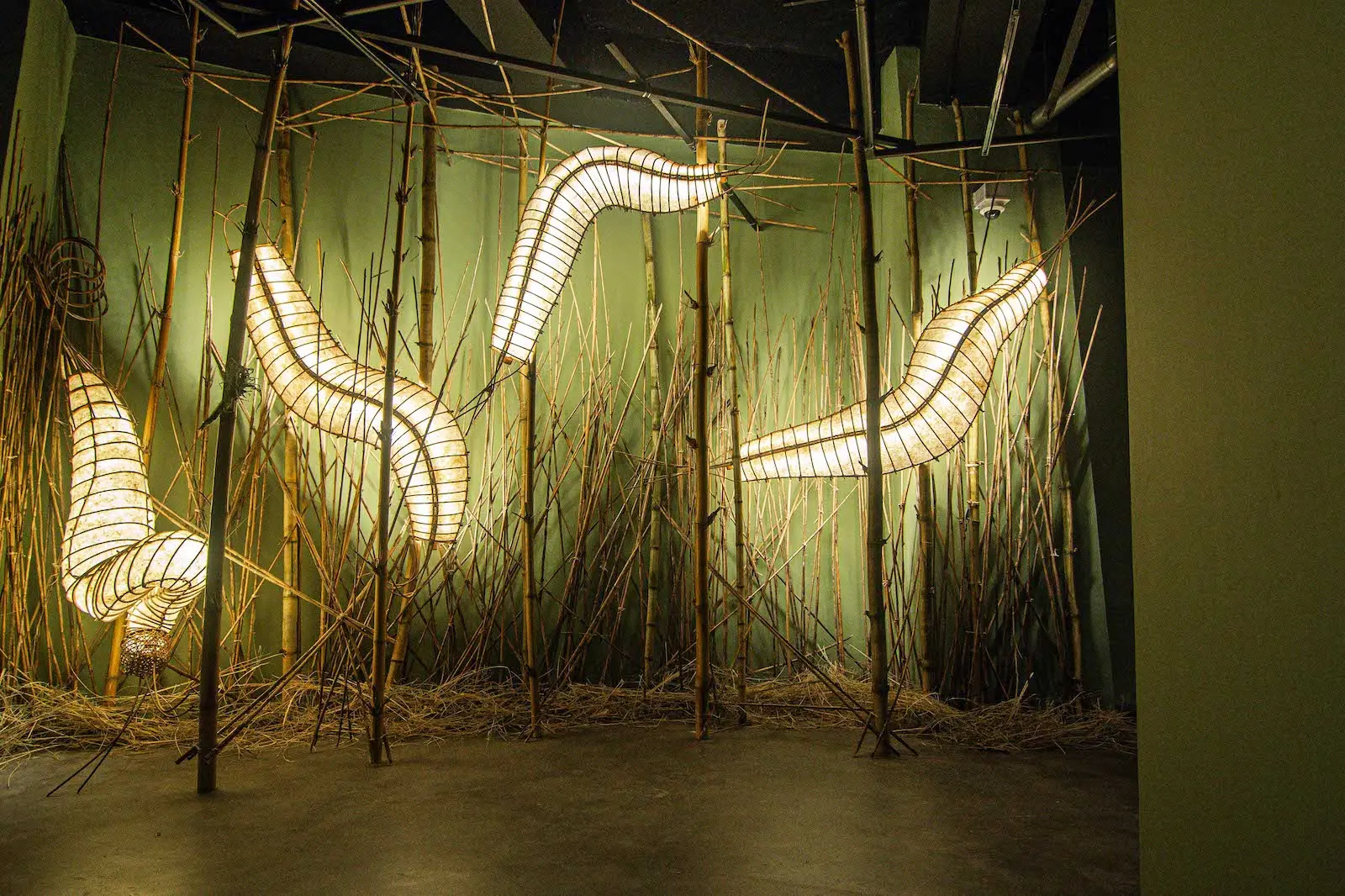
Inside the gallery lies the heart of the matter, lean with Cordillera myths, snapshots, and symbolism, and gluten-free from colonial preservatives. There is spice in the anti-colonial stance of the works of Kawayan de Guia, Kabunyan de Guia, Olie Olivete, Guiler Lagac, Leonard Aguinaldo, Willy Magtibay, and John Frank Sabado. Aesthetic flavor is also present in the large-scale and truly immersive paintings of Nona Garcia and Bong Sanchez, the textiles of Carlo Villafuerte, Irene Bimuyag, and Gail Vicente, and the mixed media installations of Perry Mamaril, Rocky Cajigan, and Randy Gawwi. Not to mention the works that find meaning in everyday life and collective memory: Angel Velasco Shaw, Egay Navarro, Kidlat de Guia, Ruben Domingo, Rica Concepcion, Mervine Aquino, and Lara with their photographs, films, and video, as well as Katrin de Guia’s dioramic archiving of events and personal histories.
This is the boiling pot, stirred and blending perfectly the spiritual with the real, the traditional with the conceptual, the old with the contemporary. It is like the indigenous food of the Igorot people, the pinikpikan, carefully prepared and stewed, now ready to be feasted on. Not without sacrifice, and not without spilling some blood, sweat, and tears — especially from the heroes and artists, the dissenters and revolutionaries who came before us.
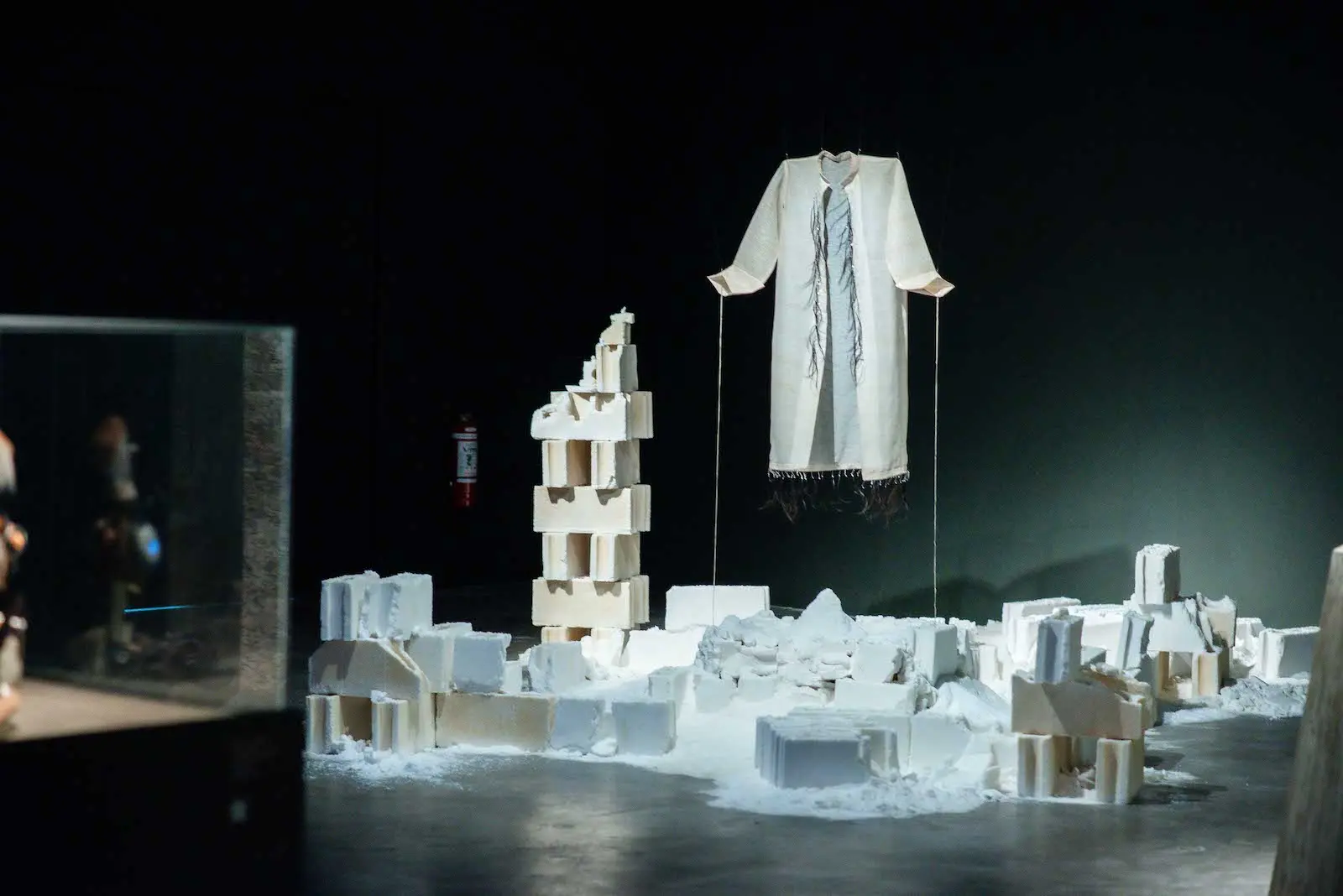
To see this show as just another cultural festival that celebrates the periphery would be a mistake. So is to see it as merely a token for the regional. There is serious instruction in this event, one that is desperately needed by any Filipino who is unaware that they sleepwalk on their own lands while still under a colonial spell.
The exhibition Gongs. Smoke. Blood. Earth can serve as a ritual for our own exorcising, our own awakening. Not just in witnessing the remarkable art style of Baguio, but in realizing that Filipino art can be nationalistic and anti-colonial while being innovative, engaging, and even avant-garde. There is a way: the indio-genous way.
This story originally appeared in The Guilty Pleasure of Showbiz Gossip Issue. Now out on select newsstands and on Sarisari.Shopping. Get digital access to Rolling Stone Philippines issues here.