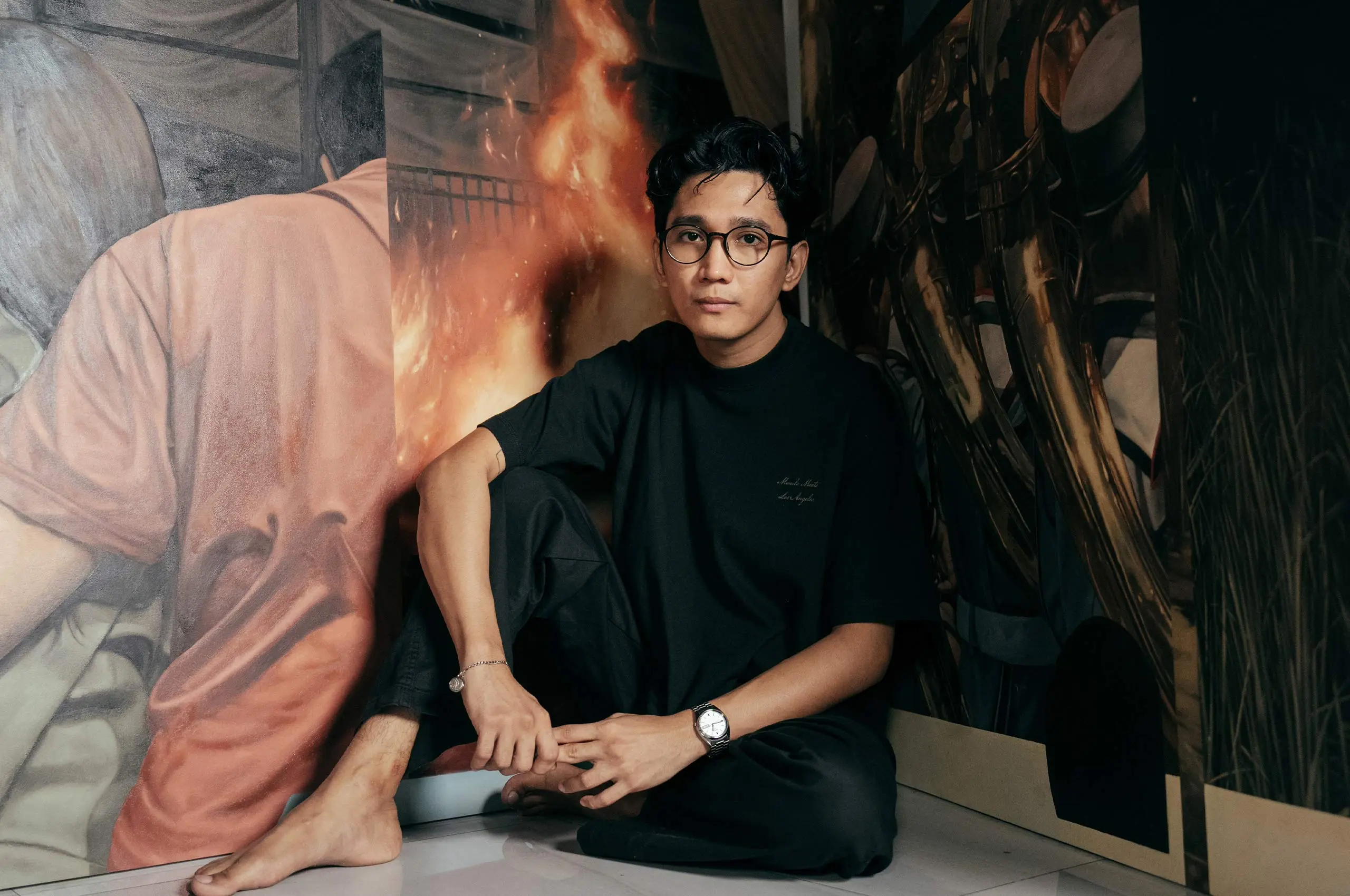
Artist Jomari T’Leon begins painting from photos he takes with his smartphone. A stray dog fattened by leftovers from a samgyupsalamat shop, monuments, strangers, snakes coiled up in impossible positions, small fires, streetlamps; the phone he lost on the MRT, drawn from memory. T’Leon then fuses photos on Photoshop. Background, element, figure. “Tina-transfer ko sa Photoshop para laruin ‘yung kulay, scale, composition.” The software, in turn, makes it easier to grid scale these layered images onto a canvas.
At 27, and five years into his career, he’s used to being called “the next [insert name of an established artist here],” an “up and coming” or “emerging artist,” or “a budding artist worth investing in.” He’s under Jay Amante’s Blanc Gallery, whose roster includes Allan Balisi, Costantino Zicarelli, Dina Gadia, Elaine Navas, Nona Garcia, the Santoses (Soler, Luis, Carina, and Isabel), and Yasmin Sison among others (although Amante insists there are really “no artists who are strictly under the gallery.” They just happen to exhibit more consistently at Blanc.)
T‘Leon was first introduced to Amante by a late collector, who showed him his works on paper during the pandemic. Starting in college, Jom, as the gallery owner calls him, has created over 300 of these oil on paper paintings to salvage excess paint. “Sobrang bilis niyang gawin — dalawang sigarilyo lang — tapos mura lang naman din ang papel,” T’Leon says. Among these works are Lucian Freud-like images; unruly depictions of the macabre and the ordinary that pass for a record of T’Leon’s short evolution. Most have since been sold.
Amante describes those early works as “super rough, super spontaneous.” “But nandoon na ‘yung narrative, e. And I’m always looking for the visual narrative.” It was from these seminal works that three solo shows and two group exhibits at Blanc, as well as shows in Finale Art File and West Gallery, followed. This February, his works are part of group exhibitions at Art Fair Philippines, presented by international gallery Amez Yavuz, and at Alt Art, presented by Blanc. At Alt Art, he is part of a section called Alt Discoveries dedicated to platforming new talents.

“‘Yung mga characters sa paintings ko, kadalasan mukhang may malalim silang iniisip, or parang mayroon silang sekreto na ayaw nilang malaman ng ibang tao.”
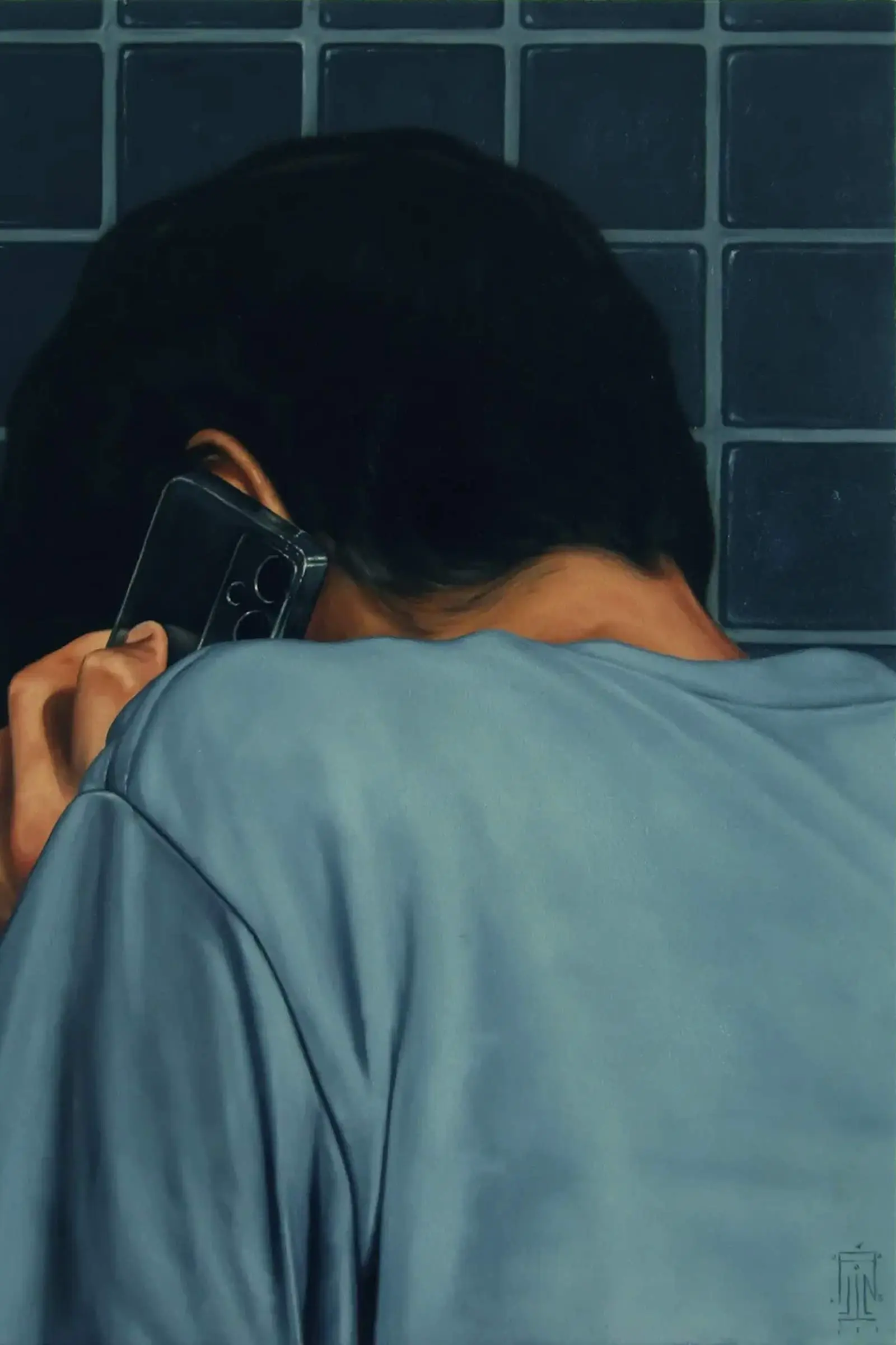
While his contemporaries are exploring abstractions and conceptual ideas, T’Leon’s paintings free the mind from the labor of decoding. In his newest work, a diptych entitled “After Mass I and II,” part of his solo presentation It’s Getting Darker Now, My Love for Alt Art, one can clearly see a woman with long-ish hair, a man with a watch, and a fire. But why are these characters in the same picture plane as these objects? This is his preoccupation: to have the viewer think of these connections.
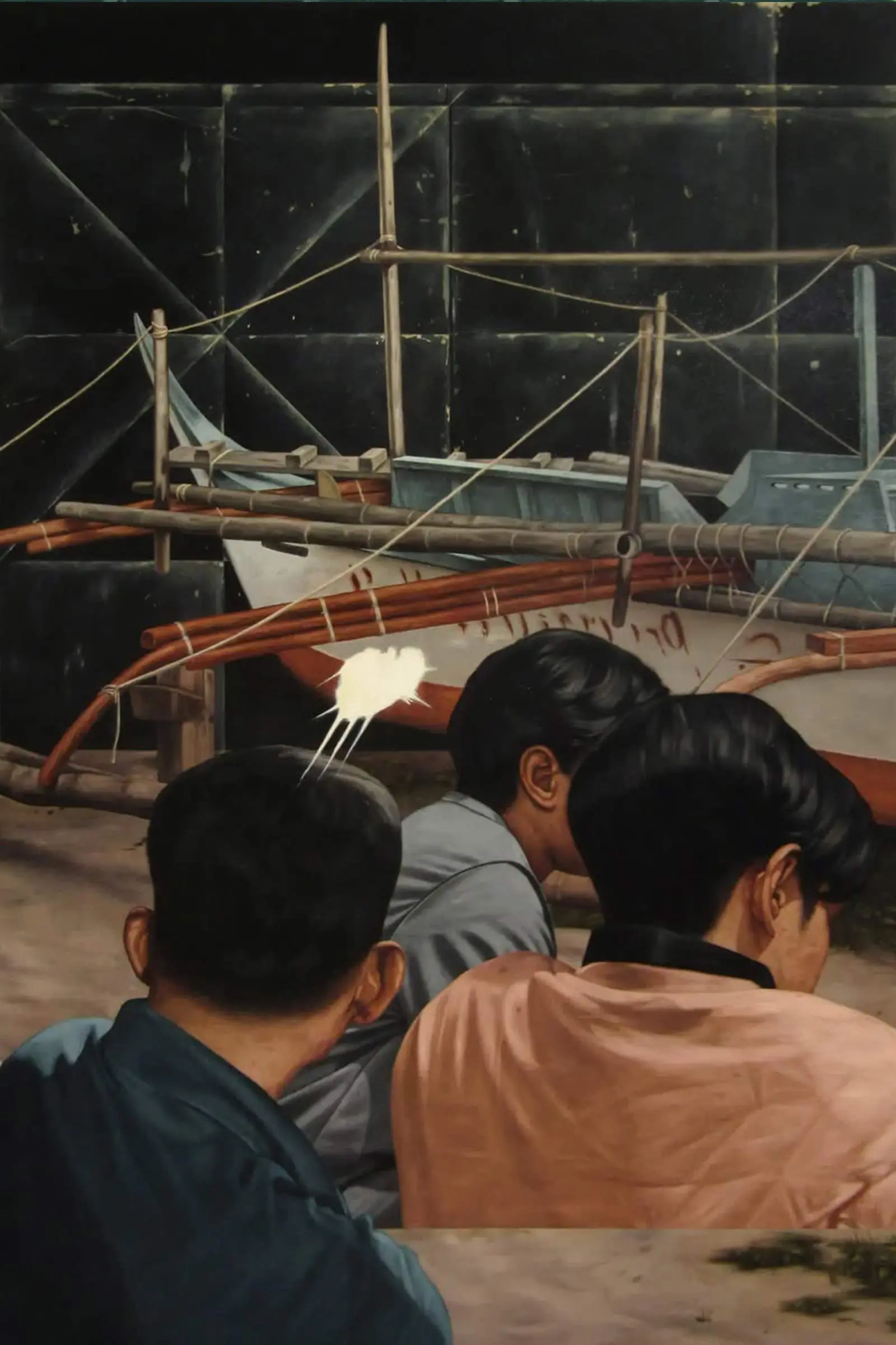
What he does isn’t exactly collaging by way of Roberto Chabet, Gary-Ross Pastrana, or even in the paintings of Isabel Santos. His are bigger details, frames even, stitched together in what contemporary art critics are calling split-screen painting.
London-based writer and curator Jack Smurthwaite, writing for Frieze, describes this style as “combining disparate scenes to process our fragmented visual world.” He wrote, “In their proximity, these converging scenes open space for interpretation… We construct narratives from these combinations as they merge into a single, interconnected story.”
“He’s an excellent painter,” Amante says of T’Leon. “More importantly, he’s an excellent thinker. May magic na ‘yung viewer can somewhat see themselves or someone they know [in it].”
It’s easy to project onto his faceless figures. As T’Leon describes them, “Parang nagtatago ‘yung mga characters. Nakatalikod — or kung nakaharap man, nakatago pa rin ‘yung face.” Something about the back of heads leads a viewer to contemplate, often, as the painter notes, on existentialism. “‘Yung mga characters sa paintings ko, kadalasan mukhang may malalim silang iniisip, or parang mayroon silang sekreto na ayaw nilang malaman ng ibang tao.”
And if his characters appear like they’re weathering an existential crisis, it’s because the author, too, he admits, is going through one. “Ang galing kasi na-fi-feel din ng iba ‘yung na-fi-feel ko sa mga piyesa ko.”
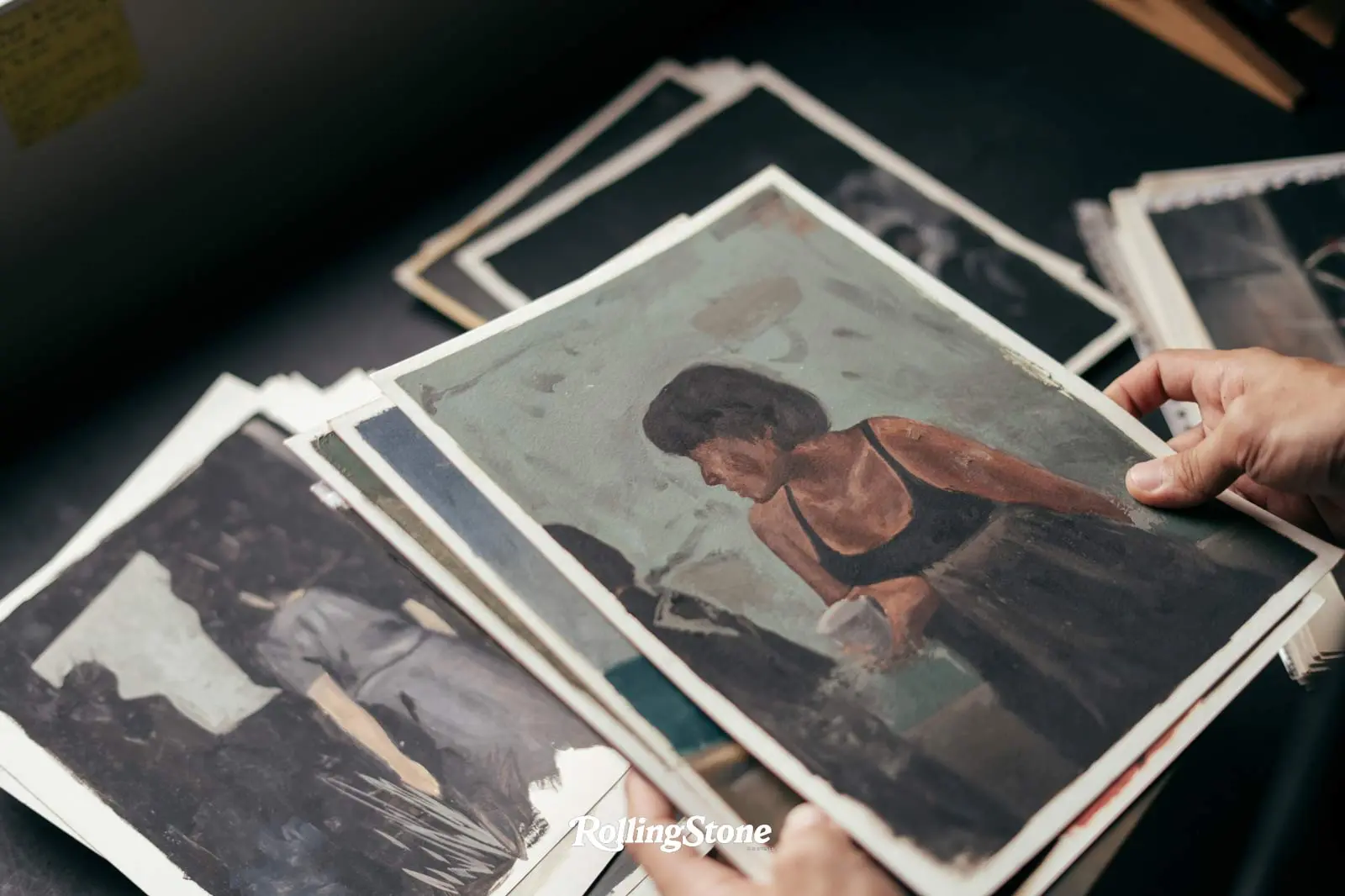
His painted people, while suffering from internal turmoil, are pristine. Coiffed hair, creased but decent clothing, and fine skin belie the labor that goes into rendering these images into canvas. “‘Pag makakakita ka ng isang Jomari T’Leon na painting, parang, ‘Wow, solid ‘to. Ang ganda.’ But if you go nearer, wow hindi pala nagiingat,” says Amante. “That’s a sign of confidence.”
“If you look at the image from afar, you can see the constellation, the stars, the comets, but he is not a realist painter. But if you go nearer, ‘yung pahid, mahahaba ha. It’s not delicately painted. Hindi sya very long brush strokes that suddenly create an image. There’s a lot of feeling into it and not scientific.” Take, for example, his method of painting hair: the fine details may look painstakingly done, but T’Leon reveals that out of “laziness” (layman lazy is eons away from that of the talented), he’s found an effective shortcut. “‘Yung hair masarap siyang gawin kasi mabilis siya. Before iniisa-isa ko siya pero antagal. Nakakatamad siya. [Ngayon,] gumagamit ako ng bristled na brush para maglagay ng strands.”
At the VIP preview at Art Fair Philippines, we meet T’Leon. He’s been going in circles but has not laid eyes on his painting at Yavuz yet. There it was, among Isabel and Alfredo Aquilizan’s geometric cardboard and metal sculptures and Nona Garcia’s P4 million painting.
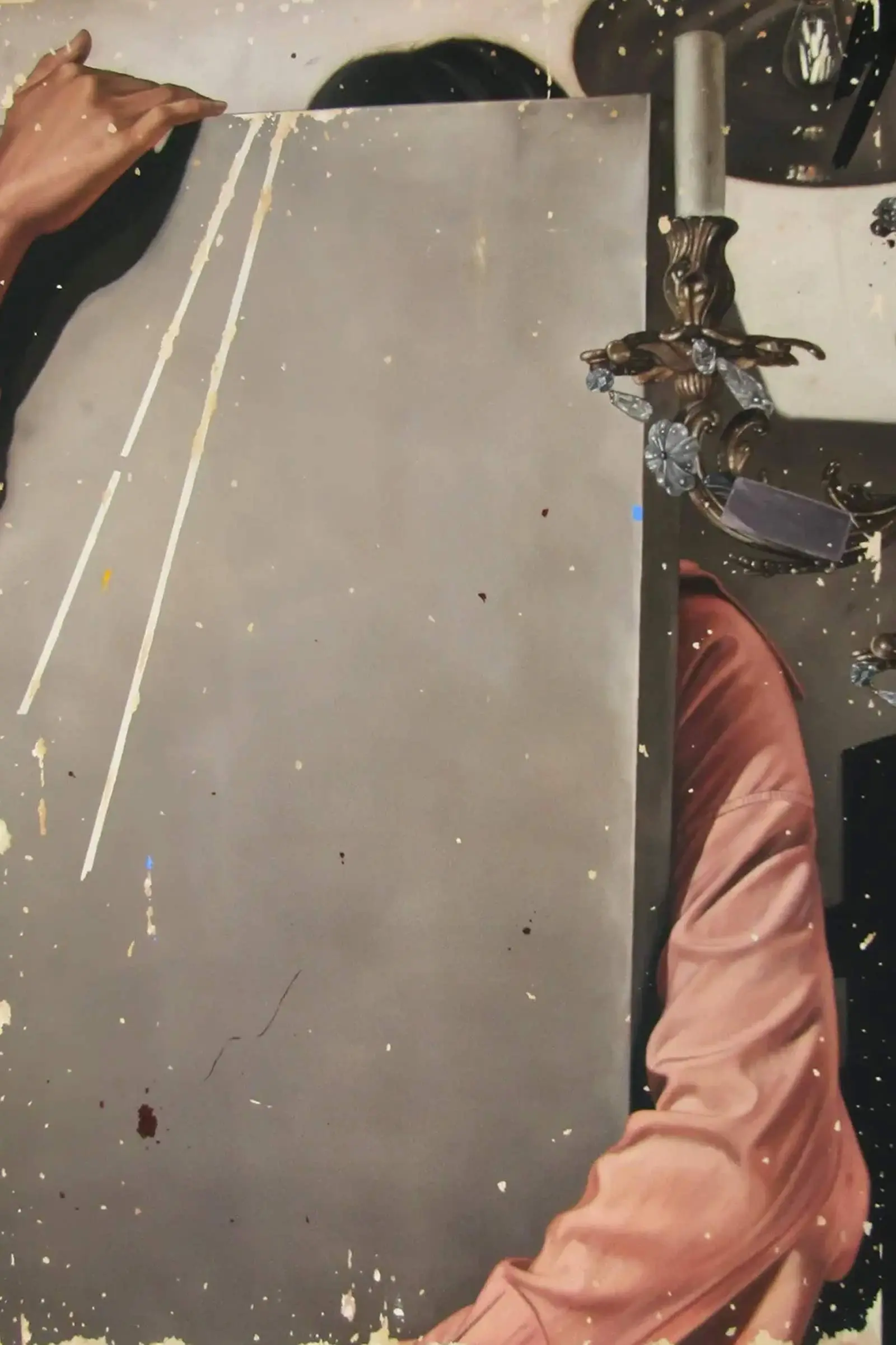
T’Leon’s meta depiction of a person hiding behind a blank canvas next to a crystal chandelier, “The Shadows Won’t Keep You Forever,” was sold at the preview for P80,000. A modest price for 4x3ft painting by an emerging artist compared to the price tag of most of the art in the room. Too modest perhaps, judging by the reaction of two prospective buyers who were sad to have missed a “bargain.”

Promising young artists like T’Leon are a hot commodity in art fairs like this. Buy them “cheap” now before their prices go up, a wise curator or art advisor would say. After all, a Balisi was once an under-five-figure get at a modest art affair. Now you’re lucky to find a six-figure painting of his — that is, if it hasn’t already been snatched up by someone else.
Balisi, who exhibits frequently at Blanc, is one of the reasons T’Leon gravitated towards the gallery. He is one of the artists in Amante’s roster that Jom considers as “mga kuya-kuyahan,” along with John Marin, Andres Barrioquinto, Renato “Jojo” Barja, Rene Cuvos, and Kim Hamilton Sulit, whom he runs to for practical advice, from picking paints and canvases to assessing a career.
Having been once newcomers, T’Leon says, “Sila ang pinagtatanungan ko kung paano ‘yung consciousness nila sa career. Nagkukwento ako ng mga kinakatakutan ko dito sa eksena. Sila din, nagkukwento ng nangyare sa kanila — hindi para manakot pero para lang mas maging careful ako sa kung kanino nakikipagtrabaho.” Pressed about these fears of his, T’Leon takes a second seemingly to take stock of his experience so far.
“If you look at the image from afar, you can see the constellation, the stars, the comets, but he is not a realist painter… There’s a lot of feeling into it and not scientific.”
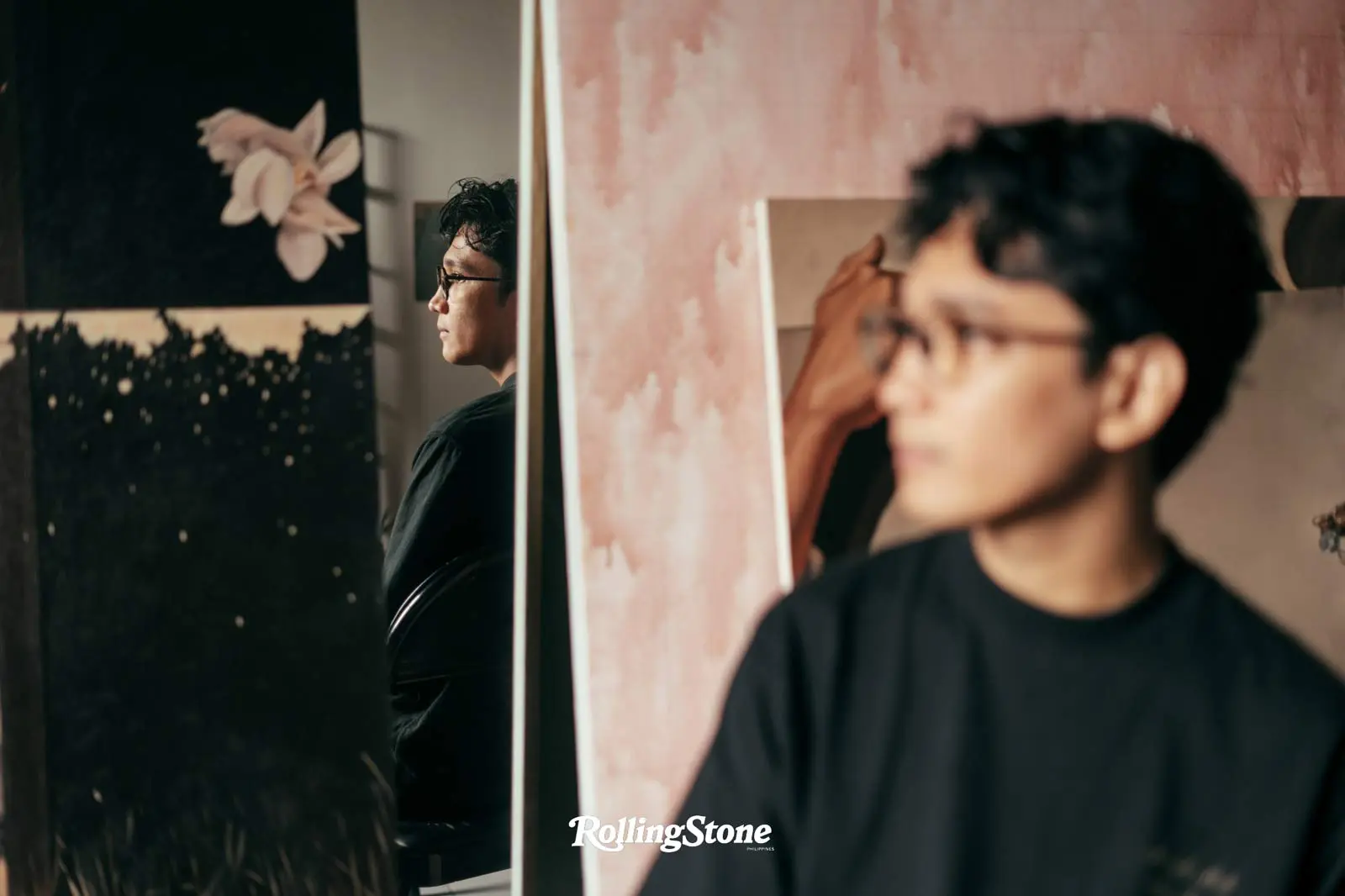
“Feeling ko hindi lang siya sa akin nangyayare e. Madaming artists kami na mga bata na mabilis ang pagusad ng career,” he says. For an artist under 30, T’Leon is well aware that the buzz of an “emerging artist” is fleeting, in part because he used to be on the opposite side of the trade, having worked as a gallery assistant at a now-defunct gallery in Alabang. “Nai-consider ko siya na parang school pa rin e, on the market.” That, coupled with his nascent experience as an artist, gave him some insight into the dealings of art: “‘Yung nakakatakot kasi ang dami ding collectors na gusto ay mga batang artists pero may mga naririnig kasi kami na horror story na ‘pag bata nag-start parang bata ring bibitawan ng market.”
Amante, a far more seasoned figure in the local art scene, corroborates this — except he qualifies what kind of artists are often subject to the whims of the market: “trendy artists.” “Pero hindi kasalanan parati ng artist ‘yun ha,” the gallery owner clarifies. “Some good artists don’t make the sales part all the time. It’s a blow. You’ll start doubting if you’re good enough. We lose artists along the way because of the lack of support. We need patrons, people who are passionately involved with art careers, not just a painting or two. We need more patrons who see through changes.”
T’Leon also acknowledges the market’s ever-shifting taste as a factor, something he’s since learned not to totally ignore, but temper with the help of Amante, who encourages him to think less of how a piece would sell and more of honing his own craft. “Pro-artist si Sir Jay e. Sinasabi nya sa akin, ‘‘Wag mong isipin ‘yung market. Gumawa ka nang gumawa tapos Blanc na ang bahala kung paano i-ma-market ‘yung work mo.’”
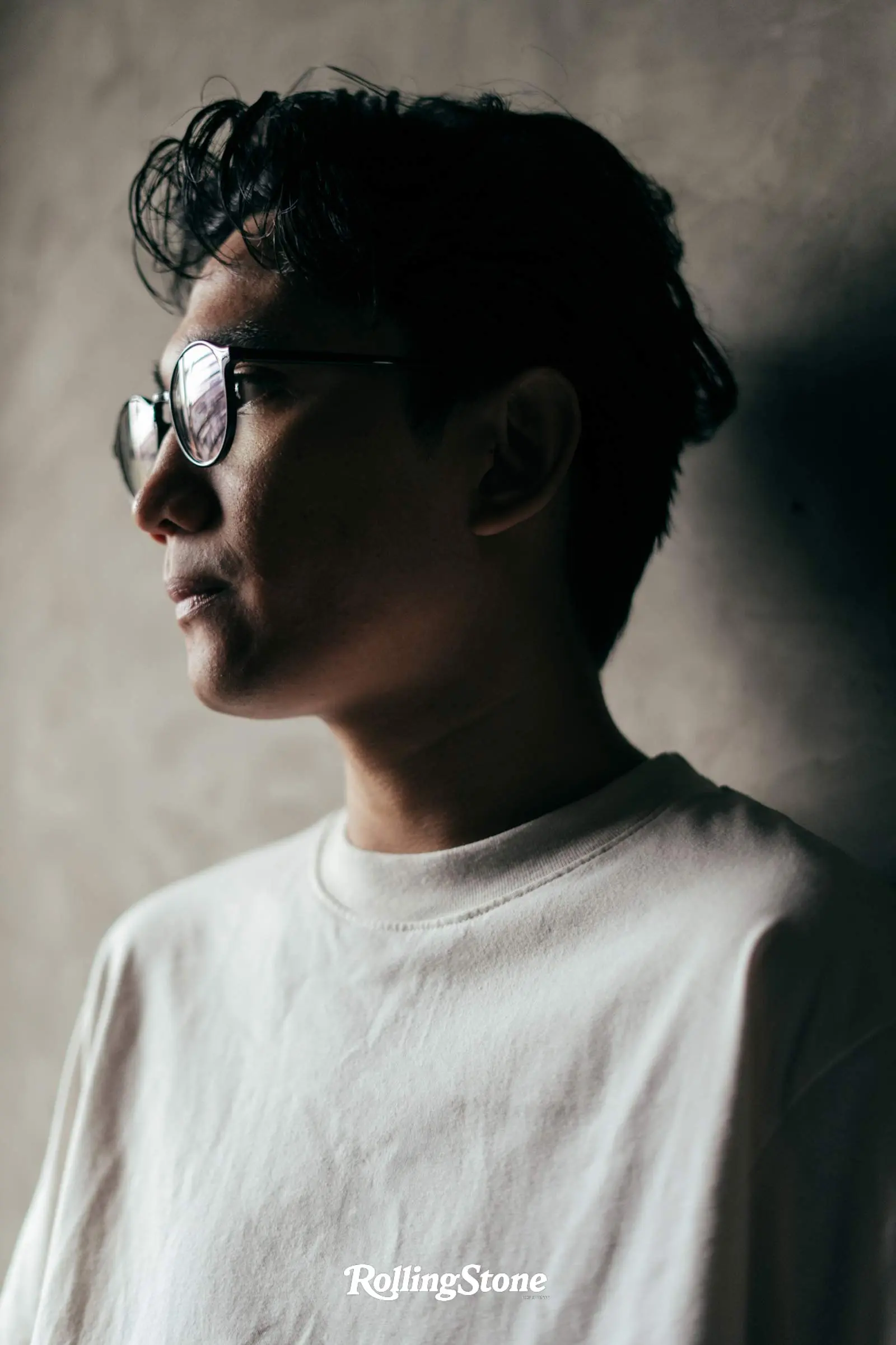
“When I work with artists, I work with them hand in hand, [long-term], acknowledging that tastes and skill changes,” Amante says. “But Jom has this particular skill na kahit anong gawin niya, alam ng tao na siya ‘yun. It’s a very overlooked trait in an artist.”
For now, T’Leon is happy to reap the rewards of early acclaim. “Ang pinakagoal ko lang naman is ma-continue ‘yung practice e.” He’s setting his sights beyond painting, too, hoping to soon explore sculptures and installations in an exhibition he’s long planned for Blanc.
“I won’t be surprised if he plans to explore new medium with his art,” Amante says of T’Leon’s plans. “Kasi minsan the medium of two-dimensional art might be bitin na for some artists. They go to sound, video, sculpture. And if they are able to release the same magic as a flat surface, it’s pushing it more. You have to remember ‘yung state ng career niya is still in the beginning. Andami pang pwedeng mangyare.”