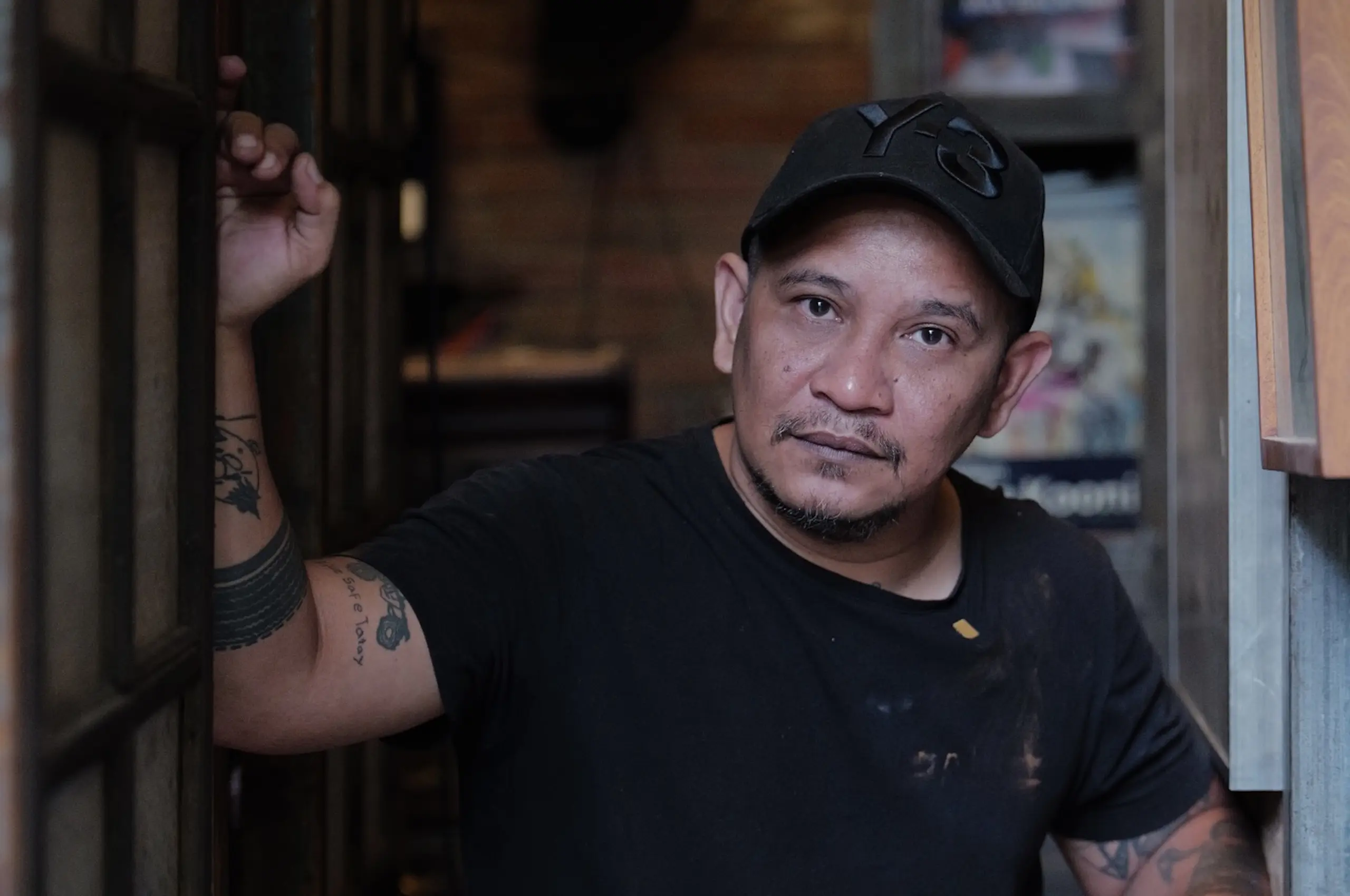
Max Balatbat didn’t always know he’d pursue a full-time career in the arts.
The Caloocan-born artist, whose exhibit “Kapilya” is one of the main highlights of this year’s Art Fair Philippines, spent his early years deciding whether he wanted to follow in his father’s footsteps as an architect or pursue his own passion for drawing.
“Every time na gumawa [ang tatay ko] ng trabaho niya, mga [plano], doon lang ako titignan ‘yong mga materyales niya, mga tracing paper, T-square,” Balatbat told me on a Zoom call from his art studio. Scattered around him were pieces of clay, barbed wire, and penitensya ropes that would eventually serve as the finishing touches to his exhibit. “So akala ko gano’n ‘yong buhay. Siguro magiging ganyan din ako pag lumaki. Pero alam ko, nasa drawing talaga ‘yong passion ko.”
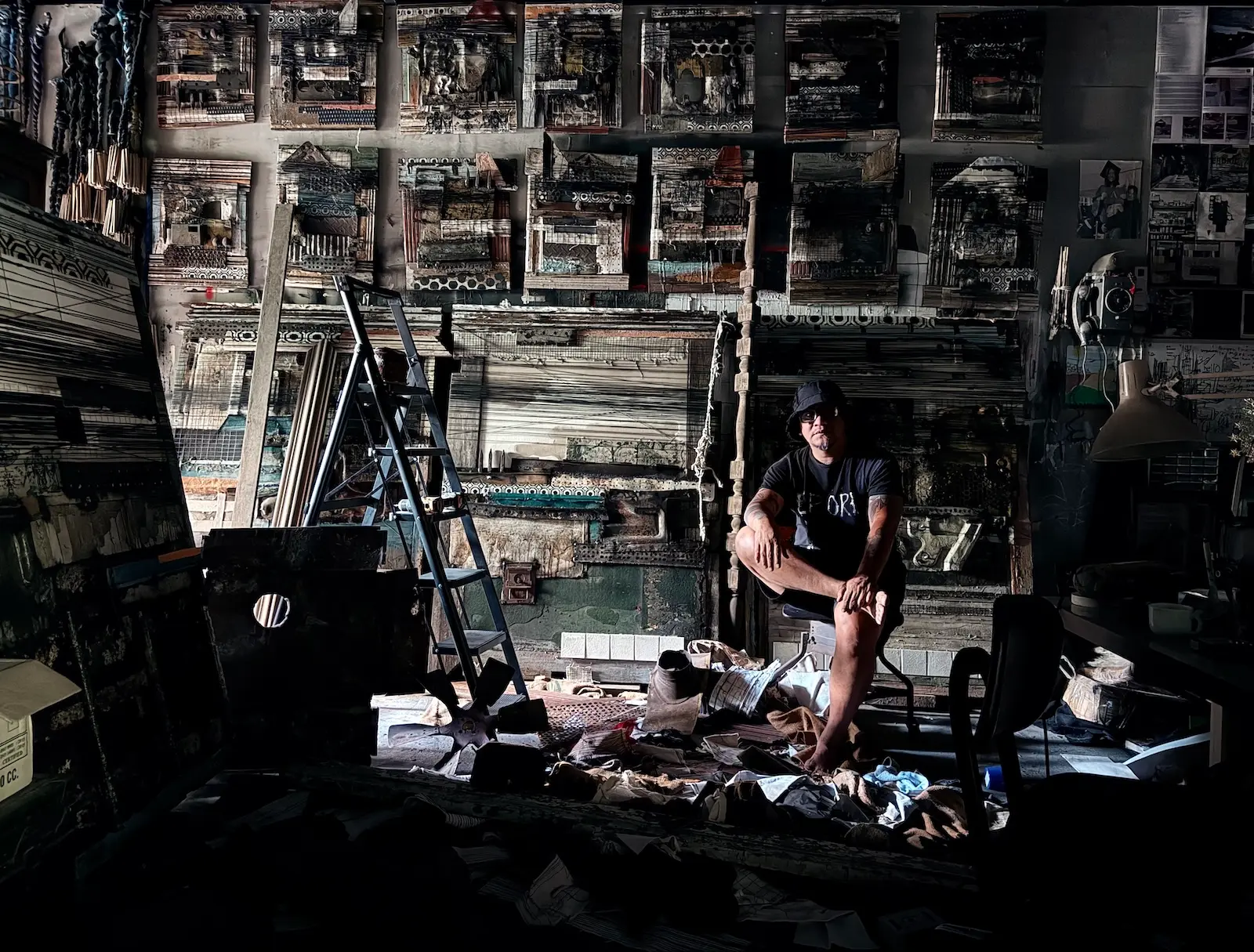
Balatbat often found himself drawn to images of saints, as well as the people of Caloocan’s red light district, spending much of his youth in the vicinity of its prostitutes and late-night workers. Many of them gathered at the Balatbat family’s small chapel, and the young artist would sneak away with his father’s tracing paper to set his memories down on the page.
Although he began studying Architecture at Far Eastern University in 1995, Balatbat ended up switching to Fine Arts two years later at the University of the East Caloocan. However, after a series of mistakes and failed art competitions, Balatbat began to lose faith in his own abilities as an artist.
“Parang every time na gumagawa ako ng art noon, [ang] lagi kong concern [ay] ‘yong viewer ko,” said Balatbat. “Normal naman ‘yon, lalo na sa nagsisimula. Kailangan mong magpa-impress.”
After graduating, Balatbat decided to set up multiple businesses as a graphic designer and photographer to support both his artistic pursuits and his growing family. “Parang three years old ‘yong panganay ko at that time,” he said. “Wala akong choice. Nagnegosyo ako para makapag-art ako ulit. Pero ito ang pinakamali kong desisyon, kasi nawala ang oras ko para sa art ko.”
However, as Balatbat found himself more and more consumed by the demands of everyday life, things took a sharp turn when he found himself stabbed in a fight.
“Nasama ko sa rambulan, [kasi] pinagtanggol ko ‘yong isang tao,” said Balatbat. “Di ko alam na nasaksak pala ako. Normal lang naman ‘yan that time, kasi sa lugar namin parang bahagi na ang mga rambulan.”
Balatbat was rushed to the hospital, where he claimed to have had a conversation with God. “Sabi ko, bata pa ako. May anak pa ako. Gusto ko pang mag-art, eh. Tapos eto na ‘yong dead end ko?”
At this point in the interview, the artist stood to lift his shirt and show the long, white scar on the side of his stomach. “Okay na ako,” said Balatbat, “I went back to the start. Parang nakahakbang na ako ng sampu. Okay lang sa akin ‘yan. Kaya ko mag-umpisa ulit.”
Kapilya
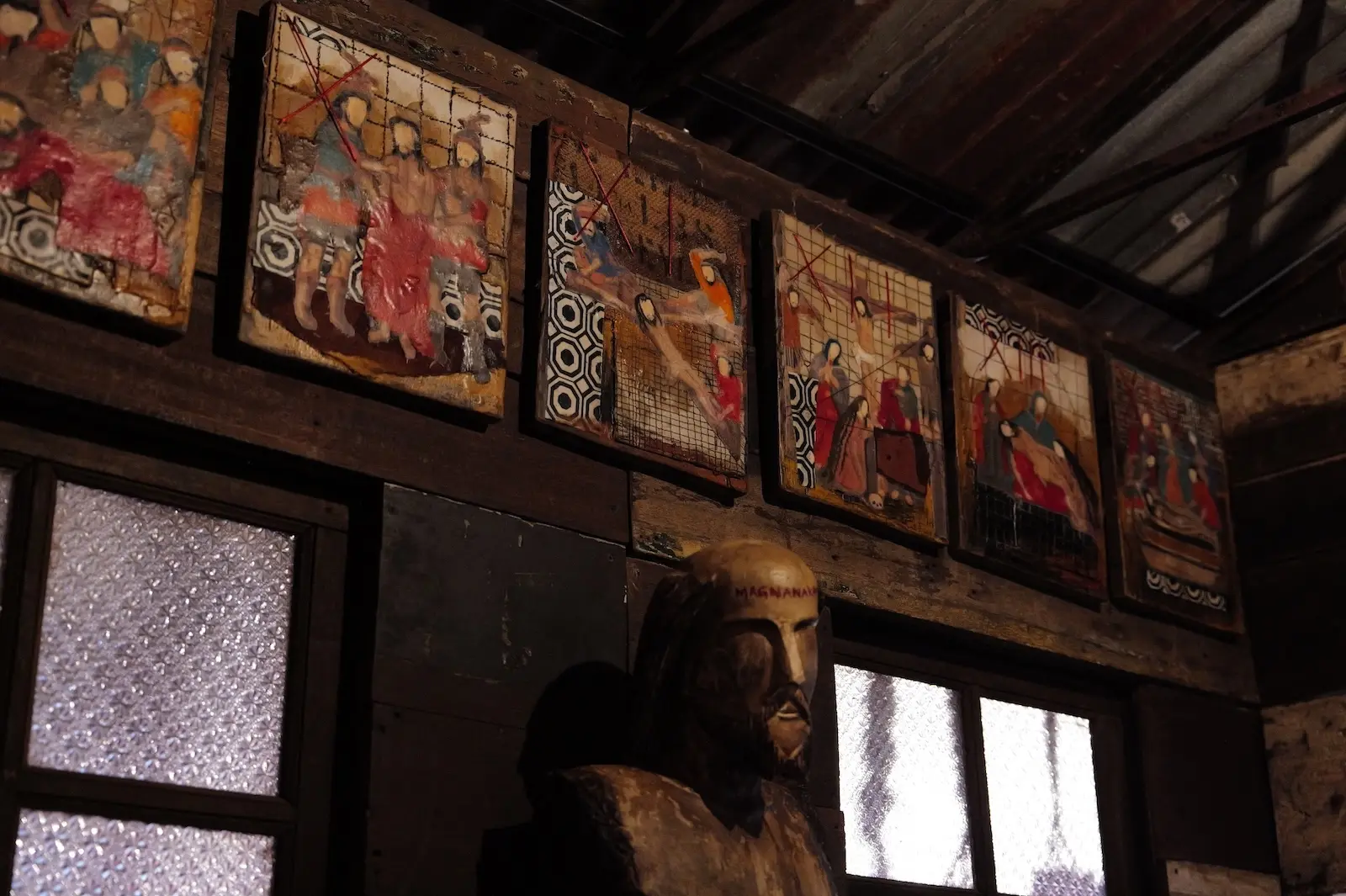
More than two decades after surviving the stabbing, Balatbat has made a name for himself as an artist both in the Philippines and abroad. His solo exhibitions, such as “Sampalataya” and “Balay,” have explored themes of religion, family, and social inequality, while incorporating materials such as salvaged wood, cement, thread, and raw canvas. Balatbat has exhibited his works in London, Florence, The Hague. In 2009, he was honored with the El Lorenzo Magnifico Silver Award at the 7th Florence Biennale.
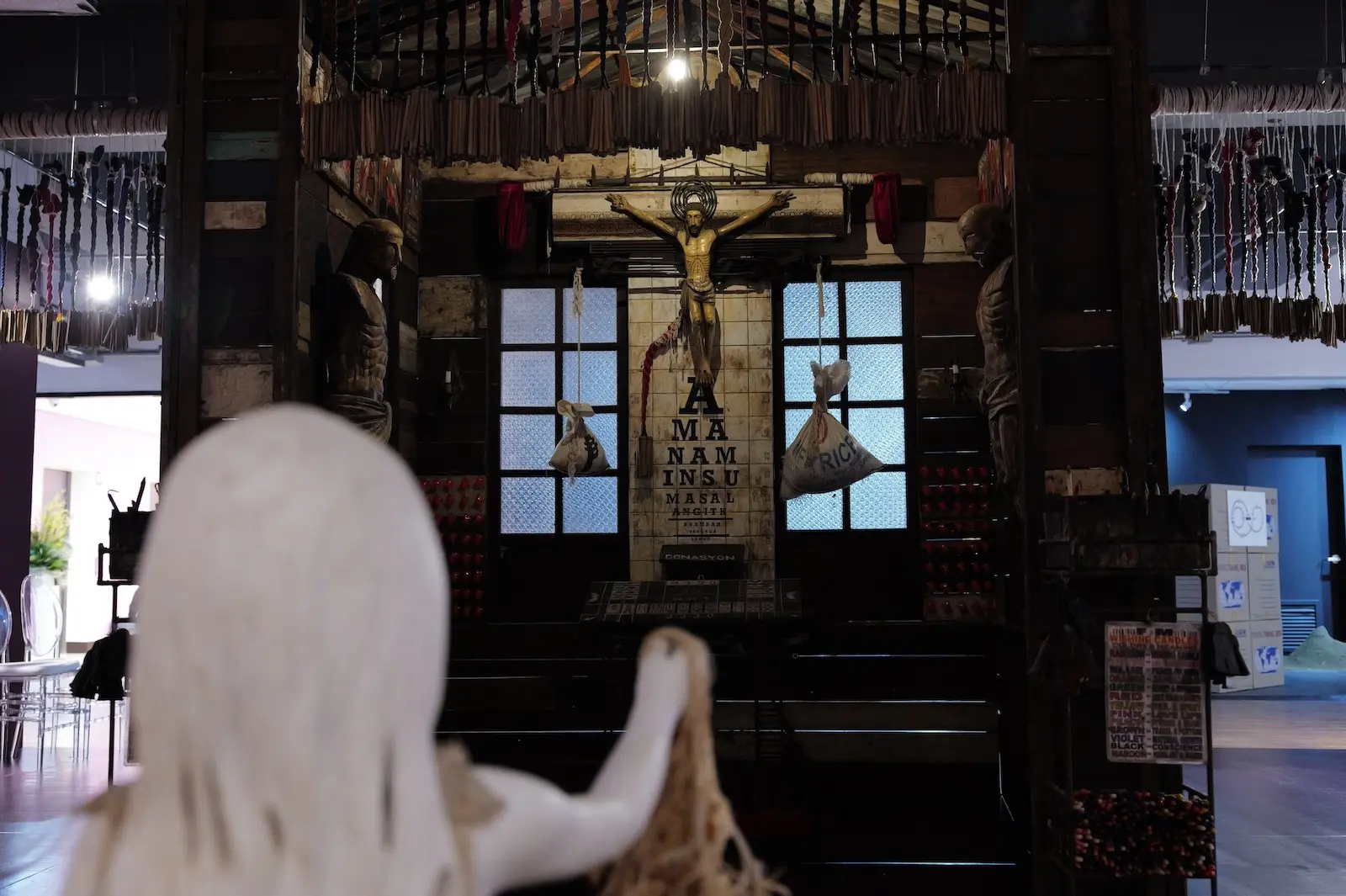
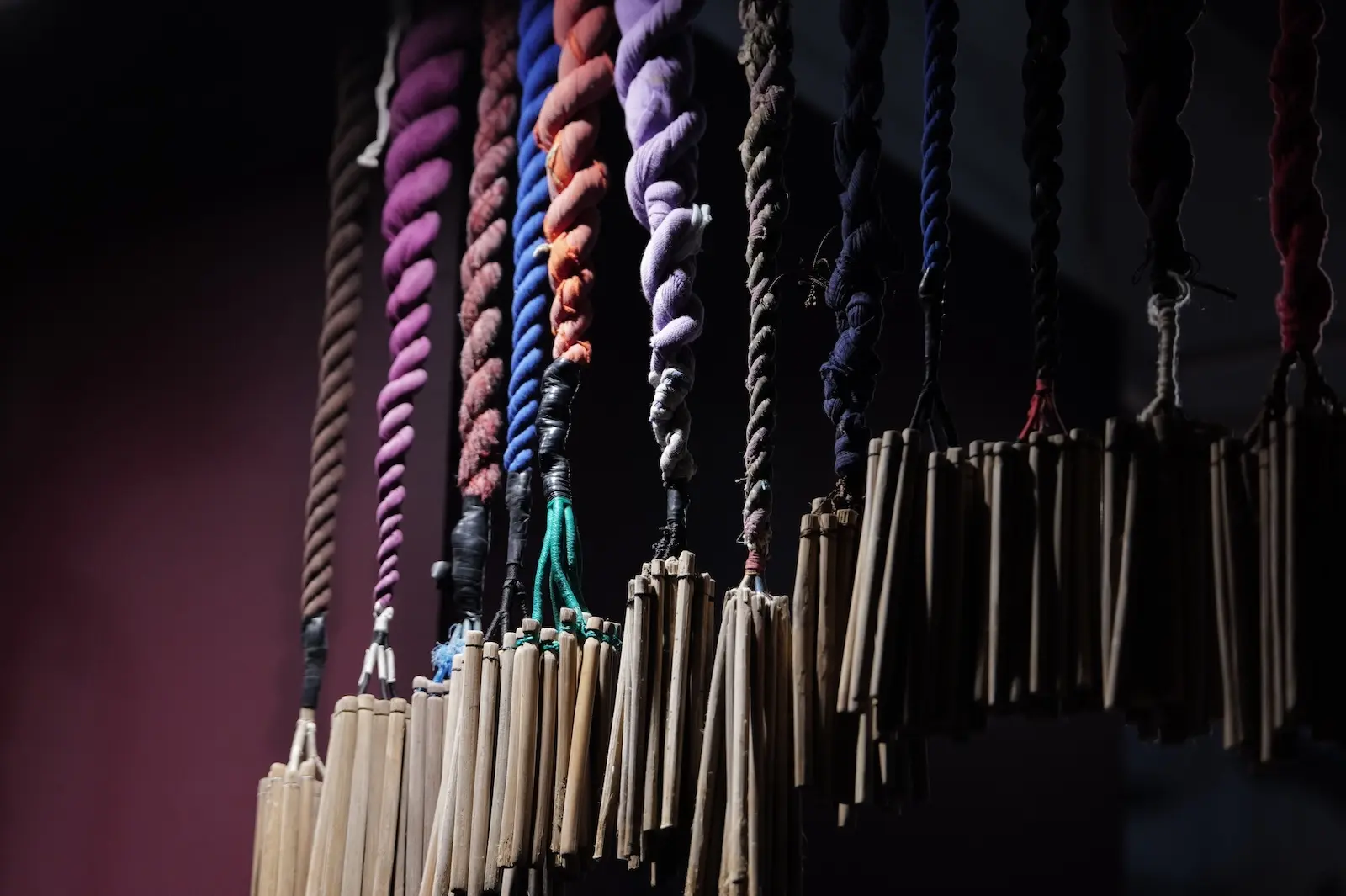
As one of the featured artists in this year’s Art Fair Philippines Projects section, Balatbat is using his platform to shine a light on the Caloocan community he grew up in. The main stage of his exhibition features a makeshift chapel, its wooden beams adorned with rows of whips woven with metal chimes. At the altar, a whip hangs from a crucifix like a pendulum, swinging and whipping two sacks of rice. Right outside the chapel, a faceless little girl wearing a dress made from scraps of fabric sells a handful of dried sampaguita garlands, her underwear pulled down to her knees.
When asked what he hopes viewers take away from his exhibition at the fair, Balatbat emphasized that he wants to highlight the darker, yet equally honest, stories of those who don’t normally stand in the spotlight.
“‘Yong art ko, gumagawa ako ng mga tungkol sa mga puta, sa mga bugaw, tungkol sa mga tao sa paligid namin na negative para sa iba,” said Balatbat. “Kinukwento ko [ang] isang side: tingnan niyo ang ibang side.”