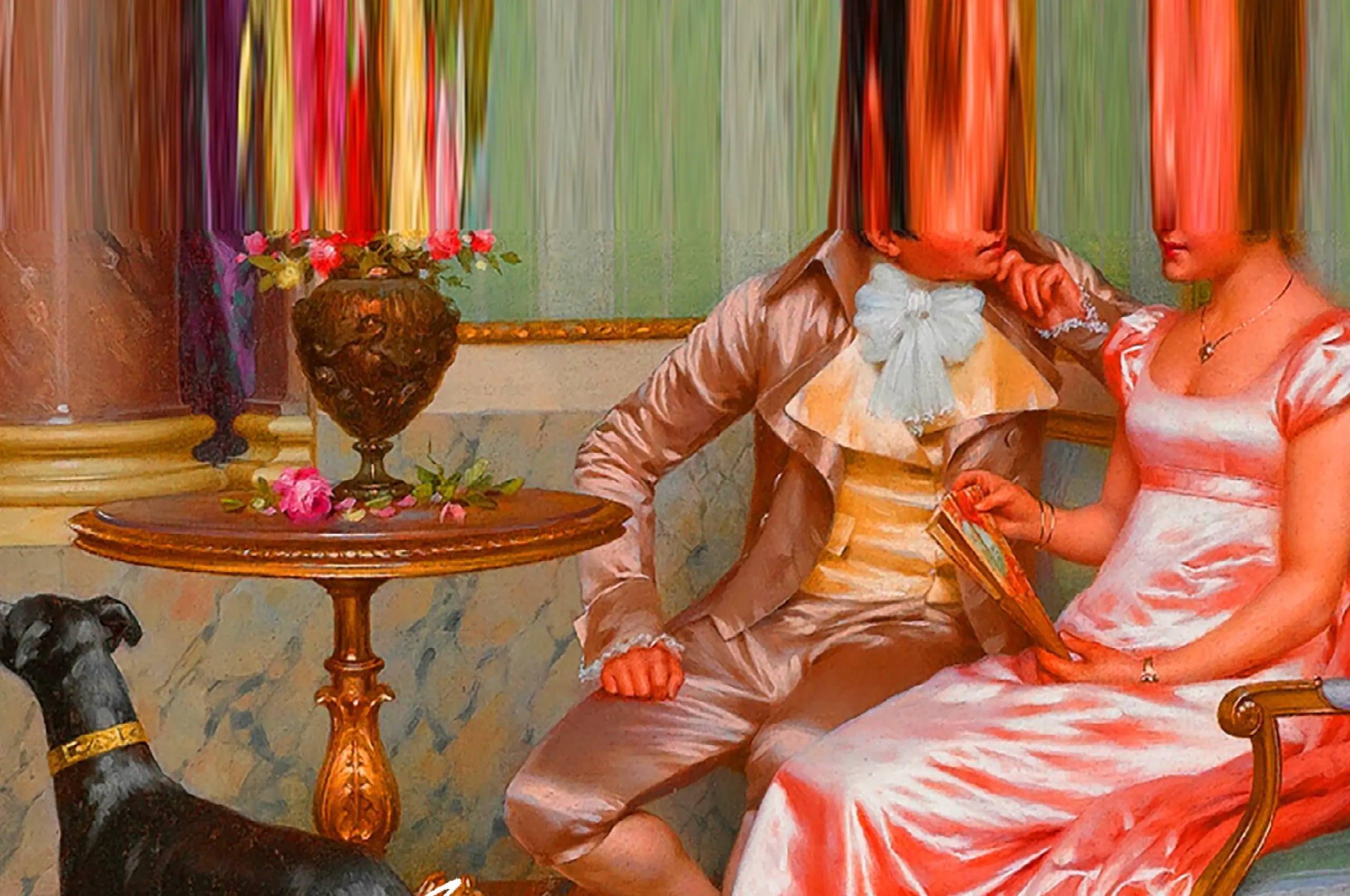
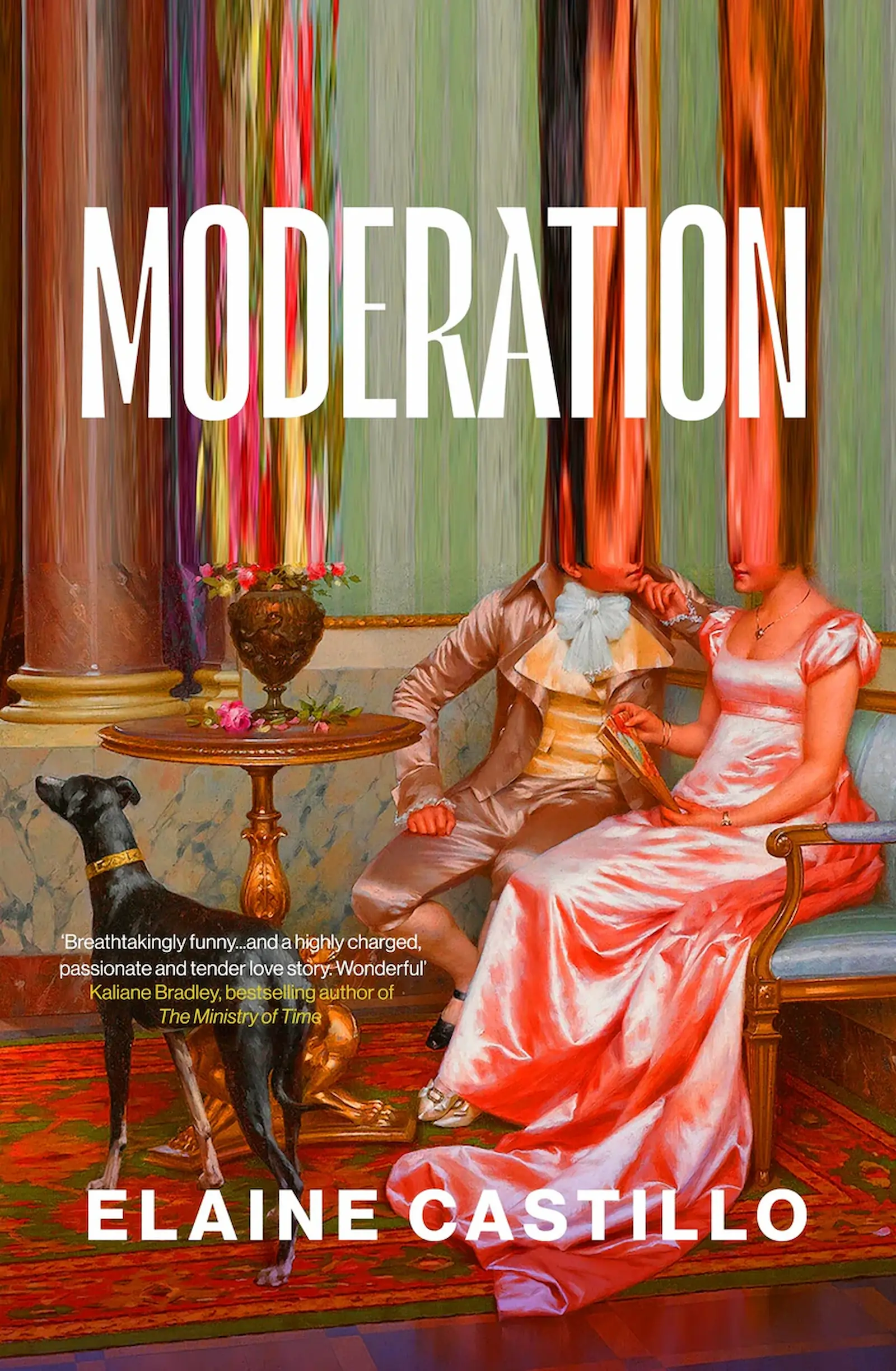
Readers familiar with the work of Elaine Castillo will perhaps recognize specters from her books, provocatively haunting her latest novel Moderation, on an obstinate, no-nonsense social media content moderator who goes by Girlie Delmundo — at least at work — and her ambivalent involvement in an intriguing, if suspicious, virtual reality enterprise following a buyout-related promotion.
As in her debut America Is Not The Heart, Girlie’s family, like Castillo, also hails from Milpitas, except the California town that “famously smelled of shit” has been thoroughly gentrified, and devastation from the 2008 financial crisis had dispersed many from her community eastward to Vegas, the new site of struggle. Her parents’ jobs — a nurse and a doctor-turned-security guard — also sound vaguely familiar. And if the author’s note in her essay collection How to Read Now came with “Or a Virgo Clarifies Things,” Girlie, we are told, has also spent some time “as an overachieving Virgo soft-butch herself.”
But the most striking jolt of familiarity will probably come from the verve and verbal grit, the prickly humor and stubborn sense of history that also propel Moderation. The big Vegas house that ironically signals the family’s precarity post-2008 is a “copy-paste Spanish-tiled dreamer’s monstrosity that had ruined them all.” In an encounter with her new boss, William Cheung, Girlie realizes he’s into her “with the clitstruck knowledge of someone who’d been a conventionally beautiful human commodity all her life.” As a species: “kingdom: asshole / phylum: know-it-all / genus: first-generation eldest daughter.”
And then there’s the history — amid the dense meditation on the vagaries of Big Tech and capital and hypermodernity: on why so many skilled moderators happen to be Filipinos, the book points to the vectors of empire, the “glowing line that trailed through them, all the way back to that first early Pinay, a twentieth-century almost-girl, being taught by a white woman how to administer quinine to a malaria patient.” William’s late friend and business partner Edison was obsessed with the St. Louis World’s Fair, where in 1904 so-called primitive Filipinos were put on display, concretizing America’s racist imperial ambitions, and which in the novel inspired the VR company’s first landscape, but the history removed because “total minefield.”
The scenes set in the too-real but also pointedly not-quite-real virtual world that Girlie has to moderate are reliably mesmerizing, and this seduction, Moderation seems to say, may obfuscate the real violence in the not-so-real realms.
The agility of the narrative is so that this history is made to coexist with the bleak near-future that it paints, one in which strides in VR technology can mean pathbreaking changes in, say, therapy or tourism, but also clarify how, under capital, the more things change, the more they stay the same. The orientation on the high-tech bodysuit that moderators have to wear is silent, Girlie notices, on “where the suits went for cleaning, and whose hands, exactly cleaned them or brought them back to her office,” and just when she feels she was at the bottom of the system, “there was another bottom, yawning open below.” Alienation ad nauseam. Labor is labor.

The scenes set in the too-real but also pointedly not-quite-real virtual world that Girlie has to moderate are reliably mesmerizing, and this seduction, Moderation seems to say, may obfuscate the real violence in the not-so-real realms. And if the current historical moment, per cultural theorist Neferti Tadiar, is defined by the struggle to become human in a time of permanent war, reprieve may come from, among others, fully (re-)inhabiting our human bodies (Girlie weightlifts), the possibility — and terror — of desire and love, and the keen recognition of our common humanity, our primal cries for help and banal feelings about community, behind the shifting avatars.
This story first appeared in The State of Affairs issue of Rolling Stone Philippines. Get a copy on Sari-Sari Shopping, or read the e-magazine now here.