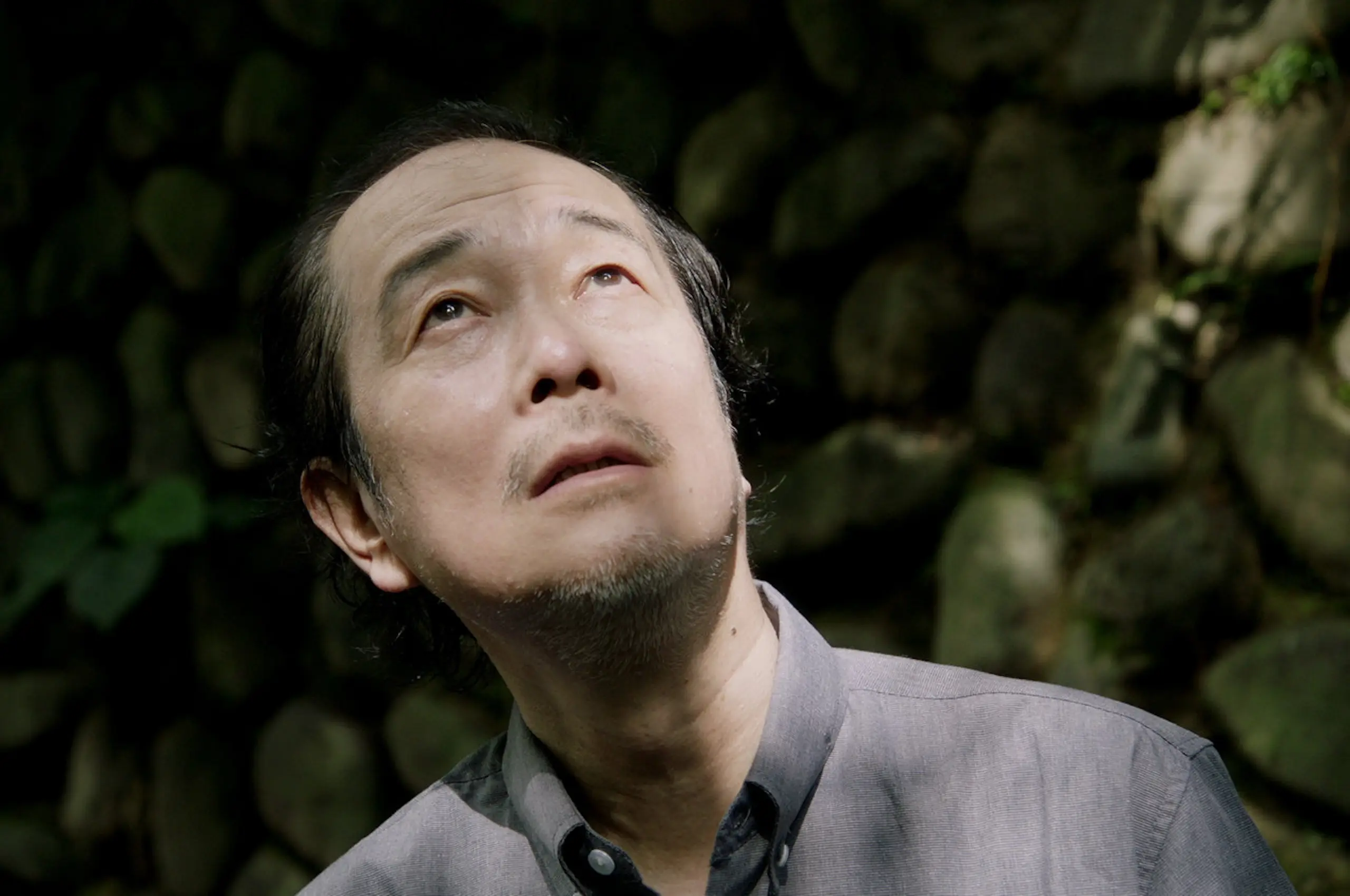
Loneliness is the core of Filipino director Janus Victoria’s debut feature, Diamonds in the Sand, starring Lily Franky.
The film, which is currently screening as part of the QCinema International Film Festival, explores the Japanese concept of “kodokushi,” or the “lonely death phenomenon.” In the last year alone, Japan saw roughly 58,000 people aged 65 or older pass away alone, as reported by the country’s National Police Agency. Kodokushi victims often live in solitude, and their bodies may not be discovered until weeks or months after their deaths. The Guardian described the rising cases of lonely deaths as an “epidemic,” especially as Japan’s population continues to age.
Diamonds in the Sand, an international co-production between the Philippines, Japan, and Malaysia, does not shy away from the morbidity and grief that come with its hyperfixation on loneliness. Franky, best known for his starring roles in projects such as Shoplifters and Renoir, brings a complex humanity to the film’s main character, Yoji. A middle-aged working man with little family left, Yoji is forced to face his own mortality when he discovers that his upstairs neighbor has become another kodokushi case. As he watches a pair of cleaners throw soap and bleach onto the dark stain left behind by his neighbor’s corpse, Yoji decides that he must do what he can to avoid the same fate.
“It was very easy to act for Janus in this movie,” Franky told Rolling Stone Philippines during a group interview, where the Japanese actor’s answers were translated into English. “We prepared for this movie for [11] years, so she had a specific vision in mind. The fact that a Filipino director is taking up the topic of [kodokushi] and making sure that it’s recognized around the world… it’s a very important phenomenon.”

Wanting to escape his solitary life, Yoji impulsively decides to travel to Manila, where his mother’s caregiver Minerva (Maria Isabel Lopez) has assured him that no one is ever lonely. Yoji becomes caught up in the hospitality and generosity he experiences in the Philippines, and becomes more and more involved in the lives of both Minerva and her daughter, Angel (Charlie Dizon).
However, as Franky emphasized, Yoji is a deeply human character, which results in him making choices that are neither right nor wrong throughout the film. He is curious about the Filipino way of life and is charmed by streetside karaoke-come-drinking sessions and family meals, a sharp contrast to his microwavable dinners spent reading porn mangas on his own. But at the same time, he is quick to judge his Filipino neighbors, and finds himself unable to fully belong in the culture.
“Yoji… he’s not really a bad guy, nor is he a really good guy,” said Franky during the interview. “He’s really ordinary. Ordinary people don’t become main characters. Ordinary people usually have something that’s not likeable about them — for example, they can be very discriminatory or too righteous. The difficult part for me was how to express the unlikeable parts of a very ordinary person.”

When asked if he saw any similarities between himself and his character, Franky simply laughed. “I believe that I have a better personality than Yoji,” said Franky. “But I also believe that there are certain parts of Yoji’s unlikeability that are also in each of us. There’s a part in him that wants to be a hero, but can’t be one.”
Above all else, Franky hopes that audiences come away from the movie thinking about how loneliness can leave its mark on a person, and how communicating can be more than enough to save a life. “As discussed in the film, the phrase ‘Have you eaten?’ is very important,” said Franky. “I think it should be more common around the world. A lot of people can be saved with this phrase.”
“Everyone may say that living alone is better or more fun, but I don’t think that’s the case,” continued Franky. “In the movie, we make it seem like there’s no loneliness in the Philippines, but I don’t think that’s really the case… [people] may not seem lonely, but they may feel it a lot more when they finally fall into that loneliness.”