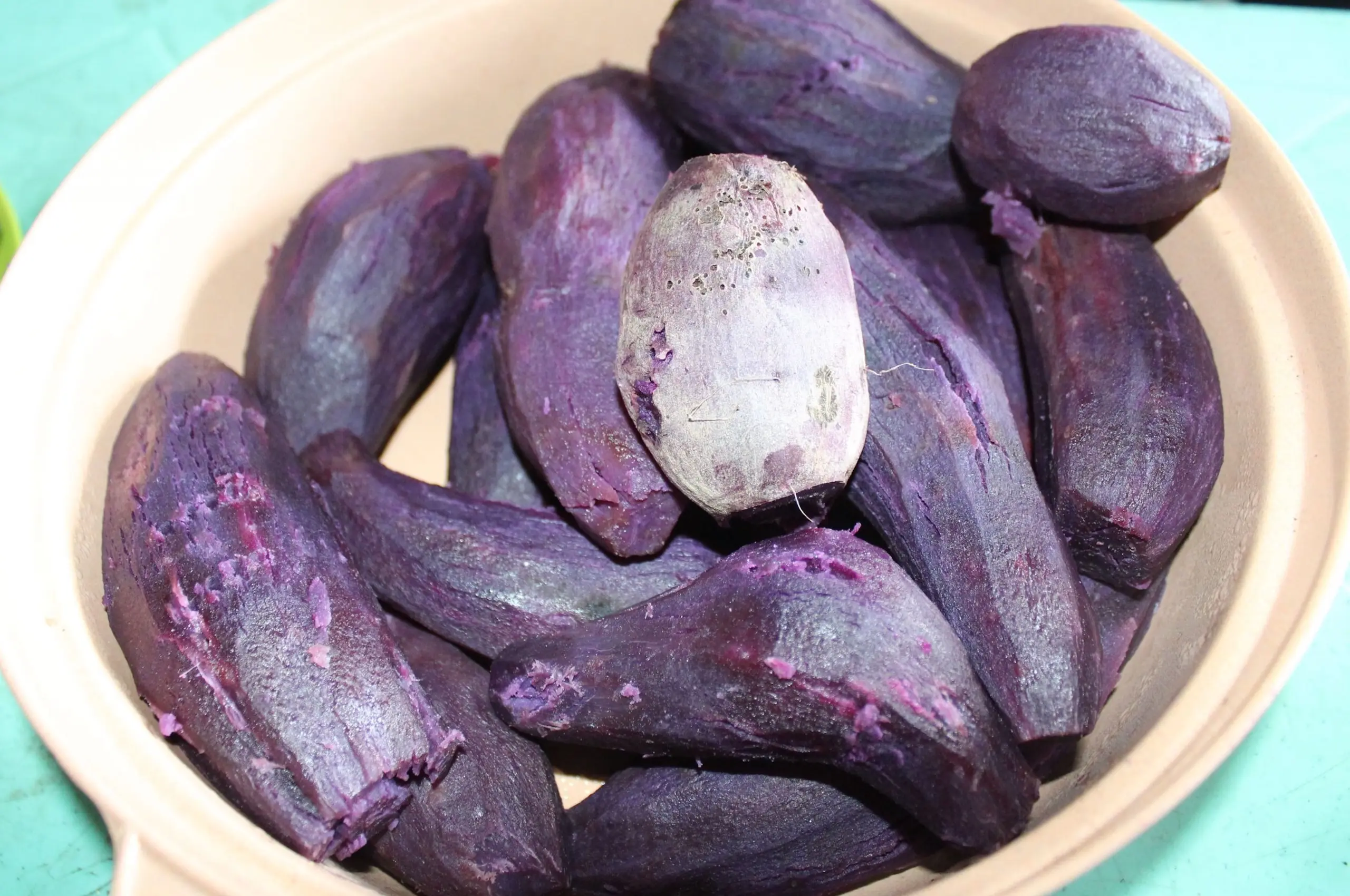
Ube has long been a staple of Filipino cuisine, but it looks like the rest of the world has figured out what a delicacy the root crop can be.
According to a recent report from CNN, almost 1.7 million kilograms of ube and ube-based products were exported from the Philippines last year, with nearly half the total amount ordered by the U.S. Earlier this February, the Department of Trade and Industry (DTI) also announced that international demand for the crop had generated $3.06 million (roughly P176,140,000) in 2025. DTI’s report went on to list the U.S., the U.K., and Italy as key markets.
The rise in ube’s popularity in the U.S. can be attributed to restaurants, cafes, and coffee chains offering specialty drinks based on the vegetable. Earlier this March, for instance, Starbucks rolled out a spring menu in locations across Europe that features an ube vanilla velvet latte, an ube vanilla velvet matcha latte, and an iced ube vanilla macchiato. Last year, these same drinks were first piloted in U.S. Starbucks Reserve stores.
Meeting Demand
However, the rising global demand for ube also raises concerns over whether or not Philippine farms can maintain their supplies. According to the Inquirer, based on data released by the Philippine Statistics Authority, annual ube production has decreased from more than 15,000 tons in 2021 to roughly 14,000 tons over the past two years. But simultaneously, exports have quadrupled in that same amount of time, even requiring the Philippines to import ube from Vietnam to help meet demand. Countries within Asia, such as China and Vietnam, have also accelerated their own ube production to meet export demands.
What’s more, farms must consider ube’s prolonged growth time, with the crop requiring 10 to 11 months after planting before it can be harvested. This cycle is also vulnerable to natural disasters, particularly typhoons. While it may be exciting to see ube get its global moment, it’s also important to raise questions about how this rising demand has affected farms, the profit that farmers may or may not make from this trending popularity, and if there’s enough of the vegetable to go around.