To mention Philippine cinema, much less the state of it, to any self-proclaimed cinephile is to unleash a molten slew of vitriol, frustration, and despair over a national audience that does little to support an industry that’s constantly proclaimed “dying.”
“We’re really at a loss,” director Erik Matti lamented during The Rolling Stone Philippines Interview. “We’re nowhere internationally right now… parang stunted ang growth natin. And audiences… now, they need to have a reason why they [should] get out of their house, ride the bicycle or jeep, pupunta sa mall, and [watch].”
Others, like Film Development Council of the Philippines (FDCP) chairman and CEO Jose Javier Reyes, rue how Filipino audiences seem to turn away from locally made productions. “Filipinos think Filipino films are trash,” Reyes said. “They think that we deal with the same tropes over and over again. Which is true. They feel that it’s inferior in quality. Which is true. They feel that it does not offer anything new and challenging. Which is true. Producers have to address that.”
“Broadly, it’s not good,” Film Academy of the Philippines (FAP) director-general Paolo Villaluna said, shaking his head, during an episode of Rolling Stone Philippines Roundtable (and if it isn’t obvious by now, yes, this publication loves interviewing filmmakers). “If we define cinema as the practice of going to theaters, as an industry where bumili ka ng ticket at manonood ka sa sinehan, then it’s really struggling.”
Pricey Tickets and Streaming Services

All of these grievances ring true — at least, to some extent. Our movie industry is still struggling out of a pandemic-induced streaming high and trying to convince moviegoers that there is merit to returning to cinemas. I myself am prone to waiting for movies to make their way to streaming platforms like Netflix because a trip to the cinema is a costly endeavor: I’m spending on transportation, food, and roughly a hefty P420 for a movie ticket. “For as long as ticket prices are too high, people don’t actually have access to Philippine cinema,” critic Philbert Dy said. “Even if they want to see a movie, they might save that money for something that they consider more essential.”
Some within the industry have tried to meet cinema-averse audiences halfway. VMX, the erotic films-centric streaming platform by Viva Entertainment, has surpassed 11 million subscribers worldwide and, as Joker Manio wrote, “took advantage of the wild, wild west that is streaming.” JuanFlix, the FDCP’s streaming site, aims to provide wider access to both new releases and the older tentpoles of Philippine cinema. “For P99 a month, you can get to watch classic films, from the Lamberto Avellanas all the way down to the Dwein Baltazars,” said Reyes. Unfortunately, as of writing, JuanFlix’s operations have been temporarily paused as of earlier this September.
But with this pivot to streaming, the local industry has inadvertently added another conundrum into the mix. “Audiences now expect and [think], ‘Oh, I can see this later on,” critic Jason Tan Liwag said. “Ang weird ng paradox: streaming promises an unlimited amount of access, but at the end of the day, because no one is really watching a lot of these films, it paradoxically kills access.”
Bring Home the Big Bucks

While Philippine cinema is far from perfect, this year saw a number of successes that point to an industry that is continuing to evolve despite the many hurdles.
If we’re thinking about box-office success, 2025 is finishing strong. Star Cinema’s blockbuster family drama, Meet, Greet, & Bye, only premiered earlier this November, but it has since become the country’s top-grossing film of the year so far, bringing in over P175 million at the global box office at the time of writing. Perhaps this is due to a number of stars aligning: the drama’s talented cast includes Piolo Pascual, Maricel Soriano, Joshua Garcia, Belle Mariano, and Juan Karlos Labajo. It is directed by Cathy Garcia-Sampana, who also gave Star Cinema their highest grossing film of 2024: Hello, Love, Again, which brought in a whopping P1.6 billion worldwide and has since been deemed the highest-grossing Filipino film of all time.
“Pero star power alone won’t cut it,”ABS-CBN Films Head Kriz Gazmen told Rolling Stone Philippines. “Kahit naman ganoong kalakas ang star power, kung pangit ‘yong pelikula, sira rin ‘yong word of mouth mo. Ang hirap-hirap ngayon because it’s a combination of so many factors: star power, storytelling, script.”
Staking Our International Acclaim
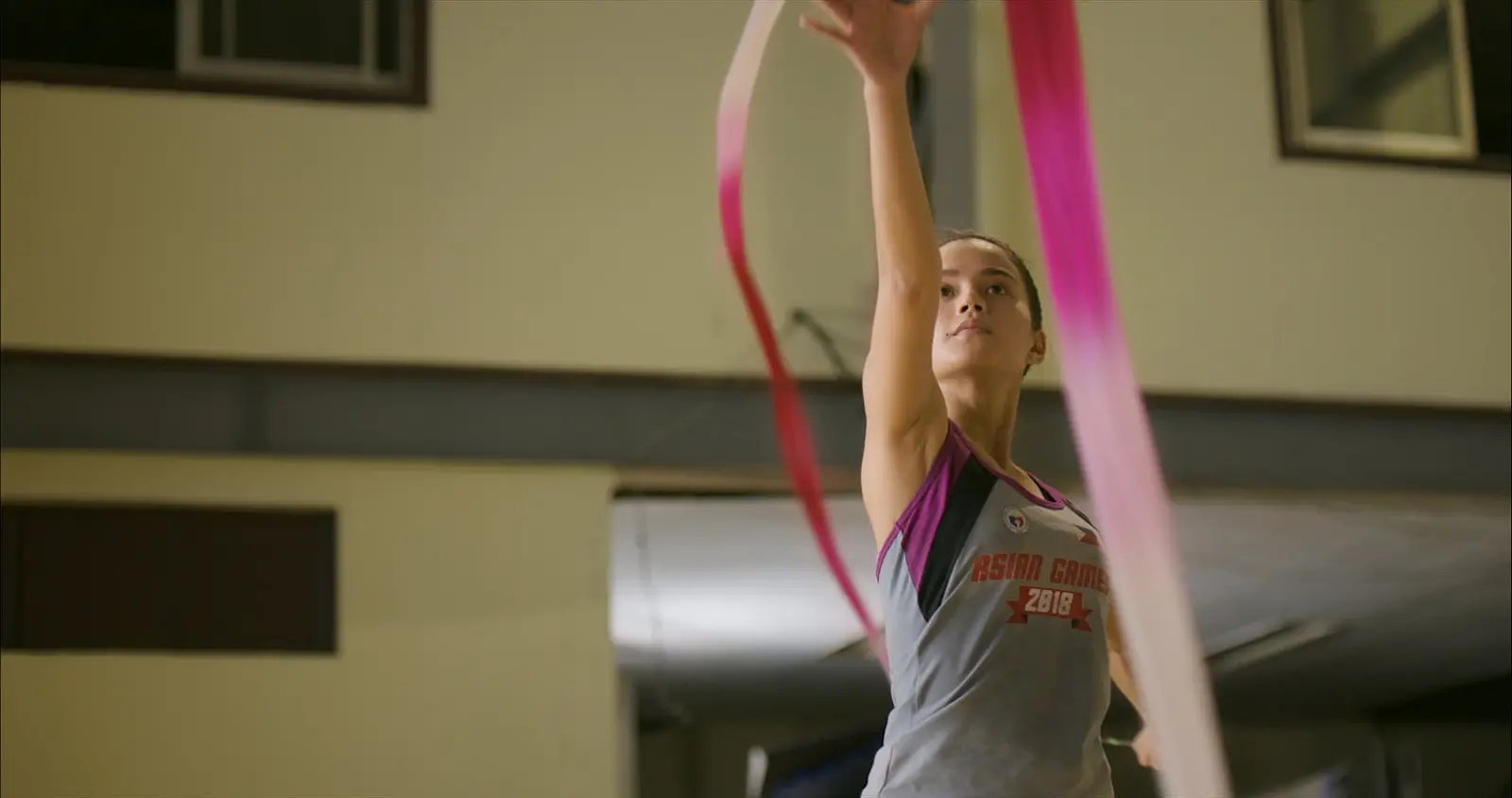
If we’re thinking about success in terms of global prestige, 2025 was also the year when several Filipino films drummed up buzz well beyond our own shores. Sunshine — the coming-of-age drama centered on bodily autonomy, Filipina womanhood, and abortion starring Maris Racal and directed by Antoinette Jadaone — brought home the prestigious Crystal Bear Award for Best Film at the Berlin International Film Festival earlier this February.
“Sobrang sarap ma-recognize in international film festivals and to see people from diverse cultures moved and transformed by Sunshine,” Jadaone said. The film’s producer, Bianca Balbuena, painted Sunshine’s place in the global festival circuit in a more strategic light: “We wanted to premiere Sunshine in top festivals [around] the world to create noise and curiosity… It’s admittedly not your typical mainstream popcorn movie, so we needed the noise for marketing.”
The noise paid off, and Sunshine made its Philippine premiere this July. Despite several speed bumps — including an initially limited screening and an R-16 rating from the Movie and Television Review and Classification Board (MTRCB) — it did so well on its opening weekend that by its third week, 65 cinemas nationwide were screening it. By the end of August, Sunshine had earned P47 million at the box office, and it is currently available to stream on Netflix.

The same international acclaim can be said for other local cinematic projects. Petersen Vargas’ queer road trip fever dream, Some Nights I Feel Like Walking, bagged several awards, including Best Cinematography at this year’s ASEAN International Film Festival. Food Delivery: Fresh From the West Philippine Sea, Baby Ruth Villarama’s unflinching documentary on the plight of fisherfolk and the Philippine Coast Guard navigating the contested waters, won the Tides of Change category at Doc Edge Awards 2025 in New Zealand, where it held its global premiere. Renoir, a Filipino co-produced coming-of-age tale, as well as the bowling alley short film Agapito, were part of the official slate at the 2025 Cannes Film Festival.
And then there’s Magellan, from internationally acclaimed director Lav Diaz, which could be making its way to the Oscars next year. As the Philippines’ official submission to the Academy’s Best International Feature Film category, Magellan has the potential to bring home an Academy Award to the Philippines. “Magellan has a pretty strong chance this year,” Villaluna said. The FAP director-general oversaw the selection committee that voted on the historical “acid trip” that is arguably one of the most accessible (and shortest) projects from the film auteur.
However, even if Magellan is chosen as an official Oscar nominee (and we won’t know until January 2026), it has a long, hard Oscar campaign ahead of it. Multiple strong Filipino contenders have emerged in the past, including Diaz’s 2013 own Norte: The End of History, but fell through due to multiple factors, especially a lack of funding.
“As a country, we have always had the best films to send to the Oscars,” noted Villaluna. “Pero sometimes the strategy is either too late or may kulang sa financial support.”
What Are They Afraid Of?
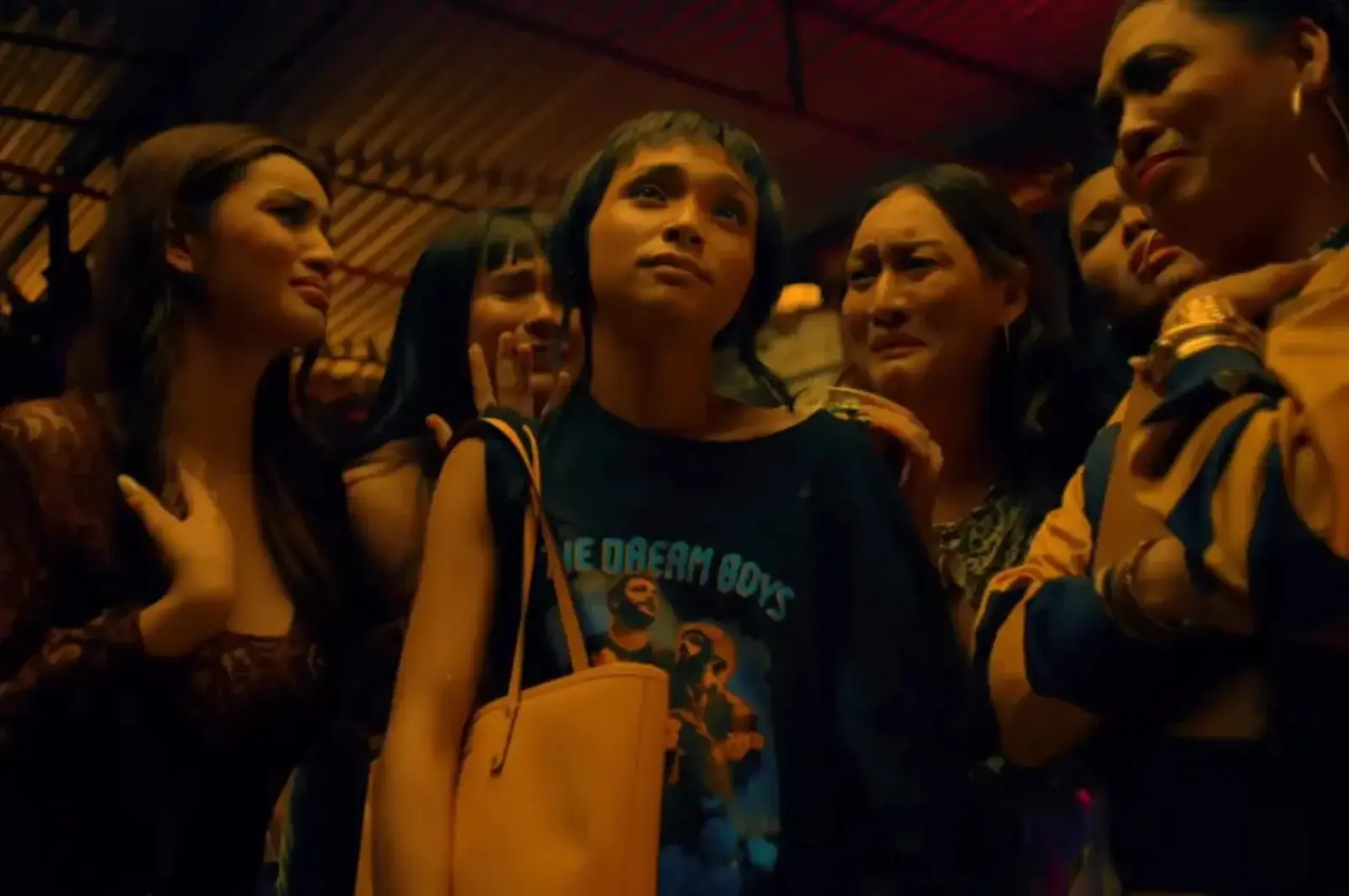
2025 has also seen a number of Filipino films fall under scrutiny from the higher powers that be. Recently, Rodina Singh’s trans drama Dreamboi, which took home Best Picture, Best Director, and a flurry of awards at VMX’s inaugural erotica film festival, CineSilip, initially received an X rating from the MTRCB, which would have marked it as not suitable for public exhibition. The board cited the “sexually explicit scenes” present in Dreamboi — the only trans film at CineSilip — as the rationale behind its rating, but it eventually switched from X to R-18, the same rating that all the other films at the festival received.
“Honestly, it was hell,” Singh said. “That’s the hardest part to accept — that after everything, someone else gets to decide whether your truth can be seen. And I will stand by this: I don’t think the government has the right to tell us what we can or cannot say through our art. Art is expression. And what we did was art: artistic, intentional, honest. So what are they afraid of?”
The team behind Food Delivery experienced a similar form of pushback when their documentary was suddenly pulled from the PureGold CinePanalo Film Festival lineup this March, just two days before it was meant to make its national premiere. The documentary delves into the politically charged issue of sovereignty over the West Philippine Sea, although its director, Baby Ruth Villarama, stresses that it is inherently about empathy and honoring the communities affected by the region’s ongoing disputes.
“It feels like history repeating itself — a déjà vu [for] artists suppressed during different times in our history,” Villarama told Rolling Stone Philippines. “We’re not even under foreign rule now, but clearly the pressure is [still] there.”
What’s Next?
Despite the many, many hurdles, either within its own borders or outside of it, there is still a defiant pulse keeping the industry alive.
“The industry… it’s struggling, but it’s also evolving, and that does not mean death,” said Villaluna. “The idea of people wanting to express themselves and for people to have that communal experience of hearing [these stories], that will never die.”
What’s more, if we are to trace the history of Philippine cinema back all the way to the first Filipino-produced film released in 1919, or even further back to when the first films were screened in the country in 1897, this more than implies that the industry has survived well over a century. “Everything that we’re going through now feels like we’re the only generation to go through it, but that’s not true,” producer Perci Intalan said. “There was the 1950s, the 60s, the 70s… It’s a struggle, but let’s just look at it as another challenge.”
But Philippine cinema cannot survive without a Filipino audience willing to meet it halfway. Our filmmakers and studios can continue to innovate, experiment, and send their stories off to local and international festivals, but their efforts can only go so far without viewers to support them. “[If] we want to bring back the life, the vibrancy, and the significance of Filipino cinema, it’s not just the job of filmmakers… it’s the job of the audience,” said Reyes. “It all depends on the audience. Kung hindi tayo maniniwala sa gawa ng Pilipino, sino ang maniniwala sa atin? Napakahalaga na bigyan natin ng supporta ang mga pelikula na makabuluhan, o kahit na ‘yung mga pelikula na kumakain lamang ng ilang oras natin, nagpapatawa o napapaiyak sa atin.”
“Ang importante kapag gawa ng Pilipino, bigyan natin ito ng wastong respeto,” continued Reyes. “Dahil tulad ng sinabi ko, kapag hindi natin pinaniniwalaan ang ating sariling kakayahan, wala tayong saysay sa pagiging Pilipino.”