
Cebuano pop artist Dom Guyot has built a reputation not just as a singer, but as a songwriter who doesn’t play it safe. With credits that stretch from popmainstay Janine Berdine to sultry R&B artist Dia Mate, Guyot has spent the last few years making room for queer storytelling in a music industry still dominated by cisgender, heterosexual narratives. But it wasn’t until the release of his single “kabit” in June that the stakes got higher for him.
Guyot isn’t the kind of artist who folds under the weight of public discomfort. He isn’t trying to be palatable. The music shifts between hushed R&B and sharper, more satirical cuts, often turning vulnerability into a pop hook. Tracks like “balik,” co-written with Adie, deal with his personal experiences on queer yearning. “body,” one of his more confrontational songs, came out of his university thesis research on safe sex. But none of these sparked the same reaction as “kabit.”

At the height of Pride Month last June, Guyot performed “kabit” at the LoveLaban event held at University of the Philippines Diliman. The set triggered backlash almost immediately. Users online made comments, accusing him of glorifying infidelity. The term “kabit,” which translates to “a secret sidepartner,” is so loaded in Filipino pop culture that the single’s title alone felt like a provocation. Clips of the performance — particularly ones showing Guyot dancing along to the single — spread quickly, and people on the internet judged that bite-sized moment, stripped of its context. Guyot was visibly shaken in the days after. He doesn’t regret making the song, but in the weeks following the performance, he chose his words carefully.
Real Talk
“We need to talk about the kabit topic in general,” Guyot tells Rolling Stone Philippines. “It’s been deeply ingrained in Philippine pop culture. There are countless blockbuster films and teleseryes built around it. In the music industry, a lot of straight musicians in the Philippines have made songs about being kabits, being two-timers, womanizers, or bragging about sleeping around. Most of those songs end up going viral or hitting the charts.”
Guyot points out that “kabit” wasn’t made to glamorize cheating. The song was meant to document what it’s like to be unknowingly caught in a relationship as a third party. For many queer Filipinos, especially those navigating secrecy and stigma, that experience isn’t rare.
“I love to stand with the community that continues to be oppressed to this day,” he says. “And I’m really regretful, to be honest, for what happened, [and] with how people have perceived the performance. Because again, I should’ve done better in making sure the context was clearer, [and] giving people more insight because I don’t tolerate cheating… I’m saying, cheaters should stop saying these kinds of excuses because you guys have full autonomy over your bodies. And it’s literally on the bridge [of the song]. That’s why when I sang ‘Okay, you can judge me, you can say ‘querida, bobita at pukingina,’’ That’s when people were cheering. Because kabits should be [held] accountable.”
The UP performance made that conversation harder. Instead of a discussion on how queer people navigate relationships and betrayal, the reaction zeroed in on Guyot’s body, his performance, and his perceived morality. In the weeks after the event, Guyot says he felt both misunderstood and exposed.
“To me, queer art has always been subversive because people find queer experiences taboo or, even worse, disgusting and immoral,” he says. “Kaya making ‘kabit’ explicitly about a unique queer experience wasn’t an attempt to normalize it, but to tell a story [that is happening in real life].”
“I can’t take the queer out of me and I don’t want to. [Being queer] will always be ingrained in me and my music.”
Performing as a queer Cebuano artist in a major Metro Manila event added another layer of pressure. Guyot says the criticism wasn’t just about the song. It was about where he came from, how he moved onstage, and what kind of pop star people wanted him to be. Guyot admits that he could have done more to provide context, but he refuses to apologize for being honest in his work
“I think music has two jobs,” he says. “One is to mirror reality and critique it and two is to shape it, shape the future.” Guyot believes that by discussing these topics more openly, those who fear prejudice will find the courage to stand up for themselves when others couldn’t. What the controversy around “kabit” made clear to Guyot are the cracks in mainstream Filipino pop which, at times, go through lengths to represent the LGBTIQIA+ community to the point of tokenizing. Queerness in music, it seems, is only tolerated when it’s sanitized or devoid of confrontation. But Guyot’s music refuses to back down, even if it’s misinterpreted.
“I can’t take the queer out of me and I don’t want to. [Being queer] will always be ingrained in me and my music.”
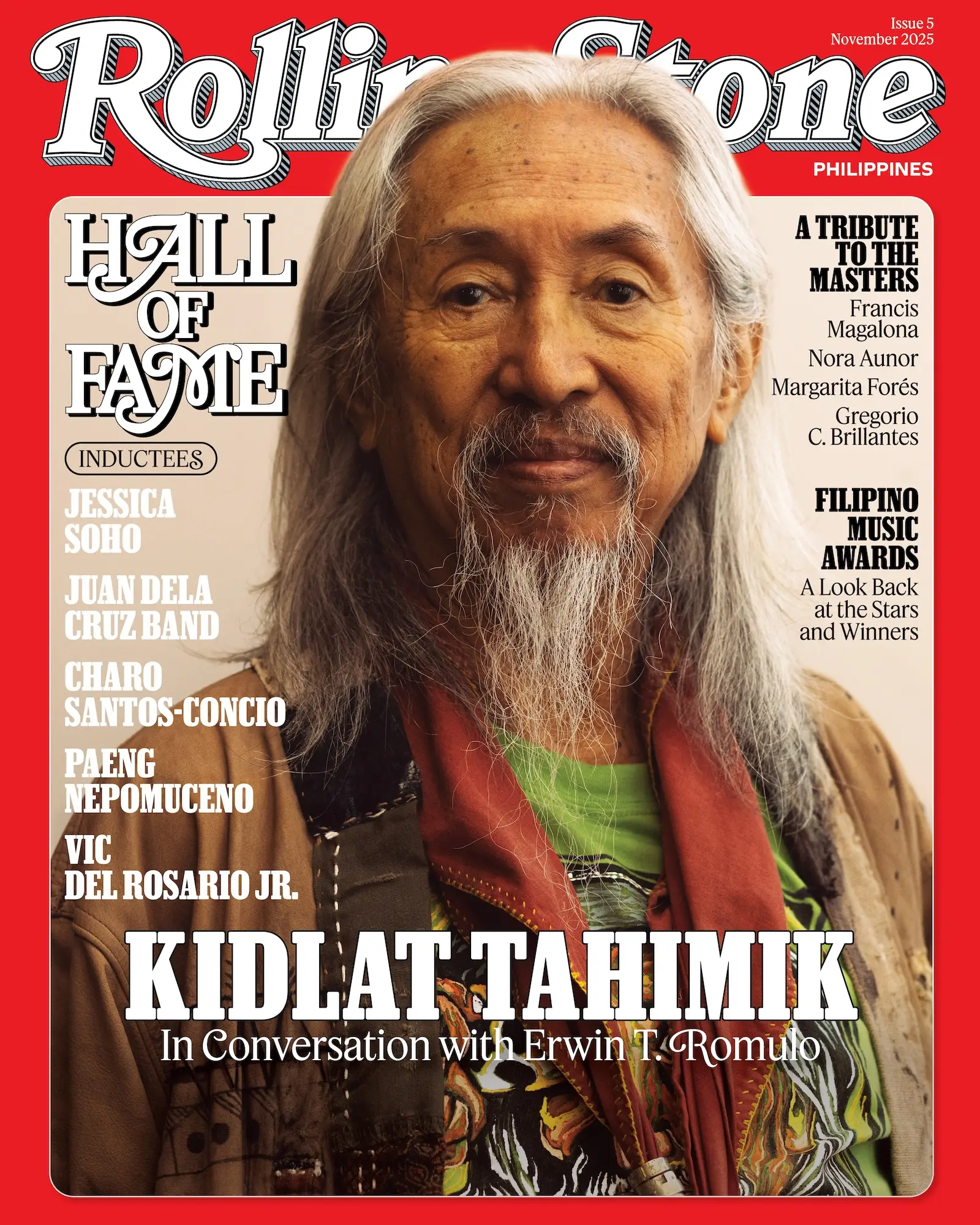
Rolling Stone Philippines November 2025 Issue, Now Available at SariSari Shopping