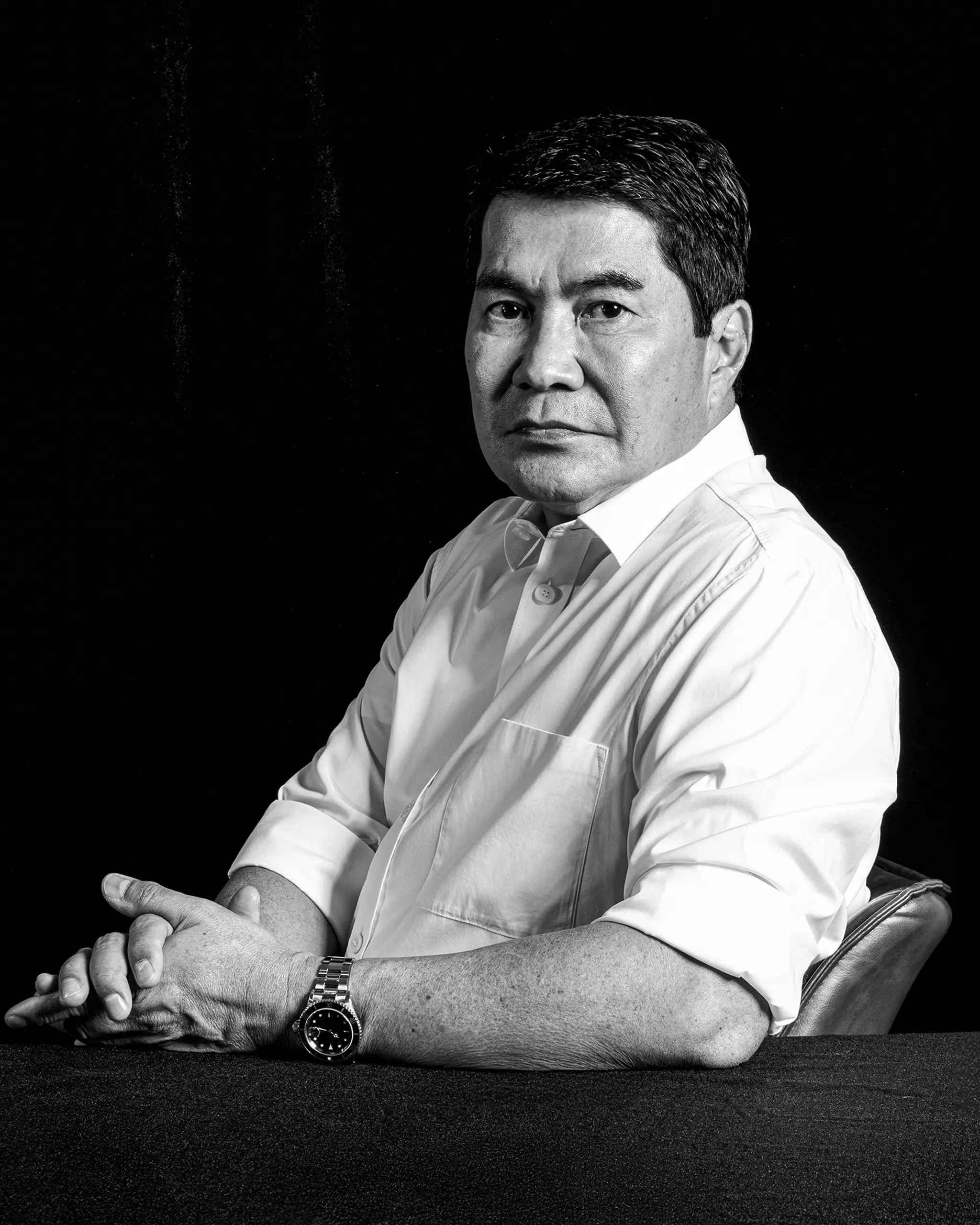
Erwin Tulfo swears politics was never the plan. And yet here he is, the second in a line of siblings who have cleverly leaped from the radio booth into the chambers of the Senate. His is a surname that carries the promise of swift justice in a country desperate enough to believe it.
The Tulfo brothers built their broadcast empire on the grievances of ordinary Filipinos, offering shortcuts to justice in a spectacle where the villains get their due, all while the cameras are rolling on prime time. “Ipapa-Tulfo kita” is pretty much a national reflex by now.
Erwin is hyper-aware of what being a Tulfo means. But he insists it wasn’t the name that won him over 17 million votes in May. “I think it’s the performance when I was the secretary of the Department of Social Welfare and Development,” Erwin says. His cabinet stint was short-lived, however, as he was never confirmed due to issues with his U.S. citizenship and a past libel conviction.
Erwin found his way back to the government soon after, slipping in via substitution as a nominee for ACT-CIS (Anti-Crime and Terrorism Community Involvement and Support Inc.), the party-list group associated with his family. It was a controversial move for the instant justice man who took a shortcut of his own, straight into the halls of power.
But the former ABS-CBN journalist says every step he’s taken since crossing the line from media to politics was all about having better access to the government machinery he once reported on.
His campaign pitch wasn’t loaded with jargon. Instead, he tells stories: Of the man who just wants to bring his wife home from the hospital but is buried in paperwork. Or the woman who, despite having all the requirements, was denied ayuda because she didn’t vote for the barangay captain.
So they all went to a Tulfo for help.
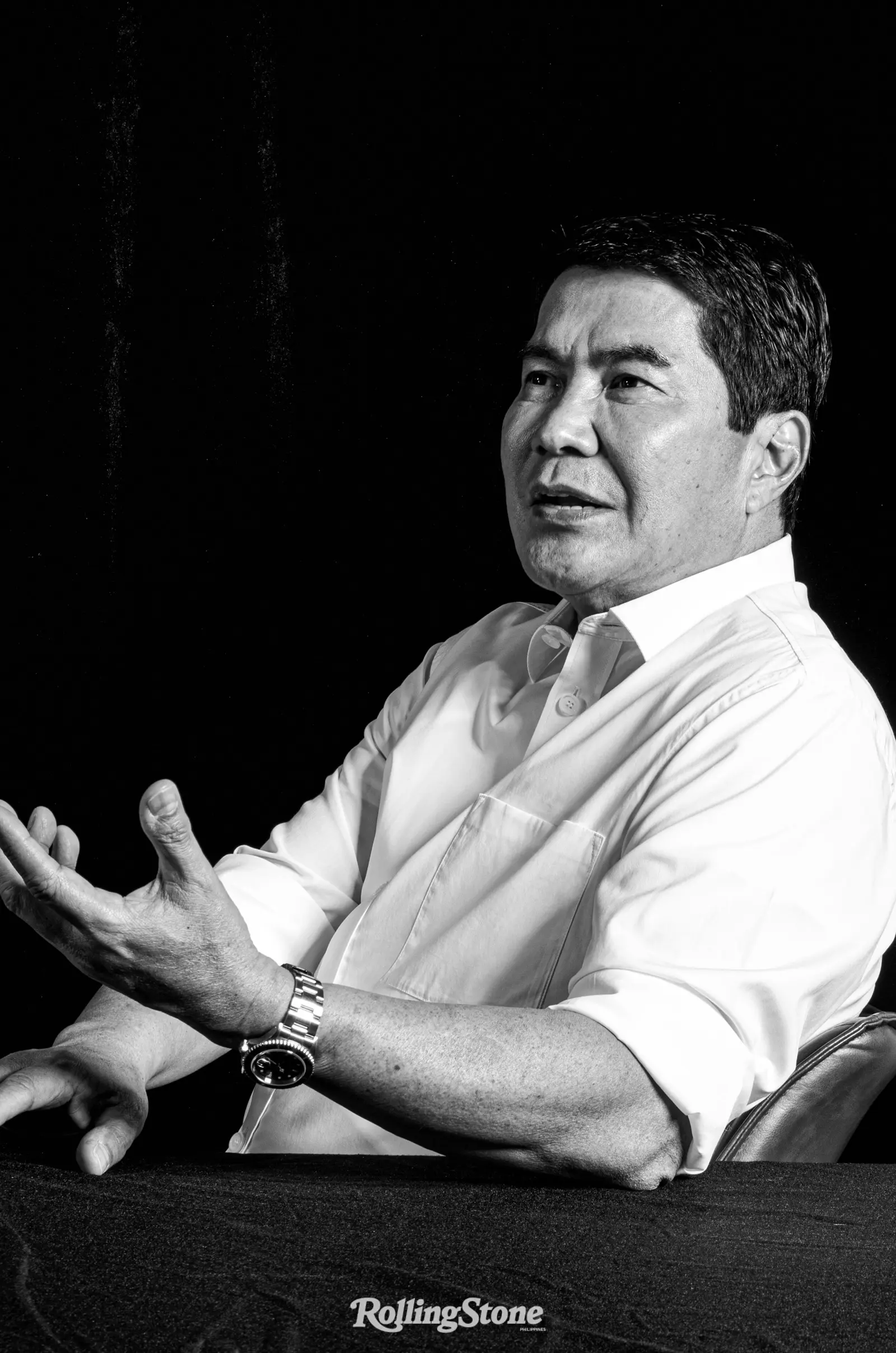
There are four Tulfos in Congress now: Erwin and his brother Raffy in the upper chamber, then his sister-in-law Jocelyn, and nephew Ralph in the lower house. There would have been a fifth and a sixth — siblings Ben and Wanda — but they fell short in their senatorial and congressional bids.
Love them or hate them — and whether they acknowledge it or not — the Tulfos are a new dynasty that is slowly but surely perfecting the formula for winning. But Erwin is out to prove he isn’t just another Tulfo.
In this interview, the senator reflects on his political rise, the Tulfo brand’s evolution, and how he plans to turn his “Kakampi ng mga Inaapi” slogan into real action in the Senate.
I want to start with you finishing the race at number four with about 17 million votes. At some point during the campaign, you were even number one despite a case filed against your family and some of the controversies that haunted you in the past. What do you think clinched the victory for you?
I think it’s the performance when I was the secretary of the Department of Social Welfare and Development (DSWD). They saw me really deliver during calamities, typhoons. We were there, even before everyone else, I think.
But before that, my brothers and I each had public service offices, where we helped people. So, I think that was it. That was what people saw.
Whenever they approach our office seeking help, we try to give it to them right away, that very same day. Labor problems, land problems, we try to resolve those issues in the very shortest period of time possible. We don’t let them come back tomorrow.
Bawas-bawas muna tayo sa mga infra natin because nagiging source ng corruption ito. That’s where politicians are making their money.
You mentioned to me earlier, even when you were just DSWD secretary, gumawa na kayo ng reforms to make that whole process simpler for the ordinary folk. How do you plan to bring that kind of energy into the Senate?
Majority of our people are below the middle class. So, they would always ask for help: medical assistance, burial, health assistance. The problem with our system [is that] we have so many requirements. You’re just asking for help, you want to bring home your loved one from the hospital. How come you have to ask for a Birth Certificate? For educational attainment? Siguro, it will be sufficient na just a hospital bill, and that was it, and then the identification of the patient, ‘di ba?.
As a matter of fact, I’m going to file a bill taking away that indigency form. Kasi nagagamit siya sa politics e. And this is what I noticed when I was his social welfare secretary: Maraming pumupunta. [I’ll ask them], “Bakit wala kang indigency form?” “Kasi, sir, galit po si chairman sa akin kasi hindi ko po siya binoto,” o “Hindi ko po binoto ‘yong mayor niya. Ayaw po niya akong bigyan. Pabalik-balik na po ako.”
The solution there is [the government] calls the hospital and then send the payment. Then, didiretso mo na doon para hindi na ‘yong tao gagawa na baka gamitin lang sa kung saan. Things like those.
Itong mga guarantee letters or ‘yong reforms niyo and indigency, some people would say it promotes patronage politics. Kasi it’s concrete help na naiintindihan ng ordinary folk. They might feel kind of indebted to you. So, how do you balance it out to show the people this is how the government should work? How do you plan to introduce reforms in the Senate para ma-institutionalize na?
When I went around the country, people were saying, “Sobrang mahal ng pagkain, Cong. We cannot afford it anymore. We don’t have enough. We cannot make both ends meet. ‘Yong salary namin ngayong katapusan, hindi na abot sa 15.”
We actually have 10 bills that we’ll be filing. The very first one will be like the review of the Rice Tariffication Law, which removed the National Food Authority (NFA) from selling cheap rice in the market. All they do now is buy rice for stock, but they cannot sell it anymore. So, we have to bring it back, allow the NFA to purchase palay from our farmers, then sell it to the market.
Of course, there will be losses. A lot of people are saying, malaki ang malulugi. The question now is, will you prefer na malugi ang gobyerno because we’re feeding millions of Filipinos, or malugi ang gobyerno dahil sa mga flood control, or sa mga infrastructure projects na we know that politicians are making money out of? Siguro mas maganda na lang we lose money feeding our people, ‘di ba?
Another thing that we’ll be filing is the review of the Universal Healthcare Law, because PhilHealth is so useless at this point. You keep on contributing monthly. But you cannot use it. For certain diseases or ailments, they’re paying 30 percent. My proposal is just to pay 50 percent across [the board], no matter what.
Did you know that if you’re going to deliver a baby [normally in a private hospital], you cannot use PhilHealth card? Why? Especially women, you contribute. Things like those, sana lahat na lang, all across. It doesn’t matter kung nakagat ka ng ipis, ng aso, etcetera; dapat masagot ng PhilHealth ‘yon.
When I became DSWD secretary, nakita ko may mga taong nakapila sa labas ng office sa Batasan. Tanong ko sa guard, “Ano po ‘yong mga nasa labas? Bakit ‘di sila makapasok?” ”E kulang mga requirements nila.” So, I walked up to them. Sabi ko, “Bakit, kulang lang kayo sa requirements?” “Hindi, sir. Kumpleto po kami sa requirements. Hindi lang namin siya (barangay captain) binoto. Kaya nandito po kami, nagbabakasakali.” I was so angry. I called the barangay captain. Sabi ko “‘Wag ganoon. That’s not nice.” Pinapasok ko sila lahat para ma-accommodate. Tapos sinabihan ko ang DSWD.
Ang DSWD naman, they don’t look at your political affiliation. Basta may mga requirements ka, they’ll give you the aid. Ang problema kasi pagbaba na [sa mga barangay], namimili. Kasi ang nangyayari diyan, ang DSWD papasok, pupunta kayo doon. Pero hindi naman kilala kung sinu-sino ‘yong mga tao. Kaya doon, pagkakataon ‘yon ng chairman, binabago niya. Hindi ‘niya sinasama [‘yong iba] dahil hindi siya binoto. Uunahin niya ‘yong mga relatives niya. It’s still a common practice right now.
So I’ll file a bill [that] if we catch you choosing kung sino lang ang bibigyan mo, you’ll get penalized, or you’ll be removed from public office, perpetual disqualification, para hindi na maulit. Or humihingi ng mga five percent sa Assistance to Individuals in Crisis Situations (AICS).
Another thing is like ‘yong salary standardization for barangay workers, and officials. Kasi right now, nakadepende doon sa LGU. Kung medyo mayaman ang LGU, malaki ‘yong sweldo. Sa Metro Manila, P20,000 sila. Pero did you know that in some remote areas and island municipalities in Mindanao, ‘yong mga barangay, they only get like P1,500 for barangay captain, P1,000 for barangay kagawad, and P100 every two weeks for tanods? So wide noong comparison. We’ll have to standardize it siguro.
Kasi pareho-pareho lang naman, ‘di ba? ‘Yong sardinas sa Metro Manila, sardinas doon sa Siasi, Sulu, same lang naman ‘yong price. Minsan, mas mahal pa. So bakit ganoon? Libre ba ‘yong food sa island municipalities? It’s not. We need to standardize it.
The problem now is, where are we going to get these funds? My proposal is, bawas-bawas muna tayo sa mga infra natin because nagiging source ng corruption ito. That’s where politicians are making their money.
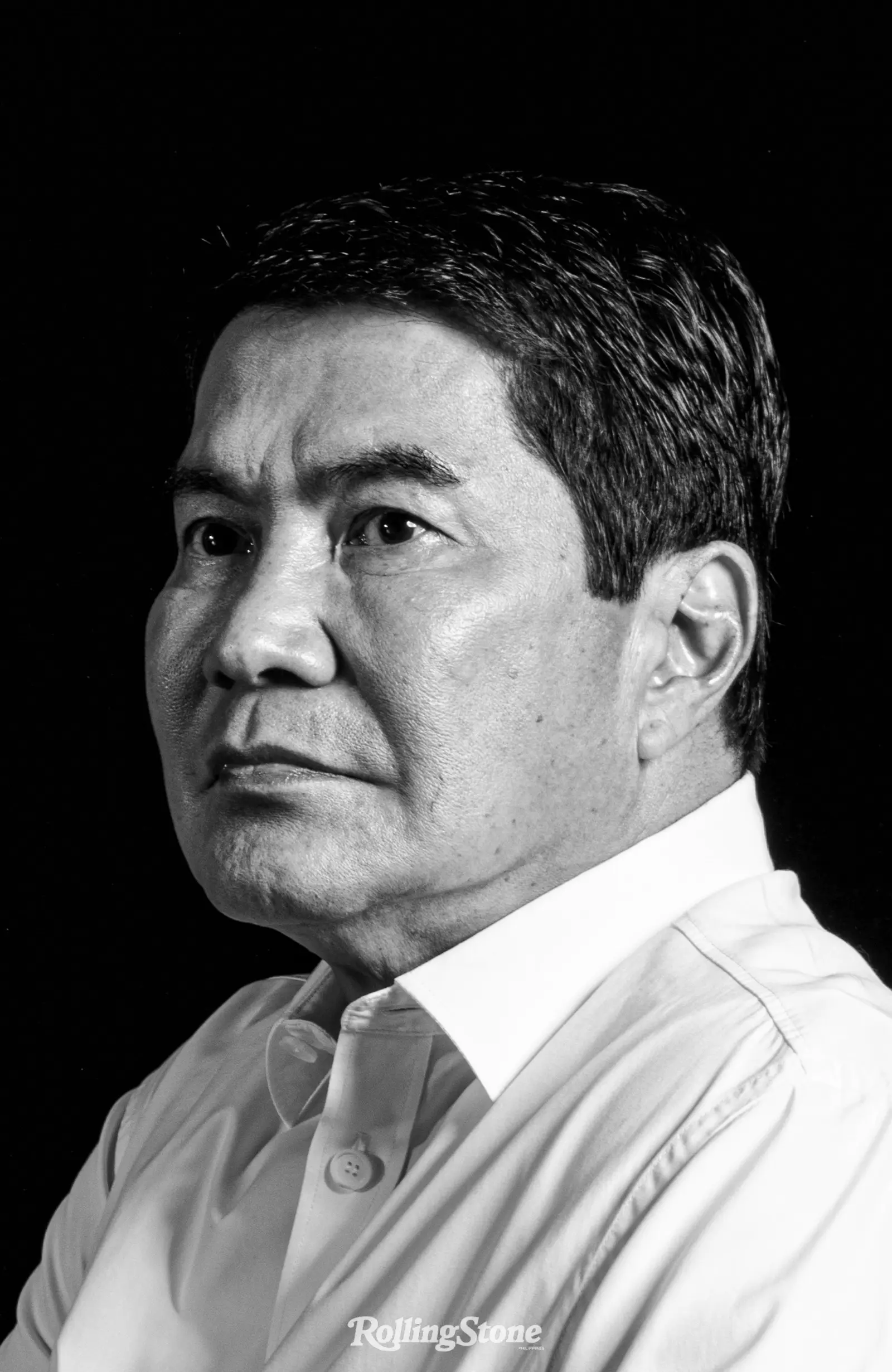
Let’s go back to your campaign. Some might say that you don’t even need to campaign as hard as the other candidates because the Tulfo brand is pretty much a household name. It’s a verb, ‘di ba? “Ipapa-Tulfo kita.” How much of your victory would you credit to being part of the iconic Tulfo brothers? And how much would be from your personal groundwork?
‘Yong Tulfo brand, siguro, [in a scale of] 1 to 10, I would just say, about 3.
You think so? How come? So low?
I’ll give you an example: My brother Ben. He also ran. Unfortunately, ‘yong kanyang groundwork, hindi masyadong [masinsin]. Tapos wala siyang TV, radio ads. Look what happened, ‘di ba? Pang-13 siya. He got 13 million because ‘yon nga sa brand. Pero ako, I did a lot of groundwork. I did a lot of commercials, ‘di ba?
Kasi may mga areas sa mga interior na we’ve experienced, “Kilala ko ito,” they keep on saying, but they don’t know your name. So, how would that be? Kaya nga sa mga commercials namin, [I would say], “Ako po si Erwin Tulfo, kakampi na mong inaapi.” That’s our tagline para nakikita. Pero, not all people in the provinces and rural areas have social media. They have phones, but they don’t have that. Or, mayroon lang silang radio or TV.
Siguro, sa mga cities sa Metro Manila at Luzon, hind na namin kailangan [mangampanya] because I know [we have name recall there]. Pero sa mga remote areas, sa Visayas, sa Mindanao, kailangan e.
When they ask for help, we give it to them immediately. That’s what I want to [institutionalize] here in the Senate.
But how different is Erwin Tulfo from Raffy Tulfo, Ben Tulfo, and Mon Tulfo?
Siguro experience in the social welfare. ‘Yon ang tumatatak sa kanila e. Even the mayors, they were saying, “O, mga kababayan, ito, tinulungan tayo noong typhoon.”
Kaya I keep on telling myself, mabuti na lang, kahit papaano, even just for that short period of six months, I became social welfare [secretary], I welcomed everybody. It doesn’t matter what your political color is.
Remember Leni Robredo? When she came to our office, na-bash kami. “Bakit pinapunta niyo diyan ‘yong mga dilawan? What’s happening?” E sabi ko naman, and I explained to the president (Ferdinand Marcos Jr.). Sabi ni presidente when we had a cabinet meeting, “Bina- bash ka Sec. Erwin doon sa pagbisita ni Leni.” Sabi ko, “Sir, e humihingi lang naman ho ng tulong dahil may baha daw siya. Siyempre [mga] Filipino, boss. Tsaka ‘yong team natin, sir, ‘di ba, unity?” Sabi niya, “You made a good decision.”
From then on, tumatatak sa mga tao. Ewan kung ako ‘yong pinakaunang secretary na pumupunta talaga [kahit pa] bumabaha, bumabagyo, may earthquake. Nandoon kami. Usually, secretaries [visit] after the fact na, after a day or two na.
People need to see somebody from the government para nagkakaroon sila ng pag-asa. And we felt that doon sa Abra, ‘yong lindol. Ang mga tao, takbo rito, takbo roon. Tapos makita nila ako, “Sir! Uy, may Tulfo! Sir! Sir!” You give them hope. They see a high-ranking government official there with them during the time of their crisis, ‘yong natutulungan sila.
So that’s the difference between me and Raffy na puro sa broadcast. And then si Ben and then si Mon, hindi talaga sila nag-government service. Ako, I had the chance to serve in the government. And awa ng Diyos, I performed kahit na six months lang.
Tapos, everyday, lahat, mayor, congressman — dinaig ko pa ang presidente — nasa office ko lagi, hihingi ng AICS, hihingi ng sustainable livelihood. Hindi ko sila pinapauwi [empty-handed]. Right there and then, I tell my chief of staff na bigyan mo na lang ito ng P5 million, P3 million. So, ‘yan ang tumatak sa mga tao.
How do you feel, now that when they say “Tulfo,” Filipinos would really say, synonymous na siya as sumbungan ng bayan. And what does that say about the kind of politics and government service that we are in now? That it needed the Tulfo brothers for Filipinos to equate public service to results?
My eldest brother started it. Isumbong mo kay Tulfo, Ramon Tulfo. Before Raffy became Raffy Tulfo, it was me sa ABS-CBN. We had the Mission X, ‘di ba? I replaced Ted Failon sa Hoy Gising! when he ran for Congress. And then it was Ben na, and it was Raffy sa radio.
‘Yong nakita ng mga tao na when they ask for help, we give it to them immediately, ‘yon siguro ‘yon. And that’s what I want to do here in the Senate, na-i-institutionalize na, whenever somebody [is asking for help]. Kasi sa atin, the problem is, ‘yong red tape, sobra [ang] bureaucracy.
Sa amin kasi, Kailangan mo? “Sige, kami na magbabayad, ma’am, ha? Abangan mo lang sa hospital.” Then we’ll call. We send our messenger there to pay for it. Mayroon din sa mga funeral parlor.
Can’t we do this on a larger scale, through DSWD, DOLE, TESDA, CHED, etc.? That’s what I want. Siguro sa second week ng pag-upo ko, I’ll be filing a bill to cut down ‘yong mga requirements na ‘yan. Kasi ito ‘yong nakakadagdag sa problema e.
Read the rest of the story in The State of Affairs issue of Rolling Stone Philippines. Buy a copy on Sari-Sari Shopping, or read the e-magazine now here.

Rolling Stone Philippines Anniversary Issue, Now Available at SariSari Shopping