While some call the 1970s as the era of “dad music” — think of the technical soft-rock of Steely Dan or Chicago’s endearing fusion of funk and sophistipop — the real legacy, at least in the Philippines, lies in what our forefathers built: a homegrown movement now known as Manila Sound. It was a sound born from disco dance floor and funk baselines; it had flash, grit and, most of all, an identity that would echo through generations.
The 1970s in Manila were loud, confusing, and, at times, terrifying. But somewhere between the martial law curfews and clamped-down airwaves, music found a way to talk back — not just in rebellion, but through rhythm. To Filipinos, the Manila Sound emerged as entertainment, but also escape and soft resistance.
Disco Dads
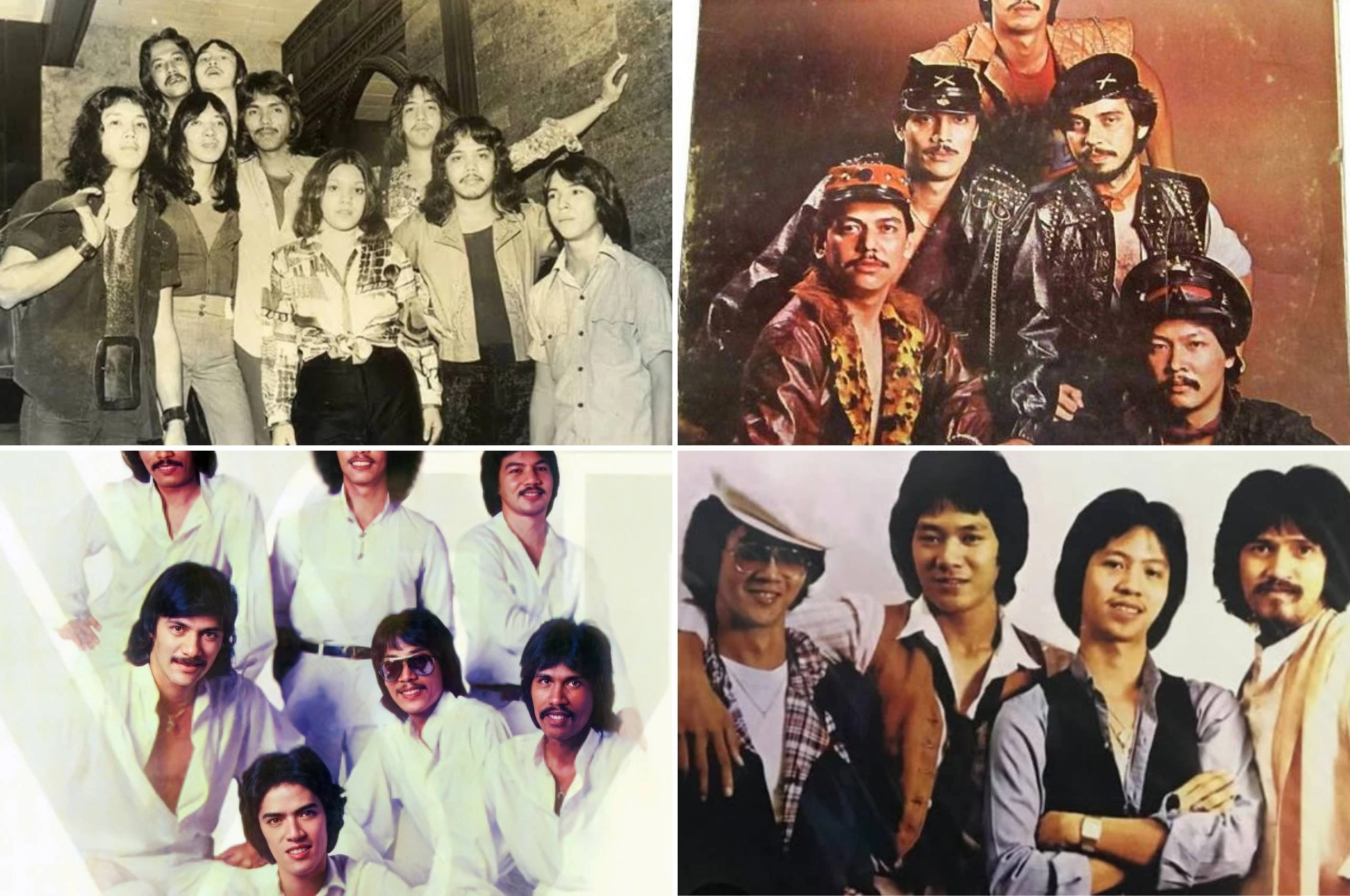
Before Original Pilipino Music (OPM) became a marketing label, there was Hotdog — the band that helped pioneer the Manila Sound. Founded by brothers Dennis and Rene Garcia, Hotdog distilled the upbeat playfulness of Taglish lyrics with sleek, Western-inspired arrangements. Their hit “Manila” was a pointed love letter to the city’s messy, melodic spirit. While others sang of heartbreak or fantasy, Hotdog sang about jeepneys, jukeboxes, and coming home. In doing so, they created a language that the average Filipino could actually dance to.
Dads with the Musical Muscle
Hagibis, often side-eyed for their overt mimicry of the Village People, shouldn’t be written off as kitsch. The matching leather outfits and testosterone-heavy vocals were a theatrical choice, but behind it was a clever remix of macho pop with Filipino flair. Tracks like “Katawan” and “Lalake” were statements on masculinity, played out on the dance floor with a smirk in the Manila Sound scene. Produced by Mike Hanopol of the Juan Dela Cruz Band, Hagibis brought an arena rock demeanor to local television and turned novelty into cultural currency.
Dads and Co.
VST & Company, meanwhile, brought precision in Manila Sound. Founded by Vic Sotto, Spanky Rigor, and Tito Sotto — yes, Senator Tito Sotto — VST fused disco, funk, and soul into some of the slickest grooves this side of Studio 54. “Awitin Mo, Isasayaw Ko” and “Rock Baby Rock” were declarations that Filipino musicians could rival global pop acts, not by imitation, but by sheer musicianship and swagger. Their musical arrangements were tight, the vocal harmonies tighter. VST & Company made music that’s impossible to ignore.
Your Boyfriends and their Dads
Then there were the Boyfriends, arguably the smoothest harmony group of the era. Their songs, from “Sumayaw, Sumunod” to “Dahil Mahal Kita,” became karaoke staples not because they were simple, but because they captured a tender emotionality that still resonates decades later. They were the bridge between the grit of disco and the sentimentality of pop balladry, forming a soft power in a genre often defined by flamboyance.
In the broader conversation around Philippine music history, these bands are often sidelined, reduced to variety show nostalgia or “tito-tita party” playlists. But they laid the groundwork for the genre-bending, bilingual, and proudly Filipino acts we see today. Before the music industry welcomed calculated digital teams using strategically placed genre tags, these artists trusted their instinct. They made songs that lived amongst the people, and eventually into the nation’s DNA.
To talk about Manila Sound isn’t just to wax nostalgic, it’s to recognize that pop music here has always been political, always been hybrid, and always been louder than it looked. Our forefathers didn’t just write hits. They rewrote the rules.