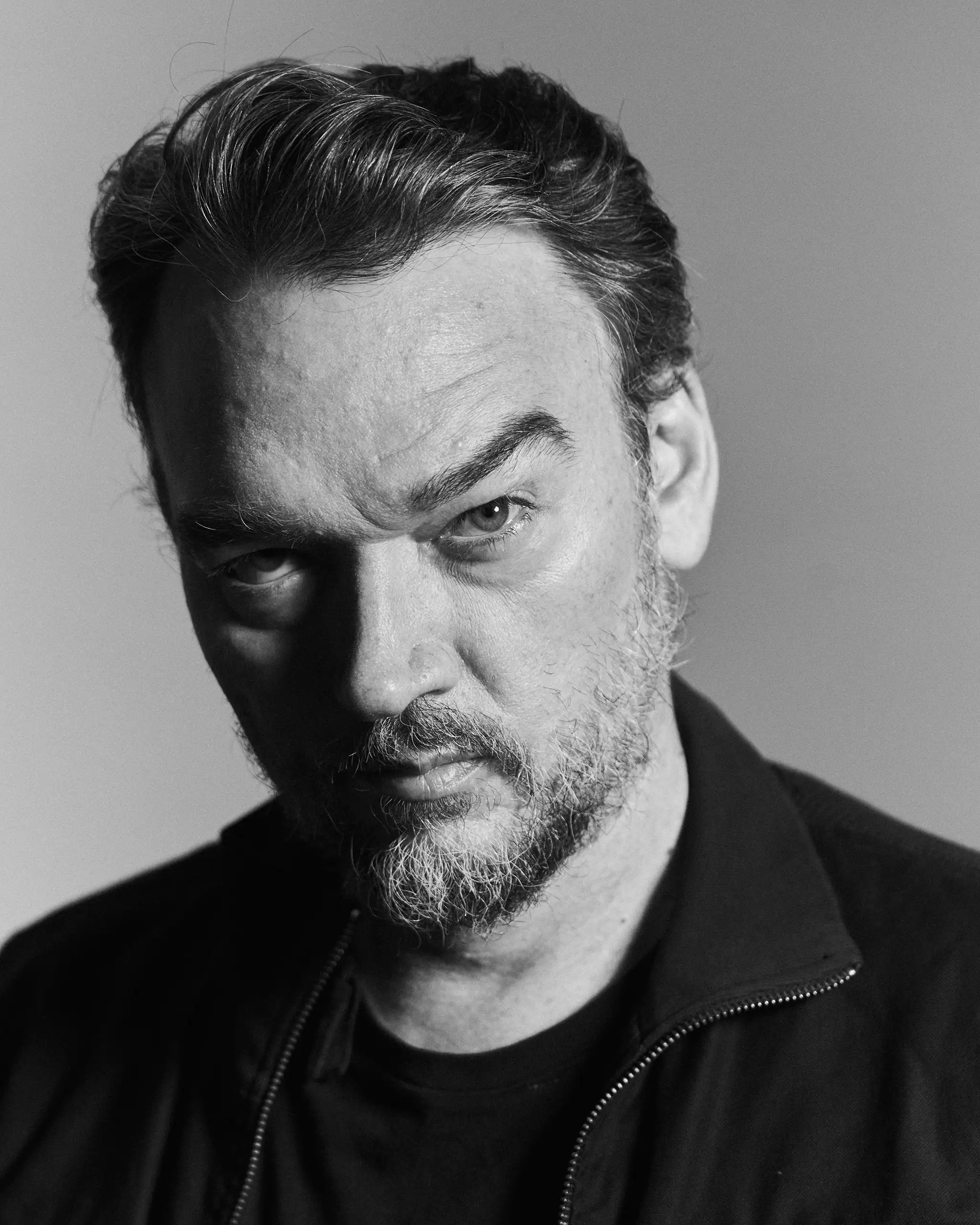
Basti Artadi doesn’t need to scream to be loud. Whether he’s knocking back a bottle of Red Horse mid-set, naming his favorite Nicolas Cage crash-out, or dropping wisdom about not selling out to the corporate devil, he has a way of cutting through the noise.
Artadi is best known as the larger-than-life frontman of Wolfgang, arguably one of the most iconic heavy metal bands to ever come out of the Philippines. Their sophomore album Semenelin dropped in the United States and Japan, chasing their dream of rubbing elbows with the likes of Mötley Crüe and Ozzy Osbourne. And for a time, they did. Alongside Razorback, Wolfgang’s counterpoint in the Filipino heavy metal scene, the two bands became the spiritual successors of groups like The Dawn and Juan dela Cruz Band, who laid the foundations for Pinoy rock. On the other hand, Wolfgang stormed the stage with a different kind of fire. Artadi became its voice, but never its stereotype. They weren’t just mimicking: it was all guts, all original.
But long before all that, Artadi was a Johnny Cash fan growing up in Lucena City. And now, three decades since beginning his career in music, Artadi is shape-shifting once again — at times leaning towards his roots in the soulful bruises of country music, or reimagining Wolfgang’s self-titled debut album exclusively for vinyl. Artadi isn’t interested in being just another legacy act. He’s too smart for that. He knows that rock stardom is about survival, defiance, and showing up each and every time with something authentically true.
Artadi is our latest guest for The Rolling Stone Interview, where he reflects on growing up with the likes of Juan dela Cruz Band, maintaining honesty in his songwriting process, and why the ‘90s was a magical era for Filipino rock. Below are excerpts from his conversation with Sai Versailles, Digital Editor of Rolling Stone Philippines, as he tackles subjects like heavy metal’s “dark” reputation, being Filipino, and Wolfgang’s synergy with Razorback. For the full interview, visit Rolling Stone Philippines’ YouTube channel.
On Heavy Metal’s ‘Dark’ Reputation
“I move towards life. That’s where I get my inspiration. I do believe [that], in a lot of times in life, there are negative things and, granted, the negative is usually more compelling and interesting… But it’s not necessarily something I would choose. What attracts me is life: different stories, people, events. I’ll take from anything…”
“When I started listening to music, it was country. Then it ended up moving into heavy metal, and, as you know, the image of heavy metal is what it is. There was only maybe one song where I actually wrote with that in mind, which was “Arise.” … But that was just an ode to my roots in heavy metal. In fact, that song ended up giving us this thing where people said we were Satanic. But we never looked at the lyrics like that. We always looked at the lyrics like a movie or telling a story, just [with] music. We were no more Satanic than [novelist] Anne Rice was a vampire…”
“There’s this one song called “Bought & Sold” which was about pedophilia. That came about because I saw a newspaper [while] sitting in McDonald’s, and there was an article that was titled, “Bundles of Pain.” I read it, and it was about a pedophile gang in some place. It inspired me to write that song. Inspiration is all around and you take what you can from anything. It’s not an active choice to choose negative stuff… It’s a switch inside me that makes me want to tackle it. I’m sure right beside that article is another [one] about a school bus that was delivering kids for free. That isn’t a compelling topic for me to write about. It’s just more interesting for me to tackle more complicated topics. And darker stuff, I guess, is more complicated. ”
Finding and Loving Rock Music
“When we were growing up, we weren’t exposed to a lot of music. It wasn’t like now, where everything is at your fingertips if you want to hear a band. Back then, whatever was on the radio was about it, you know? Maybe if you had a friend or somebody who came back from abroad and they brought back some tapes… That was how we discovered music.”
“When I was in college, Razorback asked me to sing with them because they didn’t have a singer. I think they gave me tapes of all the songs they knew. That’s how I ended up getting into rock music, and I loved it. I loved how it made me feel. Even to this day, I love heavy metal. I love it for the theatrics, I love it for the bombast.”
Wolfgang’s Synergy with Razorback
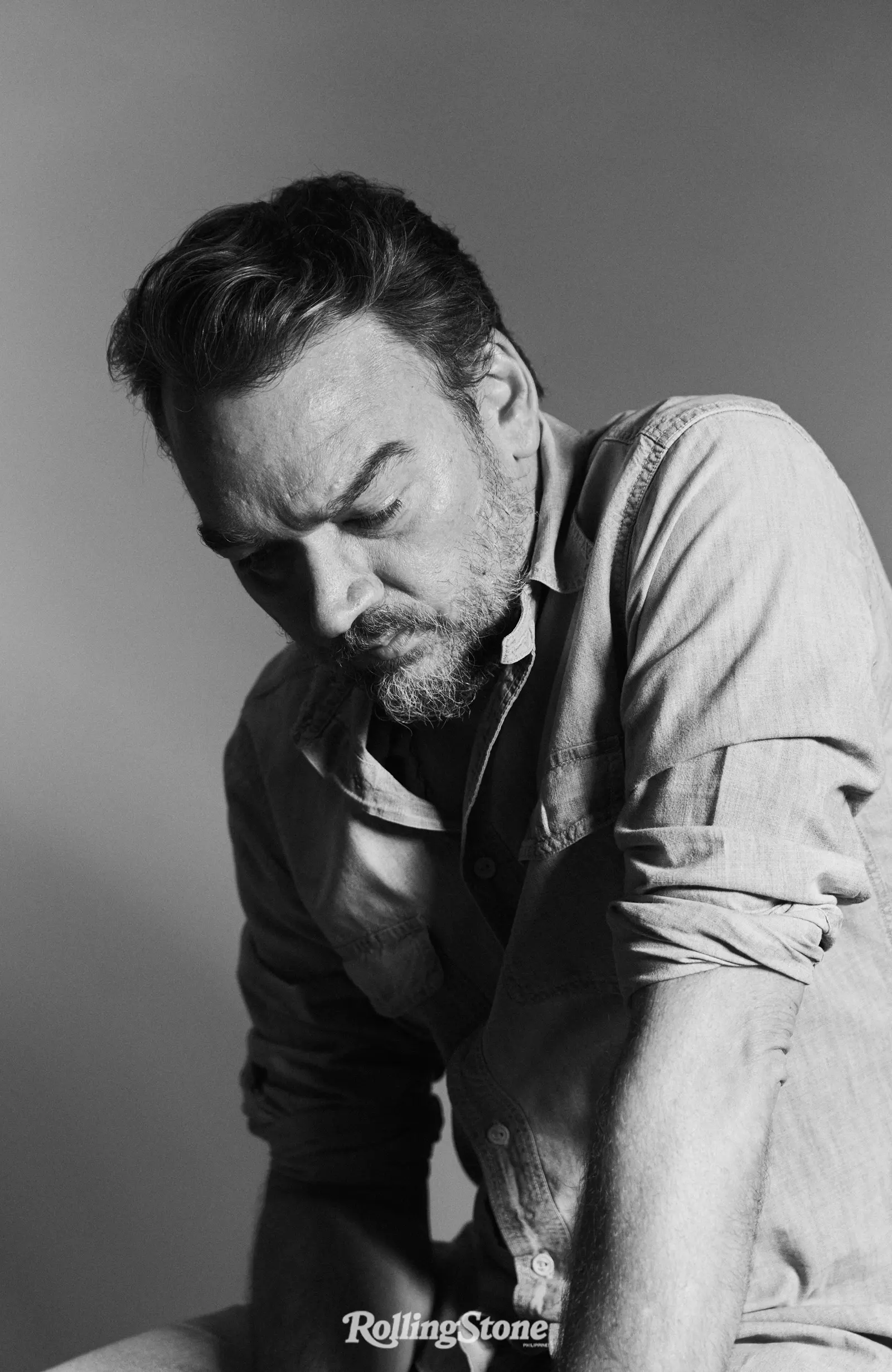
“Wolfgang would never have been Wolfgang, would never have gotten together, if it wasn’t for them because that’s how we all met. We all met because we gathered at Kalye, which was their bar, which was where they would play. Our dreams started happening in our heads because we were seeing what the possibilities were by watching them. It was just a great time, and as we ended up [creating albums]. It was always just support for each other. Like, I’m a fan of all those albums of theirs”
On Being Filipino
“I get it every time. ‘Filipino ka pala! Dumudugo na tenga ko, pinapa-English mo pa ako!’ Kasalanan ko ba ‘yan? Ikaw naman nagi-English, diba? But no, I’ve never had issues struggling with [my identity.] I’m Filipino, I’ve always seen myself as Filipino. There’s no Gemini thing going on in my head na, oh, maybe [I’m] not. No, I’m Filipino, even if I look this way, I’m Filipino.”
“I have this song called ‘Diaspora Mama’ I wrote that song because I was living in the States, right, and I was playing in a bar. I walked outside for a smoke, and the bouncer — I was talking to him — and I go, ‘Oh, you’re Filipino!’ ‘No, I’m not. I’m from Jersey.’ ‘Oh, I thought you were Filipino. Where were you born?’ ‘Pampanga.’ ‘Filipino ka, pare!’ ‘Nah, man, I’m American.’ It’s that mentality of I’ve lived here, I’ve moved here, I’m American. But, no, [I] never had an issue with it.”
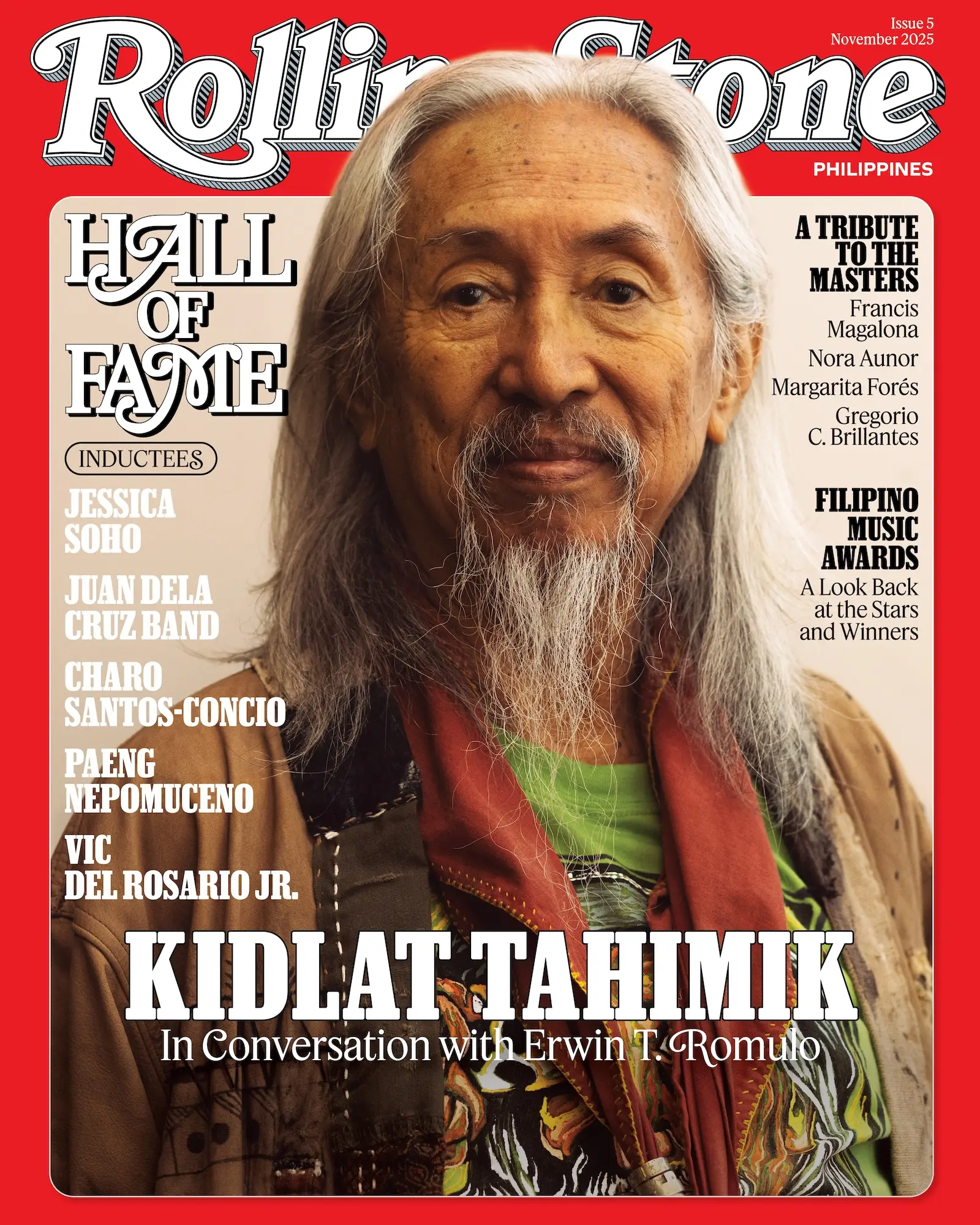
Rolling Stone Philippines November 2025 Issue, Now Available at SariSari Shopping