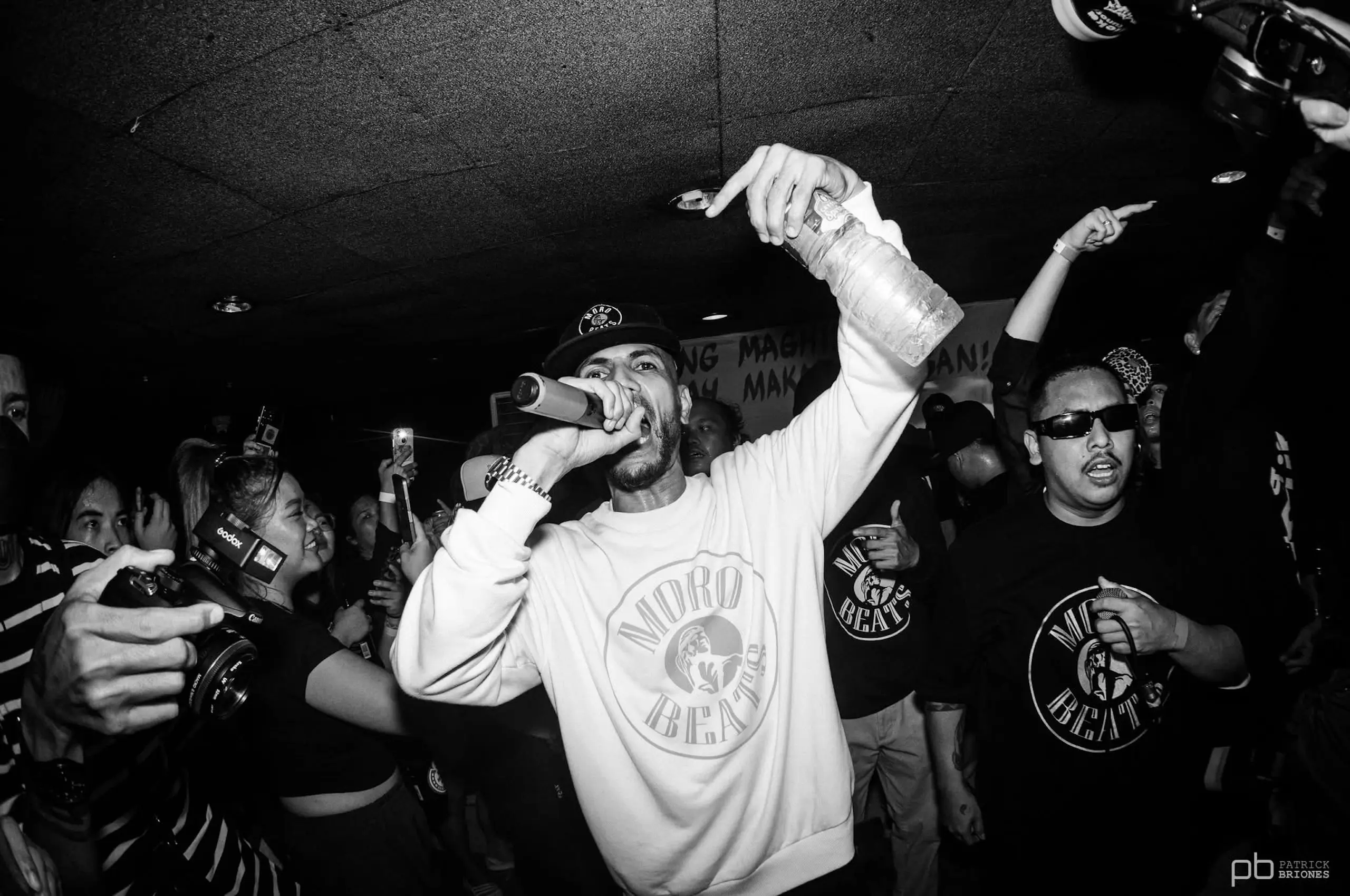
“Hip-hop has always been the music of those pushed to the edge,” writes Czyka Tumalian of the “Ang Maghimagsik ay Makatarungan: Benefit Gig Kontra Korupsyon at Karahasan,” a gig at Mow’s that aims to sustain the calls for accountability following the exposé of government corruption in various ghost flood control projects through songs that encapsulate both the anger and care of Filipinos. “In the Philippines, that edge is everywhere: in traditional jeepneys killed by modernization, in fisherfolk evicted by reclamation, in workers erased by automation. The gig wasn’t an escape from that reality; it was an indictment of it.”
“UKINAMSHET!” We arrived late. I was afraid we’d already missed the moment, but we were happy to find ourselves just in time for the magic.
It was a Saturday night, October 26, at Mow’s Bar, the small, graffiti-streaked basement beneath Kowloon House on Timog Avenue. Upstairs, families were having their usual dinner, the street soft with tricycle hums and flickering car lights — all indifferent to what was happening below. As we neared the stairs, the sound began to grumble beneath our feet — not applause, not even music, but something heavier.
We thought we were walking into a gig. We were wrong.
At the stairwell, our brother JL Burgos caught our shoulders. “Galing pa kayong La Union? Morobeats na!” he said. We hugged and slipped into the basement.
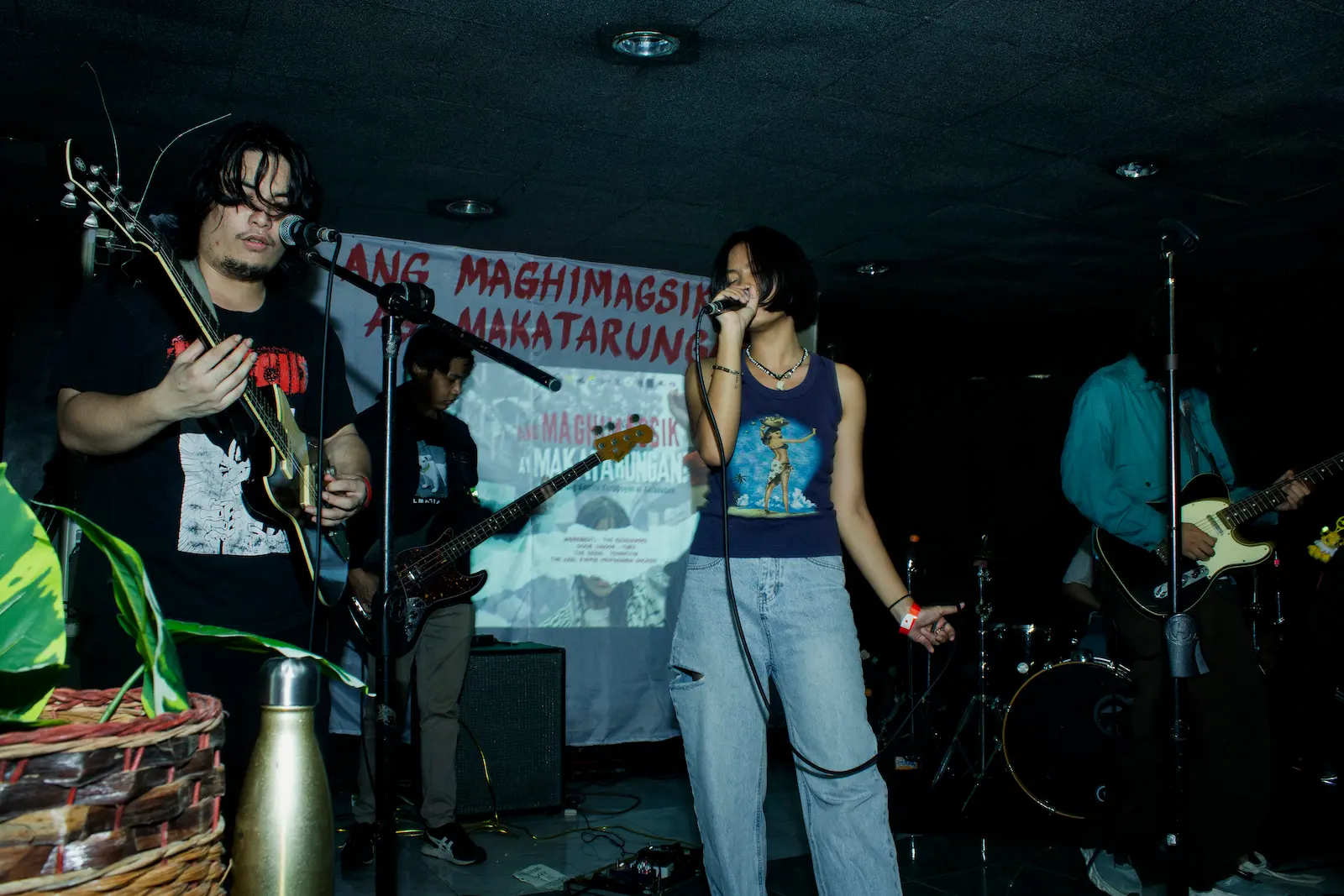
Down there, “Ang Maghimagsik ay Makatarungan: Benefit Gig Kontra Korupsyon at Karahasan” was already alive — bass shaking the concrete, sweat fogging the air. Organized by The Axel Pinpin Propaganda Machine (TAPPM) and Alternatrip with a constellation of collectives — Elev8 Me L8r, Sinagbayan, Daluyong Artists Network, Surian ng Sining, Sama-samang Artista para sa Kilusang Agraryo (SAKA), People’s Network for the Environment (Kalikasan PNE), and the Concerned Artists of the Philippines, it wasn’t just a show. Morobeats was on deck with The Geeks, The Exsenadors, c a t p u k e, Goon Lagoon, Yurei, Your#1fan, and TAPPM, their verses and vibrations colliding with speeches from Burgos, Jonila Castro, and Jun Sabayton. The lineup blurred together — artists, activists, storytellers — all striking the same chord: the sound of resistance.
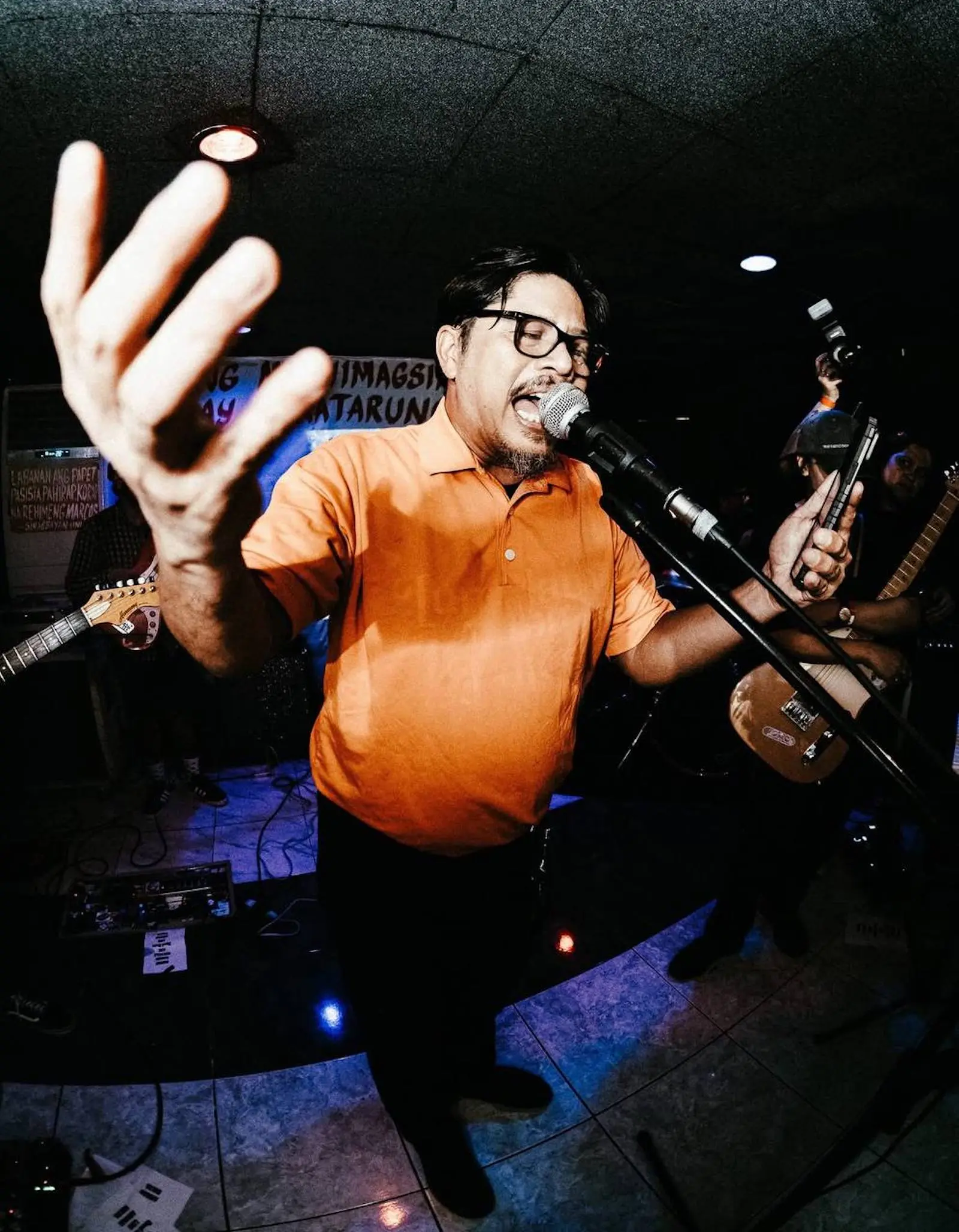
Affidavit on Beats
I’d never seen Mow’s this full: outcries taped to concrete walls, fists raised in disgust and defiance, young bodies packed shoulder to shoulder. Almost everyone was standing. You could feel a mosh pit waiting to erupt.
Onstage, the show’s name was scrawled like graffiti. It didn’t feel like a concert reaching its peak. It felt like walking into a verdict in progress. This wasn’t entertainment with politics on top — it was a rehearsal for revolution.
When Morobeats started their set, each beat landed like a ruling, each rhyme an argument. There were no spectators here. We were all participants, witnesses, and accomplices. Every verse bled into the next. Each artist carried the previous one’s momentum, building a wall of sound — a barricade made of rhythm. The air was humid and alive, bodies vibrating with conviction.
Then it happened: one bar ended, and the whole room detonated in unison: “Fuck you!”
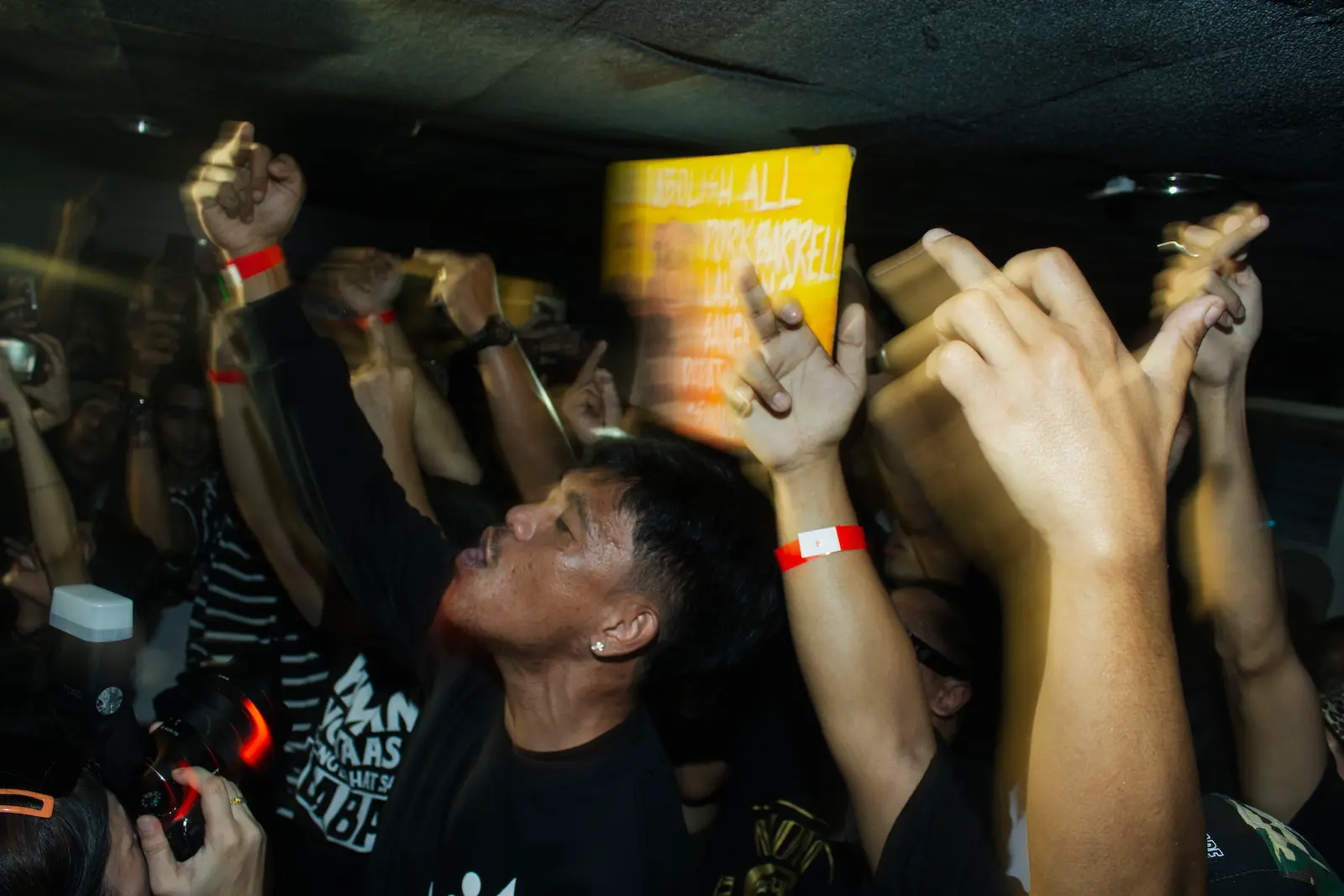
Fingers raised, not fists. I found my own hand up, too. It was a release. A recognition that rage, when shared, becomes power. You could feel the weight of it — the electricity of a people who’ve had enough.
And then the founder of Morobeats, DJ Medmessiah, started to chant, “YAMAN NG TAAS, GALING LAHAT SA IBABA!”
The crowd picked it up instantly, roaring it back until it felt like prophecy. The Wuds wrote the line in another decade, under another dictatorship. The country hasn’t changed enough for the lyric to retire. A sentence older than us returning because the wound that wrote it never closed.
“We want to show that resistance isn’t just about anger; it’s also about care.”
From the stage to the back wall, the chant spread like contagion. Even as I write this, I can still hear it echoing in my head. In those four words lived everything the country has been choking back for years: frustration, exhaustion, dignity. It was a reminder — everything the ruling few hoard was built from the labor and lives of those below. And in that roar, there was clarity: rage alone isn’t revolution; knowing where it comes from is.
“We need balance between knowledge and resistance,” DJ Medmessiah told me later. “Hip-hop isn’t about fame. It’s about voice.”
“My father helped form the MNLF (Moro National Liberation Front), then the MILF (Moro Islamic Liberation Front). He wrote about Bangsamoro rights,” he said. He rejects the assumption that inheriting a fighter means picking up arms. “People expect I’d go the armed route. I don’t. In Mindanao, there is always war. For me, it’s 80 percent education, 20 per cent resistance. Speaking is part of the fight,” he added.
Resistance as Genealogy
There’s a temptation to think protest music only lives in the streets — megaphones, rallies, marches. But in the Philippines, it is often born, sharpened, and sustained in rooms like this.
From the 1970s—when Heber Bartolome released “Tayo’y Mga Pinoy,” and ASIN turned folk into frontline prayer—to Lolita Carbon channeling native instruments and folk-rock resonance, to Sampaguita unleashing the unapologetic roar of Pinoy rock, and Bayang Barrios embracing her Manobo heritage through music—and into the 1980s underground of The Wuds—Filipino musicians have long used melody as manifesto.
Under martial law, songs moved in whispers; bootleg tapes passed hand to hand, tucked into schoolbags and parish radios. To the regime, music was noise. To the people, it was news.
Artists like Francis Magalona cracked the mainstream in the ‘90s, turning patriotism into street gospel on national TV, while Gary Granada carved protest into guitar strings and human dignity. The tradition carried into hip-hop — from Gloc-9’s working-class chronicles to BLKD and Tatz Maven’s Sandata Project, where beats and bars became testimony and indictment.
“Noise was always how we reminded the powerful that we were still here,” Burgos told me after the show.
The lineage of defiance in OPM isn’t a straight line. It loops, resurfacing whenever the country starts to forget.
By the early 2000s, Radioactive Sago Project riffed dissent through distortion and horns, while Dicta License made philosophy sound like a fistfight. Today, collectives like Morobeats, TAPPM, and Alternatrip continue to redraw the map, reclaiming not only the message but the medium.
“We want to show that resistance isn’t just about anger; it’s also about care,” TAPPM said.
Jam Lorenzo, vocalist of The Geeks and one of Alternatrip’s founders, joined the conversation later. “Art is a form of accountability,” he exclaimed. “If we don’t archive our anger, they’ll erase it for us.”
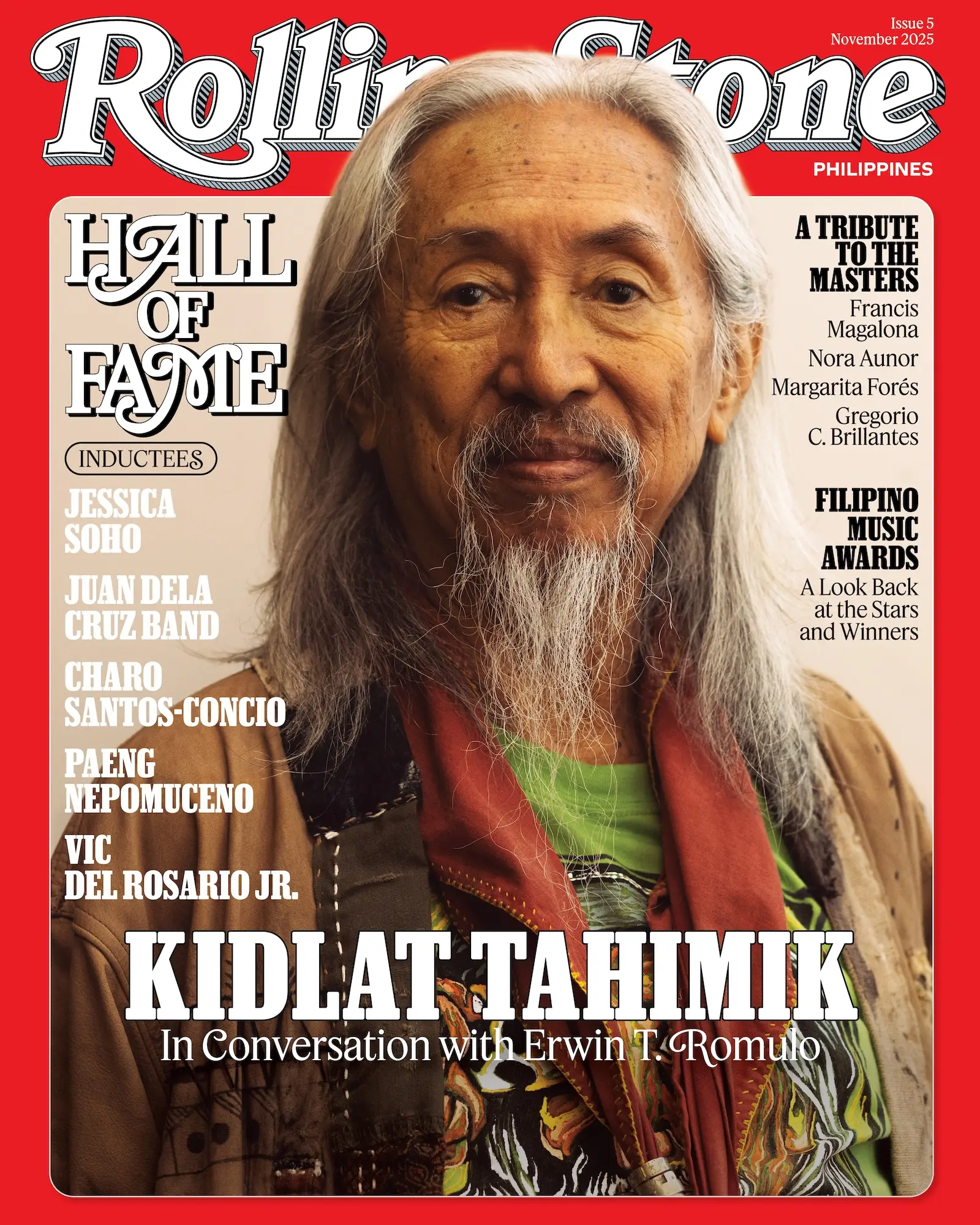
Read the rest of the story in the Hall of Fame issue of Rolling Stone Philippines. Pre-order a copy on Sari-Sari Shopping, or read the e-magazine now here.