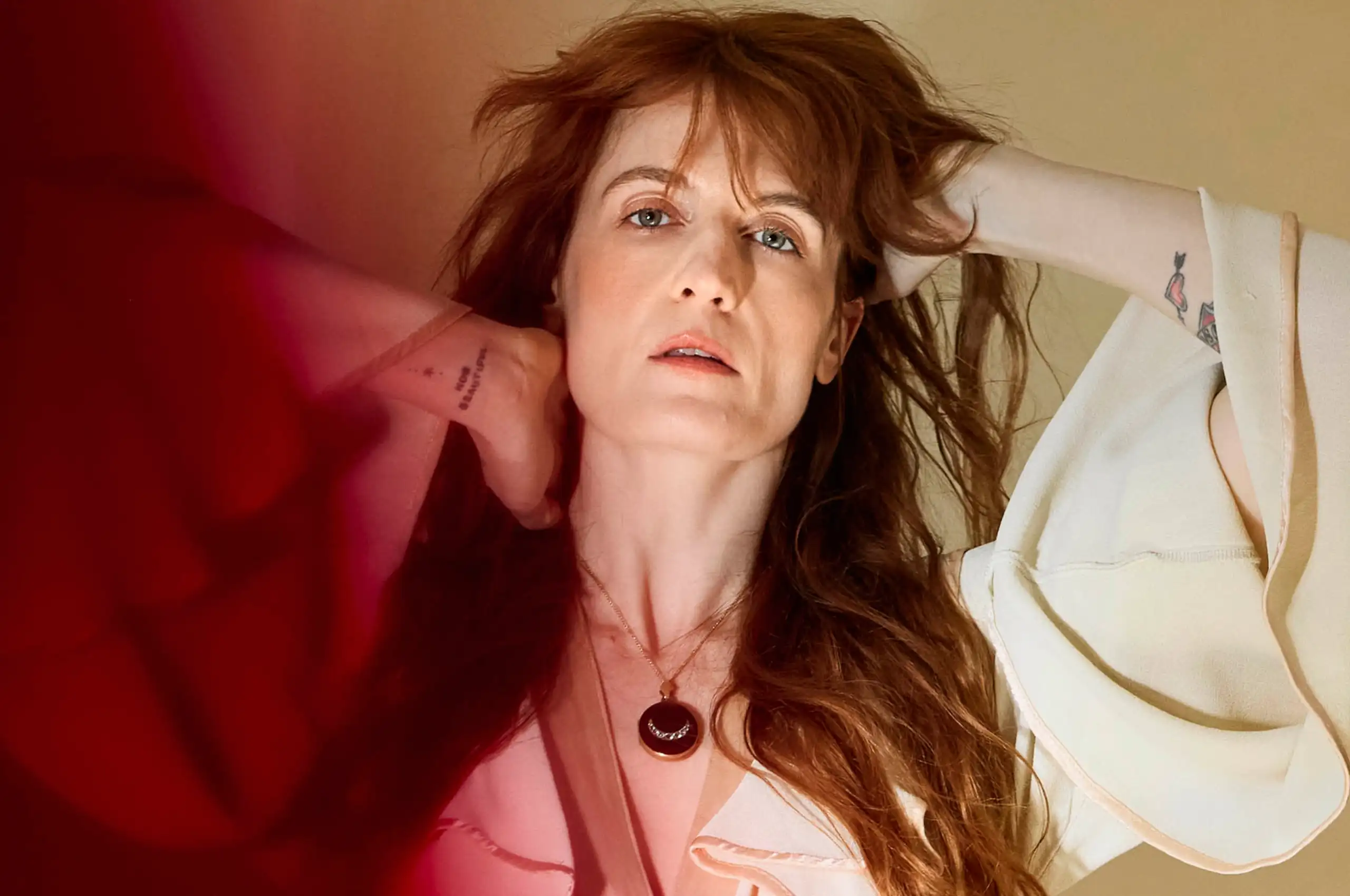
Florence Welch has always carried a certain kind of emotional heaviness within her. The singer who wrote art pop hits such as “Dog Days Are Over,” “Never Let Me Go,” and “Shake It Out” has experienced the dichotomy of life and death up close. “Anxiety is the constant hum of my life,” she admits. “Then I step out onstage, and it goes away.” She says this from the stage of New York’s Cherry Lane Theatre, dressed in white and luminous under the lights, where she’s recording the first live edition of The Rolling Stone Interview. The moment marks both a performance and an intimate revelatory experience — one that threads through her new record Everybody Scream, a sprawling and mystical reflection on mortality, recovery, and the strange peace that comes after a chaotic period in her life.
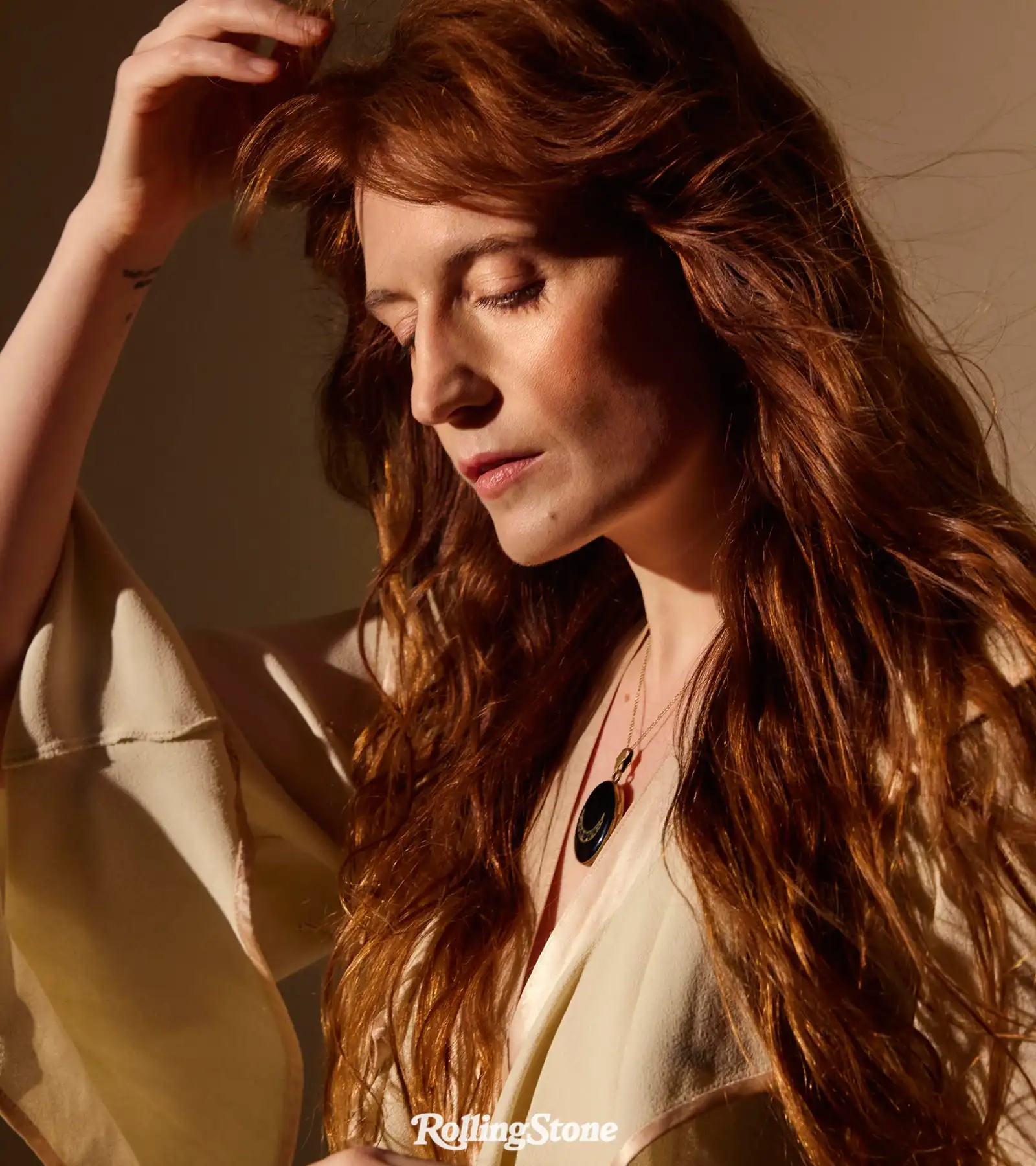
The new album was written in the shadow of a near-death experience. During her Dance Fever tour back in 2023, Welch suffered an ectopic pregnancy and ruptured fallopian tube, requiring emergency surgery. The trauma reshaped how she saw her body, her work, and her search for meaning. “When you have to have emergency surgery, the lights are so bright; it’s so clinical,” Welch tells Rolling Stone. “There was a sense afterwards that I needed to be near to the earth. I needed to be near natural things.
In conversation, she oscillates between clarity and dry humor, her thoughts unfolding like a spell cast midair. “When something happens in the body, you feel so powerless,” she says. “I think I was looking for forms of power and felt very primal. It was very sudden, very violent, [and] absolutely saved my life.”
She recalls performing through the pain on that fateful night. The aftermath bled into her sessions with Idles’ Mark Bowen and long-time collaborator James Ford, channeling the shock into raw, discordant songs like “Witch Dance” and “Everybody Scream.” Even as the record spirals into darkness, Welch’s humor keeps it grounded.
“The calmer my life got, the wilder I could be in my performance styles and in my videos and in my artwork,” she says. “I found that freedom from shame means that you can explore so many more different things in your work, and I really found that to be amazing.”