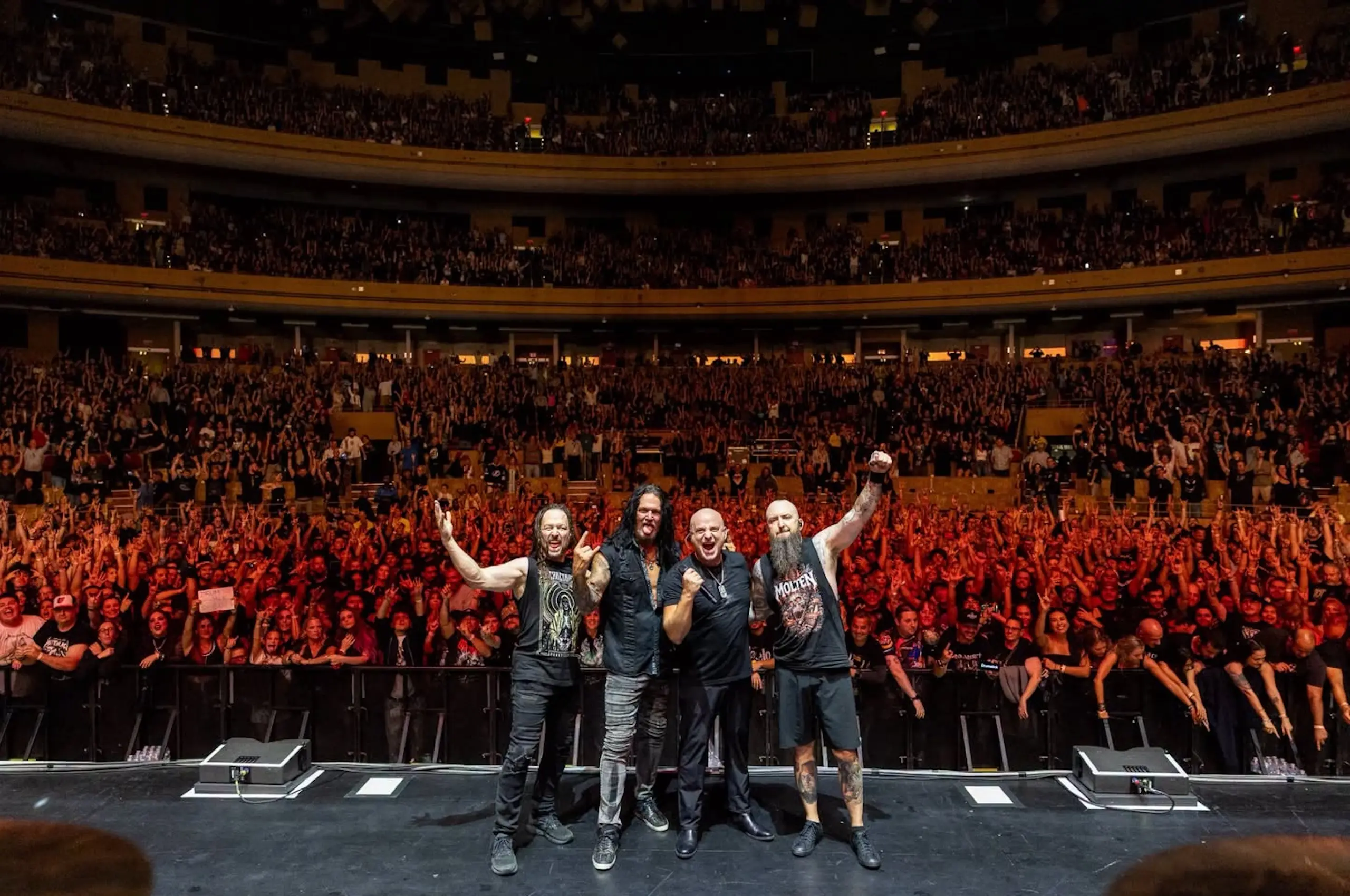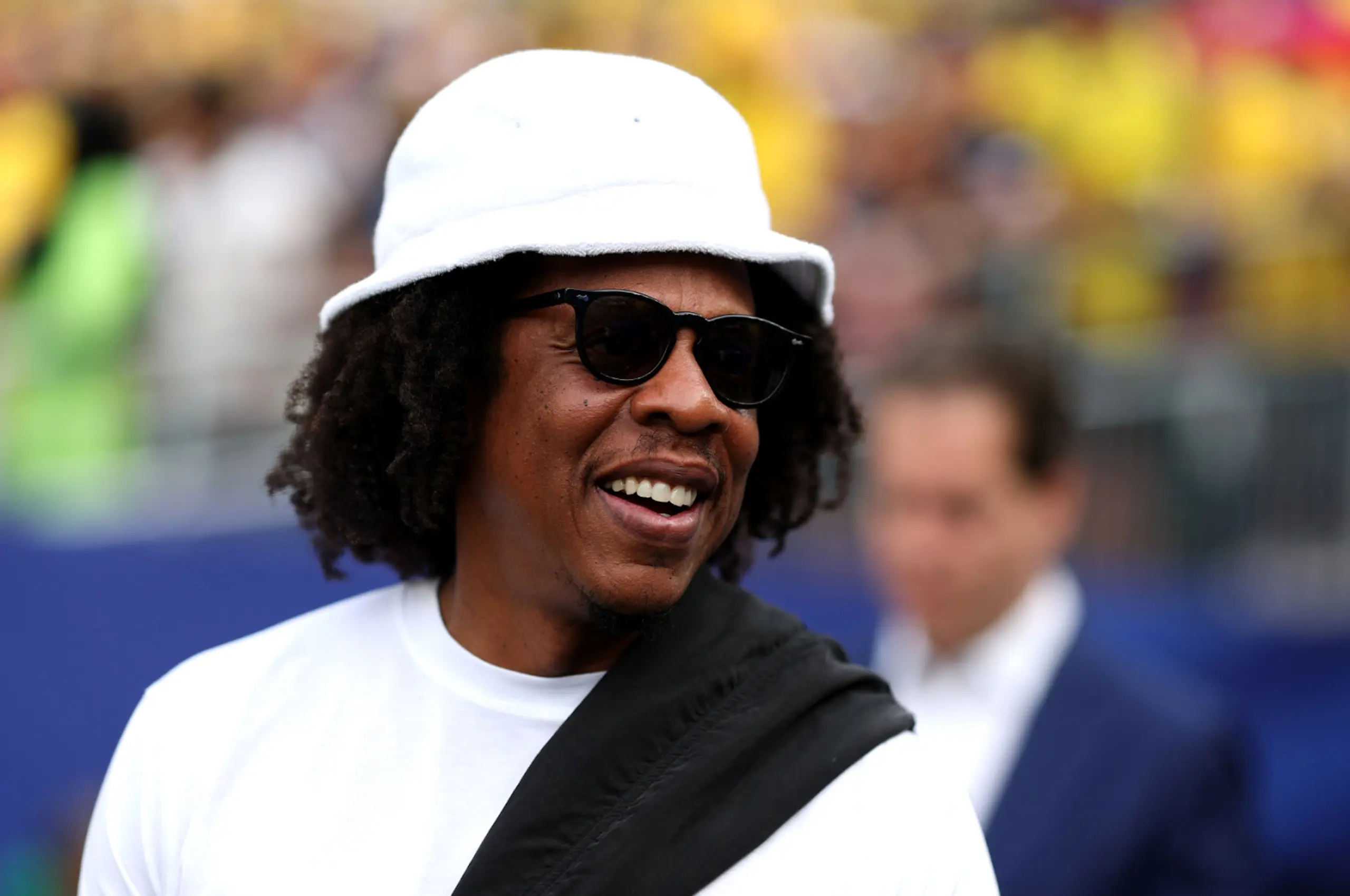


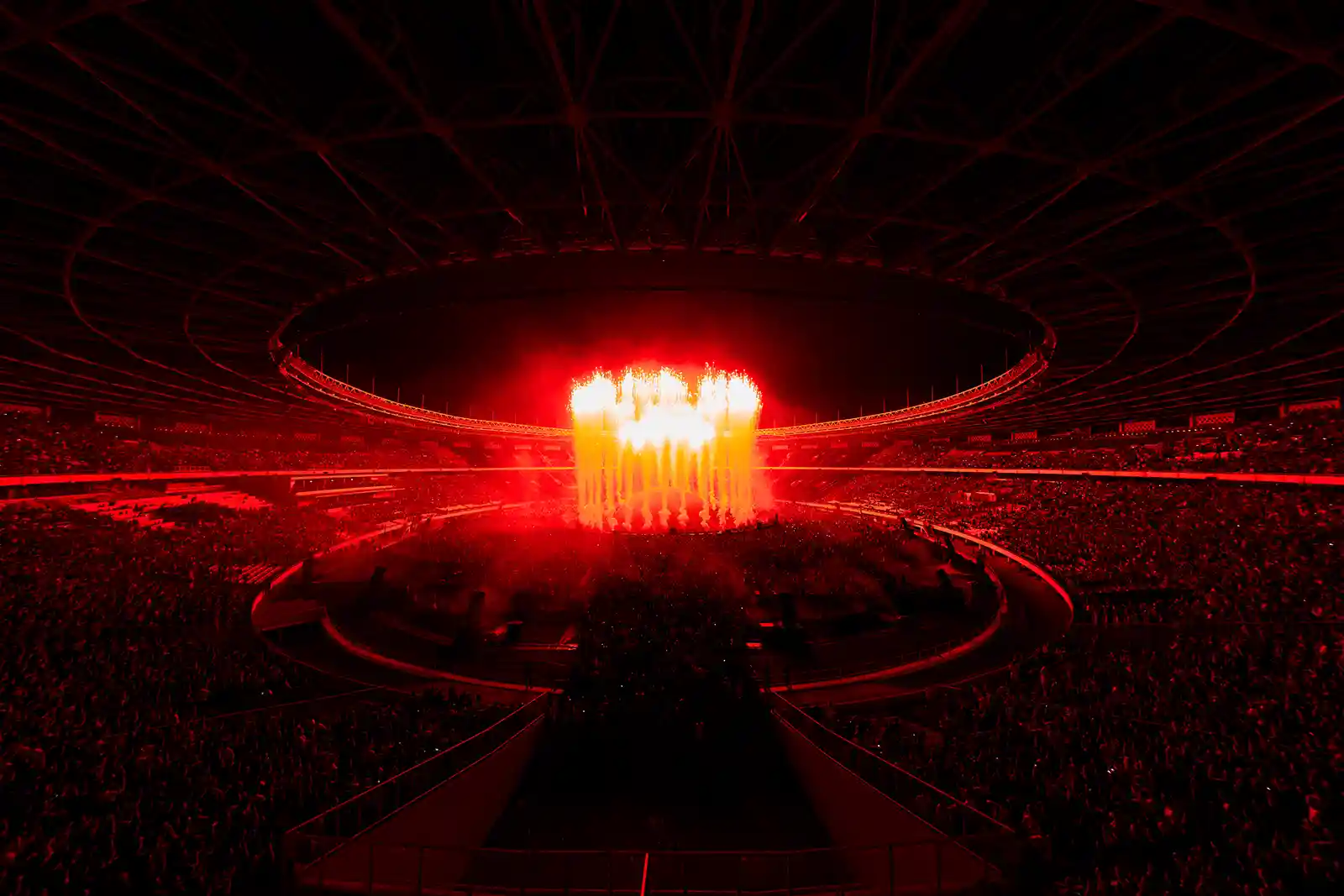
Over 70,000 attendees from all over the world gathered in Gelora Bung Karno (GBK) Stadium to see Ye (formerly known as Kanye West) last Saturday, October 24.
Ye’s highly anticipated debut concert in the Indonesian capital has broken records in foreign turnout, displaying significant economic turnover for a single night. In doing so, it has positioned Jakarta as a premier music destination for international talent that can capitalize on the interconnected audiences of not just Southeast Asia, but also wider Asia and Oceania.
According to organizers Raw Vision Collective, the event drew 25,000 foreign attendees from 80 different countries, accounting for nearly 100 percent hotel occupancy around the concert area; the top five countries were Australia, Singapore, Malaysia, Philippines, and Thailand, respectively.
Even with the tour’s multiple show cancellations due to Ye’s string of antisemitic and Nazi-related remarks between 2022 and 2025, it has clearly done little to dampen demand from his Asian fanbase, even making for lucrative business. “For many, Ye’s mounting misdeeds have eroded whatever bright-eyed memory they carry of him as the ambitious, soul-sampling dreamer from Chicago. Perhaps Asia provides a refuge from what may be an irrevocably damaged reputation in America,” Andre Gee wrote on Rolling Stone in 2024.
Being his first world tourWorld TourA series of concerts staged across several countries and continents, often lasting months and promoting a new album. A stop in Manila is a major event for local fans, andGo to World Tour Glossary since the Saint Pablo Tour in 2016, Ye was clearly cognizant of what fans expected from him as he performed his gamut of greatest hits from the last two decades — from tracks in his 2004 debut album The College Dropout, to newer songs under Bully, released last January.
But Ye’s performance is perhaps the least interesting part of this story. What lengths the industry will go to accommodate an artist like Ye and whether the Philippines is ready to step up is arguably more worth looking into.
A Milestone for Southeast Asia
In its promotional materials, Raw Vision Collective frequently touted Ye’s Jakarta concert as “historic,” and there may be some truth to that.
The region-exclusive event ran for just one night, setting it apart from festivals, multi-day concerts, and multi-stop tours. Ye’s Jakarta concert reportedly generated a whopping 600 billion Indonesian rupiah (approximately $33 million or P2.1 billion) in total event revenue alone, excluding tourism-related revenue like flights and hotels. By comparison, The Weeknd’s After Hours til Dawn Tour show, attended by 160,000 concertgoers across two nights, alongside Pestapora music festivalFestivalA multi-act music event, often held over several days, where many artists perform across different stages. Festivals combine live music, food, art, and community, and they give audiences a chanceGo to Festival Glossary, which took place on the same weekend, jointly generated Rp250 billion or $13.7 million worth of economic activity for Jakarta.
The region’s live music industry has been making big money. Entertainment logistics provider Globavend cited independent industry research that valued Southeast Asia’s live entertainment industry at $6 billion in 2025, with projections to reach $10 billion by 2034. Previously exclusive shows in Singapore, including the six-night shows of Taylor Swift (2023) and Coldplay (2024), generated an estimated $500 million and $96 million in tourism-related revenue, respectively.
On the other hand, Thailand is banking on bringing exclusive festival franchises to the country. The Cabinet is set to invest more than 2 billion baht (around $61.5 million) of its national central budget to host the Belgian electronic music festival Tomorrowland for five years starting in 2026. Other festivals in their pipeline, like the U.K.’s Creamfields and Electric Daisy Carnival from the U.S., illustrate Thailand’s willingness to maximize its festival culture as a generator for tourism-related revenue.
Inside Ye’s Debut Concert in Jakarta

At this level of demand, Ye’s concert was certainly a stress test for Jakarta’s urban infrastructure.
In terms of crowd control, for example, GBK Stadium, the third largest in Southeast Asia, displayed impressive resilience throughout the event; this is despite traffic bottlenecks in the venue’s outer perimeter, which was expected for the world’s most populous city. The multi-purpose design of GBK made spatial zoning and pedestrian routing flow naturally with the sports complex’s surrounding areas, helping minimize congestion and crossflows.
At times, their crowd control strategy worked a little too well. With large parts of the GBK complex closed off, many attendees walked very long blocks to access designated entry points. If you were walking to GBK’s Plaza Tamir entrance from the nearby Plaza Senayan mall on the opposite side of the stadium, Google Maps would’ve estimated a 20-minute walk by cutting across the complex. With the concert’s spatial zoning, it took over an hour, accounting for the ensuing confusion mid-walk.
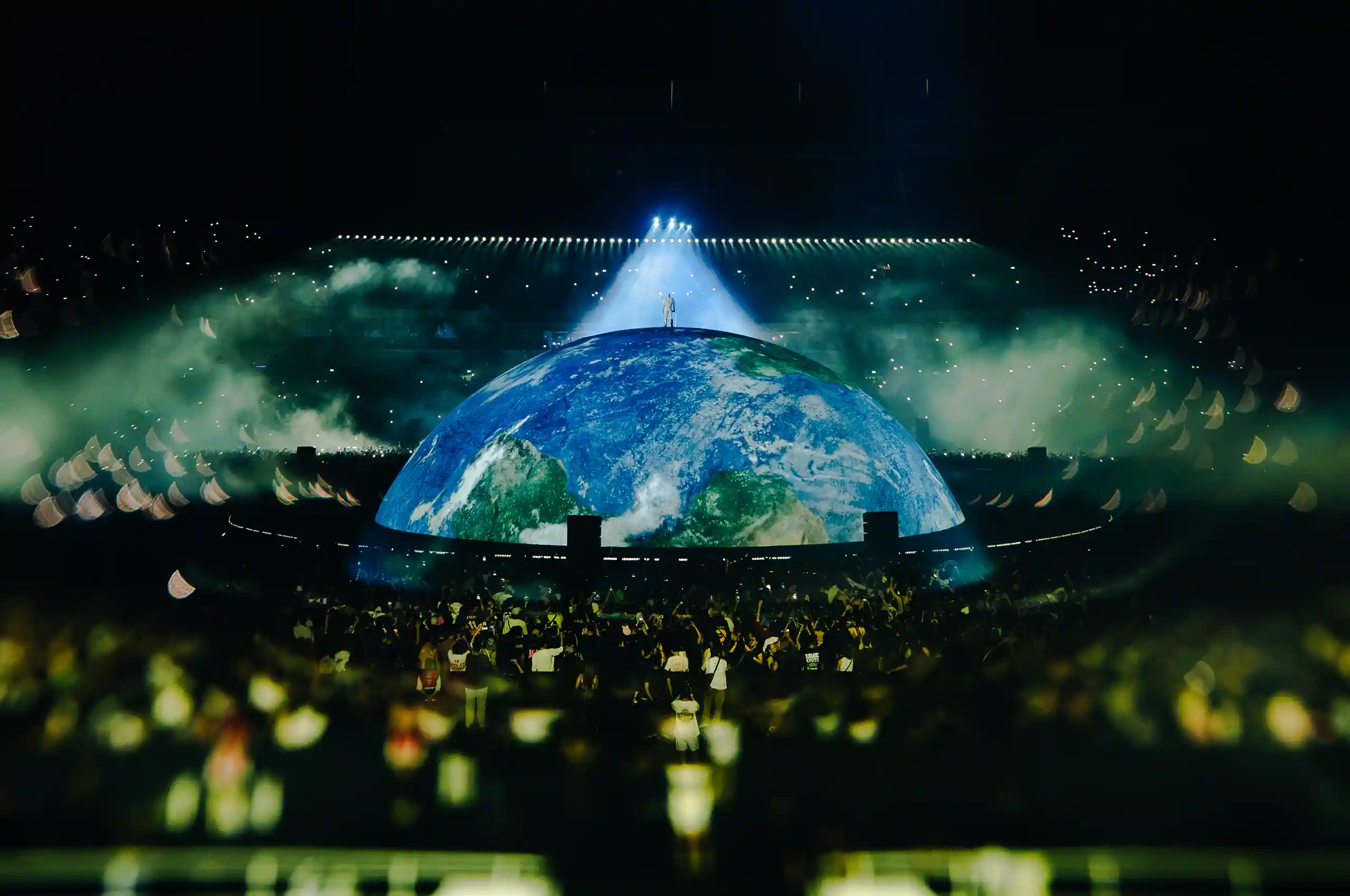
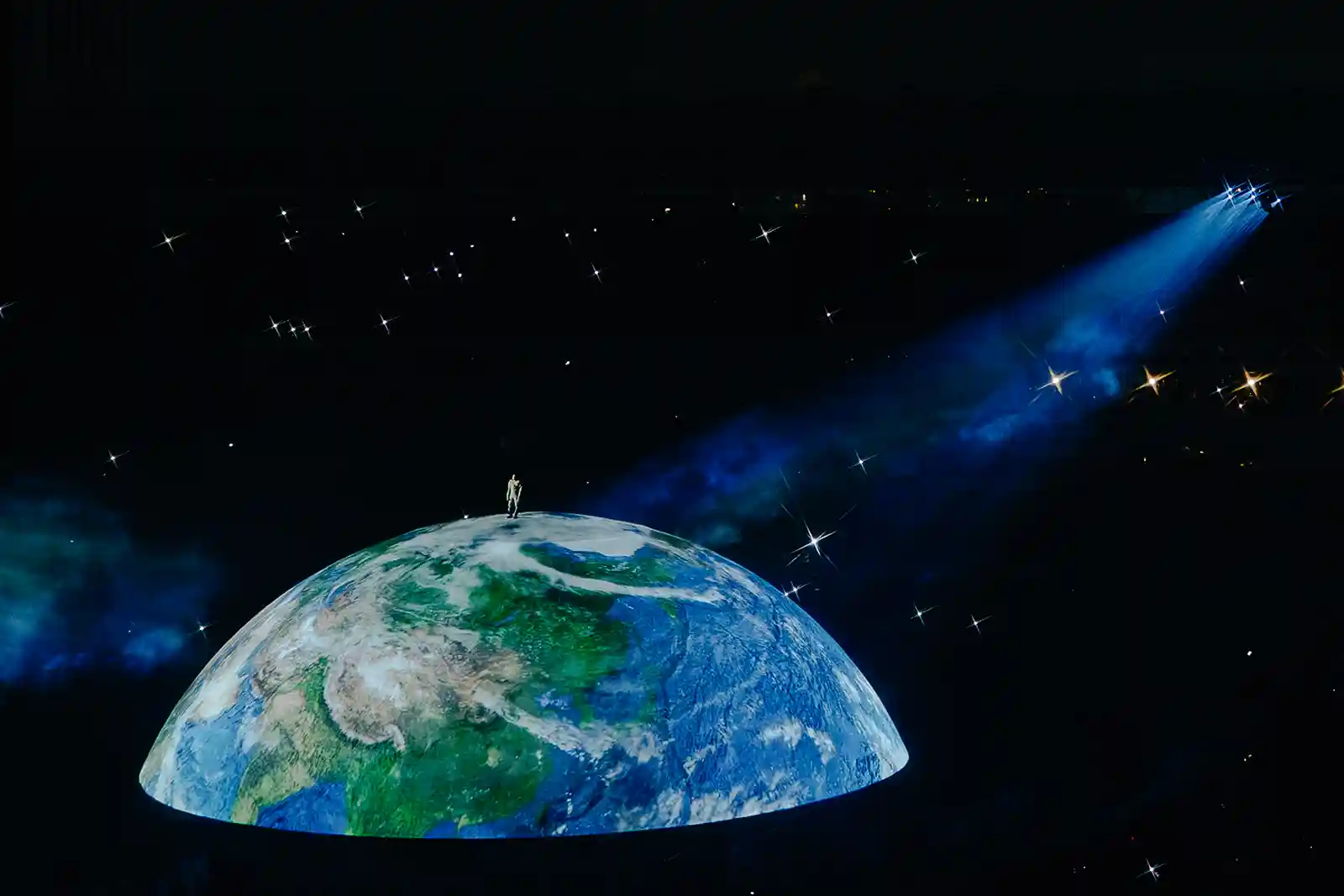
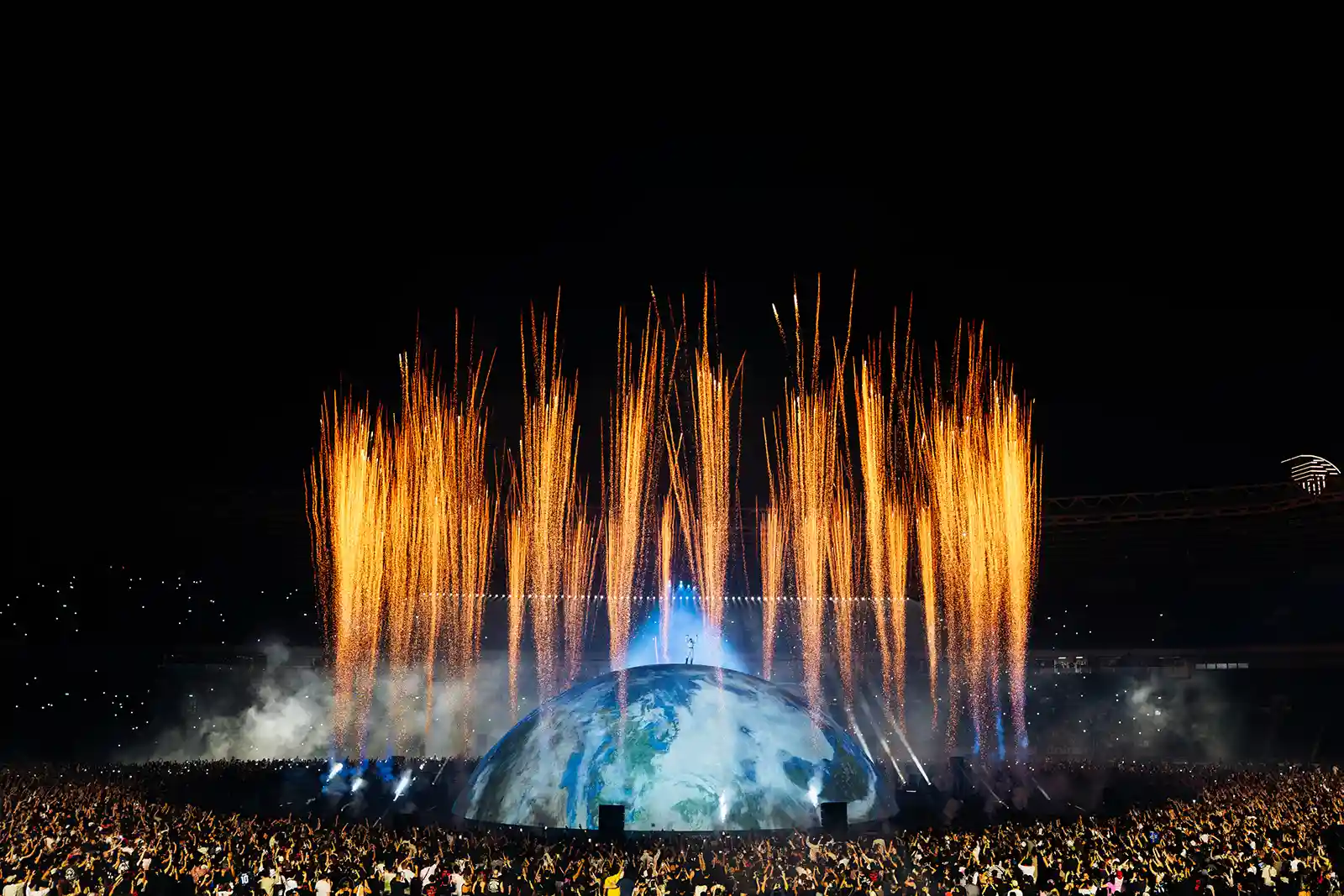
Perhaps the most glaring flaws of the production were the feedback issues of the sound system, particularly in the Festival or standing section where Ye’s vocals were often difficult to hear. When Ye instructed the crowd to sing the chorus of “Heartless,” the feedback created an audible delay between seated and standing audiences, making the moment confusing for those watching from Festival. Still, the spectacular stage design made the experience worth the price of admission. The custom hemisphere, the same centerpiece used throughout Ye’s world tour, anchored the production, while precision lighting and spatial design created visual illusions like swirling clouds and a rotating planet Earth out of the 50-foot dome.
As for going home after the Ye concert, it was difficult but not impossible. Hordes of riders from ride-hailing apps Grab and Gojek keenly waited outside GBK for potential customers, which was both good and bad for the transportation bottleneck. But if all else failed, Jakarta’s Mass Rapid Transit (MRT) system was incredibly reliable, arriving on time with hours extended especially for concertgoers. We have to give it to the organizers for having that level of foresight and coordination with the local government.
In fact, what made Ye’s Jakarta concert particularly notable was its organizer, Raw Vision Collective, which operates relatively independently of bigger event promoters like Live Nation or AEG. Though, in an interview with Rolling Stone Philippines, Karen Tjahja, Raw Vision Collective’s Chief Marketing Officer, insists that the group is “completing” the live music ecosystem rather than “competing” with it, their personal touch sets them apart from conventional organizers.
The group even went so far as to create a 75-page guide to the concert, including essential travel information, as well as where to stay, eat, and go. They also organized auxiliary events to promote the Ye show, including a five-kilometer run hosted by Grammy-winning producerProducerThe person who shapes how a record sounds, from arranging and recording to guiding performances and making creative choices in the studio. A great producer can bring out the bestGo to Producer Glossary Tony Williams and a surprise gospel choir performance in an underpass in South Jakarta. The latter featured a 15-song medley incorporating the kendang, a traditional drum heard across Indonesian music.
Does the Philippines Have What it Takes?
All this begs the question of whether the Philippines can offer international artists that same hospitality while competing with neighboring cities for exclusive regional shows.
We certainly have the manpower to make it happen. Big promoters like AEG are more likely to mount an event using tried-and-tested formulas, sometimes working with smaller productions like Insignia Presents to bring acts like Tyler, The Creator, Joji, and Rex Orange County. Other independent Filipino organizers like Wilbros Live and Karpos Live have what it takes to bring fresh talent — and they have done so — but only if they act in ways outside what audiences expect of them.
Before Raw Vision Collective secured the Ye booking, they flew out to Los Angeles and spent a month with his team. In doing so, they established personal relationships with key people, helping create experiences that go beyond the concert itself. Arguably, independent artists like Ye are more receptive to experiences that feel less transactional and more personal, a mindset that is characteristic of much smaller productions. When bidding for exclusive shows, Filipino concert organizers may benefit from sustaining events that operate at different scales, requiring an agility to chase opportunities outside the usual event timeline.
This is easier said than done. Even Live Nation, the largest live music and concert promoter in the world, failed to market Charlie Puth’s show at the SM Mall of Asia Arena last October 14, with the Philippines being the only Asian country in his Whatever’s Clever! World Tour to not sell out. This prompted the American artist to take to TikTok to address the matter. Online, fans were quick to blame Live Nation for their lack of promotion. The event also took place on a Wednesday, making it tricky for fans outside of Metro Manila to commute during the work week.
The Philippines is known in the global music industry as a “trigger market” for consumption habits and as early adopters of popular music. It isn’t a stretch to say that audiences will turn out for an artist they deem worthy of their money, and organizers must take advantage of that. But they also need to meet their audiences at eye-level and be mindful of their needs to show up.
Beyond Organizers and Audiences
But beyond what organizers and audiences can do, whether the Philippines can compete in the international live music industry ultimately boils down to infrastructure, and if the government sees music tourism as a viable long-term investment.
Ye’s Jakarta concert was among 25 international events in 2026 supported by Event by Indonesia, a priority program of Indonesia’s Ministry of Tourism aimed at strengthening the country’s position as an international events destination. Currently, the Tourism Promotions Board (TPB) appears selective in its initiatives on live music and entertainment, previously partnering with Live Nation for Maroon 5’s show in 2025, or LANY’s three-night sold-out Cebu concert in 2024. TPB’s Meetings, Incentives, Conferences, and Exhibitions (MICE) Plus Program provides incentives for international conferences and exhibitions, though it explicitly states that concerts are not qualified. Meanwhile, the Philippine Creative Industries Development Council also lists performing arts and live music as a priority sector under the Philippine Creative Industries Development Act. But its broader mandate to develop the country’s creative industries is distinct from a targeted tourism strategy for attracting international concerts.
Likewise, the only venue that can accommodate the attendance numbers seen at Ye’s Jakarta concert is the Philippine Arena in Bulacan, with BLACKPINK’s two-night show in 2022 being the Philippines’ most attended and highest-grossing concert ever, raking in 93,000 attendees and $14 million in revenue, according to independent box office tracker Touring Data.
The drawback, however, is that the Arena is only accessible by motorized vehicles, which stands in stark contrast to GBK Stadium, which visitors can at least access from the city center. The lack of transportation options can also cause a gridlock in the Arena’s surrounding area, potentially making the usually 45-minute journey into an hours-long endeavor. Coldplay even sang, to our embarrassment, an impromptu song about it during their 2024 Arena performance, with the lyrics going:
“If you want to drive somewhere then I’m warning you / A two-mile drive will take a week or two. / If you want to get back home in time for your bath / Well, I’d allow yourself about a year and a half. / Oh, we can’t wait to play Manila again / But the traffic here is completely insane.”
So, could the Philippines have made a concert with Ye happen? Given the many gaps the country has yet to address, perhaps there’s a reason why it didn’t. It will require not only strategy, but also a willingness from organizers, audiences, and the government alike to prove to the world why our stage is worth coming to.
Frequently Asked Questions
Ye, formerly known as Kanye West, brought his world tour show to Jakarta on October 24. It was his debut performance in the Indonesian capital and the only Southeast Asia stop for his 2026 world tour.
Rolling Stone Philippines points out several factors as to why the Philippines could not have hosted Ye in an exclusive regional show, including infrastructural gaps, as well as lack of government support and competitive advantage.
Ye’s Jakarta concert reportedly generated a 600 billion Indonesian rupiah (approximately $33 million or P2.1 billion) in total event revenue alone, excluding tourism-related revenue like flights and hotels.
According to organizers Raw Vision Collective, the event drew over 70,000 attendees, with 25,000 being foreign concertgoers from 80 different countries. The top five countries were Australia, Singapore, Malaysia, Philippines, and Thailand, respectively.
Currently, the Tourism Promotions Board (TPB) appears selective in its initiatives on live music and entertainment, previously partnering with Live Nation for Maroon 5’s show in 2025, or LANY’s three-night sold-out Cebu concert in 2024. TPB’s Meetings, Incentives, Conferences, and Exhibitions (MICE) Plus Program provides incentives for international conferences and exhibitions, though it explicitly states that concerts are not qualified.
Recommended Video