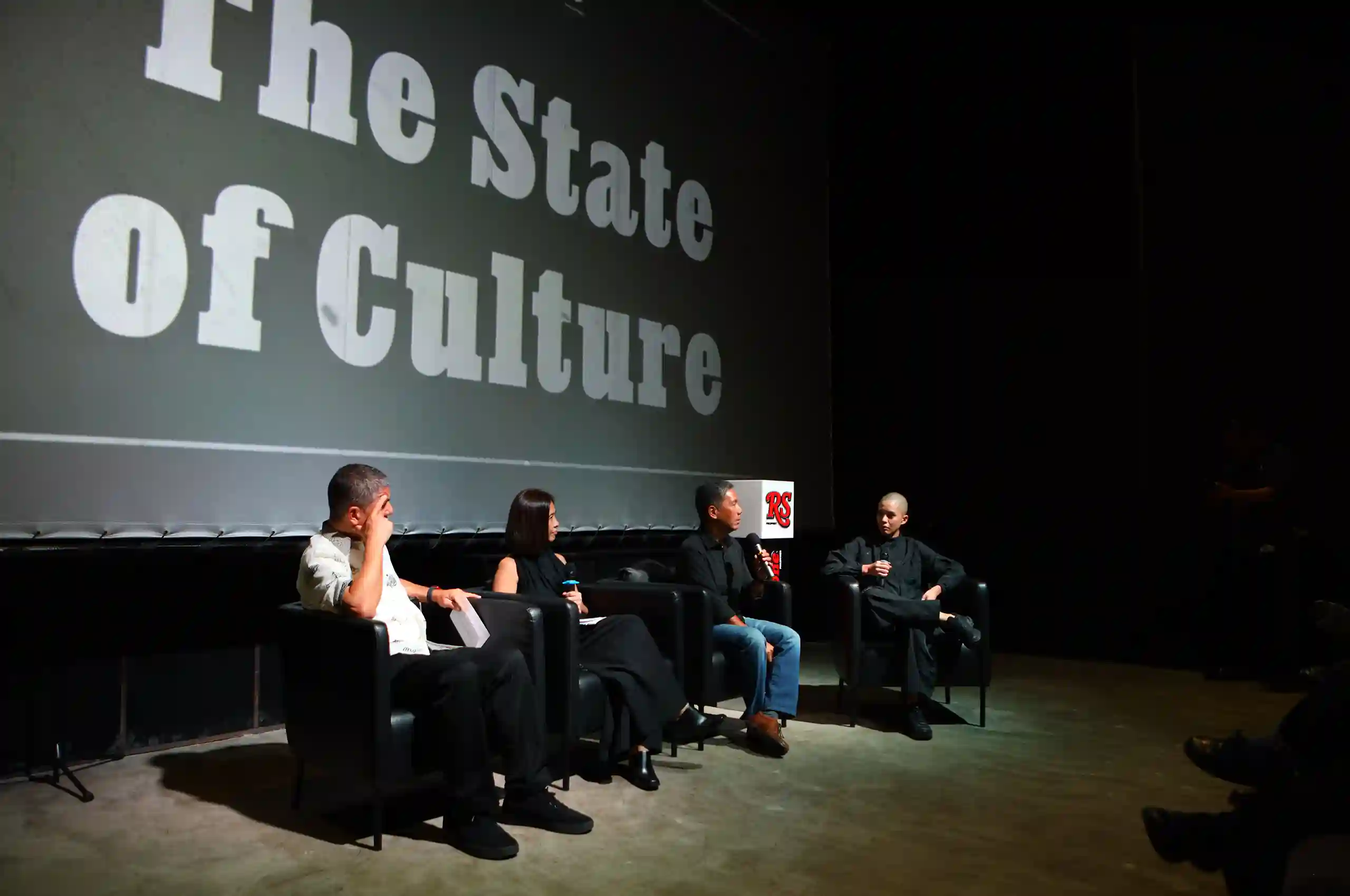
On August 7, Rolling Stone Philippines celebrated its third print issue with its inaugural State of Affairs event at Sine Pop in Cubao, Quezon City. The event gathered key figures in the Philippine cultural and creative industries; its first panel exploring the “State of Culture” as it sits at the intersection of the economy, arts education, and advertising in the Philippines.
The talk saw its moderator, Rolling Stone Philippines Digital Editor Sai Versailles, joined by Creative Economy Council of the Philippines Founder and President Paolo Mercado, Art Fair Philippines Co-Founder Dindin Araneta, and BBDO Guerrero Creative Chair David Guerrero.
When asked about the impact of national policy on the creative economy, Mercado said things could be better, and that even with increasing financial support from the government and private investors, the Philippine creative industry is still falling behind. “I find that the capital investment on creative industries is nowhere near where it should be,” he said. “I mean, the budget is supposed to be P500 million a year for the Creative Industries Development Office.”
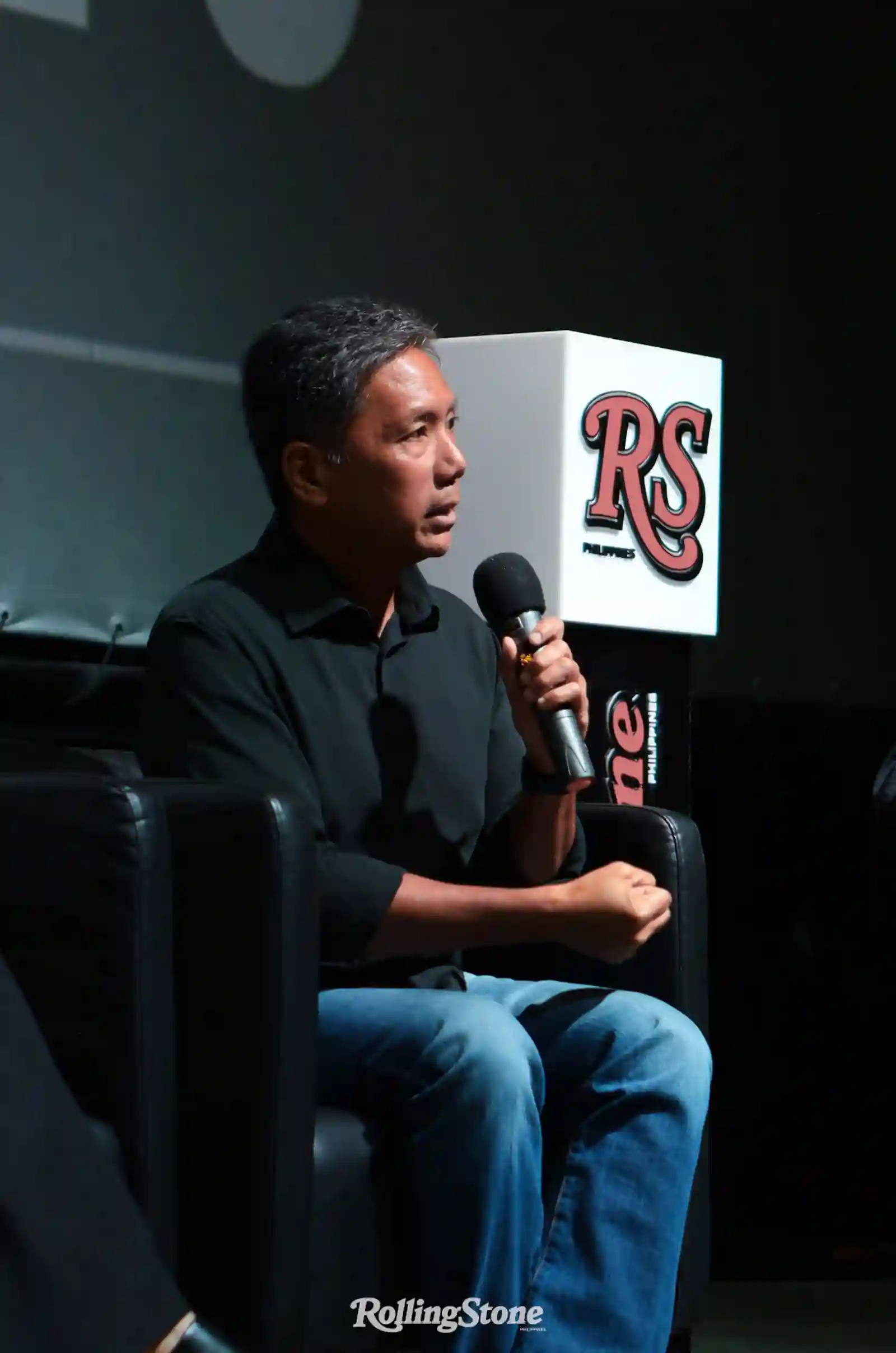
“Just comparing that P500 million a year to what South Korea just announced, which is [around] $5 billion for the next three or four years to boost their animation industry,” he added. “That’s the difference of a country that takes a specific creative sector and says, ‘We’re gonna go to town with this one.’”
In light of the Department of Education recommending to remove arts and humanities courses from core curricula in higher education, Araneta, who also serves as the director for Benilde Center for Campus Exhibitions, emphasized arts education as crucial for the development of the Philippines.
“Art helps students process complex emotions, communicate across boundaries, develop confidence, think critically, and engage with their communities,” she said. “When we take away art courses, we risk creating graduates who are technically capable, but emotionally underdeveloped or culturally disconnected.”

From here, the conversation shifted towards artificial intelligence (AI) and how it affects the arts and education.
“Today, you simply can’t separate creative industries from digital technology,” said the educator. Instead of ignoring AI, Araneta said, “We have to engage with these tools critically and confidently.”
Sharing his insight as one of the country’s leading advertisers, Guerrero discussed the homogenizing effects of AI on culture and creativity. “If everyone’s using AI, then everyone’s going to have the same kind of stuff,” he said.
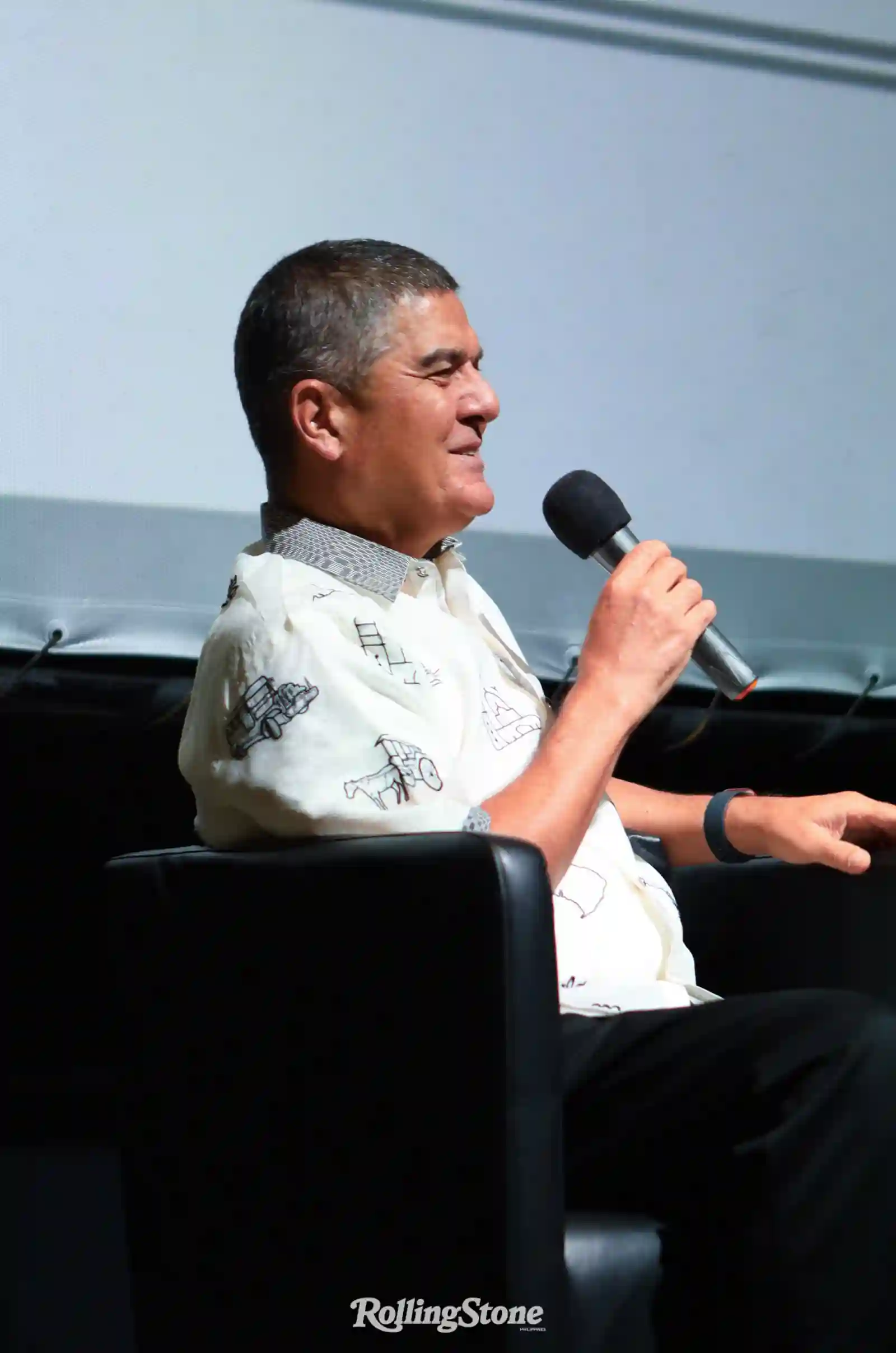
But instead of being “afraid of AI,” Guerrero said creativity will remain key to AI’s future. “It’s like information. When data became free — which was maybe 20 years ago — all knowledge is for free on the internet. In theory, it should have shut down intellectuals because you don’t need to remember everything anymore. But of course [that’s] not [what happened]. What happened is it multiplied the need for people to interpret and make sense of the data, and I think the same thing is going to happen with AI.”
Guerrero added that people only have to believe that they can still be on top of the AI boom. “Seeing Alex Eala playing tennis and thinking, she’s got this belief that can get her to compete at this very high level against former champions — we need that same kind of belief that everything we’re doing can be better than what’s [already] out there.”
Special thanks to ZYN. With special participation from H2V2 Catering and Manila Craft Mixes & Brews.