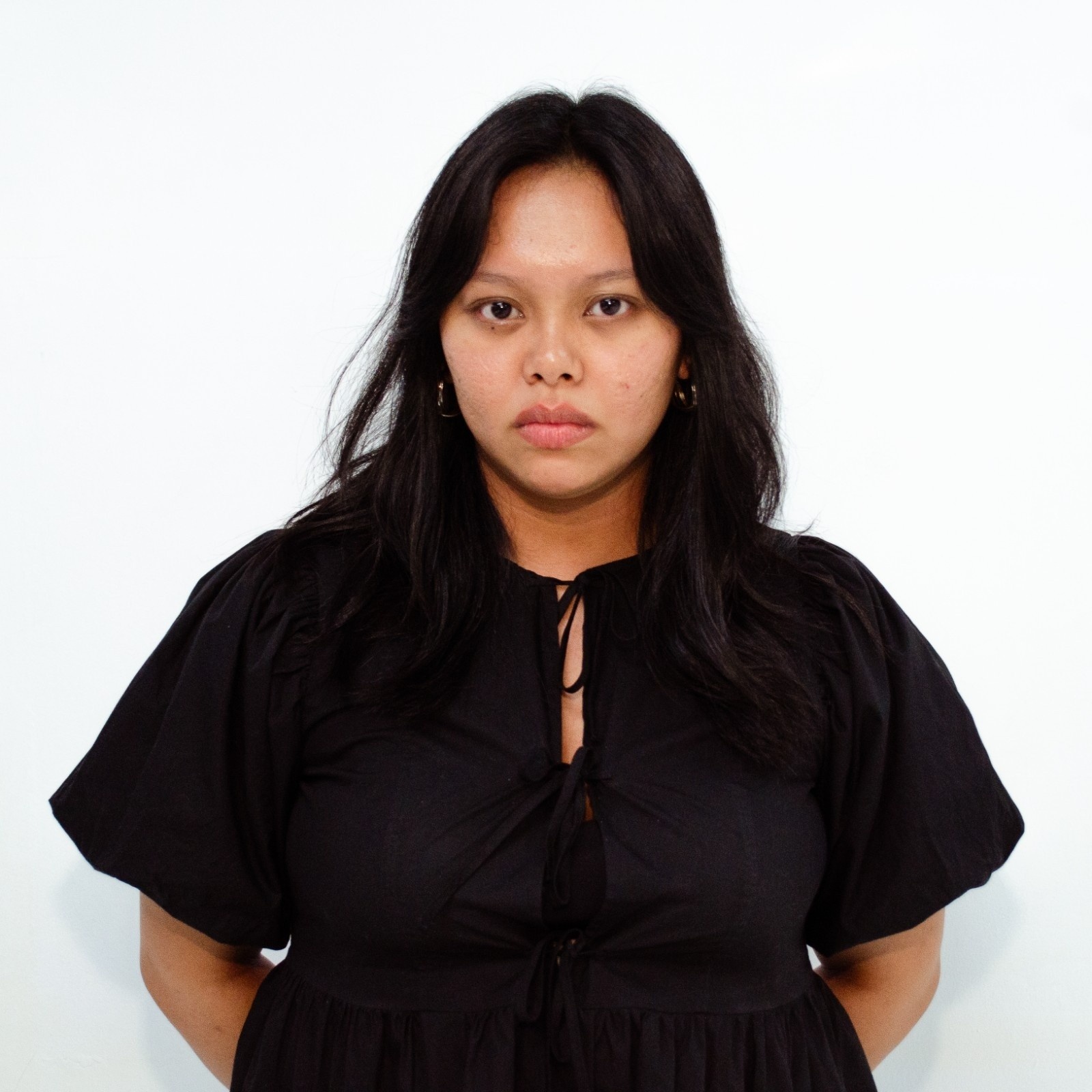


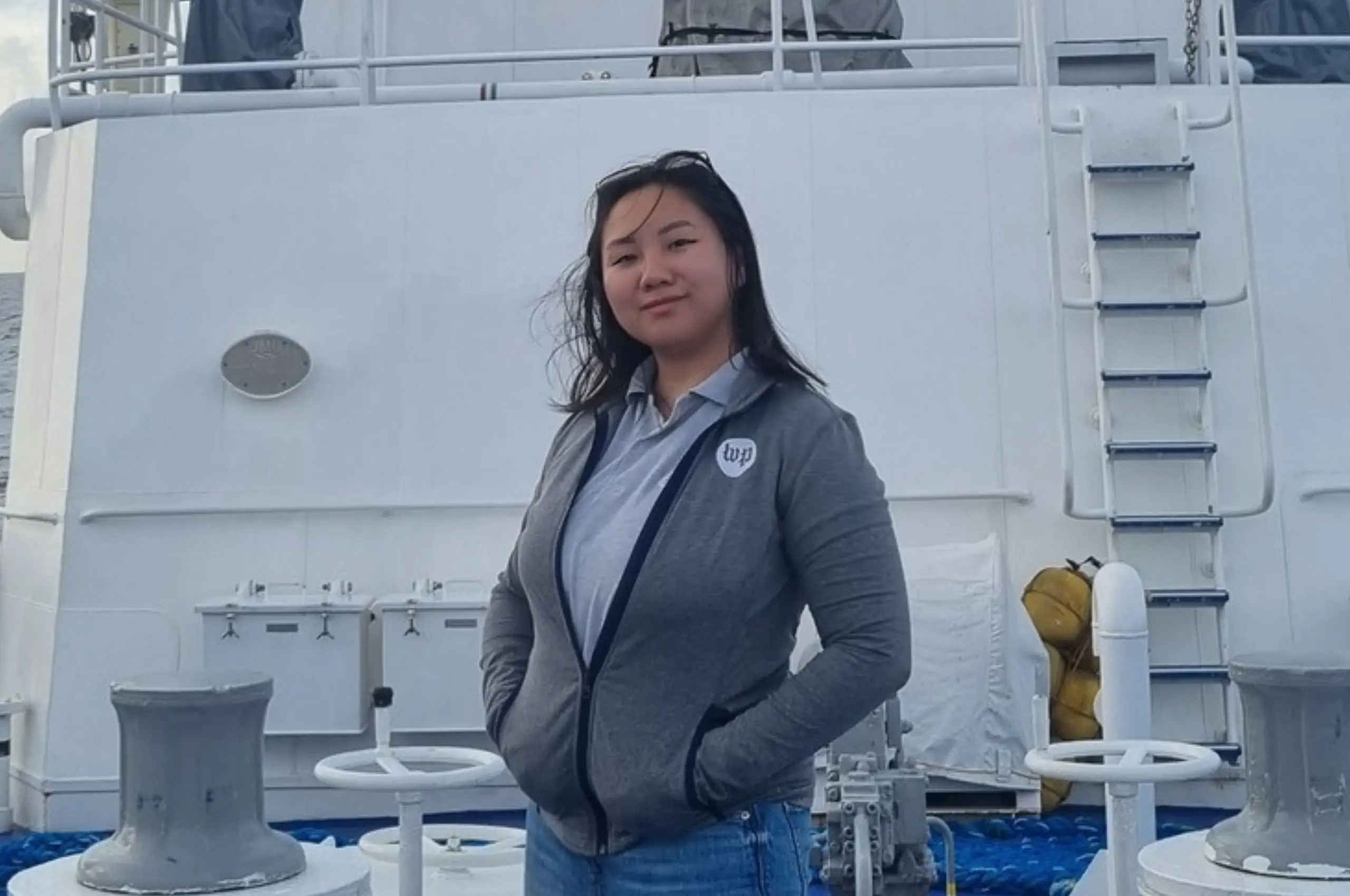
Filipino investigative journalist Regine Cabato won’t stop working and cede to intimidation from the Chinese Embassy after she faced online harassment earlier this month. “I’m very conscious that there have been Filipino journalists in generations before us who have really fought for us to be able to have the right to report the way we want,” she says. “And as long as I can handle it, I’m not going to cede that space.”
The embassy’s Deputy Spokesperson Guo Wei accused Cabato and the Philippine Center for Investigative JournalismInvestigative JournalismIn-depth reporting that digs into matters of public interest, often involving corruption, abuse of power, or hidden wrongdoing. It takes time, records, sources, and persistence to produce, and it holdsGo to Investigative Journalism Glossary (PCIJ) of colluding with retired U.S. Air Force Colonel Ray Powell to carry out a “systematic media campaign to smear China.” In a statement posted on the Chinese Embassy’s social pages dated May 10, Wei also accused Cabato of “playing the victim,” in response to the harassment that she had received from social media users.
According to Reporters Without Borders (RSF), Cabato became the target of online attacks after Philippine Coast Guard Spokesperson Jay Tarriela, in February, shared her PCIJ report from October 2025. The report analyzes social media content in the Philippines that favors China and pushes sentiment regarding its ownership over the West Philippine Sea. British human rights organization Article 19 described the harassment against Cabato as a form of “tech-facilitated gender-based violence.”
But Cabato tells Rolling Stone Philippines that the backlash coming directly from the Chinese Embassy feels different. “This was a foreign state making the accusation. And if it were any other embassy who were accusing a private citizen or individual in the way that China is doing now, it would raise alarms,” she says.
Cabato described the embassy’s online activity, specifically the posts addressing her, as “unusual activities for what should be a professional representation of a foreign state,” recalling that the first post from February was posted before midnight, which were “very odd hours” for a state institution to be posting on social media. “And then one of their most recent attacks just this month [May] was posted on a Sunday naman,” she pointed out, referring to Wei’s statement posted on May 10.
Is Cabato’s Reporting Anti-China?
Cabato rejects the accusation that she is colluding with the U.S. government, saying that she has also covered U.S. colonial history. “I have a fair diversity in my portfolio, and I’m very self-assured with that. So, all these lies that pro-partisan bloggers have been piling on, and that the Embassy has been amplifying, they have no basis in reality,” she says.
She also wants to dispel the claim that she is “anti-China.” She calls the neighboring country a “nuanced” and “diverse” place. “I don’t think that its maritime policy is necessarily equal to everything about the state,” she says. “But it’s not in the interest of pro-China vloggers to capture the nuance that I’m trying to say in my reporting. They’re trying to collapse my reporting into a single story that fits their narrative. But anybody who looks at the body of work that I’ve done, anybody who’s attended the lectures that I’ve been giving about my observations on pro-China vlogger activity, will know that I’m actually very careful in what I can prove and what I can’t, and what I assert and what I can’t.”
Dealing with Intimidation as a Journalist
“The first two weeks [of the attacks] were very stressful because I had to do a lot of logistics in terms of consulting security, consulting my family, also,” she says. “However, I’ve received such a great wave of support, honestly, from my community, from international watchdogs, and from local organizations as well.”
Joining Article 19 and RSF in voicing their support for Cabato are Reuters Institute for the Study of Journalism Director Mitali Mukherjee and Editorial Director Eduardo Suárez. Mukherjee called the attacks against Cabato “dangerous and damaging,” while Suárez said that they demonstrated “a familiar pattern: an authoritarian regime going against a journalist for holding account to power.”
The PCIJ, for its part, identified the social media users amplifying the Chinese Embassy’s messaging as “pro-Duterte partisans.” “The virality of Embassy’s message within a few hours [of posting] attests to the coordinated nature of this online attack,” the organization said in a statement in February.
When asked what it means for online attacks to come from a state institution with diplomatic power, such as the Chinese Embassy, Cabato says, “It’s very alarming, precisely because you know that this is a warning signal that you’re on a list somewhere, that you are being monitored, and your activity is being monitored.” She adds that such a threat to privacy and safety is “enough of a disincentive” for journalists to stop covering China. And I guess, for other people, that would be enough to try to be out of the public eye, or to try to stop coverage. It’s enough of a disincentive to stop covering China.”
A Pattern of Targeting Journalists Across the Region
The journalist went on to say that she thinks the attacks against her and PCIJ are part of a “bigger regional trend.”
Cabato cites a joint report by Press One, Philstar, Malaysiakini, and DailyGuardian, which found a coordinated online campaign weaponizing transparency to smear the U.S. Agency for International Development (USAID) and brand independent media receiving foreign grants as propaganda machines. Cabato says that even with foreign funding, “The newsrooms are free to exercise editorial freedom, and that’s also the case with PCIJ.”
She also pointed out the irony in the accusations of being “Western tools” against her, PCIJ, and other news organizations receiving foreign funding. “While journalists are very transparent about the funding that they get, these bloggers making the accusations, you have no idea where they get their funding from. You have no idea how much tax they pay. You have no idea how they get paid,” she says.
Co-reporting by Sai Versailles
Frequently Asked Questions
Regine Cabato is a Filipino investigative journalist who has worked with The Washington Post and the Philippine Center for Investigative Journalism, often covering disinformation and influence operations in the Philippines.
The attacks on Regine Cabato and PCIJ stem from an October 2025 report and media literacy guide analyzing pro-China sentiment targeting Filipino audiences online.
After pursuing a Master of Science in Politics and International Relations at SOAS University of London in the U.K., Cabato is primarily based in the Philippines.
Guo Wei is the deputy spokesperson for the Chinese Embassy in Manila.
The Chinese Embassy in Manila first targeted Regine Cabato and PCIJ in a post dated February 25. Many who engaged with the post and shared sentiment supporting the Embassy were found to be pro-Duterte accounts.
Recommended Video