

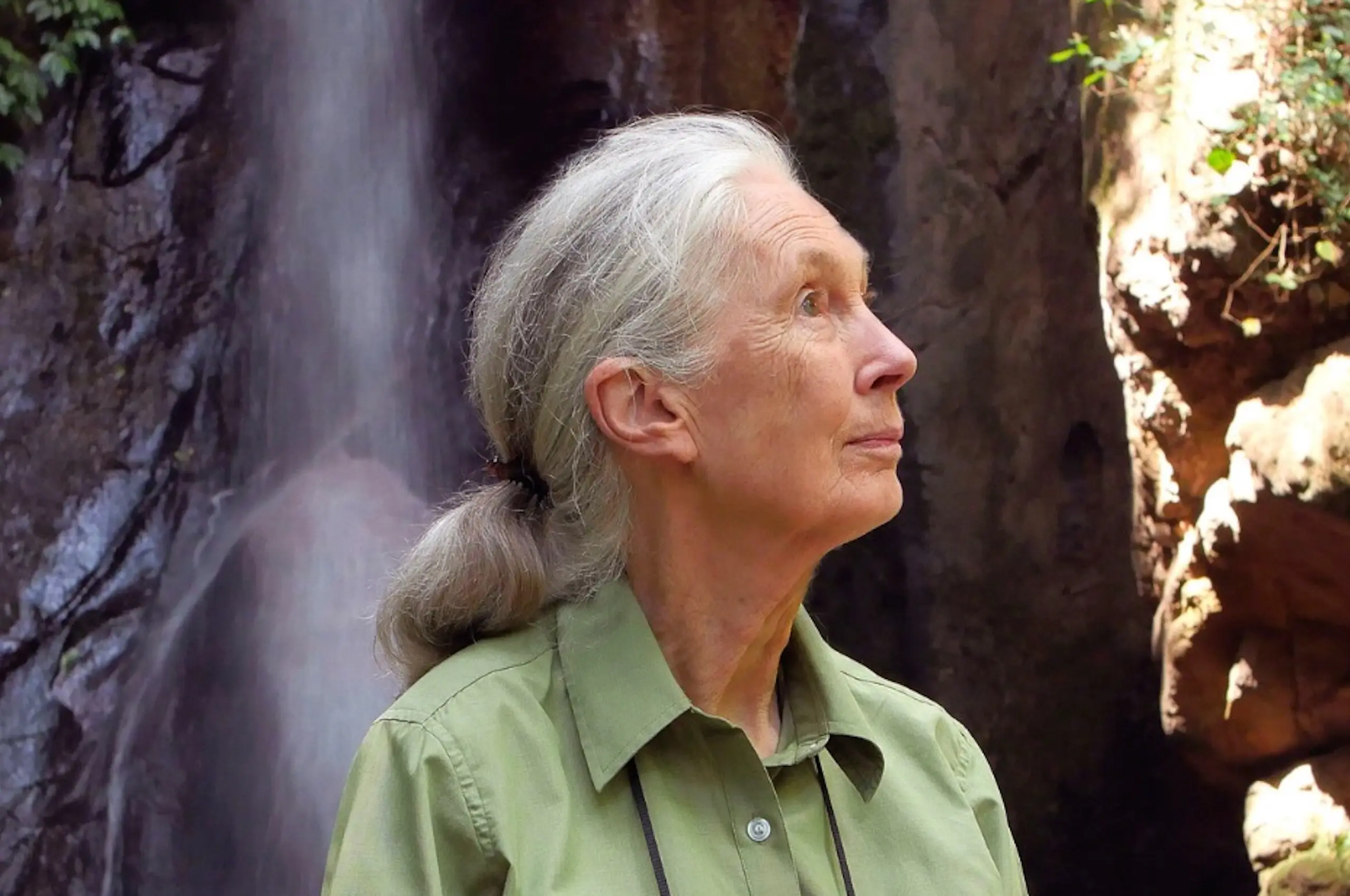
Dr. Jane Goodall was never one to advocate for false hope.
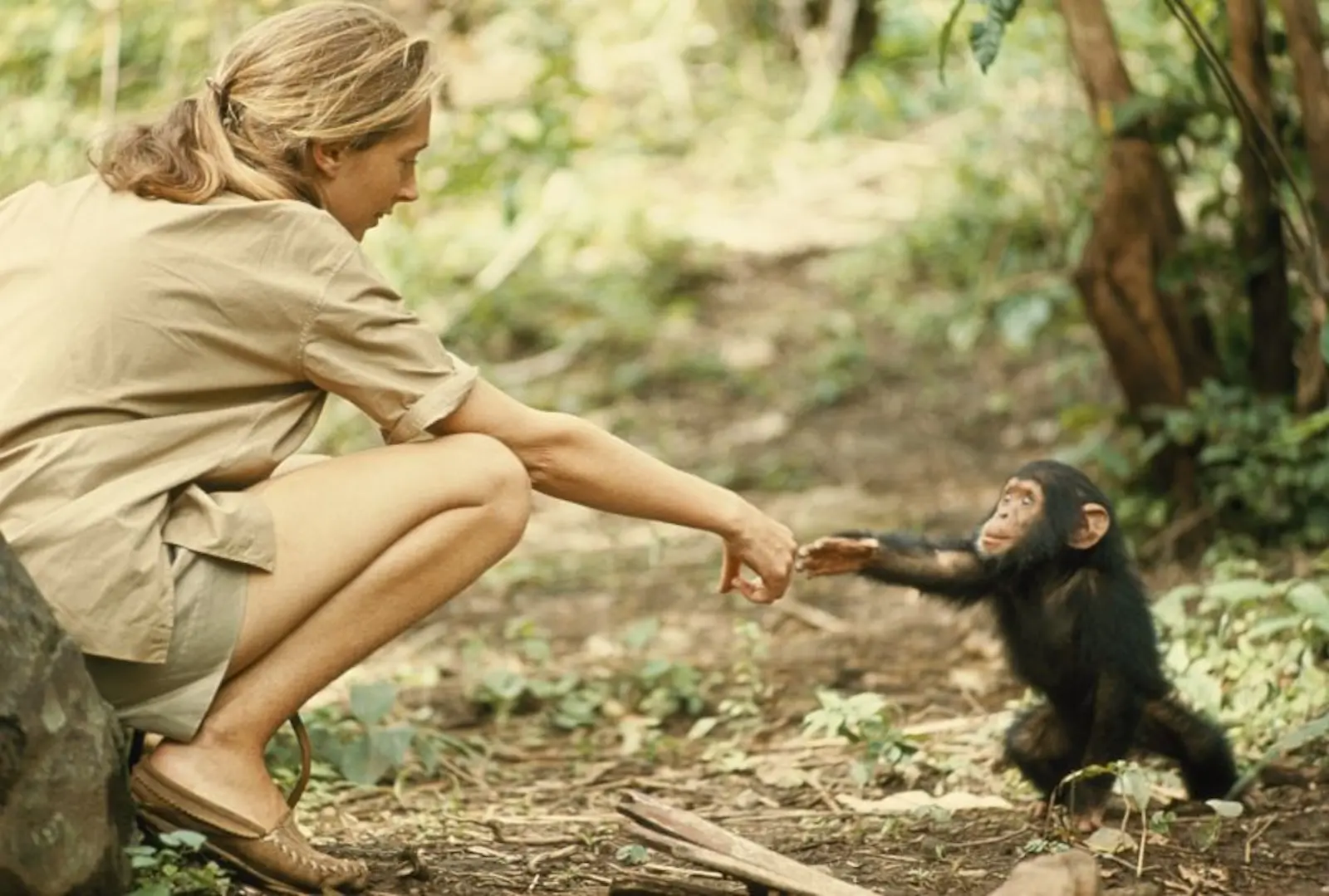
The renowned primatologist, whose field work on the behavior of chimpanzees has been hailed as “one of the Western world’s great scientific achievements,” passed away on October 1 (Pacific Standard Time) at the age of 91. The British-born Goodall is best known for her 1963 7,500-word account of the lives of David Greybeard, Fifi, Flo, and other members of the tribe of primates that she had observed while at the Gombe Stream Chimpanzee Reserve in Tanzania.
Despite the recognition and acclaim, Goodall never lost sight of the real purpose of her work: protecting the planet from its own destruction. “We are arguably the most inteligent being that’s ever walked planet Earth with this extraordinary brain,” the conservationist said in a video message she made for her 90th birthday last year. “Yet we’re destroying the only home we have. Let’s replace violence and intolerance with understanding, compassion, and love.”
“What you do makes a difference,” Goodall added at the end of the video.
Jane Goodall: ‘Gird Your Loins’
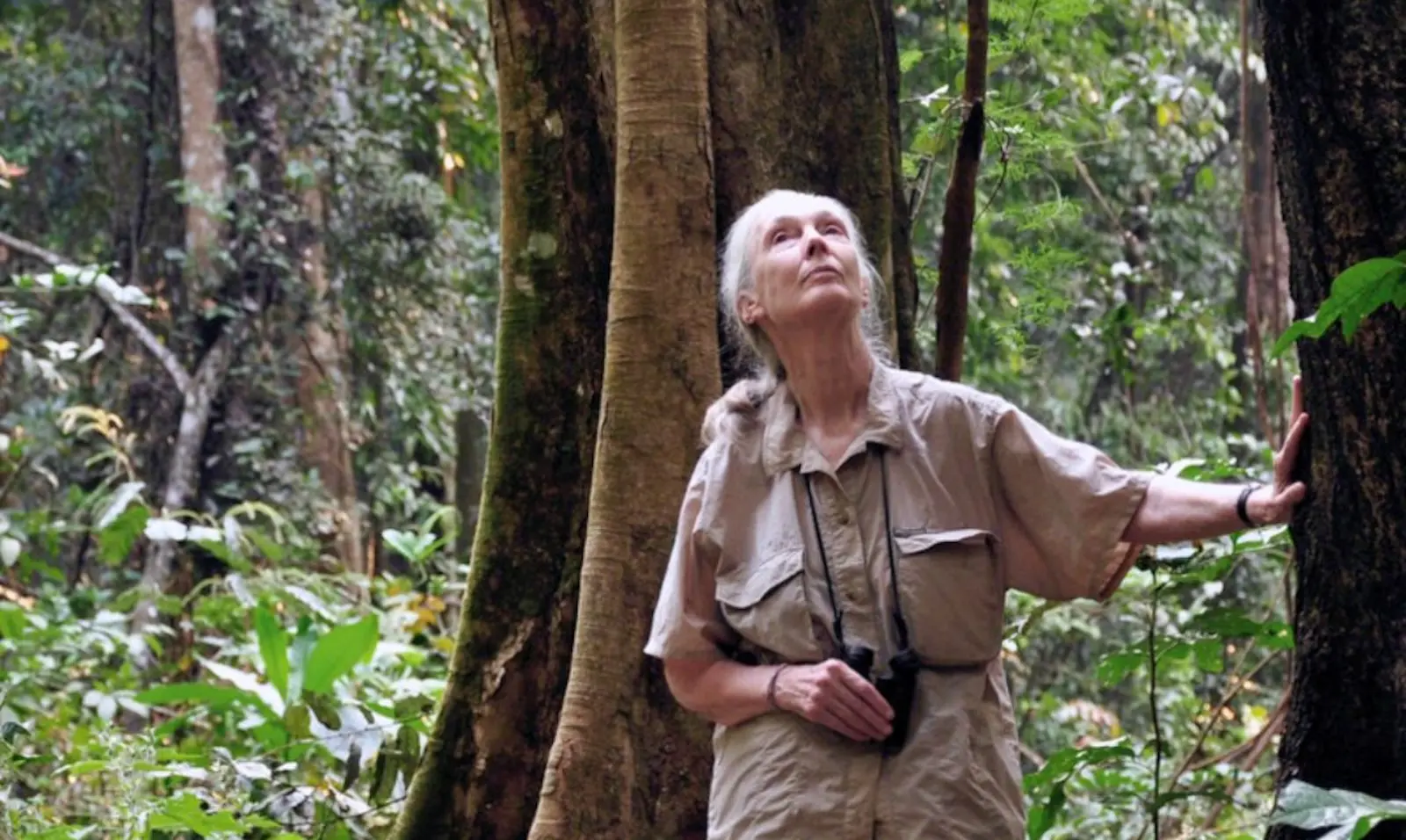
Goodall often reminded people that hope for a safer, healthier planet must be metered out with action. “Hope isn’t just wishful thinking,” she said at The New York Times’ 2024 Climate Forward event. “There’s no good sitting at the mouth of the tunnel and wishing that hope would come to us.”
Describing hope as a tiny, distant star at the end of a long tunnel, Goodall stressed that we must take action to reach that star, saying, “We’ve got to roll up our sleeves. The Bible says, ‘gird your loins.’ I love that. I’m not quite sure what it means, but let’s gird our loins. And we’ve got to climb over, crawl under, work around all the obstacles that lie between us and the star.”
Over the course of her life, Goodall wrote 32 books on her findings as a primatologist, conservationist, and scientist. She went on to establish the Jane Goodall Institute in 1977, which has grown to become one of the largest nonprofit global research and conservation organizations. The institute’s Roots and Shoots youth program, founded in 1991, has extensively taught children around the world about the importance of conservation. The United Nations, in 2002, honored Goodall with its highest honor for global citizenship: Messenger of Peace.
But her identities as a mother, wife, and hopeful human being always shone through in her written work. 15 of her books were written specifically for children, calling on them to do their part in saving the planet. Her last book, The Book of Hope: A Survival Guide for Trying Times, which she co-wrote with Douglas Abrams and Gail Hudson in 2021, saw Goodall reflecting on her optimism about humanity’s future.
“We’re surrounded by doom and gloom, and when children come to my lectures, I talk about the doom and gloom,” Goodall said in an interview with Newsweek. “But if we don’t lose hope, and if we take action, there’s still a window of time for turning, or slowing down climate changeClimate ChangeThe long-term shift in global temperatures and weather patterns, driven largely by human activity. The Philippines is among the countries most exposed to its effects, from stronger typhoons to risingGo to Climate Change Glossary, and slowing down loss of biodiversity and teaching them about the things we can do to make a better world.”
Recommended Video