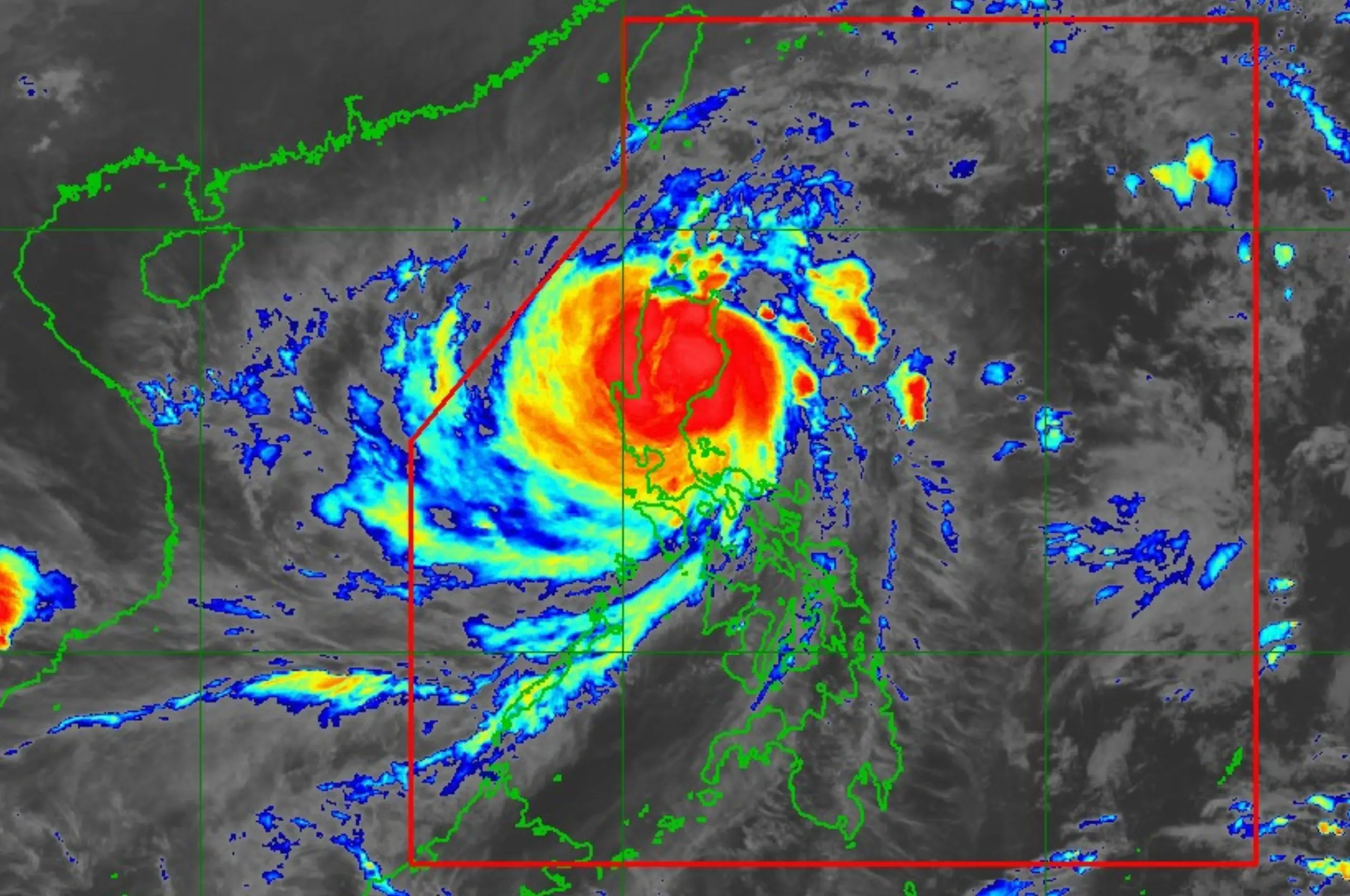
Calls to protect Luzon’s Sierra Madre mountain range resurfaced over the weekend as Typhoon Uwan battered parts of the country, displacing more than 1.3 million people and leaving at least two dead, according to the National Disaster Risk Reduction and Management Council (NDRRMC). The typhoon is expected to exit the Philippine Area of Responsibility by Tuesday, November 11.
On social media, some users repeated a familiar claim: that the Sierra Madre breaks the eye of the storm before it crosses Luzon. But speaking on DZMM, ABS-CBN meteorologist and weather anchor Ariel Rojas explained that while the mountain range can distort a typhoon’s internal structure, its weakening effect is limited.
“‘Yong structure ng bagyo [ay] vertical, patayo po ‘yan,” Rojas said, comparing the eye of a storm to a Slinky toy. He explained that when the storm’s vertical column interacts with mountainous terrain, its structure becomes distorted. “’Di ba ‘yong Slinky pag pinatayo mo at ini-slant mo, hindi mo na makikita ‘yong end-to-end na butas. ‘Yan ang ginagawa ng bundok,” he said.
However, Rojas clarified that the typhoon’s center does not disappear. “Sa radar, nakikita pa rin ‘yong sentro ng bagyo,” he said, adding that the Sierra Madre’s effect on typhoon intensity is minimal. “In a way, puwede niyang pahinain nang bahagya ‘yong bagyo. Hindi siya significant na weakening.”

Storm chaser Josh Morgerman echoed this on Facebook. “The Sierra Madre chain weakens typhoons after they make landfall on the east coast of Luzon,” he wrote. “These mountains do not protect the east coast of Luzon, which regularly experiences some of the strongest tropical cyclone impacts in the world.”
Despite this, protecting the Sierra Madre remains crucial. The mountain range is threatened by mining and deforestation, with consequences for biodiversity and climate resilience. According to the Climate Change Commission, the Sierra Madre serves as a major carbon sink, absorbing more carbon than it emits. The range is also home to around 3,500 plant species, more than half of which are endemic to the Philippines.