

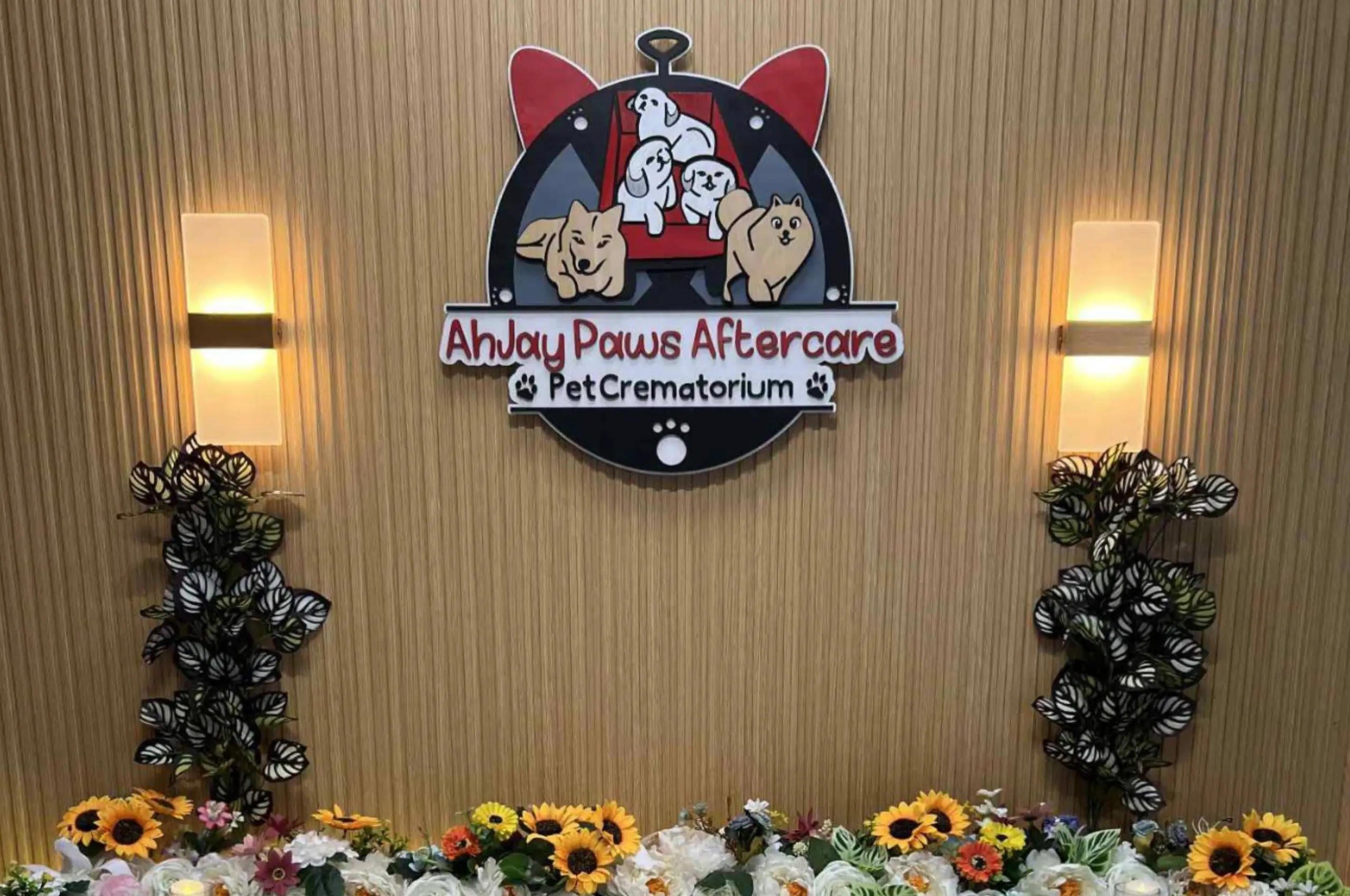
On October 31, the remains of 26 dogs and three cats were discovered inside a plastic bag, with organized names and weights, laid out on a vacant lot in San Jose del Monte, Bulacan. According to initial police investigation, several witnesses saw a white van unload sacks containing the deceased pets on October 29, and nearby residents reported a foul smell a day later. The culprit? A pet crematorium.
It was Luna and Furry Siblings, a volunteer animal rescue service, who first shared the news on Facebook, calling for public help in identifying who committed the gruesome act. Their post eventually sparked major outrage from pet owners all over the country and led to the identification of Ahjay Paws Aftercare Pet Crematorium, located in Bacoor, Cavite.
In a statement, the Philippine Animal Welfare Society (PAWS) called for a nationwide investigation of crematorium operations. “We urge the DILG, DOH, DENR, BAI, DTI, PNP, and NBI to investigate possible violations involving business permits, sanitation, environmental regulations, consumer protection, criminal laws, and ensure that affected pet parents have access to appropriate legal remedies,” the group said.
Following the first report, PAWS also found 31 deceased dogs in eight sacks on November 3, whose remains had reportedly been at the site in Bulacan since November 2025.
While the National Bureau of Investigation (NBI) probe remains ongoing and as different animal rescue groups uncover more locations of dumpsites, here are existing Philippine laws and regulations that may provide grounds for holding people accountable for the improper handling and disposal of the animals’ remains.
THE ANIMAL WELFARE ACT OF 1998
The Animal Welfare Act of 1998 is the landmark Philippine law that protects and promotes the welfare of all animals in the country by “supervising and regulating the establishment and operations of all facilities utilized for breeding, maintaining, keeping, treating or training of all animals either as objects of trade or as household pets.”
An amendment to the 1998 act, Republic Act No. 10631, was signed into law in 2013 to strengthen animal protection by covering both the physical and psychological well-being of animals, and raising penalties for abusers.
If the animal dies from cruelty or neglect, the perpetrator will be subject to imprisonment of one year, six months, and one day to two years, and/or a fine not exceeding P100,000. If the animal is severely injured and needs human intervention to survive, the person is subject to imprisonment of one year and one day to one year and six months, and/or a fine not exceeding P50,000.
Meanwhile, if the animal experienced cruelty, maltreatment, or neglect but can survive on its own, the person could be subject to imprisonment of six months to one year and a fine not exceeding P30,000.
PAWS clarified that the illegal dumping in itself does not establish a violation of the Animal Welfare Act of 1998. However, Senator Kiko Pangilinan said in a statement that he would include pet crematoriums in his Senate Bill No. 2501, or the proposed Revised Animal Welfare Act (also known as Dolly’s Act), which aims to establish an Animal Welfare Bureau to enforce animal welfare standards.
“Hindi katanggap-tanggap na pagkakitaan ang pagdadalamhati ng mga pet owner na nagbayad para mabigyan ng maayos at marangal na huling hantungan ang kanilang mga alagang hayop. Kung mapatutunayang niloko sila, dapat managot ang mga nasa likod nito,” Pangilinan said.
ECOLOGICAL WASTE MANAGEMENT ACT
Republic Act No. 9003, or the Ecological Solid Waste Management Act, governs proper waste and environmental protection in the country. Under Section 49 (1), the unauthorized, improper disposal of waste or remains in public spaces is prohibited, and the penalty for violation could range from P300 to P1,000, or community service to the local government unit (LGU) for a maximum of 15 days.
ESTAFA
Beyond the illegal and improper disposal of remains, pet owners may also seek legal remedies if they are defrauded or deceived by the businesses they paid to handle their deceased pets.
Article 315 of the Revised Penal Code (RPC) penalizes swindling or estafa in the Philippines. As stated in the RPC, “any person who shall defraud another by any of the means” constitutes a swindler, and the penalty depends on the amount or the specific violation established.
Pangilinan said in his Facebook post that the crematoriums violated this law as they tricked the pet owners into paying for something that their business did not actually fulfill. For those involved in the illegal dumping, the penalty of prisión correccional in its minimum and medium periods shall be imposed.
FREQUENTLY ASKED QUESTIONS
On October 31, remains of 26 dogs and three cats were found in a plastic bag on a vacant lot in San Jose del Monte, Bulacan. Volunteer group Luna and Furry Siblings publicized it, and the outrage led to the identification of Ahjay Paws Aftercare Pet Crematorium in Bacoor, Cavite.
Not by itself. PAWS clarified that illegal dumping alone does not establish a violation of the Animal Welfare Act of 1998. Senator Kiko Pangilinan has proposed including pet crematoriums in Senate Bill No. 2501, the Revised Animal Welfare Act, also known as Dolly’s Act.
Under Section 49(1) of Republic Act No. 9003, unauthorized or improper disposal of waste or remains in public spaces is prohibited. Violators face a fine of P300 to P1,000, or community service to the local government unit for a maximum of 15 days.
Pet owners may seek legal remedies if defrauded by businesses they paid to handle their pets’ remains. Article 315 of the Revised Penal Code penalizes estafa, with penalties depending on the amount or violation. Pangilinan argued the crematoriums tricked owners into paying for services they did not fulfill.
If an animal dies from cruelty or neglect, the offender faces one year, six months, and one day to two years in prison and/or a fine up to P100,000. Lower penalties apply when an animal is severely injured or survives, with fines up to P50,000 or P30,000.
Recommended Video