


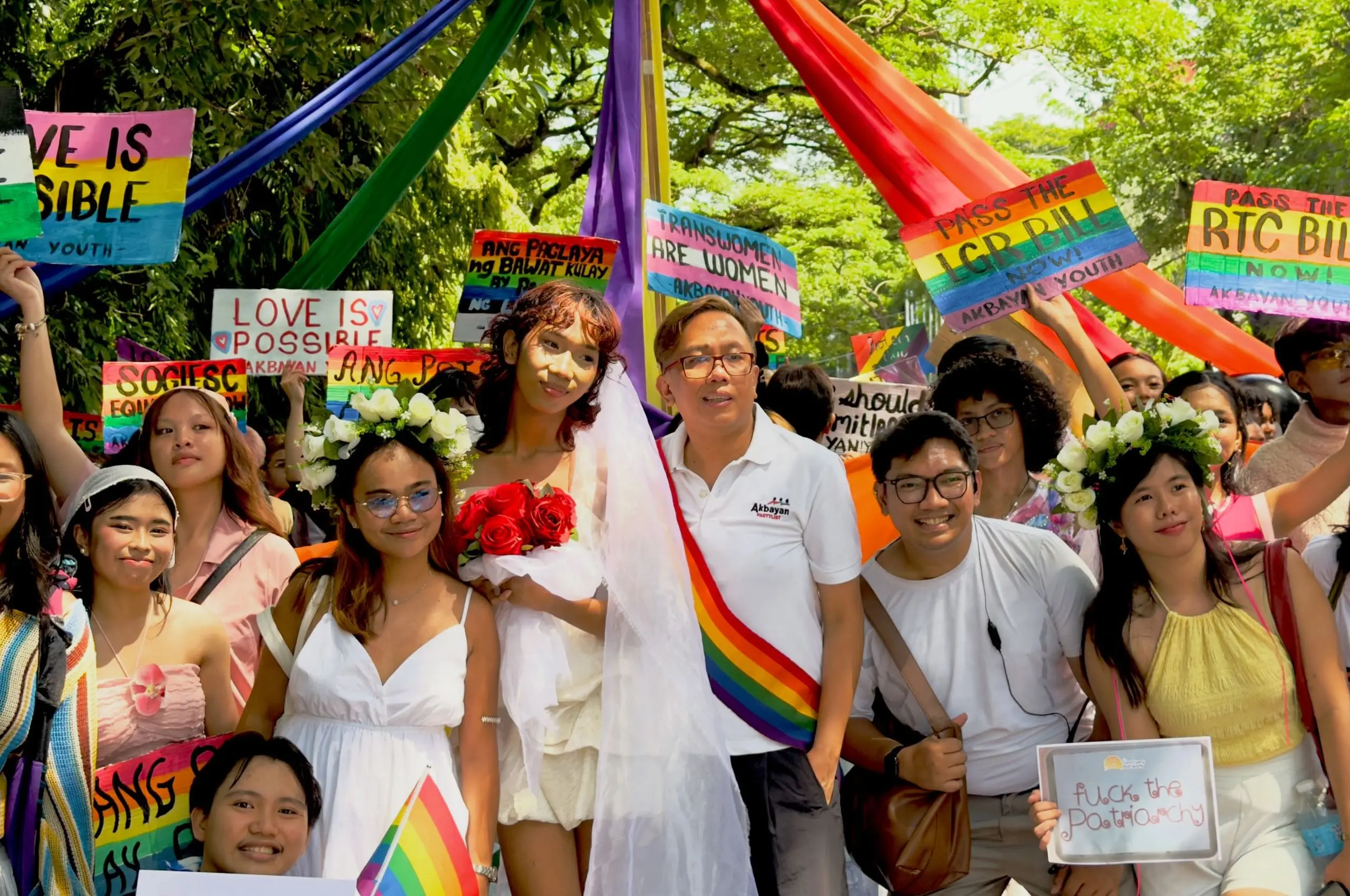
Pride Month is coming to an end, but the Marcos administration has yet to show a commitment to passing and implementing a national SOGIE equality law, even after President Ferdinand “Bongbong” Marcos Jr. expressed solidarity with the LGBTQ community earlier in June. “Kung seryoso ‘yung presidente doon sa kanyang solidarity with the community in the celebration of Pride, aba’y ‘wag lang basta bumati, ‘wag lang basta maki-celebrate,” Akbayan Representative Perci Cendaña tells Rolling Stone Philippines. “Dapat maglagay siya ng kanyang political will into saying na priority legislation ng administrasyon ang gender equality, particularly the SOGIESC Equality Bill.”
Cendaña says he’s “lost count” of the different versions of the SOGIE bill awaiting action in the House of Representatives. Ideally, these proposals would be consolidated into one bill before being passed in the third reading and transmitted to the Senate, but the House’s Committee on Women and Gender Equality has yet to conduct a hearing.
“[The SOGIE equality law] has to be engraved in [existing] programs. It has to shape and influence the way we do governance.”
“Andun pa lang tayo ngayon sa level na it has yet to have a committee hearing,” says the legislator. “Pero sa dulo, what’s very stark now is that, unlike in previous congresses na laging isa o dalawa lang ‘yung nag-author ng bill, ngayon, we have a number of versions in the House. Nakakatuwa na marami tayong mga kasamahan, especially among the younger generation of legislators, who are filing the SOGIESC Equality Bill and the Right to Care Bill.”
Cendaña has been involved in pushing for pro-LGBTQ legislation since his time as a student leader, having been the first openly gay chairperson of the University of the Philippines (UP) Diliman University Student Council and the president of UP Babaylan, the first and longest-running LGBTQ organization in the country and Asia. “During that time, the language was still ‘lesbian and gay,’” he recalls. “Hindi pa nag-e-evolve ‘yung SOGIE. In fact, if you trace the history of the SOGIE equality bill, the first version was just on sexual orientation. It was the anti-discrimination bill for lesbian and gay people.”
What Anti-Discrimination Ordinances Mean for National Legislation
The anti-discrimination bill’s first iteration was filed by the late former Senator Miriam Defensor-Santiago and former Akbayan Representative Etta Rosales in 2000, and was followed by many other versions filed in succeeding congresses. Over two decades later, a law addressing discrimination based on sexual orientation, gender identity, and expression (SOGIE) still hasn’t been passed.
While House and Senate bills remain in limbo — or as Cendaña calls it, “languishing at the House of Representatives” — local government units (LGUs) have already enacted ordinances to protect their constituents from SOGIE-based discrimination, like the provinces of Albay, Agusan del Norte, Bataan, Batangas, Cavite, the Dinagat Islands, Ilocos Sur, and Iloilo, and 32 cities and municipalities nationwide.

Cities have also started adopting Right to Care programs, which involve giving LGBTQ citizens a notarized special power of attorney (SPA) recognizing their right to decide to accept, refuse, and withdraw consent to medical treatments on their partners’ behalf.
In June 2025, San Juan became the second city in the Philippines to adopt the Right to Care card after Quezon City first launched it in June 2023. In March 2025, Iloilo City passed a Right to Care ordinance, while Parañaque City’s Council approved similar legislation in April. In May, Dasmariñas City and Mandaluyong also approved their own Right to Care ordinances, followed by Cebu province in June this year.
“Ang isang gobyerno [na nagtataguyod ng] diversity, equity, and inclusion ay isang makataong gobyerno.”
The increasing number of LGUs adopting anti-discrimination and Right to Care ordinances is promising for Cendaña. “This tells us na talagang mayroong totoong clamor for these kinds of policies. This reinforces our case for national legislation,” he says. “Napakahalaga ng efforts at the LGU level kasi nakikita natin dito ‘yung puwersa ng community of advocates at the local level, which eventually could be amplified at the national level.”
According to Cendaña, the Right to Care bill has already been passed to the House Committee on Health and is ready for consolidation as of early June. “Hopefully, within the year, we get to report it out sa plenary at sana makapasa na tayo on the second and third readings,” he says. As for the SOGIE equality bill, the lawmaker says he “hopes to see that kind of political will” among national legislators.
What Comes After the SOGIE Law and Right to Care?
When asked what steps the government would have to take after passing the SOGIE and Right to Care bills into law, Cendaña says, “This has to be really implemented, not just through the IRR [implementing rules and regulations]. It has to be engraved in [existing] programs. It has to shape and influence the way we do governance.”
The solon cites anti-discrimination ordinances in Quezon City and other LGUs as an example. “Hindi siya simpleng isang polisiya lamang. It cuts across programs for housing, for ayuda, for social services, and even, most especially, for health and education.”
“Kinakailangan talaga ng reorientation of governance towards diversity, equity, and inclusion, hindi dahil makakabuti ito sa LGBTQ community lang, kundi dahil ang isang gobyerno [na nagtataguyod ng] diversity, equity, and inclusion ay isang makataong gobyerno,” he adds.
Frequently Asked Questions
The SOGIE Equality Bill is proposed legislation against discrimination based on sexual orientation, gender identity, and expression (SOGIE), first filed in 2000 in the Philippines. Over two decades later, it remains stalled, with multiple House versions still awaiting a Committee on Women and Gender Equality hearing.
Perci Cendaña is an Akbayan Representative and longtime LGBTQ rights advocate, formerly the first openly gay UP Diliman student council chairperson and UP Babaylan president. He continues pushing for the SOGIE Equality Bill and Right to Care Bill in Congress.
The Right to Care bill grants LGBTQ partners a notarized special power of attorney to make medical decisions for each other, while the SOGIE Equality Bill addresses broader anti-discrimination protections. The Right to Care bill has reached the House Committee on Health and is currently for consolidation.
Provinces including Albay, Agusan del Norte, Bataan, Batangas, Cavite, the Dinagat Islands, Ilocos Sur, and Iloilo have enacted SOGIE-based anti-discrimination ordinances, alongside 32 cities and municipalities nationwide, even as national legislation remains pending in Congress.
Cendaña argues that expressing solidarity during Pride Month is insufficient without concrete political action. He says Marcos should prioritize the SOGIE Equality Bill as administration legislation, rather than offering symbolic greetings without backing the bill’s passage.
Recommended Video