In our warming world, typhoons have become stronger and more destructive. The Philippines experiences this firsthand with an average of twenty typhoons hitting it in a year.
As of this writing, communities across the country are only beginning to recover from the 16th tropical cyclone this 2024: Typhoon Man-yi, locally known as Pepito. It is the sixth tropical cyclone in less than a month to wreak devastation on our islands. Communities in the Bicol region of southern Luzon and the Cagayan region in the north, meanwhile, are still recovering from Super Typhoon Kristine, a severe tropical storm that made landfall in October affecting 4.2 million Filipinos, taking at least 81 lives in its wake. As I write this, relief operations are still underway in numerous communities to help families recover.
My rage began during our first on-ground response to the devastating typhoons of 2020. Together with numerous youth organizations, volunteers, donors, artists, and community workers, we began a nationwide typhoon relief effort called The Climate Emergency and Typhoon Relief Fund to support survivors of Typhoon Rolly and Ulysses — Category 4 and 5 typhoons that ravaged the Bicol region just 10 days apart. These typhoons were the strongest of that year, leaving whole areas submerged in water and many of its survivors homeless. Both typhoons pushed the Philippines into despair, exacerbated by the fact that these occurred under the strict and militarized COVID-19 lockdown of the Duterte administration.
When we do raise ourselves and each other, it is in the belief of a better life than this reality.
In December 2021, Typhoon Rai, locally known as Odette, slammed into the southeastern part of the country. It was a Category 5 typhoon, its damage insurmountable for me to write down. Our youth group network ran nationwide relief operations once again as communities were left lost and vulnerable.
Surviving, not resiliency
Our relief operations come in two parts. Once immediate aid is stabilized, we move on to long-term solutions where we raise more money to rebuild houses and schools. With this fund, we’re also able to provide boats for fishermen, starter packs for farmers, and plant more trees in critical areas to mitigate floods in high-risk areas. In our early years, we distributed water filters that could last ten years, and solar light systems that could last up to five. We knew the impacts of surviving a typhoon would last a lifetime.
The youth thought ahead — prepared, planned, gathered resources, and implemented. They continue to do so knowing that, in order to protect our people, we need to fill a huge gap that elected officials insist on ignoring. It’s a question that runs in my head constantly: “Why do politicians insist on being incompetent throughout their terms? Is it to normalize an inefficient and corrupt system so we don’t expect anything more from them ever? Or were they never competent enough for their role in the first place?”
I can’t wrap my head around it. Why do they even run?
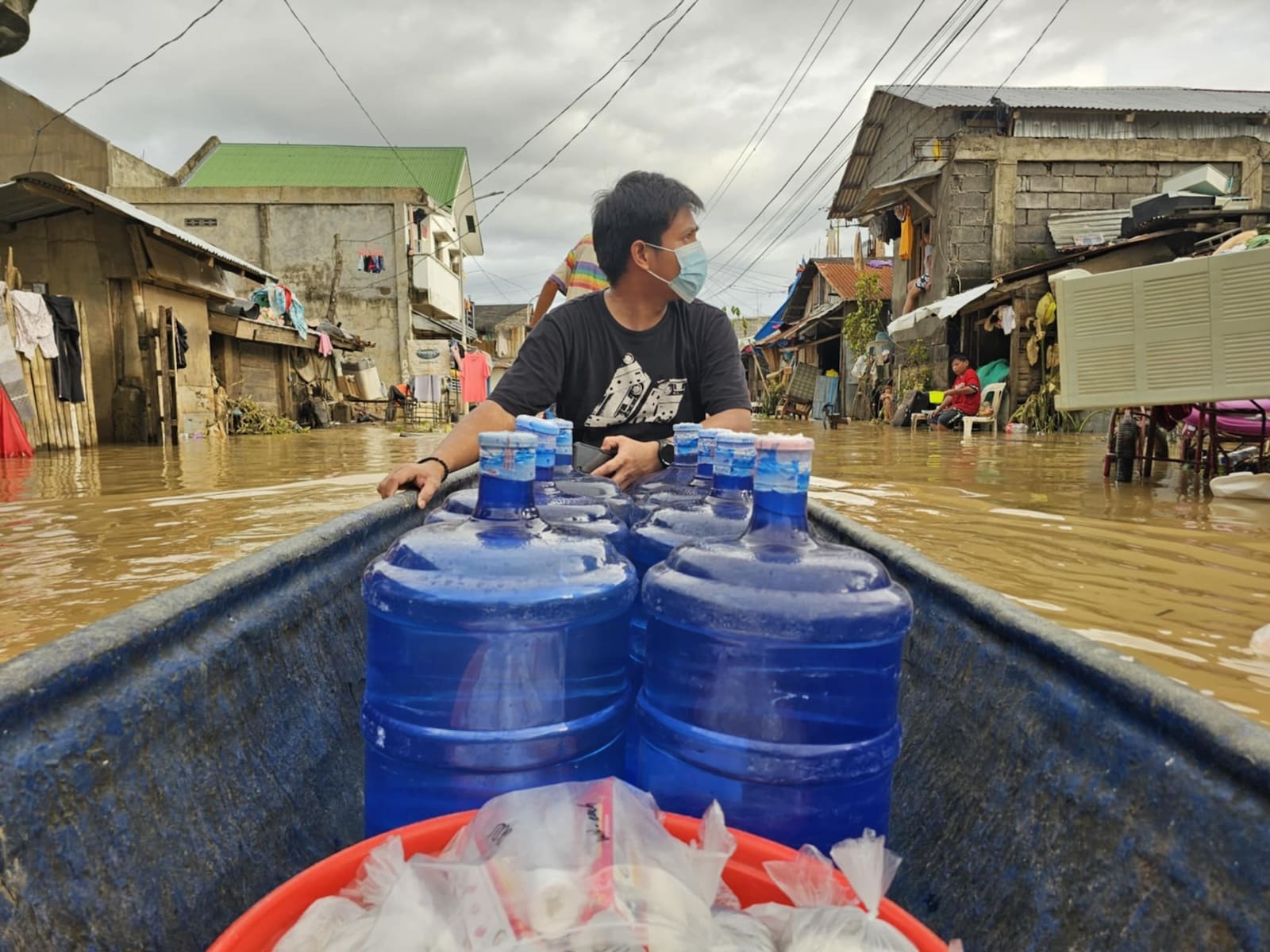
The word “relief” comes from an old Latin word “relevare,” which means “to raise again.” “To alleviate.” We are in the fourth year of operating relief, my fourth year of watching over and over how our people are subjected to the ruthlessness of politicians. I remember when the same public officials and media revered typhoon victims, calling them resilient — as if the catastrophes were something out of the blue.
This is not resiliency, this is surviving — surviving the inadequacies of those who swore to serve us. We are not just battling the effects of the climate crisis, we are battling our own people. When we lift each other from the mud, it is not just the mud from the apathy of the Global North, it is the mud from the indifference of fellow Filipinos. So when we do raise ourselves and each other, it is in the belief of a better life than this reality. It is because of hope. And the response of these politicians? To take advantage of it.
During the early years of our relief operations, I recall an instance where we worked with a local youth group in Metro Manila to prepare packs of fresh food for distribution to evacuation centers. The packs were locked up in a room while two rivaling political families could not agree to how these could be distributed. Food were left to rot, their constituents were left hungry.
In the Bicol region, many of the typhoon survivors we encountered in devastated areas of Camarines Sur refused to accept relief goods out of fear that receiving such from another entity (even a non-politically tied one like For the Future and Kids for Kids) would cancel their voter’s fee, a not-so-secret bribe of around P2,000 to P10,000 per vote. In other areas, we’ve had balikbayan boxes of relief goods taxed at checkpoints for a few hundred pesos each, and canned goods held at ports until an official extorted enough money off us for its release, only to be loaded into vans with politicians’ faces on it.
I’ve witnessed entire communities left without shelter, food, or a plan for their children. One family that comes to mind are the Verdejos, typhoon refugees who moved to the Tabgon area in Caramoan from another town after losing their home due to Typhoon Rolly and Ulysses in 2020. The family sought shelter by building a makeshift hut in a field with their two small boys. Each night, the mother lost sleep keeping snakes away from her children. Their new neighbors were the ones who gathered resources to secure their family’s safety.
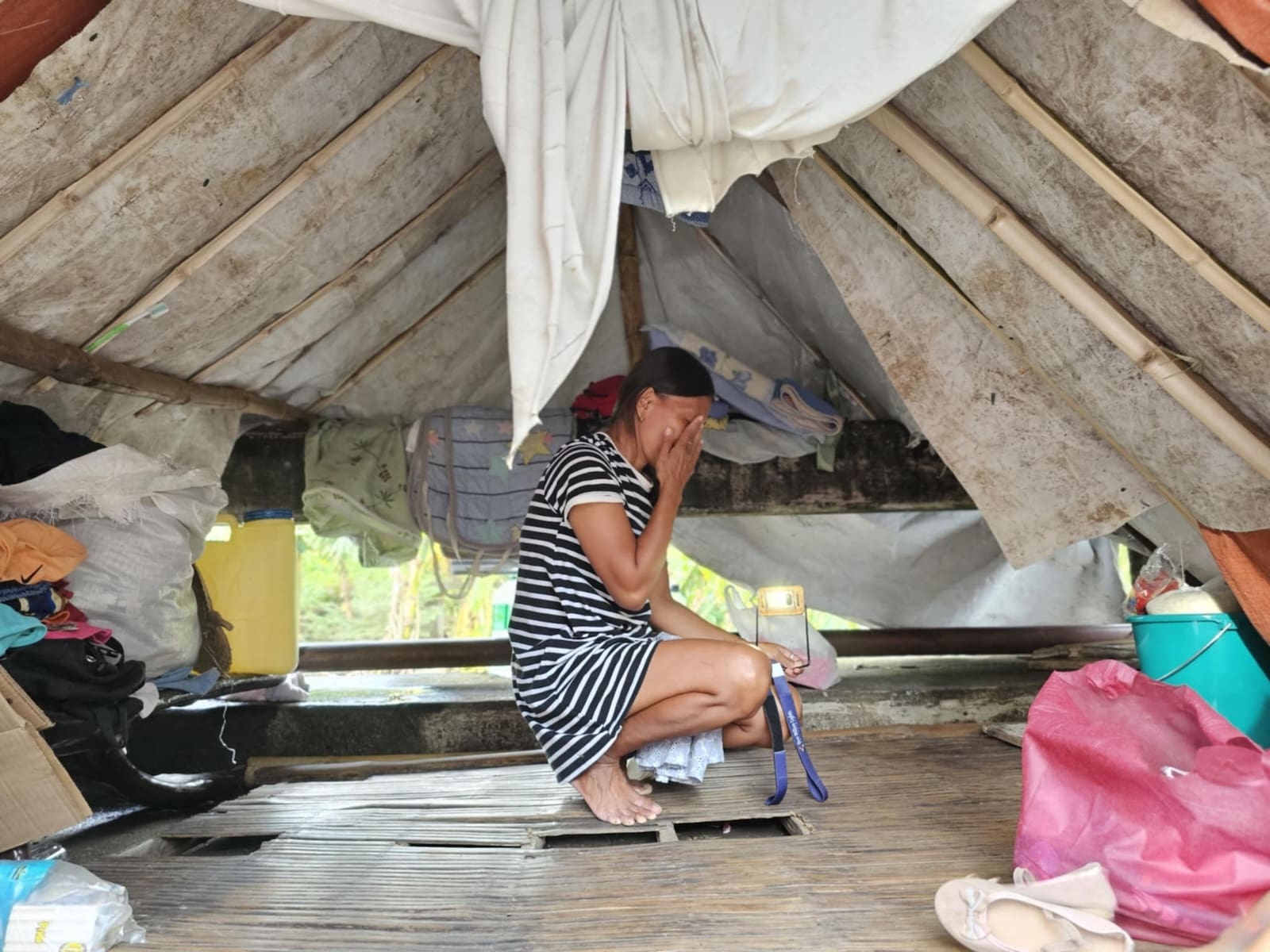
Salve, a child I met in 2021, ate only gabi (taro) and salt for a whole year after Typhoon Ulysses. Her family lost everything. And because one of the biggest television networks in the country, ABS-CBN and its provincial radio stations, were shut down, they had no way of knowing that the typhoons were coming, leaving them unprepared. We rallied to bring her and her siblings back to school to fulfill their father’s only dream: for them to graduate.
Gaming the crisis
Even with an opportunity to do something good, certain people will still choose to do the opposite. My rose-tinted glasses shattered to this thought.
These politicians have all of our resources to make a difference. So why don’t they?
I still can’t help but feel like they see crises as a silly game to win. The floods are back, who can get the most publicity? The typhoon hit, who can stamp their face on the most relief bags? The people are hungry, who can take the most pictures from cash handouts? And at the end of all that, what are we left with?
It is our right to live better than this. And it is their propaganda to tell us otherwise.
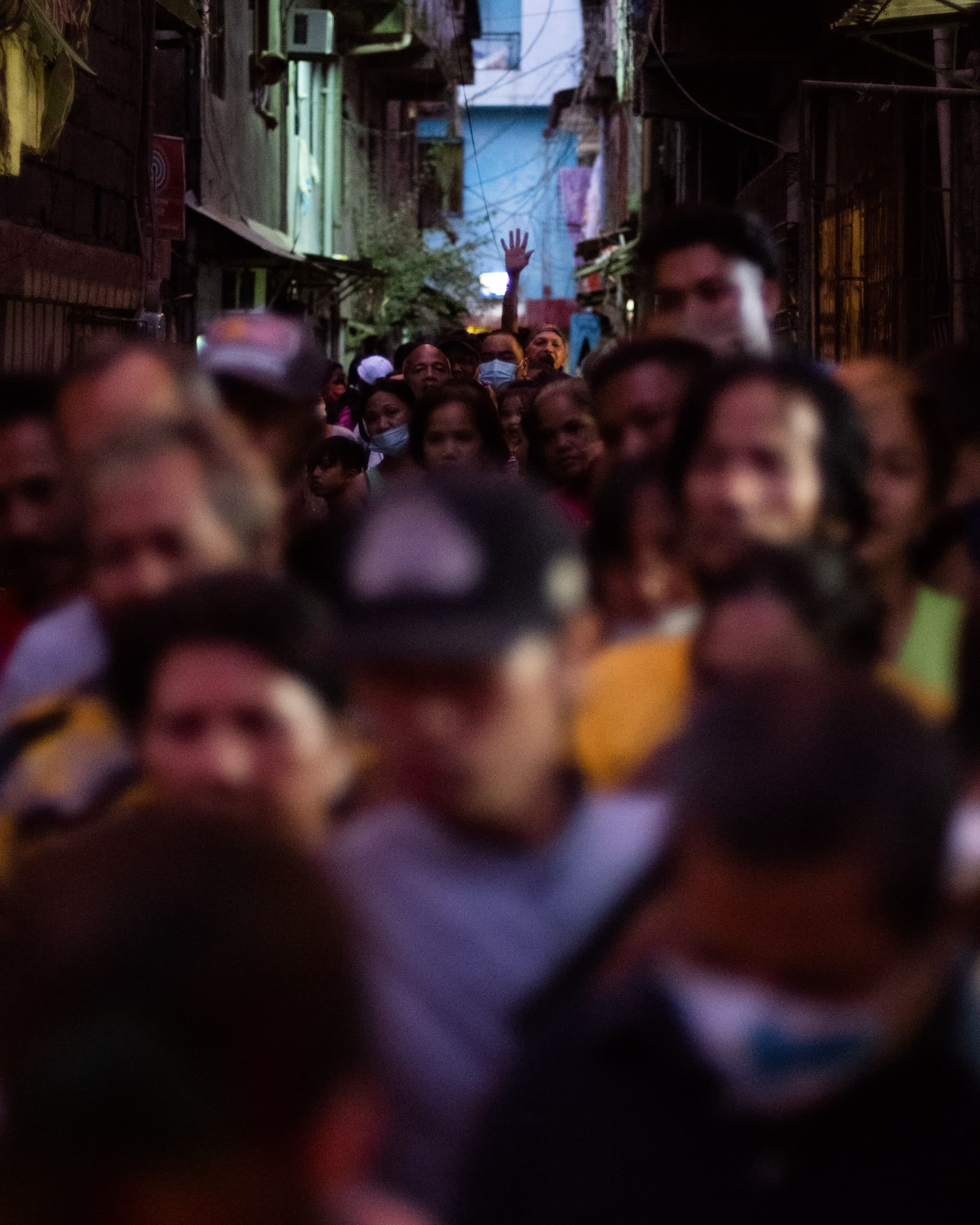
The day after Typhoon Kristine hit, our on-ground lead Don Razon, sent us a photo inside an evacuation in Naga City. It was a hall and stairway packed to the brim with typhoon survivors, many of them children. Food was needed urgently, Don told us. People needed to eat, but there were no provisions ready in the makeshift center. Even if the typhoon was expected, there were no preparations. So the gap was filled once again by students, who donated their allowance, office workers with their week’s pay — all of that kindness servicing hot meals to the survivors.
We deserve cities that are prepared for the calamities we know are coming. We deserve leaders that stress the need to mitigate floods and who know, at their core, the pain of this destruction. We deserve mayors and governors who plan for disasters. We deserve lawmakers who know that protecting the environment is tantamount to protecting its citizens. We deserve all of it. It is our right to live better than this. And it is their propaganda to tell us otherwise. It is their victory when we squeal in delight at a cash handout, waist deep in flood water.
Let these politicians’ disaster response be their bid for re-election. Let us be discerning enough to distinguish who is running for power and who is running to serve. I believe we are capable of seeing their intent for what it is — a product of their own corruption and greed. For when we rise again, may it be for good, may it be for long. May it be because we led ourselves to light and found leaders who when offered a chance, will always choose to do what is good.
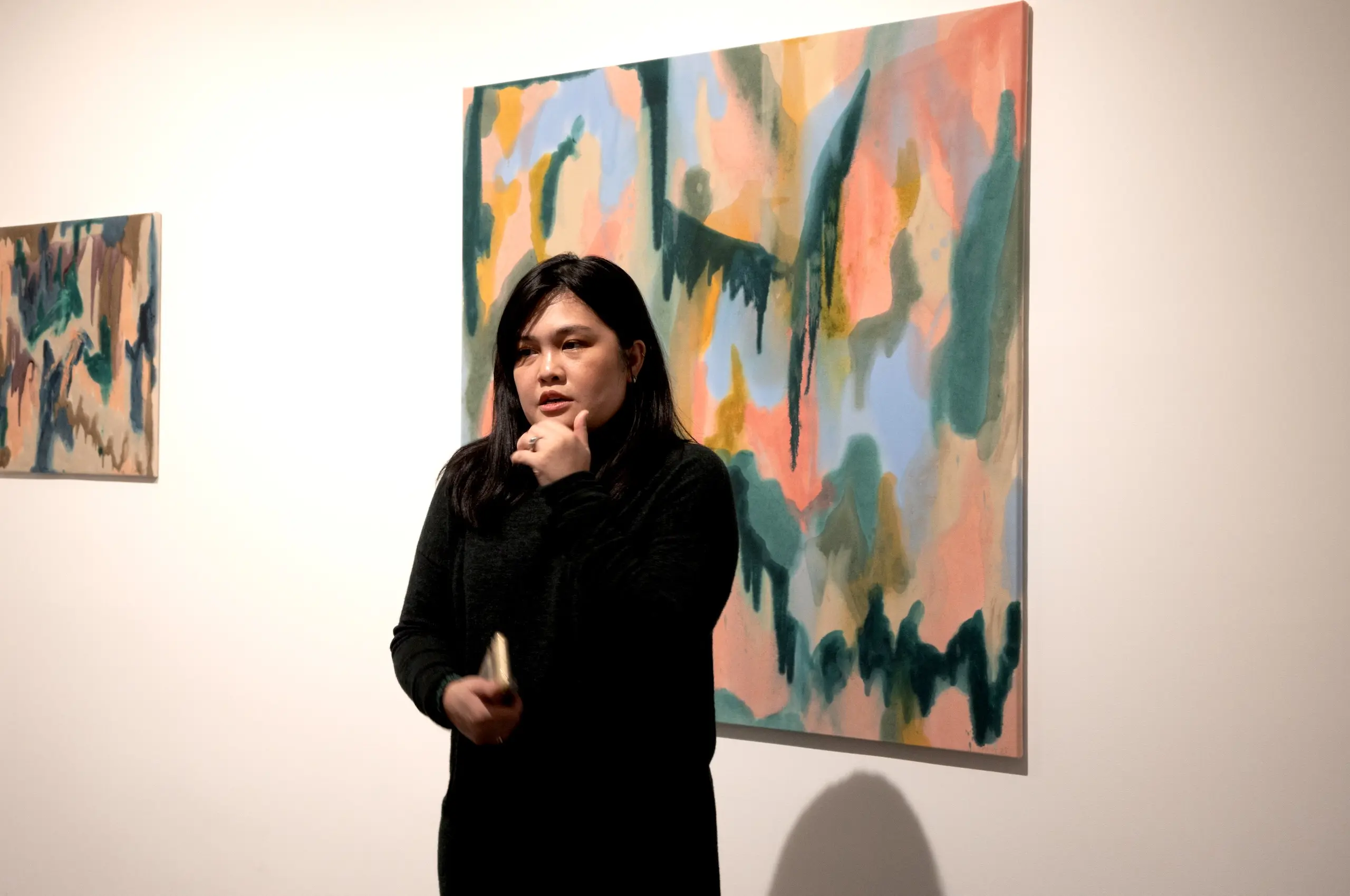
Issa Barte is a Filipina artist and co-founder For the Future PH, a youth-led non-government organization. Her current work focuses on Filipino culture, memory, and identity and how these can be weave into climate discussions and solutions. Barte is 2021 National Geographic Young Explorer, and 2023 National Geographic Meridian explorer.
Rolling Stone Philippines November 2025 Issue, Now Available at SariSari Shopping