

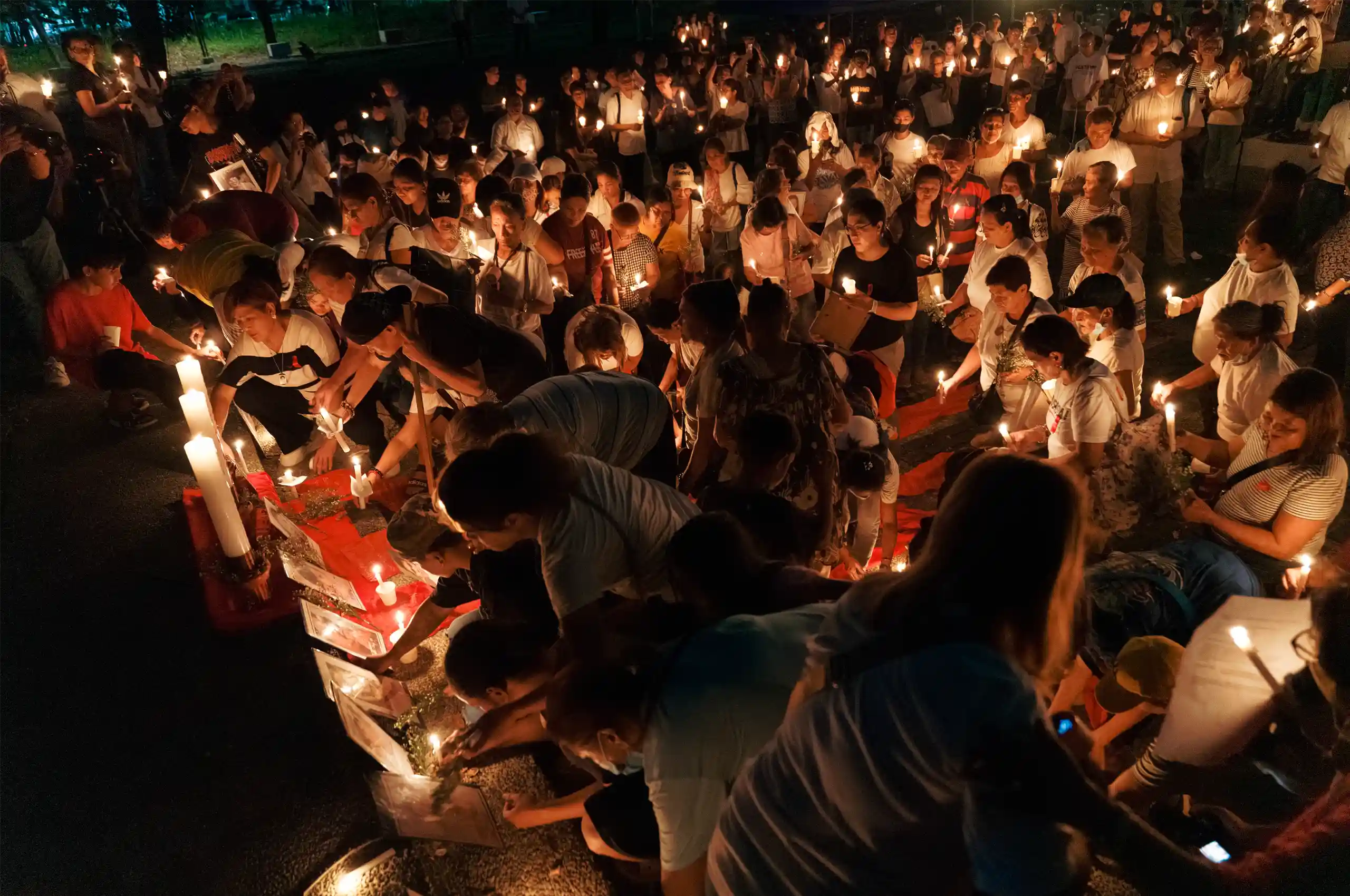
On July 1, victim-surviors of the Philippine drug war, alongside artists, journalists, academics, church lawyers, and human rights defenders, gathered in Bantayog ng mga Bayani in Quezon City to mark ten years of Project Double Barrel, the Duterte administration’s nationwide anti-illegal drugs campaign.
The gathering was part of the launch of DEKADA (Dekada ng Sama-samang Pag-alala, Pagkakaisa para sa Hustisya), a multi-site and multi-disciplinary series of exhibitions, film screenings, discussions, and public interventions commemorating the thousands of lives lost to extrajudicial killings from the drug war.
“The coalition draws a stark historical parallel to this date: Just as the signing of Proclamation 1081 institutionalized Martial Law on September 21, 1972, July 1 stands as the foundational date of a decade of state-sanctioned violence and impunity,” reads a statement by DEKADA as the group calls for accountability in light of Senator Ronald “Bato” Dela Rosa’s arrest order by the International Criminal Court (ICC), as well as former president Rodrigo Duterte’s trial in The Hague for crimes against humanity.
“Madali tayo makalimot sa mga nangyari. Ang dami ng nangyari sa atin, just like martial law,” Nanette Castillo, whose son Aldrin Castillo was shot five times by motorcycle-riding vigilantes in 2017, says about whether she feels Filipinos have already forgotten how Duterte’s drug war has impacted the nation. To her, what has changed about the Philippines has much to do with what has become normalized.
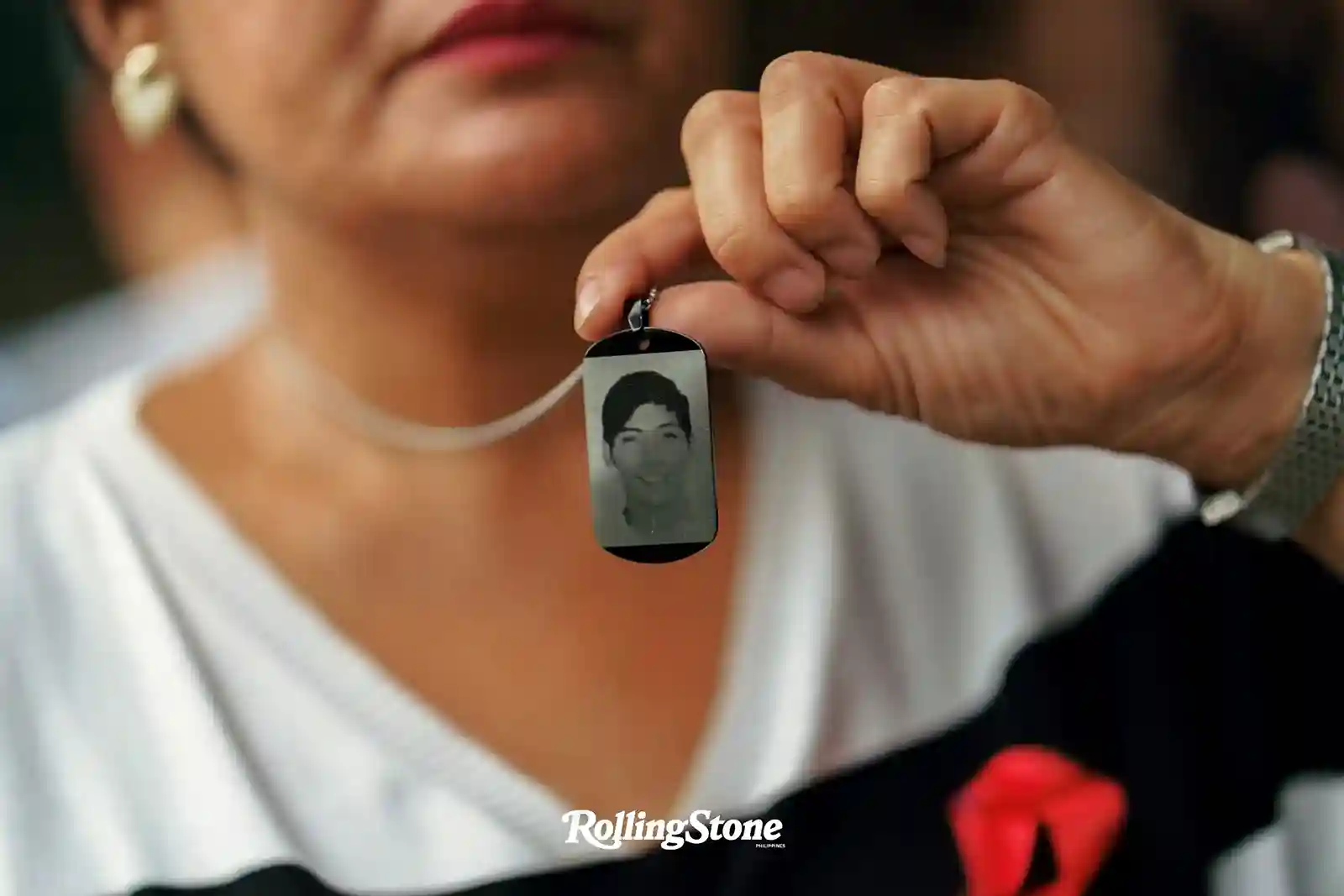
“Napansin ko na nakaupo na [si Duterte] nung sunod-sunod na yung patayan. Parang naging normal na yung pagpatay. At yung mga tambay sa labas ay tawag salot at addict, kahit di gumagamit o baka out of school youth lang. Nalagyan na sila ng label kaagad na hindi sila dapat mabuhay.” This normalization of violence became especially apparent to Castillo at the level of the government.
“Bukod doon na umabuso ang gobyerno, lalong-lalong ng mga kapulisan. Masyado umabuso, mabilis ang kamay sa baril. Parang wala nang due process.”
Every Filipino Deserves Due Process
According to DEKADA’s statement, its participating organizers and individuals “hold steadfast to a fundamental principle of justice: Every Filipino deserves due process.” In doing so, the group hopes to mark the decade by moving narratives away from “violence and spectacle to center the humanity of those affected.”
Raphaneita Flores, a traffic enforcer from Caloocan, recounts how losing her sister to the drug war permanently changed the course of her life. “Hindi ko sukat akalain na isa yung pamilya ko na ma-bibiktima,” she says. “Kinuha nila yung isa kong kapatid na kaagapay ko sa buhay at lalo na syempre para sa mga anak niya.” As a result, Flores is now left with the responsibility of taking care of her sister’s children.
“Ngayon ako yung sumusuporta sa mga anak niya. May lima akong anak pero may lima pa akong inaalalay. Sobrang laking responsibilidad yung naiiwan sa akin,” Flores says.
While the government has only acknowledged the deaths of 6,525 related to Duterte’s war on drugs, groups like Human Rights Watch, Amnesty International, and the ICC estimate up to 30,000 fatalities during Duterte’s reign. Data from the Philippine National Police (PNP) and the Philippine Drug Enforcement Agency (PDEA) also state that 342,216 have been arrested in anti-drug operations during his administration, with 122 children killed during drug-related operations from July 2016 and December 2019, according to World Organization Against Torture.
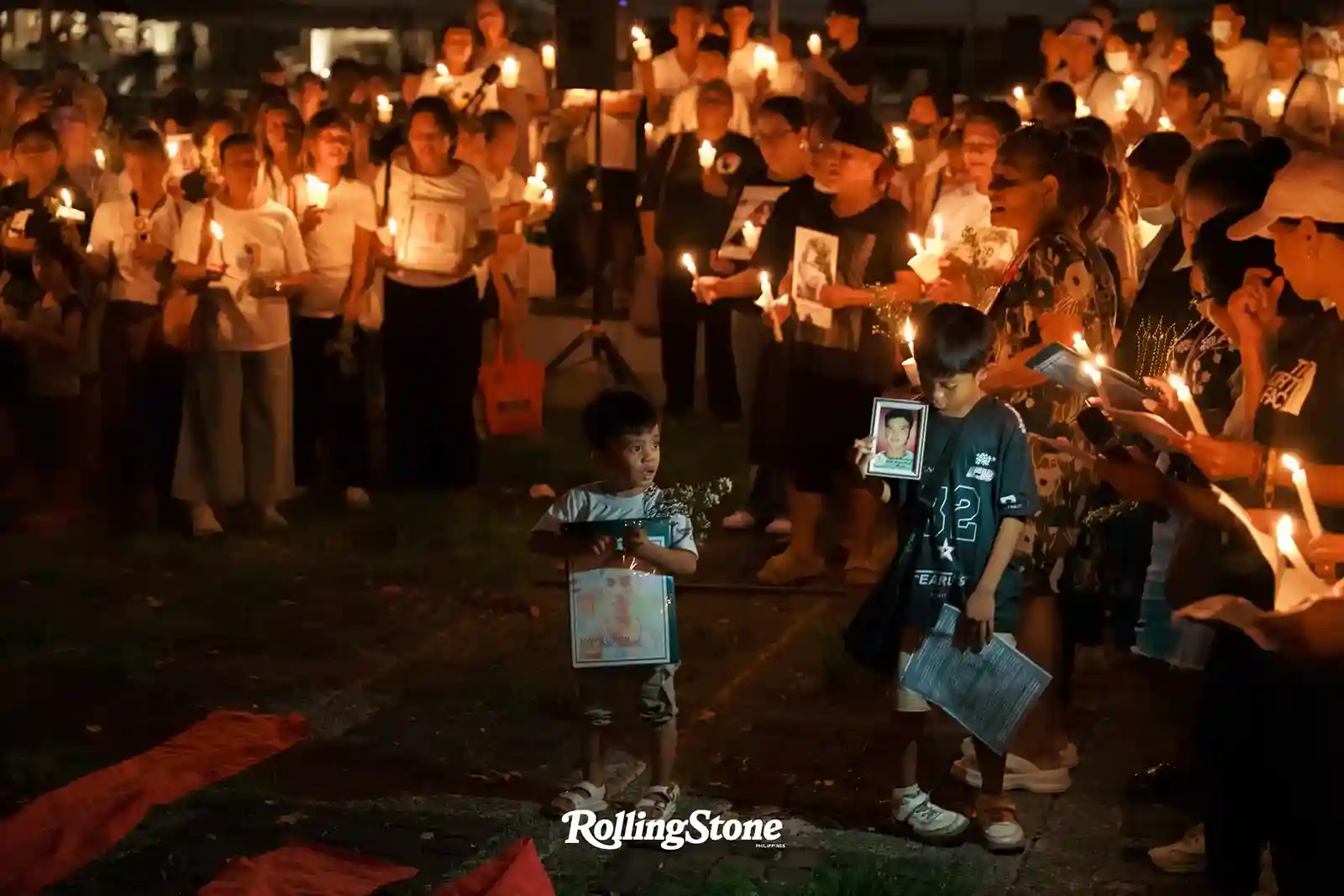
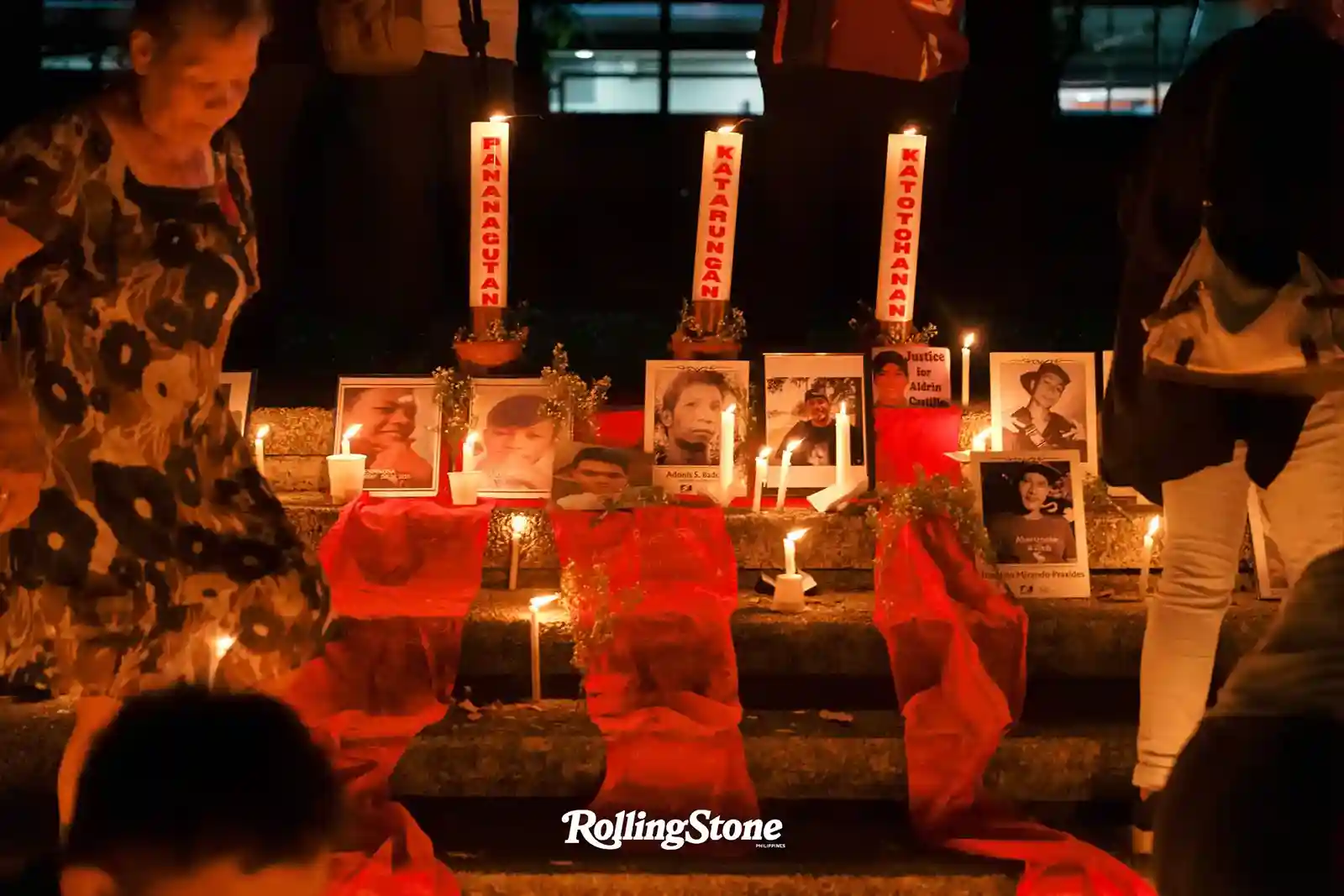
Yet, only five drug war killings have led to convictions, according to a report by Amnesty International which, to family-survivors like Castillo and Flores, remains a grave injustice.
“Sa amin, pag sinabi ang due process, dapat pantay-pantay. Pero kasi sa nangyayari ngayon, parang sila lang ang pwedeng gumamit ng due process,” Flores says, referring to Duterte’s trial in The Hague, as well as Dela Rosa’s call for proof of his arrest warrant. “Yung mga mahirap na ordinaryong tao na walang kakayahan, hindi pwedeng gumamit ang sinasabi ng due process.”
“Some lawyers talk about what we need is the rule of justice, not the rule of law, because the rule of law has been so slow and so weak in actually delivering justice to the most needy especially, to the poor and to those who are at the margins,” says Rebecca Lawson, a missionary and organizer of Rise Up for Life and for Rights. With most cases taking eight to ten years to try a case, according to Lawson, she believes the slow and inaccessible nature of the Philippine justice system mostly favors the most privileged part of society.
“We can’t stop until those who are accountable for extrajudicial killings are actually charged and convicted for what they have done,” she adds, “because that’s what’s really going to bring more freedom, more democratic space to the Philippines, which is what we need to renew, to recapture, but also to build beyond what it has ever been.”
Frequently Asked Questions
DEKADA (Dekada ng Sama-samang Pag-alala, Pagkakaisa para sa Hustisya), a multi-site and multi-disciplinary series of exhibitions, film screenings, discussions, and public interventions commemorating the thousands of lives lost to extrajudicial killings from the drug war.
FWhile the government has only acknowledged the deaths of 6,525 related to Duterte’s war on drugs, groups like Human Rights Watch, Amnesty International, and the ICC estimate up to 30,000 fatalities during Duterte’s reign. Data from the Philippine National Police (PNP) and the Philippine Drug Enforcement Agency (PDEA) also state that 342,216 have been arrested in anti-drug operations during his administration, with 122 children killed during drug-related operations from July 2016 and December 2019, according to World Organization Against Torture.
July 1, 2016, was when the Duterte administration legitimized Project Double Barrel, a nationwide anti-illegal drugs campaign in the Philippines.
The International Criminal Court has issued an arrest order for Senator Bato Dela Rosa, the former PNP chief under Duterte, and is trying former president Rodrigo Duterte in The Hague for crimes against humanity linked to the extrajudicial killings of the drug war.
Only five drug war killings have led to convictions, according to a report by Amnesty International — a gap that family-survivors like Nanette Castillo and Raphaneita Flores point to as proof that due process in the Philippines isn’t applied equally, especially for poor and ordinary victims.
Recommended Video