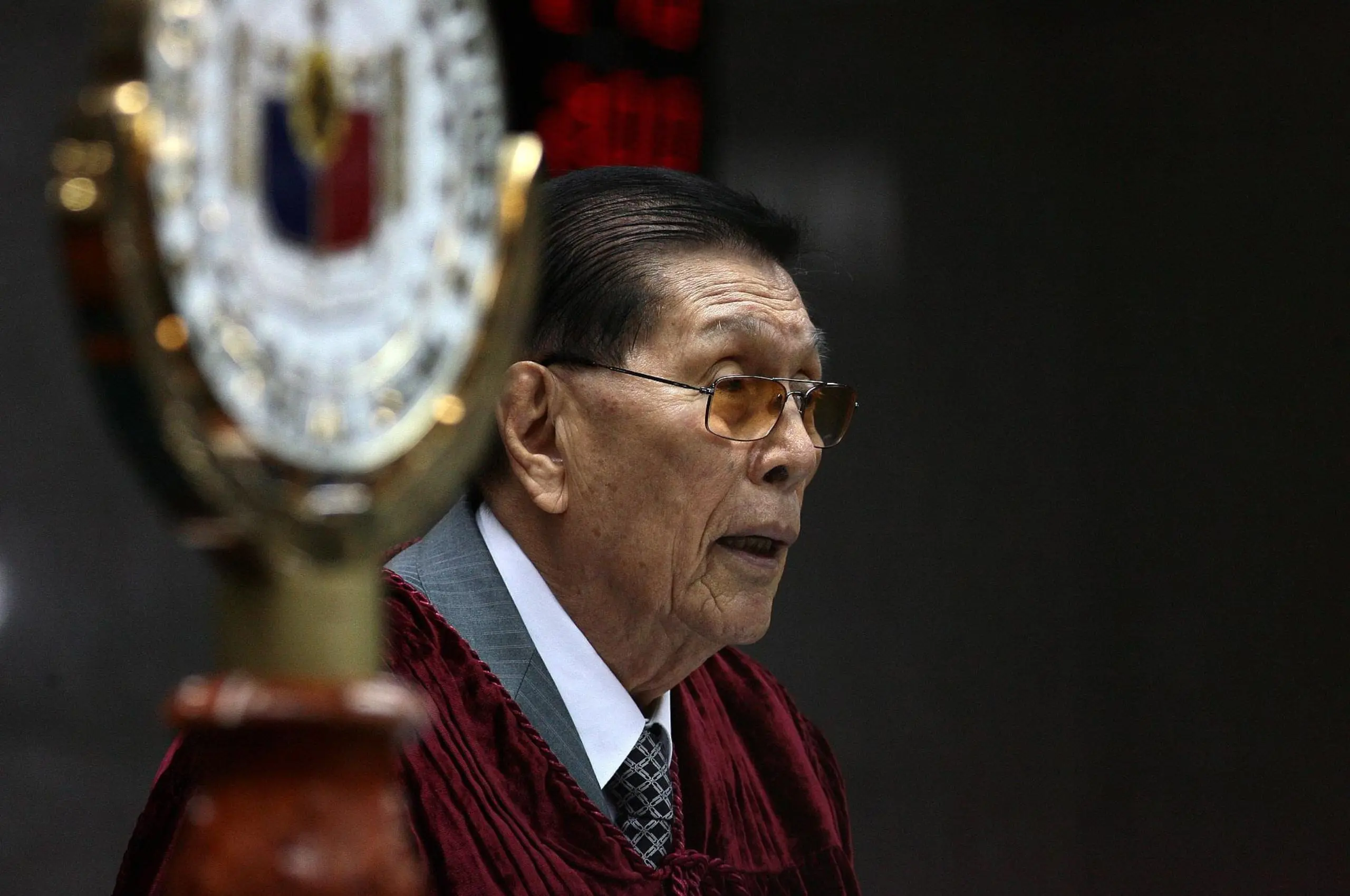
Few figures in Philippine politics have lasted as long or loomed as large as Juan Ponce Enrile. His public life spanned more than seven decades, crossing from the authoritarian rule of Ferdinand Marcos Sr. to the presidency of his son, Ferdinand Marcos Jr. He was both witness and participant in some of the country’s most turbulent eras: the declaration of martial law, the fall of the dictatorship, the transition to democracy, and the return of the Marcos name to power.
Enrile survived everything from World War II and the COVID-19 pandemic to corruption scandals and political betrayals. For generations of Filipinos, he represented both the brilliance and rot of the political class, using his mastery of law and power for self-preservation. His was not merely a career but a continuous negotiation with history — and history, time and again, let him back in.
1960s: On the Rise with Marcos
A Harvard-educated lawyer, Enrile entered public service in the 1960s under Marcos Sr., after previously taking care of the politician’s personal legal affairs. In 1966, he was appointed undersecretary of the Department of Finance in Marcos’ first presidential term, before being made commissioner of the Bureau of Customs. In 1968, he was appointed justice secretary.
1970s: The Martial Law Enforcer
In 1970, after Marcos won a second presidential term, Enrile was appointed the minister of national defense. He was central to the implementation of martial law, which suspended civil liberties, extended Marcos’ rule, and gave more power to the military. As defense secretary, Enrile oversaw the military establishment that sustained the Marcos dictatorship.
1980s: Turning Against Marcos — and the Failed Coups
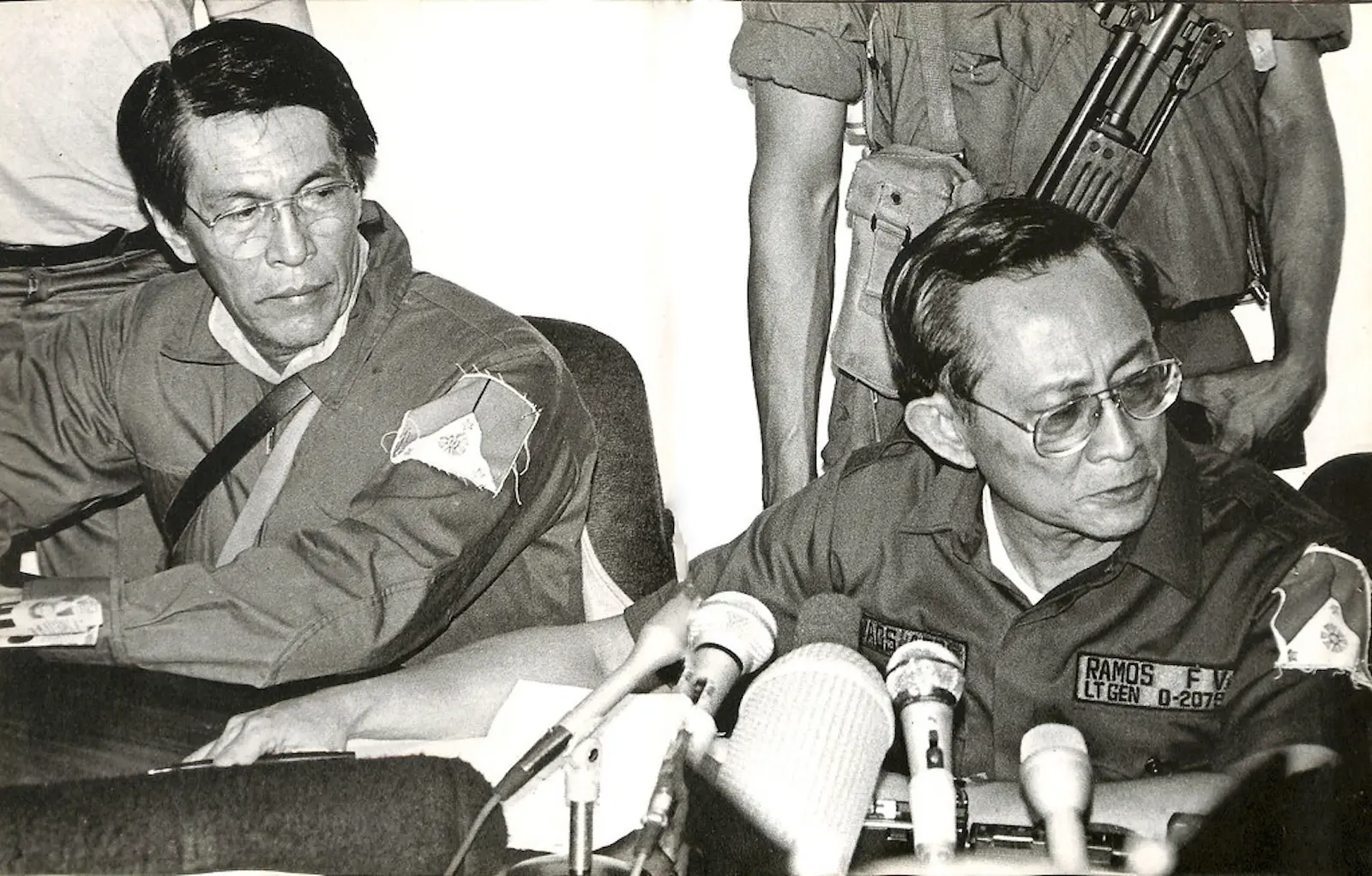
In the twilight of the Marcos regime, the president took control of the military, rendering Enrile powerless. This prompted the defense secretary to work with the Reform the Armed Forces Movement (RAM) led by then-Lieutenant Colonel Gregorio “Gringo” Honasan, which would attempt a coup in February 1986. While the coup failed, the People Power revolution saw Marcos removed from power and replaced by Corazon Aquino. However, the defense chief and RAM were accused of backing another coup attempt against the new president, and Enrile was kicked out of the cabinet.
1990s: Senatorship and the ‘Dagdag-Bawas’ Scandal
Enrile reemerged in the 1990s political mainstream, winning a seat in Congress in 1992 and then the Senate in 1995. The comeback, however, was marred by controversy, as he was implicated in the “Dagdag-Bawas” vote-rigging scandal that tainted the 1995 elections. Still, Enrile maintained his seat, and even sought P2.5 million in damages from senatorial candidate Aquilino Pimentel Jr. for accusing him of stealing votes.
2000s: The Pro-Erap Crusade
During President Joseph Estrada’s impeachment trial in 2000, Enrile was among several senators who voted against opening a letter that would purportedly prove Estrada guilty of graft and corruption. This inaction prompted the Second People Power Revolution, which sought to unseat Estrada. Enrile was also among many senators to show up to a protest against Estrada’s arrest in April 2001, joining Honasan, the late Miriam Defensor Santiago, and current Senators Joseph Victor “JV” Ejercito and Panfilo “Ping” Lacson.
2010s: The Pork Barrel Scam
In his later years, Enrile’s reputation took another blow. As Senate President, he was implicated in the Priority Development Assistance Fund (PDAF) or “pork barrel” scam, accused of funneling millions in public funds through fake NGOs in a scheme masterminded by businesswoman Janet Lim Napoles. Other lawmakers named in the case were former Senator Bong Revilla, Senator Jinggoy Estrada, and then-Senator Ferdinand “Bongbong” Marcos Jr., though only Revilla, Estrada, and Enrile would be indicted for graft.
2020s: The Final Return
Defying age and expectation, Enrile returned once more to the Malacañang Palace in 2022, this time as chief legal counsel to Marcos Jr. At 100 years old, the appointment felt full circle: the man who helped build the first Marcos regime had lived long enough to see to and serve in the second.