

The House Committee on Tourism has approved a measure consolidating several bills that seek the abolition of the travel tax. Should the bill be passed into law, outbound Filipino passengers no longer have to pay the travel tax, which ranges from P1,620 to P2,700. But what happens to the tourism and cultural programs it funds?
The Philippine Hotel Owners Association (PHOA) warns that by repealing the travel tax for Filipinos flying abroad, Filipino tourists will be more enticed to travel outside the Philippines for study, work, or leisure, rather than travel within the country.
PHOA said, “We should be focusing on inbound and not outbound tourism. We do not want to encourage overseas spending that boosts the economies of our neighbors. Instead, we should support our own hotels, resorts, and other tourism establishments and help our local workers […] The association asserts that a concrete, comprehensive replacement plan must be finalized before any talk of abolition begins.”
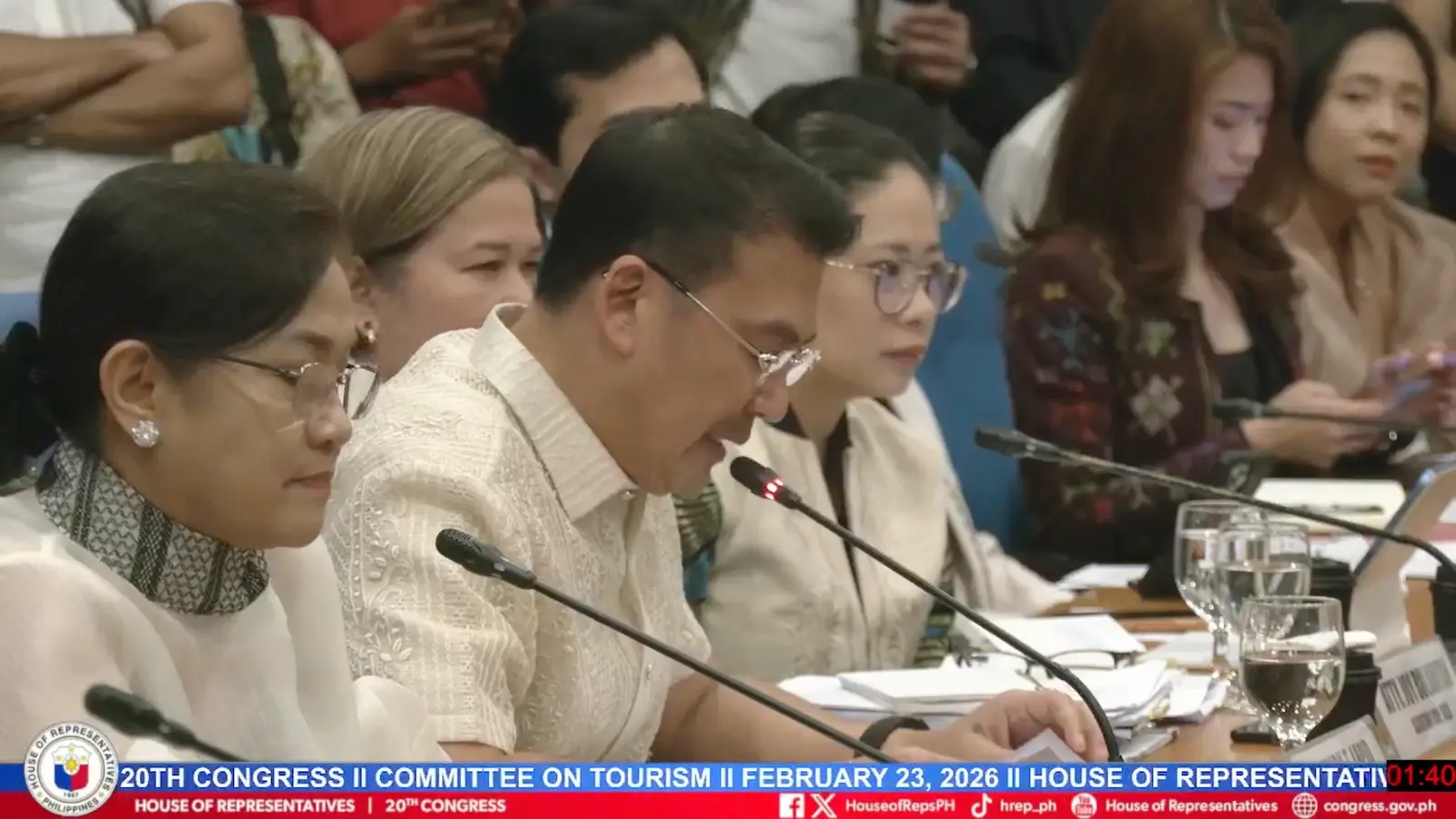
During the tourism committee’s hearing on February 23, Tourism Infrastructure and Enterprise Zone Authority (TIEZA) Chief Operating Officer Mark T. Lapid said that the travel tax is “essential to make the Philippines a competitive tourist destination,” as its revenue funds infrastructure projects. Lapid also said that the travel tax generated P8.7 billion for the government in 2025, and that this went to tourism development, cultural programs, and maintenance of tourist sites.
The travel tax also funds grants given by the Commission on Higher Education (CHED) and the National Commission for Culture and the Arts (NCCA) to researchers and artists. CHED Commissioner Shirley Agrupis says 40 percent of travel tax collections accounts for 85.6 percent of the commission’s resources.
According to Bilyonaryo, P600 million to P700 million of the travel tax revenue also goes to the rehabilitation and operation of historical and heritage sites, such as the Manila Metropolitan Theater, baroque churches across the country, and the city of Vigan, Ilocos Sur.
‘No Brainer’
However, Congressman Miro Quimbo, chairman of the House Committee on Ways and Means, predicts that the abolition of the travel tax could generate as much as P22 billion annually through travel agencies and airline companies, far exceeding the annual travel tax revenue of around P7.5 billion.
“Kapag tinanggal po natin ‘yong P1,620 sa isang plane fare, mas maraming tao ang makakabiyahe. So mas madadagdag ang kikitain ng ating travel agencies, ating airline companies. No-brainer,” said Quimbo on February 15, amid discussions among lawmakers about the repealment of the travel tax. He also added that the Philippines is the only Southeast Asian nation that still imposes a tax on outbound travel.
Meanwhile, the tourism committee, chaired by Cong. Eleandro Jesus Madrona, says lawmakers will continue seeking out alternative sources for funding tourism, cultural development, and scholarship programs currently supported by the travel tax.
Frequently Asked QUestions
Outbound Filipino passengers paying the standard travel tax contribute between ₱1,620 and ₱2,700 per ticket, depending on their travel class and ticket type.
The Tourism Infrastructure and Enterprise Zone Authority (TIEZA) receives the primary share, while 40 percent goes to the Commission on Higher Education (CHED) for higher education grants, and a portion goes to the National Commission for Culture and the Arts (NCCA) to maintain heritage sites.
According to TIEZA, travel tax collections generated ₱8.7 billion for the government in 2025, which directly funded tourism development, heritage preservation, and academic research grants.
Proponents like Congressman Miro Quimbo argue that removing the tax lowers flight costs, stimulating travel demand and generating up to ₱22 billion annually through boosted airline and travel agency activity.
PHOA warns that removing the tax could encourage outbound spending in neighboring countries at the expense of domestic resorts and hotels, urging lawmakers to establish a replacement funding plan first.
Recommended Video