


Film Concerts PH isn’t kidding when it comes to bringing orchestral performances into the spotlight. For Mikhail Schemm, the founder of the company, the dream began with a lightsaber. At first, he wanted to dress up as a Jedi. But it wasn’t just the costume; it was the moment he first saw John Williams’ music performed live where the spectacle of the score latched onto his imagination. It was the wide-eyed, almost naïve wonder that never left him, finding a stage somewhere in a theater located in Pasay City.
The mission was simple but bold: bring cinematic music to life, and let it roar louder than the screen it once lived on. On their social media, Film Concerts PH shows no signs of slowing. With film showcases in the pipeline like Marvel’s Infinity Saga and Star Wars: The Empire Strikes Back — even the Nintendo Switch video game Stardew Valley — the company is on a sprint through pop culture’s most recognizable soundscapes. Many more performances are on the horizon, and they’re doing it with zero irony and full commitment.
Film Scores as a Product
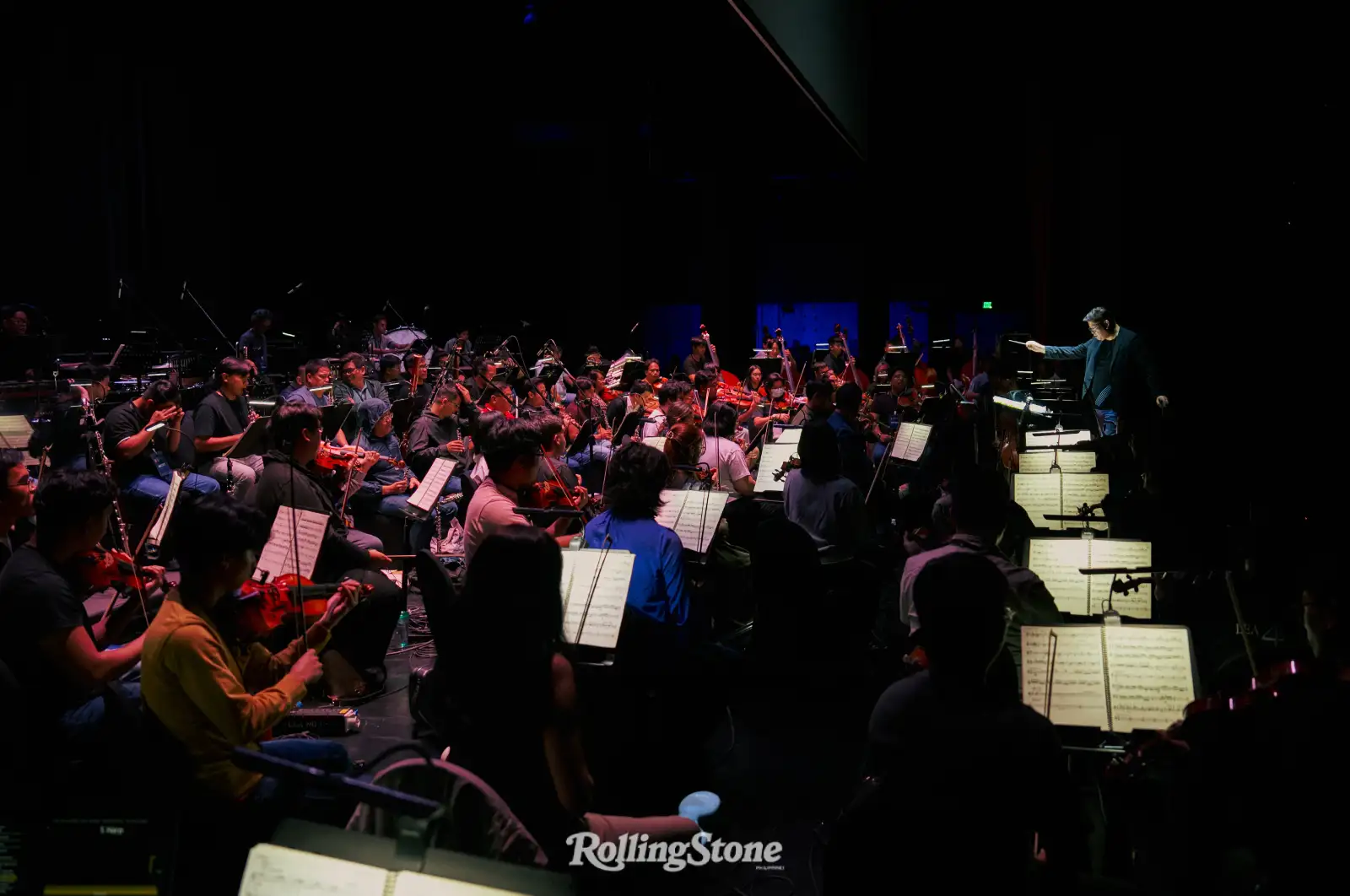
On a rainy Thursday evening inside The Theatre at Solaire, the air was thick with nervous energy. The lights were low. A giant white screen hovered above the stage, lowered two days before the show. The orchestra members sat quietly, instruments tuned and ready, rehearsing with the weight of precision on their shoulders. It was past six in the evening. Schemm paced the floor, watching the final run-through of Harry Potter and the Prisoner of Azkaban performed by the Filharmonika Orchestra and the Philippine Madrigal Singers. The sound dwarfed the movie. Perhaps the goal was for the music to not just complement the film, but to punch through it, to claim its own space.
“It’s more of a perfect marriage,” Schemm tells Rolling Stone Philippines. “Obviously, film music is made for the films, and the films that are released help to disseminate that orchestral music as a vehicle. But before classical music is obviously represented to be very high brow, you know, it’s like elitist and everything. This is actually one of the main ways to get mass appeal for orchestras.”
What he’s building isn’t some trendy gimmick. It’s a reframing of what orchestral music can be in the modern world, something that lives in pop culture itself. For decades, orchestras have been boxed in, seen as institutions for the privileged few. However, Schemm wants to discard that image for Film Concerts PH. He’s not trying to reinvent the wheel, just get more people to actually see it spin.
There’s more at stake here than a spectacle. Schemm is clear about wanting to push the conversation around Filipino orchestras forward, not for one specific demographic, but for the players themselves. Most of the musicians performing in these shows are Filipino professionals. Some are educators, while others are freelancers. These performances offer not only gigs, but stages, platforms, and reasons to keep going. The hope is that these concerts can help inspire the next wave of students, composers, and conductors to not only dream, but to see a future where classical music is relevant.
“Maybe at some point a few years down the line, when we’re satisfied with a lot of these shows we’re doing, there’s so many programs one could do,” Schemm says. “Maybe one of them is writing their own little classical symphony, and they want to start to debut it.”
Film Scores as an Art Form
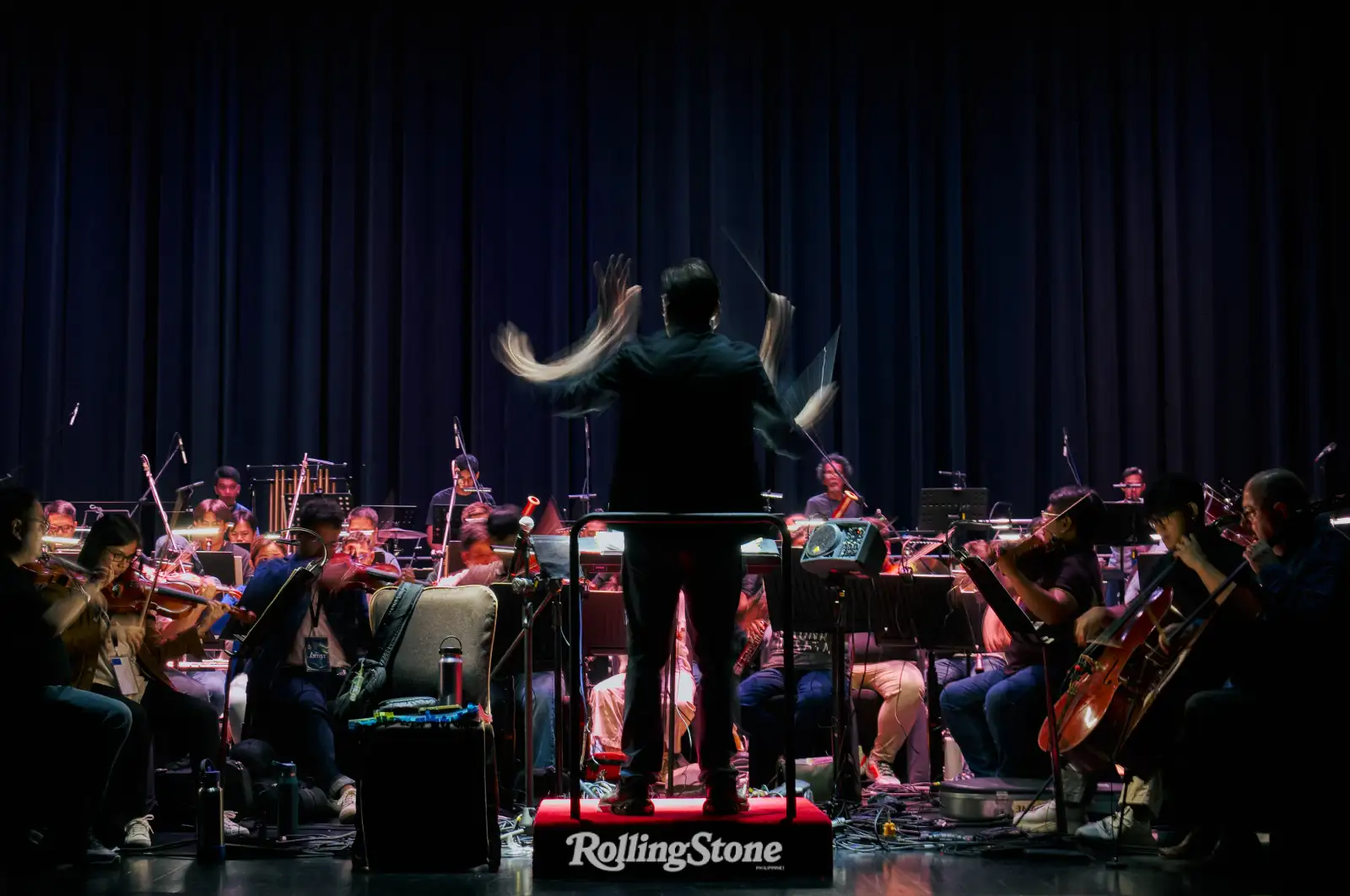
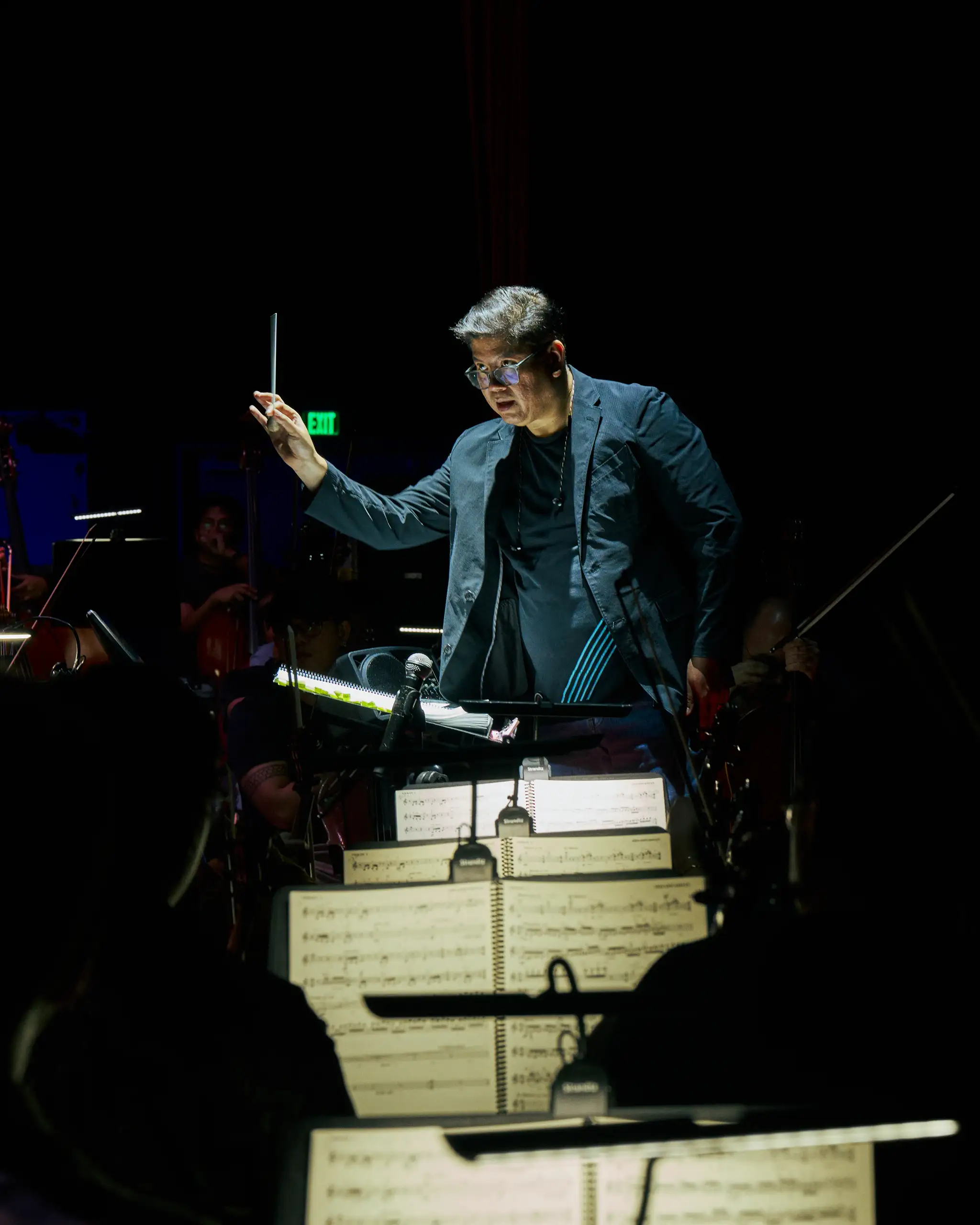
The rehearsal room turns bright. Schemm flashes a grin as the orchestra takes a break. It’s a quick breather before things ramp up again. Downstairs, the mood shifts entirely. The room is darker. Heavier. A scene not unlike the ones scored in the films themselves. In the middle of it is The Outstanding Young Men awardee and orchestra conductor Gerard Salonga leading the Filharmonika Orchestra, baton in hand, arms commanding, and eyes fixed. This is not some movie version of a conductor losing his cool for the camera. It’s the real thing. Focused chaos. Calculated demands. The stakes are higher than usual because this isn’t any regular concert. It’s Harry Potter with a live score with a 96-member orchestra and a 50-member choir, and expectations are through the roof.
Perfection is not optional for Salonga. Rehearsals inside the theatre are tense. The orchestra doesn’t get second takes. There is no studio editing. What happens on that stage is final. You either hit the mark or get swallowed by the next cue. The weight of playing a John Williams score is spiritual.
“When I’m performing a piece of music, it’s always about how I can make this as beautiful as it can be for the people who will hear it.”
Salonga comments on the sentiment of local conductors taking on the pressures of giving justice to a major film score. “Well, you could say the same thing for Beethoven’s ‘Symphony No. 5,’” Salonga says. “It’s a symphony that everybody knows. I conducted that last week in Kuala Lumpur. And you don’t think about it [as a pressure to perform]. Because by worrying about that, you’re looking at yourself. You’re not looking at what the music can do for the people who listen to it. My tendency is to focus on that. When I’m performing a piece of music, it’s always about how I can make this as beautiful as it can be for the people who will hear it.”
To Salonga, conducting film music is not about indulgence. There are no liberties taken. You do not rearrange Williams. You do not fatten a Hans Zimmer crescendo. You keep the score sacred. For him, there is no remix, only translation. What’s written on the page is what gets played.
Salonga is careful about balancing that sound with the images on screen. In something as visually detailed as Prisoners of Azkaban, where scenes transition from sweeping wide shots to intimate character moments, the music can’t just follow along. It needs to meet the scene at eye level and deliver a performance that hits with the same gravity. That means every entrance, every swell, every crash of a timpani must land in step with the film’s emotional beats. He describes it like breathing with the film. You don’t lead it, you move with it. That’s the challenge. Different conductors will bring different textures to a score, but the fidelity to the original intention is what keeps it honest.
Are Local Film Scores Sustainable?
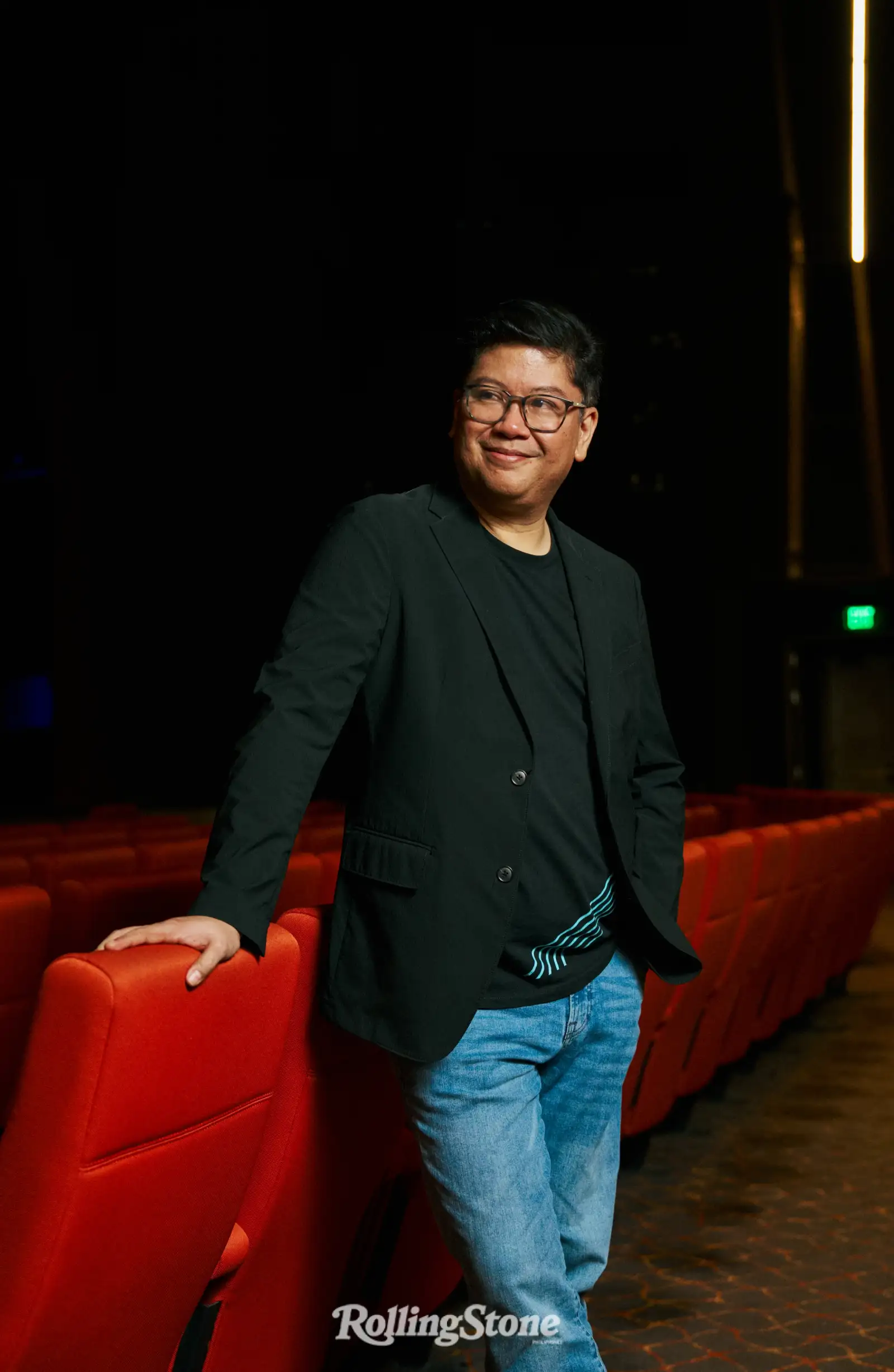
For Salonga, the dream of mounting a full-scale live orchestral concert for a Filipino film remains out of reach — not because of talent, but because the market isn’t there. Unlike global franchises, local films don’t carry the same weight overseas, making the economics of live orchestral scoring nearly impossible to sustain.
“The reason why these films are viable, it’s because they’re famous all over the world,” he says. “If you were going to do something of this magnitude just for the Philippine market, there’s no way the producers would get their money back. It’s just impossible. So the only way that it would work is to have a product that is known overseas.”
He doesn’t mince words when it comes to comparing scale. “What’s the percentage of the Philippine market compared to the global market that these films have? Less than 1%?” he says. “It’s impossible to make a comparison. Even Japanese anime, for example, when Joe Hisaishi records a live orchestra, it’s doable because the films make so much [profit] all over the world. When was the last time a Filipino film made as much money all over the world as a Japanese Studio Ghibli film? Never.”
At its core, Film Concerts PH isn’t trying to rewrite what an orchestra is. It’s not out to rebrand classical music as some sort of crossover trend. Instead, it’s showing that this form, one that has existed for centuries, still holds the power to move people in the age of digital everything. With every sold-out theater, every raised baton, and every perfectly timed crescendo, the message gets louder. Orchestras are not dead. They’re just getting started.
“That’s how music is learned, isn’t it? It’s from teacher to student. It’s passed down,” Salonga says.
Schemm knows this. Salonga feels it in the pit of his stomach every time the downbeat drops. And the musicians, many of whom are juggling multiple gigs to make a living, carry that belief with every note they play. It’s work. It’s passion. It’s a spectacle. But more than that, it’s proof that the past still has something to say.
Recommended Video

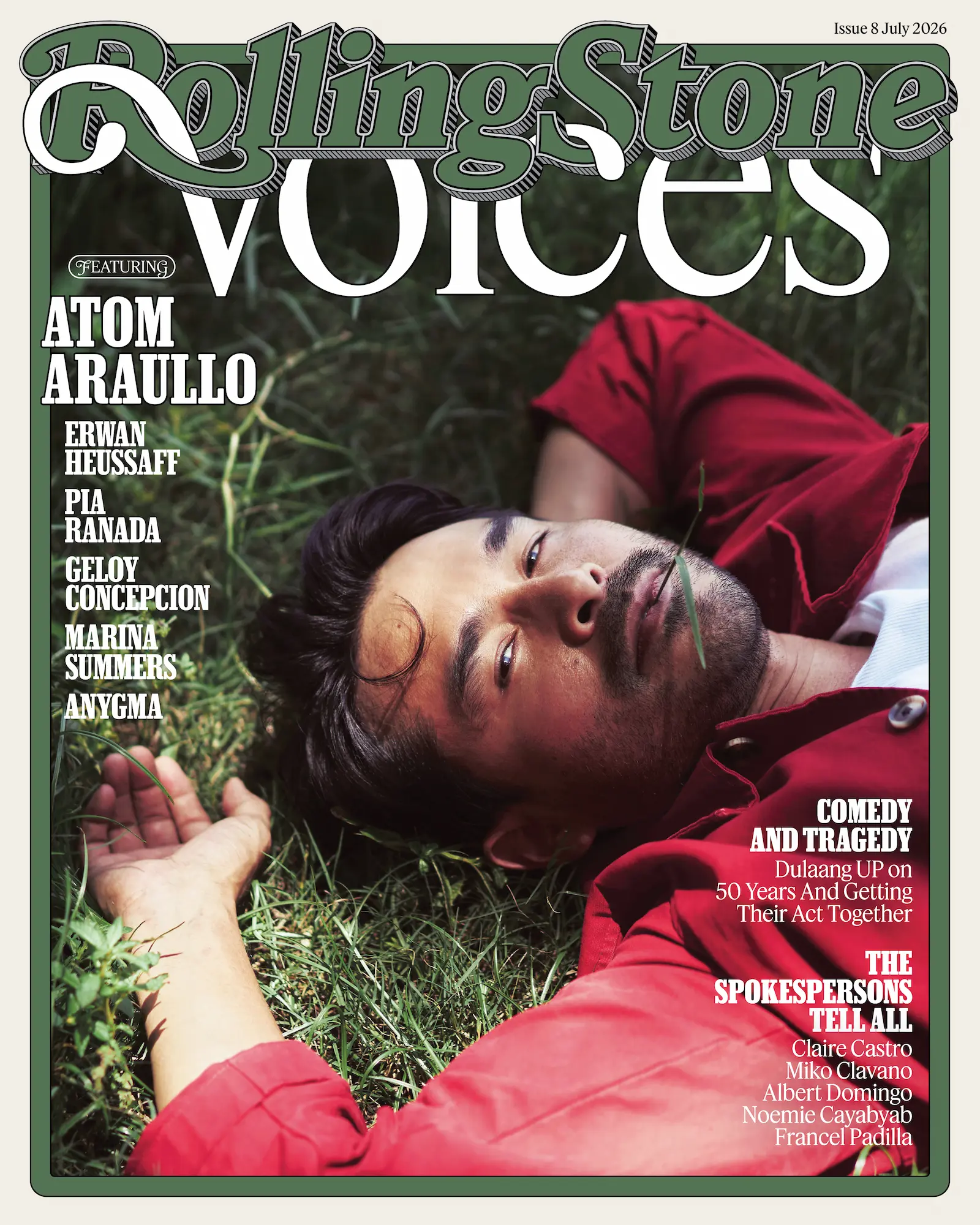
Rolling Stone Philippines Voices Issue, Now Available at SariSari Shopping